
That Funny Feeling
Arguably the most influential film by transgender creators of the 20th Century, The Matrix is — in addition to being a rip-roaring action flick — an accessible dive into philosophy, most notably when it comes to issues of conformity. When Neo, played by Keanu Reeves, is first introduced to Lawrence Fishburn’s Morpheus, his feelings are summarized by his soon-to-be mentor thus:
“What you know you can’t explain, but you feel it. You’ve felt it your entire life, that there’s something wrong with the world. You don’t know what it is, but it’s there, like a splinter in your mind, driving you mad.”
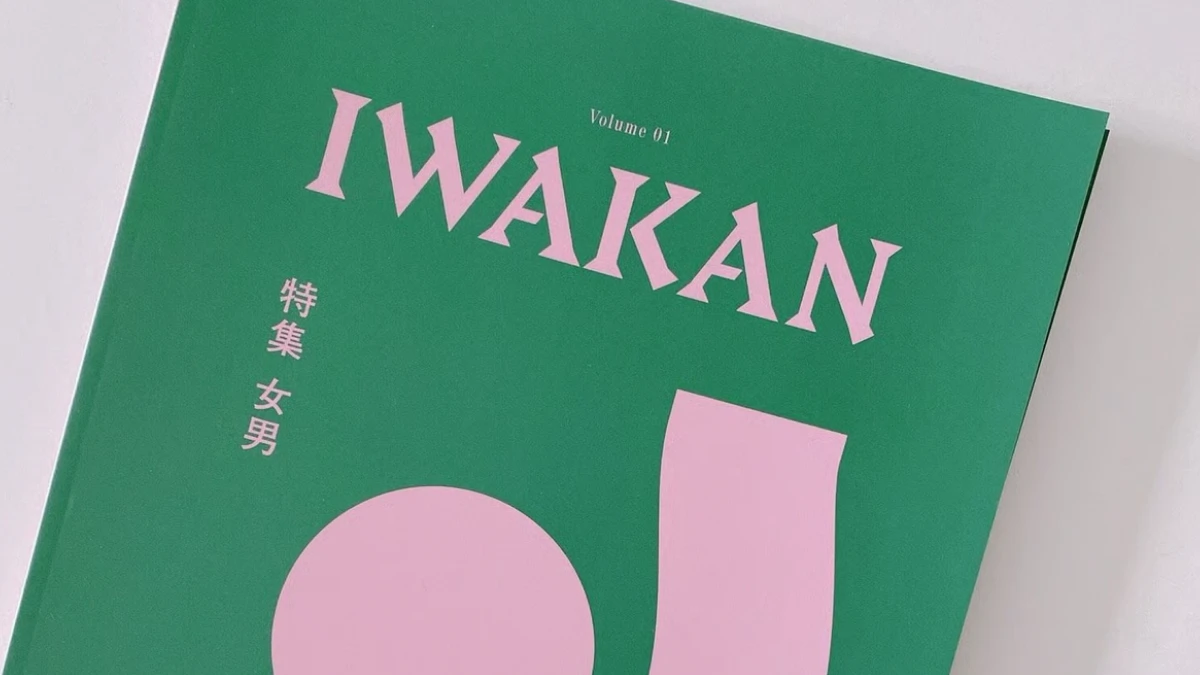
This is a feeling, that something is “off,” is one that has been felt by everyone at some point, at some time, to some degree. However, for LGBTQ+ people, gender non-conforming people, and others, this feeling can be persistent and pervasive. In Japanese, this sense of unease is called 岩観 (違和感), and it has become the namesake of a critically acclaimed magazine that examines contemporary Japanese society by exploring and discussing this feeling. Today, we’re going to take a look through IWAKAN magazine, and how reading it may go towards enlightening and liberating you: especially if you also feel that you have a splinter in your mind.
What is IWAKAN?
Begun in 2020, during the first wave of the Covid-19 pandemic, IWAKAN was a biannual periodical whose motto was “Questioning, challenging, and exploring our everyday 岩観.” The magazine is created from a fundamentally queer perspective, with LGBTQ+ people both at the center of and centered in the conversation. However, this is not to say that those outside of Iwakan’s community are or should feel that they are outside of its audience. As its website says, “IWAKAN is a magazine not just for queer people, but anyone who feels uncomfortable with the status quo and what society has come to call ‘normal.’”

Each edition focused on a different theme, and featured a series of essays from people from the queer community affected by said issue. Their volumes to date have covered the following topics: Woman/Man – Challenging the Gender Binary; Love – Re-examining Fixed Ideas Surrounding Love; Politics and Self-Reliance – Reclaiming the Political Power of the Individual; Diversity? – Depicting Diversity is Depicting the Individual;(Un)natural – What’s Wrong with Being an Unnatural Being?; Masculinity – Break Free from the Rusted “Masculinity”; and To the Men of the Future – IWAKAN Letters: 37 Letters Addressed to the Men of the Future.
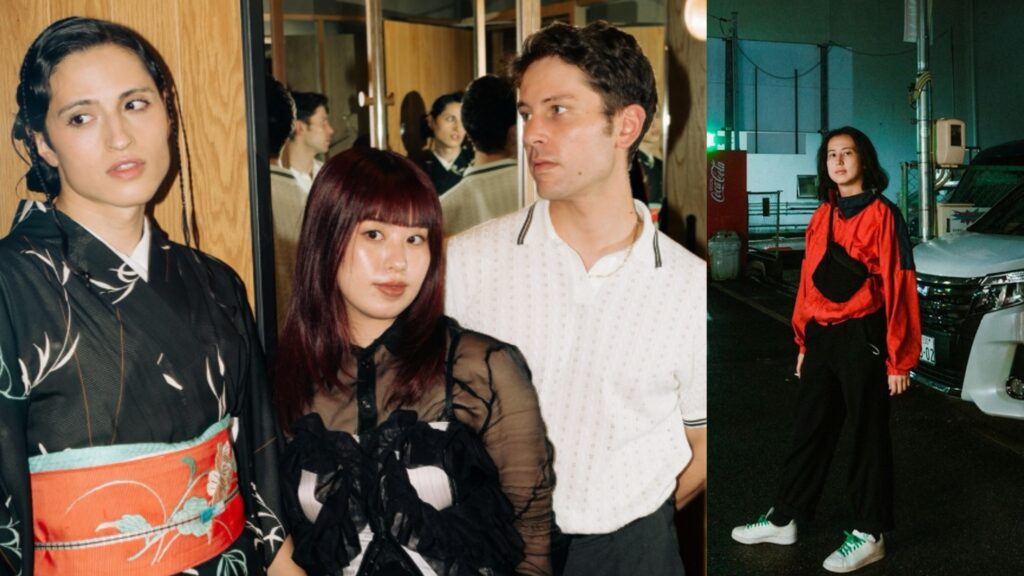
Each of these issues was curated by a quartet of editors heavily involved in the Japanese LGBTQ+ community. These include: Andromeda, a trans femme drag artist and model who grew up in Canada and shares information about the ups and downs about being trans in Japan; Jeremy Benkemoun, a French-born photographer whose work primarily revolves around non-patriarchal interpretations of gender, sexuality, and identity; Yuri Abo, a producer and podcaster who focuses on projects that concern gender expression and queer community; and Lana Kageyama, whose expertise in sales and the community helped IWAKAN to find the right people in the right places and the right time.
The Bilingual Special

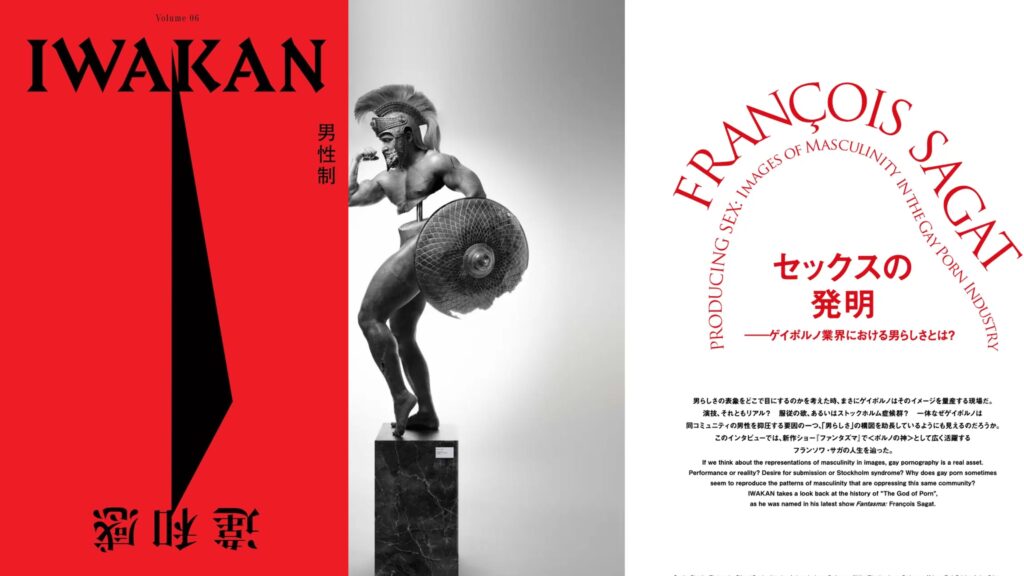
Volume Six of IWAKAN, Masculinity – Break Free from the Rusted “Masculinity” was the only volume of the magazine to be translated into English. As the magazine was gaining critical acclaim, it was decided to have both Japanese and English text next to one another on the page in order to reach a larger audience. Meanwhile, the theme of masculinity was chosen as the editors had noticed when selling IWAKAN that often, men would show disinterest in the magazine as they were cisgender, heterosexual men, and so felt that they would not be able to benefit from its content.
As such, a number of pieces — including interviews, photojournalism, and poetry — were created and published in order to explore, challenge, and navigate what masculinity means in the modern age to people from a diverse range of genders, ages, professions, and nationalities.
The articles were extremely incisive, with some notable stand outs (in my opinion) being: Singh Ikebukuro and Keito Kawanishi’s exploration of what it means to be men working in women-dominated fields (as an obstetrician-gynecologist and a parenting advisor, respectively); Amity Miyabi’s discussion of what masculinity can contribute to a non-binary identity; and François Sagat’s piece on masculinity as it relates to the gay porn industry.
I also highly recommend Keita Nakamura, Yuki Shibata, and Mako’s discourse on how masculinity impacts the coffee industry. Together, they discuss how an industry that is at once global and local is reliant on the work of women, while coffee itself has a “masculine” image in media, and misogyny is rife within cafe culture, where women roasters are dismissed as ignorant, and customers who want to discuss coffee seriously asking for men to speak to. Their illuminating conversation illuminates how patriarchy has its claws into various aspects of life, with the coffee industry acting as a synecdoche for society writ large.
The End of IWAKAN
Sadly, following its seventh edition, IWAKAN suspended its activities at the end of 2023. Despite the valuable work that was being done, and the hugely positive response from the readership, unfortunately business pressures made continuing sadly unfeasible. However, the editorial team remain dedicated to cooperating with anyone who has that feeling that something is off, and are still active in the community, including helping with WAIFU.
Regardless, the seven volumes that we are left with remain sources of invaluable information and insight. While the company is no longer selling the magazine directly, it can still be bought online from independent sellers, and for Japanese readers, it is a superb resource for academics, the curious, and — of course — anyone with that IWAKAN splinter.