

People often search for a ‘same-sex partner visa’ for Japan, but Japan does not offer one standard visa under that name. The possible route may depend on whether you are legally married, each partner’s nationality, the status one partner already holds or intends to obtain, and what the accompanying partner plans to do in Japan.
For two foreign nationals who are legally married, a relationship-based Designated Activities status may be considered in some circumstances. Japanese-foreign couples and unmarried partners require a different, more case-specific analysis.
The comparison below will help you identify the most relevant starting point. It is not a prediction of eligibility or approval. Immigration decisions are made on the circumstances of the individual case, so always confirm the current procedure before applying or travelling.
Which Situation Describes You?
Use the table below to find the starting point that most closely matches your situation.
| Your situation | Likely starting route | What is not automatic | Work implication | Safest next step |
|---|---|---|---|---|
| Two foreign nationals legally married in the relevant home countries | Non-notified Designated Activities may be considered where one spouse holds an appropriate status of residence in Japan | Ordinary Dependent or another spouse status does not automatically apply | Depends on the activity designated for the individual | Check the current Immigration Services Agency guidance and seek case-specific advice |
| Japanese national plus foreign same-sex spouse married abroad | An individually assessed Designated Activities route may be relevant | The overseas marriage does not by itself create ordinary Spouse or Child of Japanese National status | Depends on the individual designation | Treat the documented cases as examples and obtain current individual advice |
| Unmarried same-sex partners or holders of a Japanese municipal partnership certificate | An independent work, study or other residence status may be the starting point | A partnership certificate does not automatically create a national marriage-based status of residence | Depends on the independent status held | Assess each partner’s own immigration route |
| Partner independently eligible for work, study or another status | Apply under that independent status | It is not an LGBTQ+-specific partner route | Governed by the status and permitted activity | Check the requirements for the actual work, study or other activity |
Several things can affect the outcome, including your nationalities, where your marriage is legally recognised, the status of the partner already living in Japan, your relationship evidence and what you plan to do in Japan.
The important distinction is between a possible route and an entitlement. A relationship can be relevant to an application, but it does not create an automatic right to live in Japan.
Is There a Same-Sex Partner Visa for Japan?
There is no single Japanese status called a ‘same-sex partner visa’. Instead, the appropriate status depends on the circumstances described above.
It is also useful to distinguish a visa from a status of residence. A visa generally relates to the process of seeking entry to Japan. A status of residence determines the legal basis on which a foreign national can remain in Japan and what activities they may carry out.
One status that can be relevant to same-sex couples is Designated Activities (特定活動). This is not one uniform spouse category. It covers different situations where an activity is specifically designated by the Minister of Justice for an individual foreign national.
That is why the name alone does not tell you whether you can work, study or undertake another activity. The individual designation matters.
This makes Designated Activities different from established statuses such as Dependent (家族滞在), Spouse or Child of Japanese National (日本人の配偶者等) and Spouse or Child of Permanent Resident (永住者の配偶者等).
For same-sex couples, that distinction is important. A same-sex spouse may be considered for Designated Activities in some circumstances, but this is not the same as receiving the standard spouse status available to different-sex married couples.
If You Are Two Foreign Nationals Married Abroad
The most established relationship-based route concerns two foreign nationals who are legally married.
A Tokyo High Court judgment records a Ministry of Justice notice from 18 October 2013 concerning same-sex spouses whose marriage is valid under the relevant foreign laws. The judgment describes a policy under which the foreign spouse of a person already holding an appropriate status in Japan may be considered for non-notified Designated Activities.

The purpose of this route is to allow the couple to live together and maintain a shared household in Japan. The key point is that the relationship is treated as a legally recognised marriage for this particular immigration analysis.
That makes legal marriage important. Dating, cohabitation or an informal partnership is not the same thing as the marriage described in the documented policy.
A legally married foreign same-sex spouse may be considered for this route if the other spouse has an appropriate status in Japan. Approval is not automatic, and the outcome can depend on the principal resident’s immigration status and the circumstances of the case.
The application process also needs to be checked carefully. Current Immigration Services Agency procedures for Designated Activities cover many different categories, and the general page does not provide one single procedure for every possible non-notified case.
If this is your situation, start by confirming the principal resident’s exact status and the legal validity of the marriage. Then ask the Immigration Services Agency or a qualified immigration professional which procedure applies to your case.
If One Partner Is Japanese
Japanese-foreign couples require a more careful analysis.
An overseas same-sex marriage does not by itself create the ordinary Spouse or Child of Japanese National status for the foreign spouse under the Tokyo High Court judgment.
There is, however, an important documented case.
The judgment concerns a US national who was married to a Japanese man. In March 2023, the foreign spouse was granted an individually defined Designated Activities status that allowed him to remain in Japan and live with his Japanese spouse.
The designation was specific to that case and excluded remunerated activity.
This is important evidence because it shows that Designated Activities has been used for a foreign same-sex spouse of a Japanese citizen. It does not establish a standard spouse route that every Japanese-foreign couple can automatically use.
The case also involved a request for Long-Term Resident status. The High Court did not establish Long-Term Resident status as the standard solution for Japanese-foreign same-sex spouses.
The Japanese Government has also distinguished the treatment of foreign-foreign couples from other cases. In an April 2023 Diet response, the Justice Minister explained that cases outside the established foreign-foreign situation are considered individually, taking account of matters such as the proposed activity, residence circumstances and the need to remain in Japan.
For this reason, a Japanese-foreign couple should treat Designated Activities as an individual assessment, rather than as a standard spouse category.
If You Are Not Legally Married
Being in a committed relationship does not automatically create an immigration status in Japan.
The documented foreign-foreign policy is based on a legally valid same-sex marriage. That is different from dating, long-term cohabitation or another form of partnership.
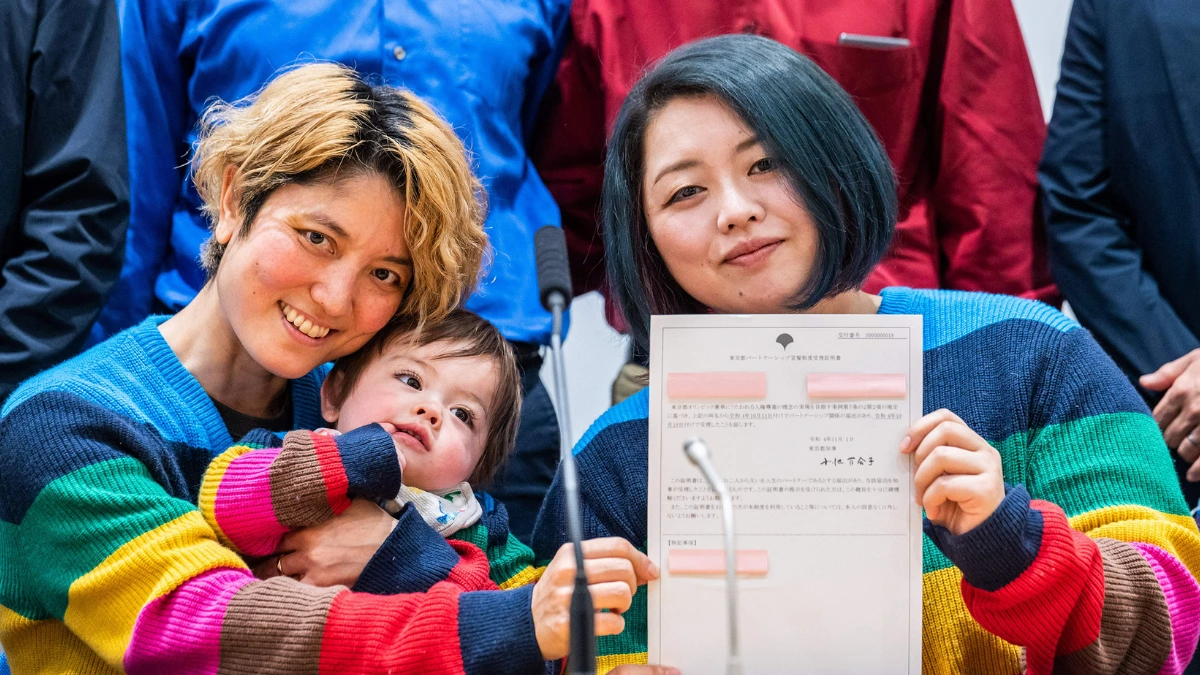
Japanese municipalities also operate partnership oath and certification systems. These can provide useful recognition in areas covered by the relevant local scheme, but they are not the same as a national legal marriage.
For more on the legal position, see our guide to same-sex marriage in Japan.
For example, Tokyo describes its Partnership Oath System as certification that a declaration has been received. The system itself states that, unlike legal marriage, the declaration does not produce the same legal effects.
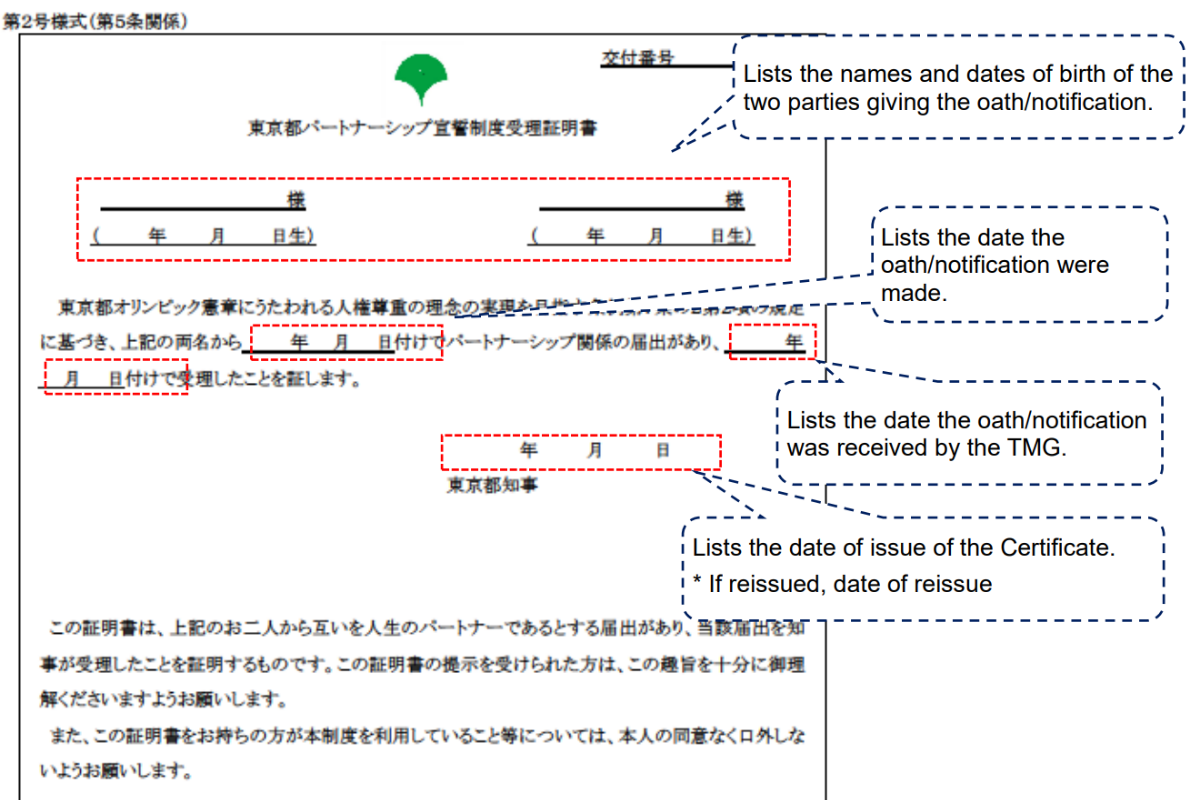
This means that a Tokyo partnership certificate does not, by itself, create a national marriage-based status of residence for a foreign partner.
That does not make partnership certificates meaningless. Depending on the organisation and scheme involved, they can have practical uses in areas such as housing, healthcare or benefits.
From an immigration perspective, however, you should not assume a municipal partnership certificate gives your partner the same position as a legally married spouse.
If you are unmarried, the safer starting point is to look at each partner’s independent immigration options. One partner may qualify through employment, study, business or another status. In some circumstances, there may also be other case-specific considerations.
Learn more about the partnership oath certificate process on the Japan Gay Guide:
Can the Accompanying Partner Work in Japan?
Having a route to live in Japan does not automatically give the accompanying partner the right to work.
This is particularly important with Designated Activities because it is not one standard category with one set of employment rights. What you can legally do depends on the activity designated for the individual holder.
The documented Japanese-foreign case illustrates this point. The spouse received a specifically defined Designated Activities status, and remunerated activity, including employment, was excluded.
That does not mean every same-sex spouse with Designated Activities is barred from working. It also does not mean every holder can work. You need to check the exact designation issued in your case.
There is also a separate Immigration Services Agency procedure for permission to engage in activities outside those permitted by a person’s current status. However, eligibility and working limits depend on the person’s status and circumstances.
Do not assume that a standard 28-hour-per-week rule applies. That figure is associated with particular permissions and circumstances. It is not a universal work entitlement attached to Designated Activities.
Before accepting employment, starting a business or undertaking paid freelance work, confirm exactly what the individual status permits and whether additional permission is required.
Independent Work, Study, and Other Residence Options
A relationship-based route is not the only way for both partners to live in Japan.
If one partner qualifies for a Japanese status based on what they plan to do in Japan, they can apply under that status. Depending on their circumstances, this could include eligible employment, study or another qualifying activity.
This is an ordinary immigration route. It is not a special route for LGBTQ+ couples.
For example, someone who qualifies for a work-based status should apply based on the requirements for that job. Someone who genuinely plans to study should look at the requirements for Student status.
Each status has its own eligibility rules, permitted activities and application requirements. Some also require support from an employer, school or another organisation.
This can be a simpler way to approach your situation. Instead of asking only:
‘What visa can my partner get because we are a couple?’
also ask:
‘What status can each of us qualify for based on what we will actually do in Japan?’
The Immigration Services Agency’s status-of-residence index is a useful starting point for comparing the available options. Once you have identified a possible route, check how it applies to your circumstances before making travel, employment or housing plans.
How to Prepare Before You Apply or Travel

Before starting an application, first establish which immigration route may apply to your situation.
Write down:
- Each partner’s nationality
- Whether you are legally married
- Where the marriage was registered and recognised
- Whether either partner already has a Japanese status of residence
- What status that partner holds or intends to obtain
- What the accompanying partner intends to do in Japan
- Where you currently live
- What evidence you have of your relationship and shared life
These details can make a significant difference to the relevant immigration analysis.
You should also prepare documents likely to be relevant to your circumstances. These may include:
- Official marriage or relationship records
- Identity documents
- Evidence of financial resources or support
- Documents showing the status of the partner already living in Japan
This is a preparation list, not a guaranteed document list. Immigration authorities can ask for additional evidence, and requirements can vary between cases.
Note: If documents are in a foreign language, check whether Japanese translations are required. The Immigration Services Agency’s current application guidance commonly requires Japanese translations for documents prepared in other languages.
The next question is the procedure itself.
Depending on the case, you may need to consider a Certificate of Eligibility (COE) application, a visa application overseas, a change of status of residence or another procedure. Do not assume that one procedure applies simply because another same-sex couple used it.
Be especially careful with advice telling you to enter Japan as a Temporary Visitor and then change status after arrival. The Immigration Services Agency states that changing from Temporary Visitor to another status is, in principle, not permitted unless there are unavoidable special circumstances. Whether an exception could apply to a particular case must be confirmed with the relevant immigration authority.
Before booking travel or making other commitments, contact the relevant Immigration Services Agency office or the Immigration Information Center.
Ask them to confirm:
- The correct filing procedure and location
- The current application forms
- Which supporting documents are required
- Whether translations are needed
- Current fees
- Whether a COE is relevant
- Whether you can remain in Japan while an application is being considered
- Whether you can travel while an application is pending
- Exactly what work, if any, is permitted
If the situation is unusual or the consequences are significant, consider speaking with a Japan-qualified immigration lawyer or an immigration-experienced gyoseishoshi. If you want a gyoseishoshi to act as an application intermediary, confirm that they have made the required notification through their professional association to the relevant regional immigration bureau.
Do this before resigning from a job, signing a long-term tenancy, booking non-refundable travel or accepting employment based on an assumed immigration outcome.
What Could Change Next?
Japan does not currently have a national same-sex marriage status. That is an important part of the reason overseas same-sex marriages do not automatically receive the ordinary spouse treatment described above.
The legal position could change.
On 25 March 2026, Professor Yasuhiko Watanabe of Meiji University reported that the Supreme Court had decided to hear the six constitutional challenges to Japan’s restrictions on same-sex marriage in its Grand Bench. His analysis suggested that a ruling could come in early 2027.

That timing is an academic forecast, not an official Supreme Court schedule. Readers should therefore check the Supreme Court’s own information before relying on any reported hearing or judgment date.
A future constitutional judgment could change the legal context surrounding same-sex marriage, but it would not necessarily mean new immigration procedures appear on the same day. Immigration rules, forms and administrative guidance would still need to be checked after any major legal change.
For that reason, treat this article as a guide to the current framework, not a permanent statement of what Japan’s immigration system will look like.
For broader information, see our guide to LGBTQ+ rights in Japan and our coverage of the Supreme Court’s review of Japan’s same-sex marriage restrictions.
What to Do Next
If you are unsure where to start, return to the comparison table near the top of this guide and identify the situation that most closely matches yours.
Then confirm the four facts that matter most:
- Your nationalities
- Whether you are legally married
- The immigration status of the partner already living in Japan
- What each of you plans to do in Japan
Once you have identified a possible route, check the current Immigration Services Agency guidance and contact the Immigration Information Center if you need clarification. For relationship-based Designated Activities cases, professional advice from a Japan-qualified immigration lawyer or immigration-experienced gyoseishoshi may also be worthwhile.
Most importantly, do not make employment, resignation, housing, or travel commitments based solely on a general article. The correct procedure and outcome depend on the circumstances of the individual case.
This guide is intended to help you identify the right questions and avoid starting with the wrong immigration category. It cannot predict what the Japanese immigration authorities will decide in your case.
Information and sources checked: August 2026. Always confirm the current rules and procedures before applying or travelling.