

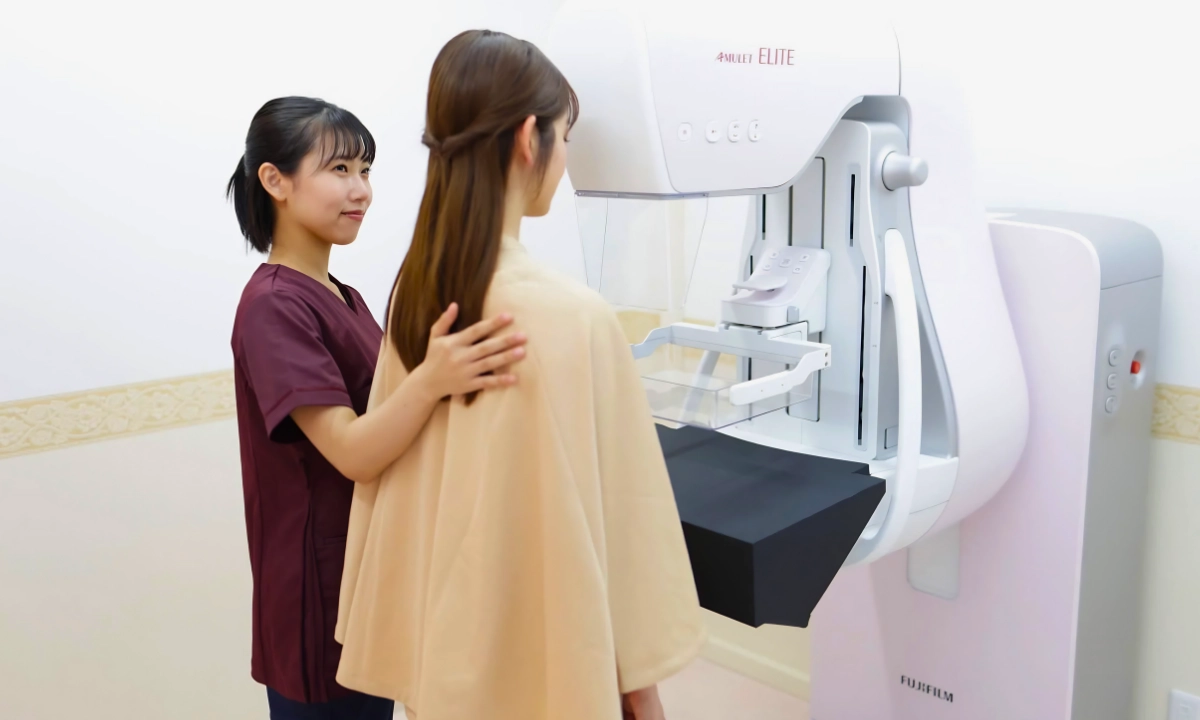

Breast cancer can affect anyone with breast tissue, but knowing when and how to get screened isn’t always straightforward. This is especially true if you’re LGBTQ+ and your body, medical history, or healthcare needs don’t fit neatly into standard guidance.
In Japan, routine breast cancer screening is recommended every two years from age 40 for women covered by the national screening framework. However, your individual screening needs may depend on you.
If you notice a new breast or chest lump, nipple discharge, skin change, or another concerning symptom, don’t wait for your next screening appointment. Seek medical advice so the symptom can be assessed.
For LGBTQ+ people, accessing screening can also raise practical questions, especially when public programs use gendered eligibility rules.
This guide explains who should get breast cancer screening in Japan, how to arrange a mammogram, what LGBTQ+ people should know about screening recommendations, and what to expect during an appointment.
Who should get breast cancer screening in Japan?
Japan’s nationally recommended breast cancer screening framework advises women aged 40 and over to have a mammogram every two years.
However, this is a population-screening recommendation, not a complete medical rule for everyone. Routine screening is designed for people who don’t have concerning symptoms, and some people need more individual advice.
For example, your screening needs may differ if you have:
- A personal or family history of breast cancer
- A known genetic predisposition to breast cancer
- Previous breast cancer or radiation treatment to the chest
- Previous breast or chest surgery
- Hormone use or other medical factors that affect your individual risk
These circumstances may call for a screening plan that differs from the usual two-year schedule.
For LGBTQ+ people, sexual orientation or gender identity alone does not determine which screening is appropriate. This is particularly important for transgender and nonbinary people, whose anatomy or medical history may not fit neatly into Japanese public-health guidance.
It’s also worth remembering that breast cancer can occur in men. However, Japan’s routine municipal mammography programs are not designed as population-screening programs for average-risk cisgender men. If you have symptoms or a significantly increased risk, speak with a healthcare professional about the appropriate assessment.
How breast cancer screening works in Japan
Knowing that screening is recommended is one thing. Arranging it is another.
Japan does not have a single national enrolment system for breast cancer screening. Instead, you can generally access screening through three routes:
- Municipal screening: A screening program offered by your local city or ward
- Workplace or health insurer screening: A program offered through your employer or insurance provider
- Self-pay screening: A screening service you arrange and pay for yourself
The National Cancer Center distinguishes between these routes, and the booking process, eligibility requirements, and costs can differ.
For residents, municipal screening is often a good place to start. Many municipalities cover a significant portion of the screening cost, although the amount you pay varies depending on where you live.
If you’re only visiting Japan temporarily, don’t assume you can use a municipal resident screening program. Self-pay screening may be a more realistic option.
Municipal screening
If you live in Japan and want to use your local public screening program, start with your city or ward website.
Search for 乳がん検診 (nyūgan kenshin/ breast cancer screening). When you find the relevant page, check five things:
- Eligibility: Who can use the program?
- Application or ticket procedure: Do you need to apply or receive an examination ticket?
- Screening period: When is screening available?
- Fee: How much will you pay?
- Participating facilities: Where can you have the screening?
The exact process depends on the municipality. Some cities send eligible residents screening tickets or vouchers, while others require residents to apply before booking.
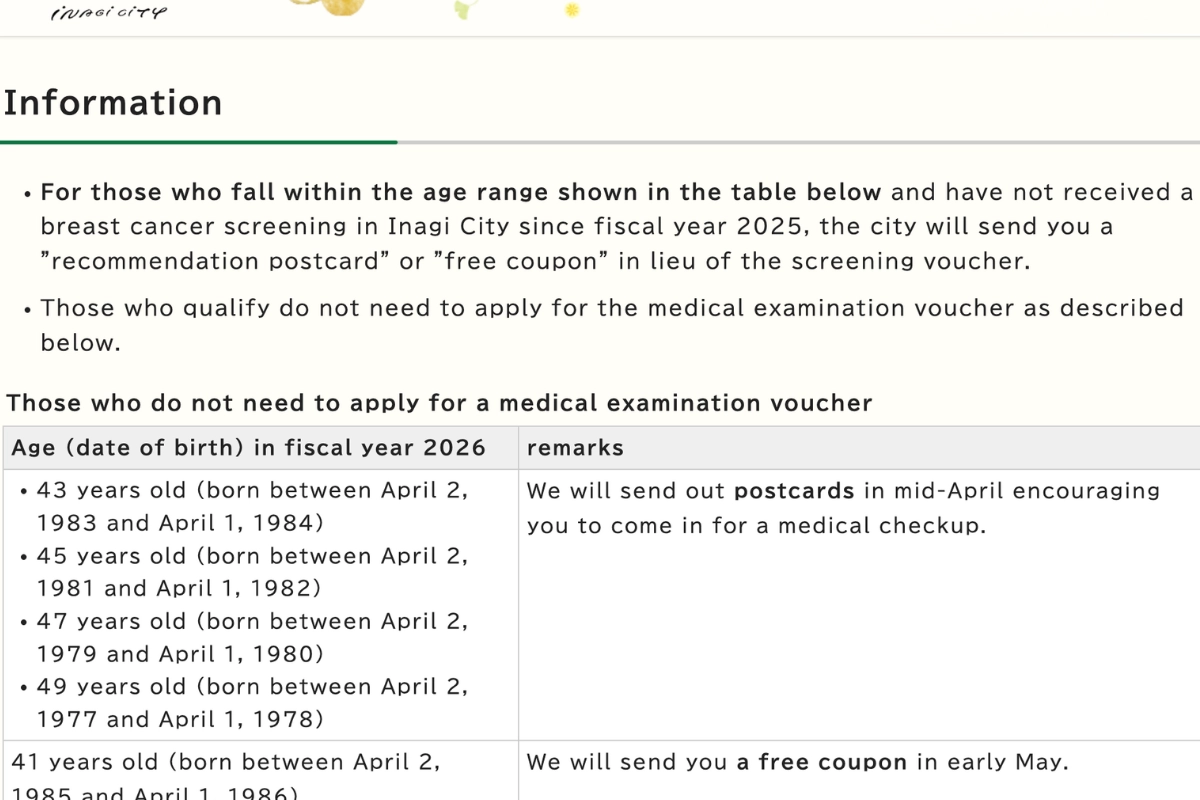
For example, Inagi City’s FY2026 breast cancer screening program sets out a clear process. Residents who need an examination ticket apply through the city’s health centre, receive their ticket and instructions, and then arrange an appointment with the designated screening centre. Some eligible residents receive a recommendation postcard or free screening coupon instead.
This is an example of how one municipality handles screening, not a nationwide procedure.
What if the screening program is listed for “women”?
One of the most confusing parts of navigating healthcare in Japan can be the wording itself.
Public screening information often refers to women or female residents aged 40 and over. If you’re transgender or nonbinary, that wording might leave you wondering whether the program applies to you.
Unfortunately, there is no verified nationwide administrative rule that tells us how every municipality handles eligibility based on legal gender markers, hormone use, or chest surgery.
If you’re unsure whether you qualify, contact your municipality’s health centre or cancer-screening office before booking. You can also contact the screening provider listed by the program.
You don’t need to provide your entire medical history to ask about eligibility. Start with the details relevant to your question and ask what other information they need.
If you’re comfortable enquiring in Japanese, you could begin with:
乳がん検診の対象か確認したいのですが。
Nyūgan kenshin no taishō ka kakunin shitai no desu ga.
“I’d like to check whether I’m eligible for breast cancer screening.”
The important thing is not to assume that unclear wording means screening is unavailable.
If the municipal program cannot accommodate your circumstances, a healthcare professional can help you identify another suitable route.
Workplace and self-pay screening
Some employers and health insurers offer breast cancer screening as part of their health programs.
However, a regular workplace health check does not automatically include breast cancer screening.
If your employer offers screening, check which tests are included and whether the program uses the nationally recommended screening method.
You can also arrange screening privately and pay for it yourself. This may be useful if municipal screening is inconvenient, you’re not eligible for a particular program, or you would prefer to choose your own provider.
However, paying privately doesn’t automatically mean the screening is more complete or medically better.
Likewise, more scans or tests don’t necessarily make a screening package more effective. Look for screening methods supported by medical evidence, and ask a healthcare professional if you’re unsure which tests you need.
For information about LGBTQ-friendly or English-speaking providers, see Japan Gay Guide’s Medical Resources for LGBTQ in Japan.

What LGBTQ+ people need to know about breast cancer screening
There is no single LGBTQ+ breast cancer screening schedule. What matters is your individual medical situation, including the tissue you have, any surgery or hormone treatment, your age, and your level of risk.
However, accessing screening can present additional challenges.
A 2025 Japanese study of 11,056 people assigned female at birth found that LGBTQ+ respondents had 18% lower odds of undergoing breast cancer screening than non-LGBTQ+ respondents after adjustment for other factors.
The study shows a difference in screening participation. It does not mean LGBTQ+ people universally have a higher biological risk of breast cancer or need a different screening schedule.
Instead, it highlights why accessible information and inclusive healthcare matter.
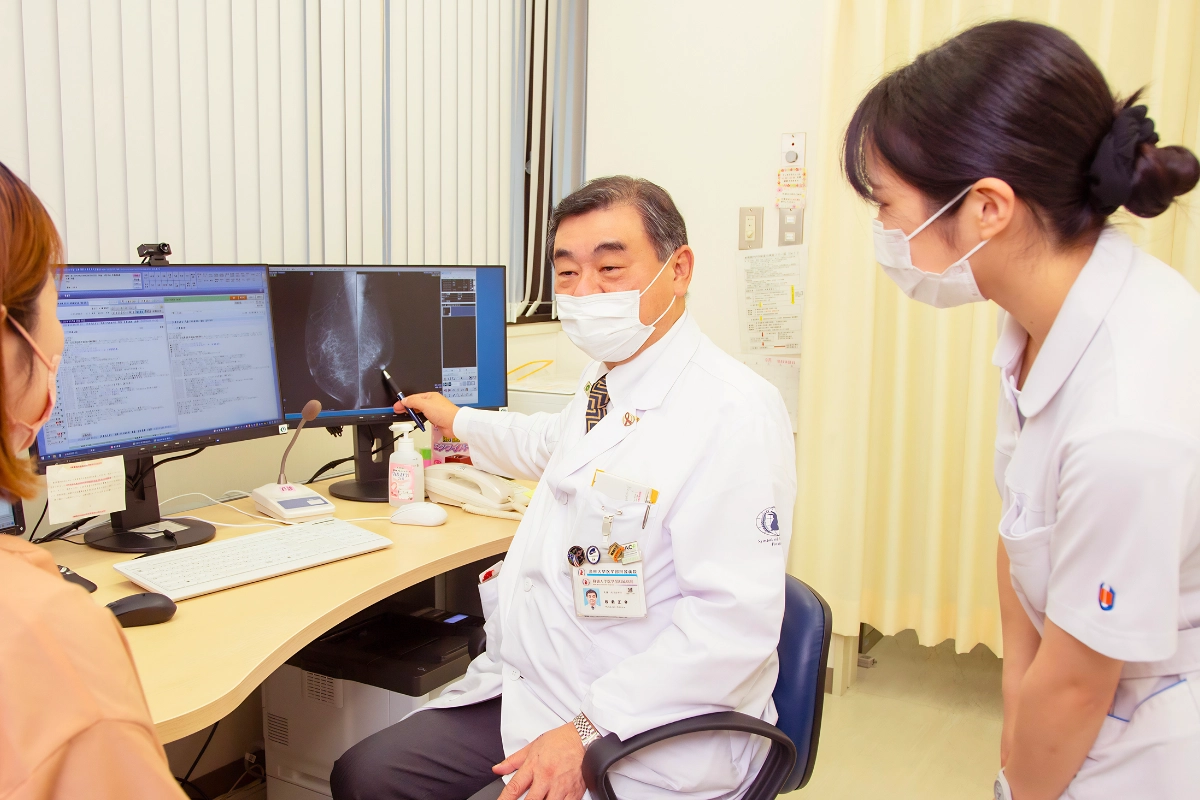
So, what should different LGBTQ+ people consider when deciding whether to get screened?
Lesbian, bisexual, and queer women
Being lesbian, bisexual, or queer does not mean that you need a separate mammography schedule.
The usual screening recommendations still apply according to your age, symptoms, and individual risk factors. Sexual orientation alone does not determine when you should have a mammogram.
What can matter, however, is feeling comfortable accessing care, discussing your medical history, and asking questions about screening.
Japanese research has found that LGBTQ+ women were less likely to have undergone breast cancer screening than non-LGBTQ+ women. This difference relates to screening participation rather than biological cancer risk, but it highlights why clear, inclusive, and practical information about how to access screening matters.
If you’re eligible for routine screening, don’t assume that your sexual orientation changes the medical recommendation.
Trans men and transmasculine people
For trans men and transmasculine people, the most important screening considerations are the breast or chest tissue you have, your surgical history, and your individual risk factors.
The Japan Association of Obstetricians and Gynecologists’ (JAOG) 2026 guidance states that trans men who retain breast tissue should generally undergo breast cancer screening in the same way as cisgender women.
The guidance also notes that the effect of androgen therapy, including testosterone, on breast cancer incidence has not yet been firmly established.
Whether you’ve had chest surgery makes an important difference.
For someone who hasn’t had chest surgery, or has undergone breast reduction, routine mammography may still be appropriate.
The American College of Radiology’s (ACR) Transgender Breast Cancer Screening Appropriateness Criteria rates mammography or digital breast tomosynthesis (3D mammography) as “Usually Appropriate” for average-risk transmasculine people aged 40 and over who have had no chest surgery or breast reduction.
After bilateral mastectomy, meaning surgery to remove breast tissue from both sides of the chest, the ACR rates these tests as “Usually Not Appropriate” for routine screening.
However, having top surgery doesn’t mean your risk is zero.
Gender-affirming top surgery and a mastectomy performed to treat breast cancer aren’t necessarily the same procedure. The amount and location of breast tissue remaining can vary.
Even after top surgery, a new lump or other concerning chest symptom should be assessed by a healthcare professional.
If you’re unsure what tissue remains after surgery, or don’t know exactly which procedure you had, speak with a clinician who can review your surgical history and help determine whether routine imaging is appropriate.
Trans women and transfeminine people
For trans women and transfeminine people, breast cancer screening recommendations may depend on age, estrogen exposure, and individual risk.
Unlike the general national screening recommendation, there isn’t one simple rule that applies to every trans woman.
Two professional guidelines provide useful, but different, approaches.
Japanese guidance (JAOG, 2026)
The JAOG guidance proposes considering mammography every two years for trans women aged 50 and over who have received approximately five to ten years of estrogen therapy.
It also notes that dense breast tissue is common in this population. Dense breast tissue can make some cancers harder to detect on a mammogram, so the guidance recommends ultrasound alongside mammography.
American guidance (ACR)
The ACR recommendations take a different approach.
For an average-risk transfeminine person aged 40 and over with at least five years of current or previous hormone use, the ACR rates mammography or digital breast tomosynthesis as “May Be Appropriate“.
For the same group, routine screening breast ultrasound is rated “Usually Not Appropriate“.
What does this mean for you?
The two guidelines differ in their age thresholds and their recommendations about ultrasound. JAOG recommends using ultrasound alongside mammography, while the ACR does not routinely recommend it for the average-risk scenario described above.
These differences should not be combined into a single screening rule.
For example, it would be misleading to say that every trans woman should automatically begin mammograms at age 40 or 50, or that everyone should receive both mammography and ultrasound.
If you’re approaching one of these age or hormone-exposure thresholds, have a higher-than-average risk, or are unsure which approach applies to you, discuss your circumstances with a clinician familiar with breast health and transgender care.
Nonbinary people
There is no separate breast cancer screening schedule based on being nonbinary.
Instead, the medical considerations discussed throughout this guide apply according to your own circumstances.
For example, a nonbinary person who retains breast tissue and hasn’t undergone chest surgery may have different screening needs from someone who has had top surgery or uses gender-affirming hormones.
You don’t need to force yourself into a binary category to work out which information applies to you. Use the guidance that matches your anatomy, medical history, and individual risk.
If a Japanese screening program’s eligibility wording doesn’t clearly fit your situation, contact the municipality or screening provider to clarify your options.
What happens during a mammogram?
A mammogram is an X-ray examination of the breast. It’s the main imaging method used in Japan’s organised public breast cancer screening programs.
If you’ve never had one before, knowing what to expect can make the appointment feel less intimidating.
The National Cancer Center’s screening guidance describes a screening questionnaire followed by mammography.
Before the examination, you may be asked about symptoms, previous screening, personal or family breast cancer history, and other relevant medical information.
During the mammogram, a radiologic technologist positions your breast between two plates, which compress the tissue so that X-ray images can be taken.
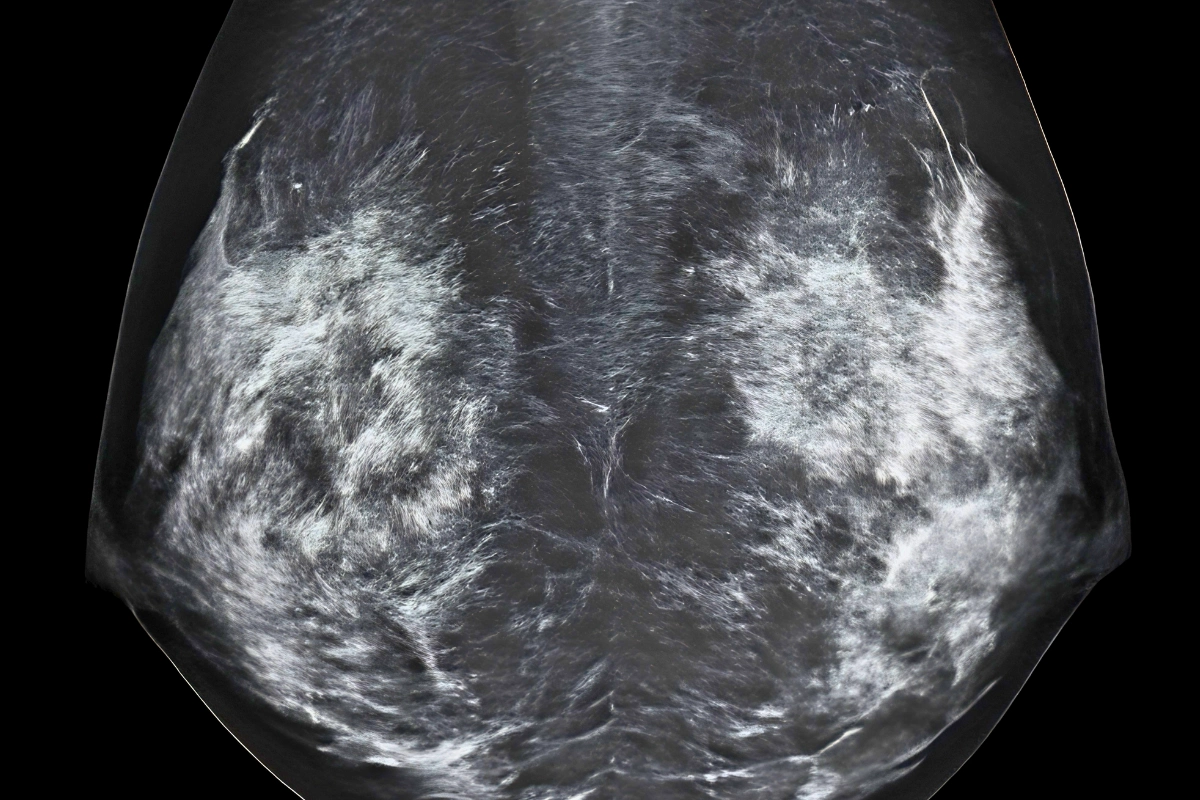
This compression helps produce clearer images. However, it can feel uncomfortable or painful for some people.
If you’re worried about pain, have limited mobility, or have a medical condition that might make positioning difficult, contact the screening provider beforehand to discuss your needs.
It’s also worth asking how and when you’ll receive your results, as the process may differ between providers.
Will you need an ultrasound too?
Not necessarily.
Japan’s national public screening framework focuses on mammography. Ultrasound isn’t automatically included in every municipal mammogram.
However, Japanese specialist guidance takes a more detailed approach.
The Japanese Breast Cancer Society’s 2022 breast cancer screening and diagnosis guideline weakly recommends handheld ultrasound alongside mammography for population screening when suitable quality-control measures are in place. The recommendation is based on moderate-quality evidence.
The same guideline weakly recommends against using handheld ultrasound alone for population-based screening.
In other words, ultrasound may have a role as an additional test, but it shouldn’t automatically replace mammography.
It’s also important to keep the different types of guidance separate:
- National screening recommendations set out the standard population-screening approach.
- Municipal programmes determine which screening services are offered locally.
- Specialist guidelines consider additional tests and particular medical circumstances.
- Transgender-specific guidance addresses factors such as hormone exposure and surgical history.
The appropriate approach depends on your circumstances rather than on simply choosing the package with the most tests.
What if you have implants or other medical considerations?
If you have breast implants or other implanted chest devices, tell the screening provider before your appointment.
Implants can make mammograms harder to interpret, and some devices may require changes to the examination or a different approach.
Pregnancy, breastfeeding, and other medical circumstances can also affect whether a particular screening programme will accept you.
For example, Inagi City’s FY2026 programme lists several circumstances in which residents cannot use its screening service, including pregnancy, breastfeeding, certain implants, and ongoing care for breast cancer.
These are the municipality’s programme rules, not necessarily nationwide medical restrictions.
If you’re unsure whether mammography is appropriate for you, speak with the provider or a healthcare professional rather than choosing a different imaging test yourself.
When screening is not the right next step
Sometimes, the most important thing is knowing when not to wait for routine screening.
If you notice a new breast or chest lump, bloody nipple discharge, changes to the skin or nipple, or another unusual symptom, arrange a medical consultation instead of waiting for your next municipal screening appointment.
Routine screening is intended to look for cancer in people who don’t have concerning symptoms. If you already have symptoms, you need medical assessment.
The same applies if your screening results say:
要精密検査 (yō seimitsu kensa) – detailed examination required
This does not mean that you have been diagnosed with cancer.
It means that the screening found something that needs further assessment. You should follow up rather than waiting until your next routine screening appointment.
Depending on the finding, additional tests may include more mammographic images, ultrasound, cytology (examining cells), or a tissue biopsy.
The distinction is simple: screening looks for disease in people without symptoms, while diagnostic testing investigates a symptom or an abnormal finding.
And even if your last mammogram was normal, don’t ignore a new or concerning change.
Where to get help and what to do next
If you’re trying to work out your next step, start by deciding whether you need routine screening or medical assessment for a symptom.
If you don’t have symptoms and routine screening seems appropriate, check your municipality’s breast cancer screening programme first.
If that route doesn’t apply to you, ask about workplace screening or an appropriate self-pay service.
For those whose screening needs may be affected by chest surgery, hormone treatment, implants, or higher-than-average cancer risk, speaking with a healthcare professional before booking can help you choose the right examination.
💡 Remember:
Breast cancer screening does not have to be something you figure out alone. If the standard Japanese guidance does not seem to fit your situation, asking a municipality, screening provider or healthcare professional for clarification is a reasonable next step.
If you’re looking for an LGBTQ-friendly or English-speaking healthcare provider, Japan Gay Guide’s Medical Resources for LGBTQ in Japan offers practical provider information. You can also explore our LGBTQ Sexual Health Resources in Japan for broader healthcare support.
If your questions are specifically about accessing gender-affirming hormones, our guide to getting gender-affirming HRT in Japan covers that separately.