
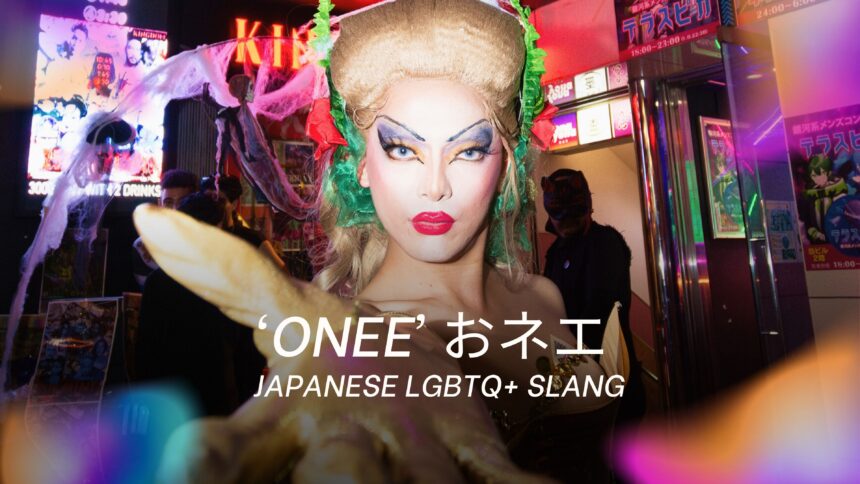

In Japan, conversations about LGBTQ+ culture often bring up unique slang terms that carry both cultural history and modern visibility. Among the most widely recognized is Onee (オネエ), a word often used to describe gay men who express themselves in feminine, flamboyant, or charismatic ways. Unlike the older term オカマ, which is usually considered derogatory, Onee in Japan has entered mainstream media and everyday language, where it is associated with humor, style, and bold personality.
What Does ‘Onee’ Mean in Japanese
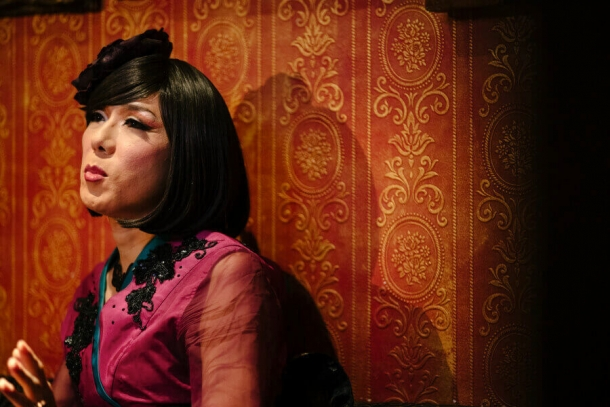
という言葉がある。 Onee (オネエ) comes from oneesan (お姉さん), which literally means “older sister.” Over time, it became slang used to describe men who display feminine traits, mannerisms, or speech, particularly those who are openly gay or flamboyant in their self-expression.
一方 オネエ can carry a playful tone, it is not always neutral. Depending on the context, it may be affectionate, humorous, or stereotyping. In LGBTQ+ communities, some gay men embrace the label オネエ as part of their identity, while others prefer not to be categorized by it.
‘Onee’ in Japanese LGBTQ+ Culture
Social Identity and Community
Within Japanese LGBTQ+ culture, オネエ has become a visible and recognizable role. Many gay men who present in a feminine or camp style use the word as a self-descriptor, reclaiming it as a point of pride. It can signal confidence, humor, and resilience in a society where rigid gender norms still dominate.
Nightlife and Ni-chome
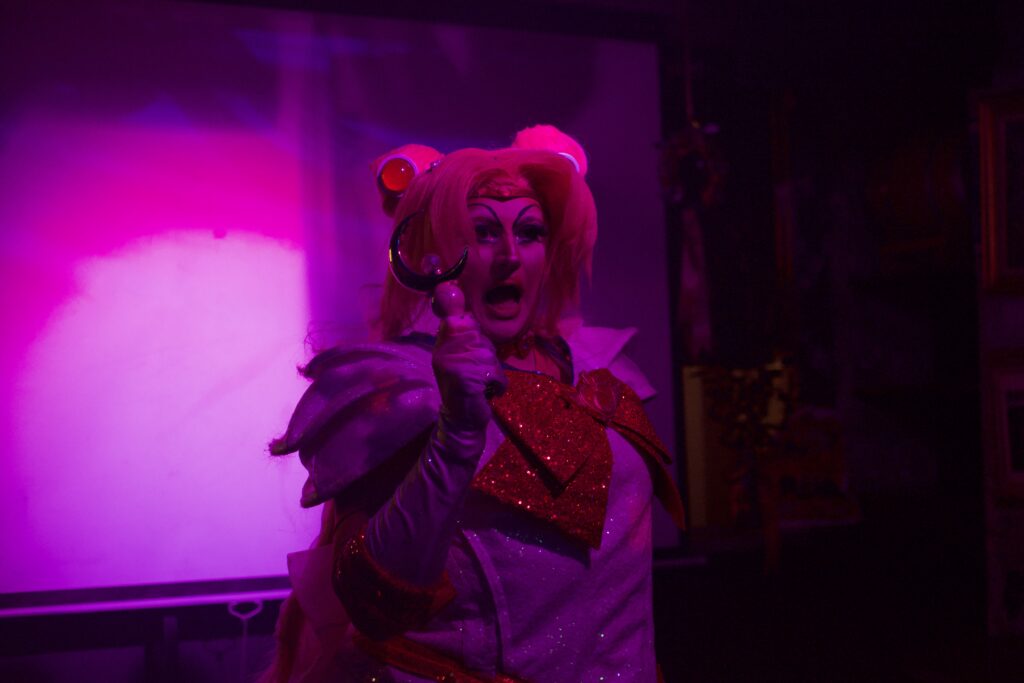
In Tokyo’s 新宿二丁目, Japan’s most famous gay district, Onee bars are popular spaces where effeminate gay hosts interact with guests, offering both entertainment and community. These venues highlight the role of オネエ personalities as central figures in queer nightlife, blending performance with authenticity.
Generational Perspectives
Younger LGBTQ+ individuals in Japan may have mixed feelings about the term. While it provides visibility and a sense of identity, some feel that オネエ reduces gay men to a stereotype of exaggerated femininity, overlooking the diversity within Japan’s gay community.
‘Onee’ in Japanese Media and Popular Culture

Perhaps more than any other LGBTQ+ term, オネエ is a staple of Japanese television and media.
- Variety shows: Onee talents appear frequently on talk shows and comedy programs, where their sharp humor and flamboyant style are celebrated.
- Mainstream acceptance: Unlike オカマ, which is considered derogatory, オネエ has been normalized in pop culture, with celebrities proudly adopting the label.
- Stereotypes: While visibility has increased, representation often focuses on flamboyance, humor, or fashion, leaving little room for quieter or more diverse expressions of gay life.
This media presence has made オネエ one of the most familiar LGBTQ+ identities to the general Japanese public.
Is ‘Onee’ Considered Offensive?
Unlike オカマ, ‘Onee’ is generally not considered offensive, especially when used by LGBTQ+ individuals themselves. In fact, many gay men proudly call themselves オネエ as a form of self-expression. However, when used by outsiders, the tone matters. If said mockingly, it can still carry a sting.
The safest approach is to understand オネエ as part of Japanese LGBTQ+ culture and use it respectfully, especially when describing public figures who self-identify with the term.
‘Onee’ and Other Gender Identity Terms in Japan
To understand オネエ, it helps to compare it with other terms used in Japanese queer culture:
- オカマ(おかま): A slang term for effeminate gay men, now considered outdated and offensive.
- オナベ(おなべ): Refers to Assigned Female At Birth (AFAB) individuals presenting as male, often in nightlife contexts.
- Xジェンダー: A modern term used by those who identify as non-binary, outside the male-female binary.
Together, these words show how Japanese culture has developed a spectrum of slang and identity terms, each carrying its own history and nuance.
よくある質問
What does ‘Onee’ mean in Japan?
オネエ is slang for effeminate gay men or queer personalities in Japan, derived from the word for “older sister.”
Is ‘Onee’ offensive?
Generally no. Many LGBTQ+ people proudly identify as オネエ, though it can feel stereotyping if used mockingly.
What is an ‘Onee’ bar in Tokyo?
An Onee bar is a type of LGBTQ+ nightlife venue, especially in Shinjuku Ni-chome, where flamboyant gay hosts entertain and interact with guests.
How is ‘Onee’ different from ‘Okama’?
While both terms refer to effeminate gay men, オカマ is considered derogatory, while オネエ has become more normalized and sometimes empowering.