

ノンキ (ノンケ) は、日本のLGBTQスラングで、 ストレートまたは異性愛者.
重要なことに、, ノンケ 性的指向を指し、性自認を指すものではありません。異性愛者であっても、シスジェンダーまたはトランスジェンダーである可能性があります。この用語自体は、必ずしも「シスジェンダー」を意味するものではなく、単に「LGBTQではない」という意味でもありません。.
何をするのか ノンキ 日本語で言うと?
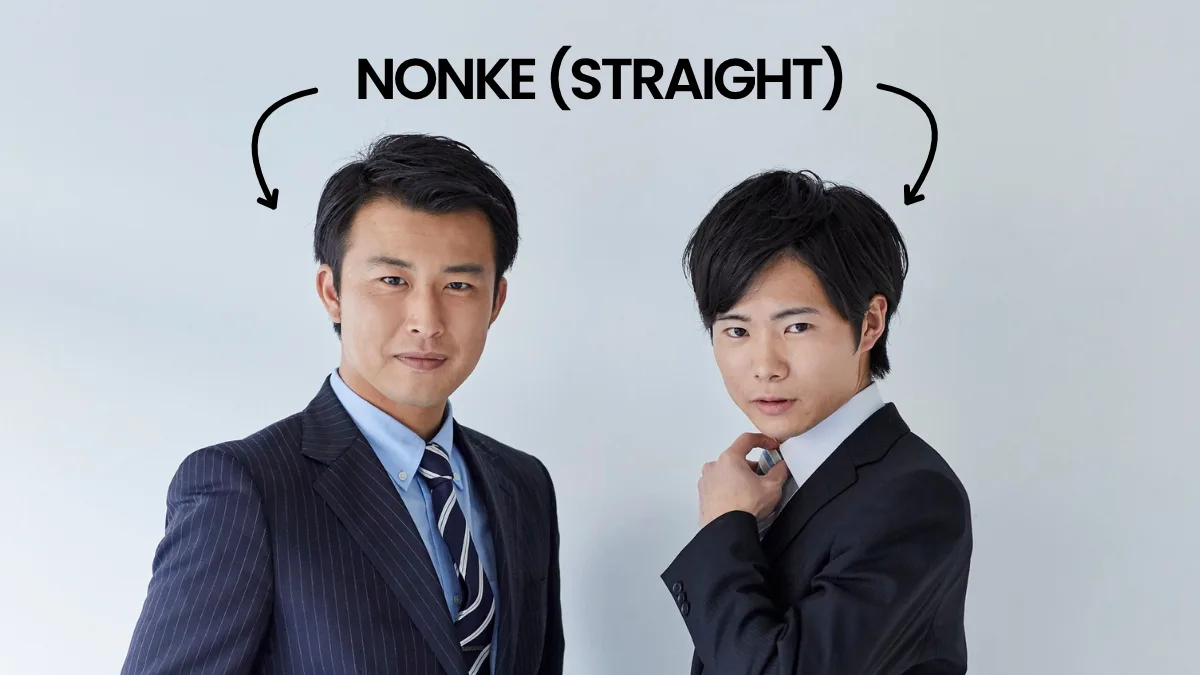
日本語のLGBTQ+用語では、, ノンケ(ノンケ) は 異性愛者またはストレートの人. この用語は、特にデート、ナイトライフ、人間関係に関する会話において、ゲイやクィアコミュニティの言葉遣いと強く結びついている。.
この用語は一般的に異性愛者を指す場合もあるが、特にゲイコミュニティの文脈で異性愛者の男性について話す際によく用いられる。. ノンキ また、男性に限ったことではなく、異性愛者の女性も次のように表現できます。 ノンケ 話者や状況によって異なる。.
重要な違いは、 ノンケ 話し手がその用語を使用している文脈において、異性愛またはストレートな性的指向を指す。.
言葉はどこにあるのか ノンキ どこから来たの?
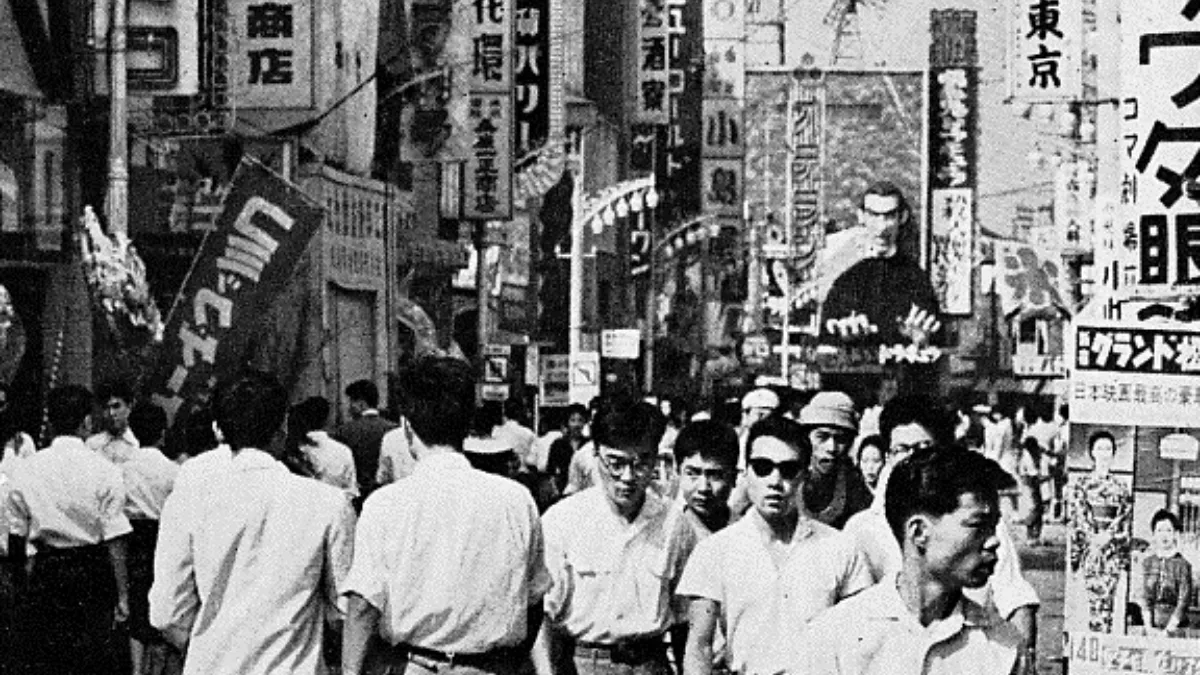
正確な起源は ノンケ 明確に確立されているわけではないが、この用語は日本の戦後都市部のゲイコミュニティ、特に東京などのナイトライフ地区を中心に発展したコミュニティと関連付けられている。 新宿二丁目. それは、バー、雑誌、デート文化、そしてLGBTQの社交空間で使われる語彙の一部となった。.
よく引用される説明は「‘非'’ 否定と「‘ke'’ 「その気」という言葉は、誰かの考えを中心に発展した。 同性愛の傾向がない. しかし、日本の辞書や用語集には、この言葉の正確な起源について統一された見解は示されていない。.
重要な点の1つは、 ノンケ 「nonke」はコミュニティのスラングであり、正式なアイデンティティを表す用語ではありません。通常、公的な書類に「nonke」と記載することはありません。これは、ナイトライフ、デート、LGBTQコミュニティなどの社交の場で使われる会話用語です。.
誰が利用するのか ノンキ そして、いつですか?
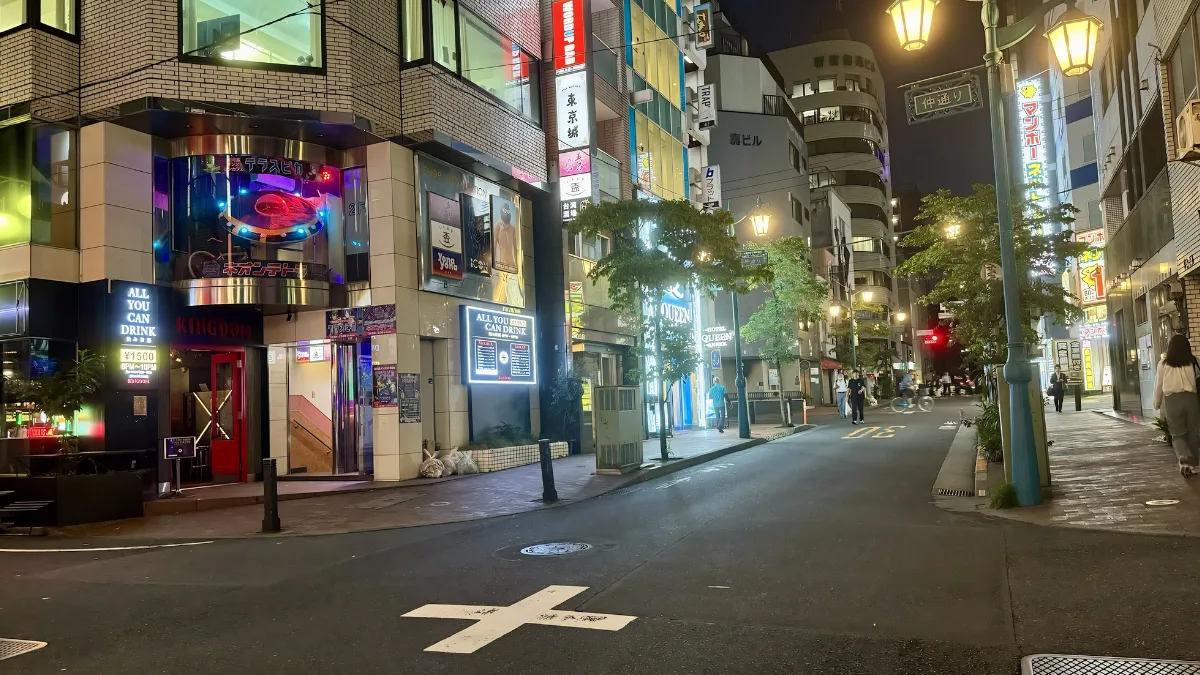
ノンキ これは、特に日本のLGBTQコミュニティやゲイコミュニティの会話で使われる非公式な言葉遣いです。仕事の場よりも、カジュアルな社交の場でよく耳にします。.
旅行者は、 ノンケ LGBTQコミュニティ内での何気ない会話で使われることが多い。その他にも、東京の新宿二丁目や大阪の堂山といった、デートスポットやナイトライフが盛んなエリアで耳にすることもあるだろう。また、バーの看板、イベントのチラシ、SNSの投稿、出会い系アプリ、あるいはLGBTQの友人同士の会話などでも見かけることがある。.
一般的な例としては、以下のようなものがあります。
- ノンケOK(ノンケOK) — 異性愛者歓迎
- ノンケ歓迎 (ノンケ カンケイ) — 異性愛者歓迎
- 彼はノンケだよ (彼はノンケだよ) — 彼はストレートです
これらはすべて、公式な日本語ではなく、非公式なコミュニティの文脈におけるものです。.
役立つ経験則は ノンケ 「ストレート」または「異性愛者」を意味します。. の違い ストレート(ストレート) 全く異なる定義ではないが、 その言葉が使われる社会的文脈. ノンキ は、クィア、ナイトライフ、デート、コミュニティの会話で最もよく見られるが、 sutorēto は、一般的な日常会話においてより中立的な用語であり、 異性愛者 (いあいあいしゃ) より一般的なのは、公式な場、学術的な場、医療現場、または法律の場である。.
訪問者にとって最も安全な方法は 理解する ノンケ 遭遇した場合は、sutorēto を使用してください。ただし、すでにクィア コミュニティの文脈で話している場合を除き、一般的な会話では sutorēto を使用してください。.
より広範な日本のクィア用語に興味がある場合は、次のガイドをご覧ください。 日本のゲイスラングとLGBTQ用語.
は ノンキ 攻撃?

ノンキ 日本語では一般的に不快な表現とはみなされません。ナイトライフや会場の説明によく登場します。‘ノンキ OK(「異性愛者の訪問者歓迎」)。これは東京などの地域で見られるかもしれません。 新宿二丁目 そして大阪の堂山など、会場の入場ポリシーを説明することを目的としています。.
しかし、口調や文脈は依然として重要です。友人同士では、, ノンケ 英語圏の人が冗談で「ストレートの友達」と呼ぶのと同じように、遊び心を持って使われることもある。しかし、状況によっては、誰かをステレオタイプ化したり、会話やコミュニティから排除したりするために使われると、軽蔑的な印象を与える可能性がある。.
ノンキ 対 ストレート、ヘテロ、そして私聖愛者違いは何ですか?
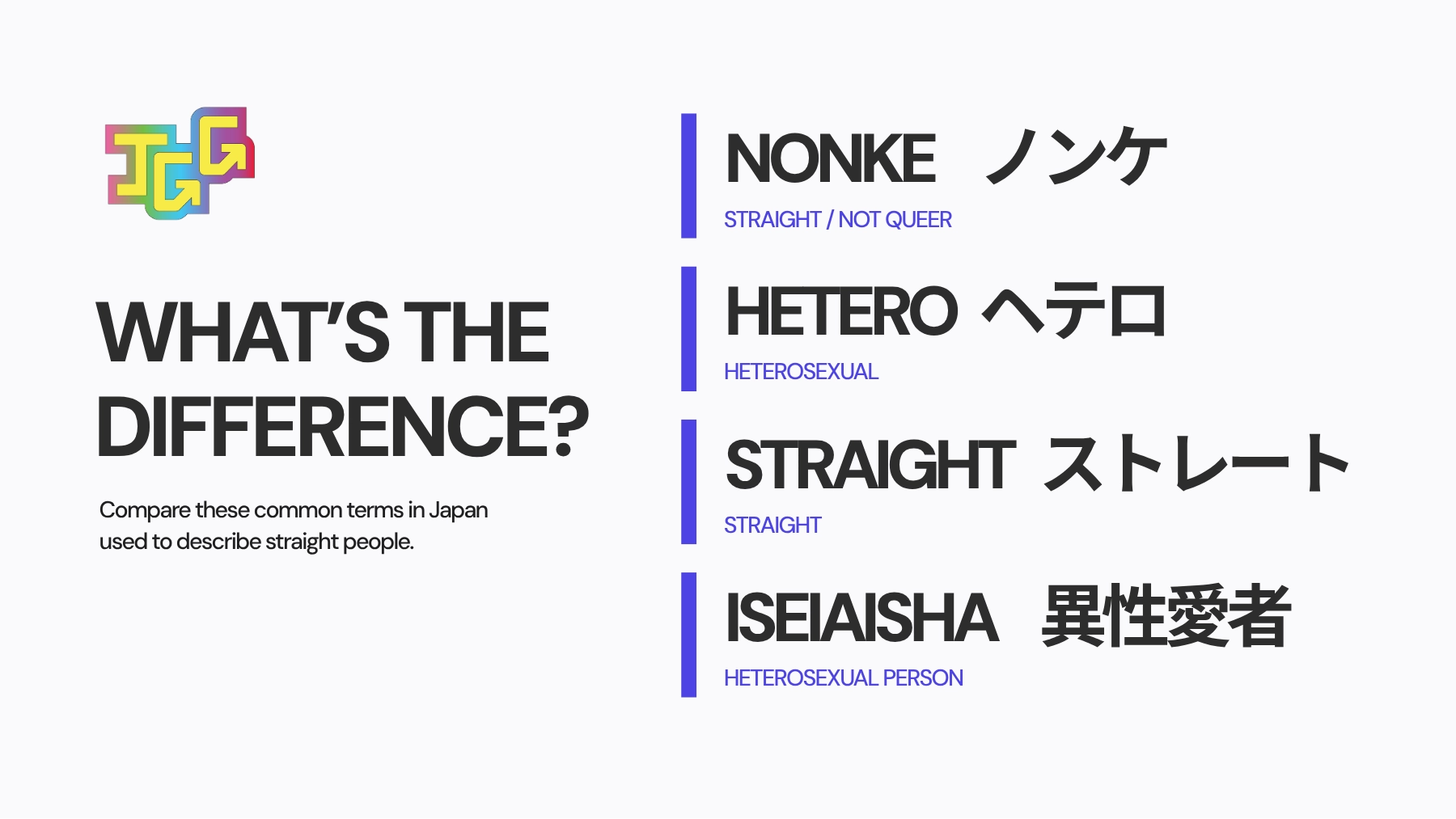
以下の4つの用語はすべて異性愛者を指すことができますが、日本語では互換性がなく、それぞれ異なる用法とニュアンスを持っています。.
| 学期 | 読む | 典型的な使用例 |
|---|---|---|
| ノンケ | ノンケ | LGBTQコミュニティのスラング、特にゲイのナイトライフやデート文化において使われる。 |
| ストレート | 真っ直ぐ | 日常会話やメディアの主流 |
| ヘテロ | ヘテロ | セクシュアリティとジェンダーに関する学術的、活動家的、またはオンラインでの議論 |
| 異性愛者 | いせいあいしゃ | 公式、公的、法的、医学的、または学術的な文脈 |
これらの用語を理解する上で役立つ考え方は、意味は重なり合っているものの、主に文体、社会的文脈、そしてフォーマルさの度合いにおいて異なっているという点です。.
ノンケ(ノンケ)—コミュニティスラング
最も遭遇しやすいもの: 新宿二丁目、大阪の堂山、ゲイバー、出会い系アプリ、そしてクィアの社交界。.
これはコミュニティスラングであり、正式なアイデンティティラベルではありません。その核心的な意味は「異性愛者」または「ストレート」ですが、ゲイコミュニティの文脈では、誰かが ゲイの出会い系やナイトライフシーン以外で。.
ストレート (sutorēto) - "真っ直ぐ"“
これは現代において最もよく使われる日常用語です。.
| 私はストレートです | 私はストレートです | 私はストレイトです |
| ストレートの友人 | ストレートの友達 | すとれいとのともだち |
外国人旅行者が「ストレート」と言えば、ほとんどの日本語話者はすぐに理解できるでしょう。.
ヘテロ(ヘテロ)—「ヘテロ」“
これは元々「異性愛者」という言葉を短縮したものです。.
| 異性愛規範 | ヘテロリム | ヘテロキハン |
| 異性愛社会 | ヘテロ社会 | ヘテロ社会 |
は、観光客とのやり取りよりも、LGBTQ活動、学術論文、オンラインでの議論などで見かけることが多いでしょう。.
異性愛者 (いせいあいしゃ)—「異性愛者」“
最も遭遇しやすいもの: よりフォーマルな場面で。.
通常、これが使用される場面の例としては、以下のようなものがあります。
- 政府調査
- 医療フォーム
- 学術研究
- 法的議論
- 職場における多様性に関する資料
それは単に「ストレート」と言うのではなく、「異性愛者」と言うのと同義です。.
普通(普通)—「通常」(使用を避ける)
時々耳にするもう 1 つの用語は普通 (普通)は「普通」という意味です。一部の人は「ストレート」という意味で使いますが、人の性的指向を表すのに適切な用語ではないため、避けるのが最善です。.
時々耳にするかもしれない 普通です 「私は普通です」という表現は、かつては異性愛者であることを意味していました。しかし、この言い回しはLGBTQ+の人々を「異常」とみなすニュアンスを含み、不快感を与える可能性があります。英語で「私はゲイではなく、普通です」と言うことが不快に感じられるのと同様に、日本語でも同じようなニュアンスが存在します。.
自分を異性愛者だと表現したい場合は、 ストレート, 異性愛者, または、代わりに適切な別の用語を使用してください。日常会話で「普通」という言葉を耳にすることもあるかもしれませんが、学習者は使用を避けるのが最善です。.
どうですか ノンキ 日本語での使用例文

バーやクラブで
| 異性愛者の方も歓迎いたします | ノンケOKです | のんけOKです |
これは、旅行者がバーの看板やソーシャルメディアでよく見かけるフレーズの一つです。.
誰かについて話す
| 彼はストレートです | 彼はノンケだよ | カレはノンケだよ |
誰かが同性愛者ではないことを、くだけた言い方で説明する方法。.
直接的な質問をする
| あなたは異性愛者ですか? | ノンケですか? | のんけですか? |
これは通常、フォーマルな会話ではなく、カジュアルなデートやナイトライフ、コミュニティといった場面で尋ねられる質問です。.
友達について話す
| 私は異性の友人と一緒に来ました | ノンケの友達と来ました | のんけのともだちときましました |
異性愛者の友人と一緒にLGBTQ関連の施設を訪れる場合に役立ちます。.
会場ポリシー
| 異性愛者のお客様も歓迎いたします | ノンケ歓迎 | ノンケカンゲイ |
これは、異性愛者の来場者も入場できるという意味であり、必ずしもその会場が異性愛者を対象としているという意味ではない。.
有益なニュアンス
日本語話者はよく ノンケ(ノンケ) 英語話者が「straight」と言うような場合。この単語は 根本的な意味は「異性愛者」または「ストレート」のままである。. しかし、ゲイコミュニティのデートやナイトライフの場面では、誰かが 地元のゲイシーンの外で, 異性愛を表す正式な学術的、法的、医学的ラベルとして機能するのではなく。.
結論
その違いを覚える一番簡単な方法は次のとおりです。
- ノンケ(ノンケ)=クィアコミュニティのカジュアルなスラング
- ストレート(ストレート)=「ストレート」を意味する日常の主流用語‘
- ヘテロ (hetero) = 活動家、学術用語、オンライン言説用語
- 異性愛者 (いあいあいしゃ) = 正式または公式用語
理解 ノンケ スラングを暗記することよりも、日本人が言葉を使っている社会的文脈を認識することの方が重要です。日本のバーの看板にノンケOK(nonke OK)と書いてあったら、それは単に ストレートの訪問者も歓迎します.
よりよく理解するために ノンケ, 他の日本語のLGBTQ+用語との比較については、弊社のガイドをご覧ください。