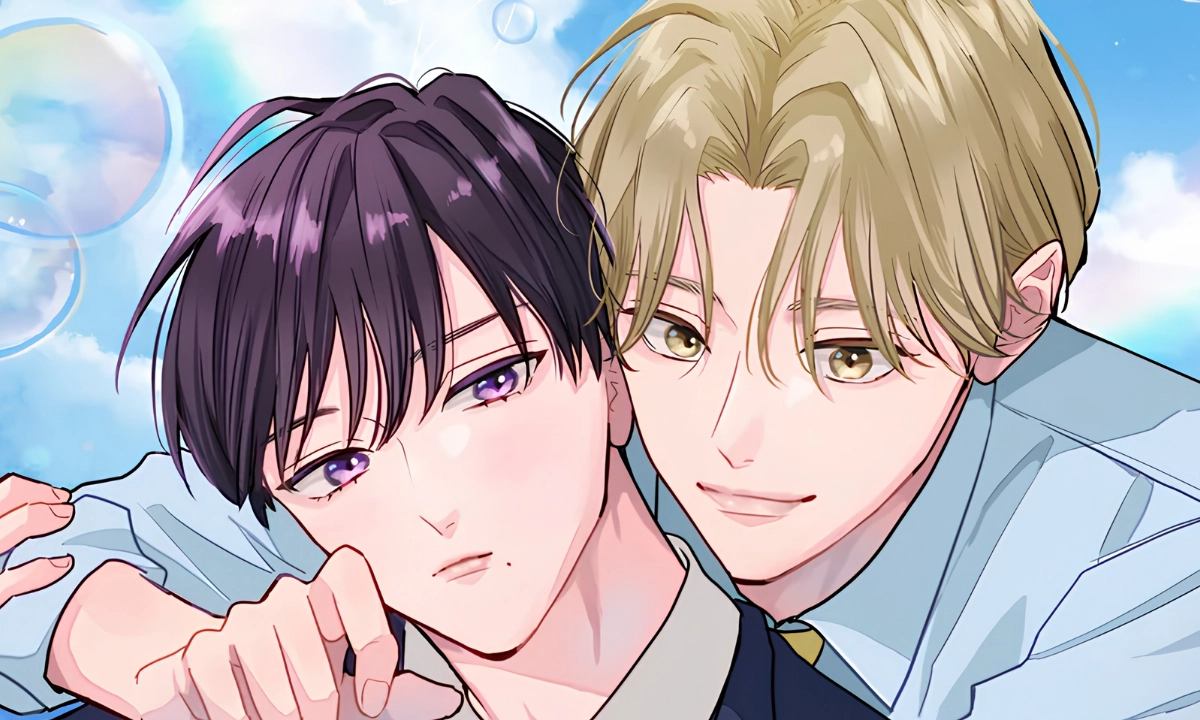

In Boys’ Love (BL), a genre focused on male-male romance, セメ (攻め/ セメ) normally refers to the insertive or top role, while ウケ (受け/ ウケ) refers to the receptive or bottom role.
These terms describe roles within a pairing. They do not automatically tell you anything about a character’s personality, masculinity, femininity, dominance, passivity, age, or appearance.
That distinction is important because seme and uke are often associated with familiar BL stereotypes. Understanding the difference between the roles and those stereotypes also makes it easier to understand BL pairing conventions, including characters who switch roles.
Seme vs Uke: What’s the Difference?
At their most basic, seme and uke describe different roles within a BL pairing.
| 学期 | Japanese | Root meaning | Conventional BL role | Common BL stereotypes |
|---|---|---|---|---|
| セメ | 攻め/ セメ | Attack, offence; attacker | Insertive/ top | May be older, taller, confident, masculine, assertive, protective, or dominant |
| ウケ | 受け/ ウケ | Receive; receiver | Receptive/ bottom | May be younger, smaller, shy, feminine, emotionally expressive, or passive |
セメ comes from 攻め, which carries the root sense of attack or offence. ウケ comes from 受け, meaning to receive.
The final column is where things can become more confusing. Those traits are common BL tropes, not part of the definitions themselves.
A seme does not have to be dominant or masculine. An uke does not have to be passive or feminine. Their personalities and appearances can vary widely.
Seme and Uke in BL: Roles vs Tropes
BL has developed many recognisable character patterns over time. One familiar trope, for example, pairs an older, taller and confident seme with a younger or more emotionally expressive uke.
But that is only one possible dynamic.
A seme can be shy, gentle, or emotionally vulnerable. An uke can be confident, forceful, masculine, or openly assertive. The sexual role does not automatically define the rest of a character’s personality or relationship behaviour.
So how do you know which character is the seme and which is the uke?
Usually, the answer comes from the work itself or from how the pairing is established by the creator, publisher, or fandom. Sometimes the roles are made clear through the story or a sexual relationship. In other cases, BL pairing conventions and notation make the intended roles clear.
One of the most useful conventions is the order in which the characters’ names appear.
How Seme/ Uke Pairings Work in BL Fandom
A × B Pairing Order
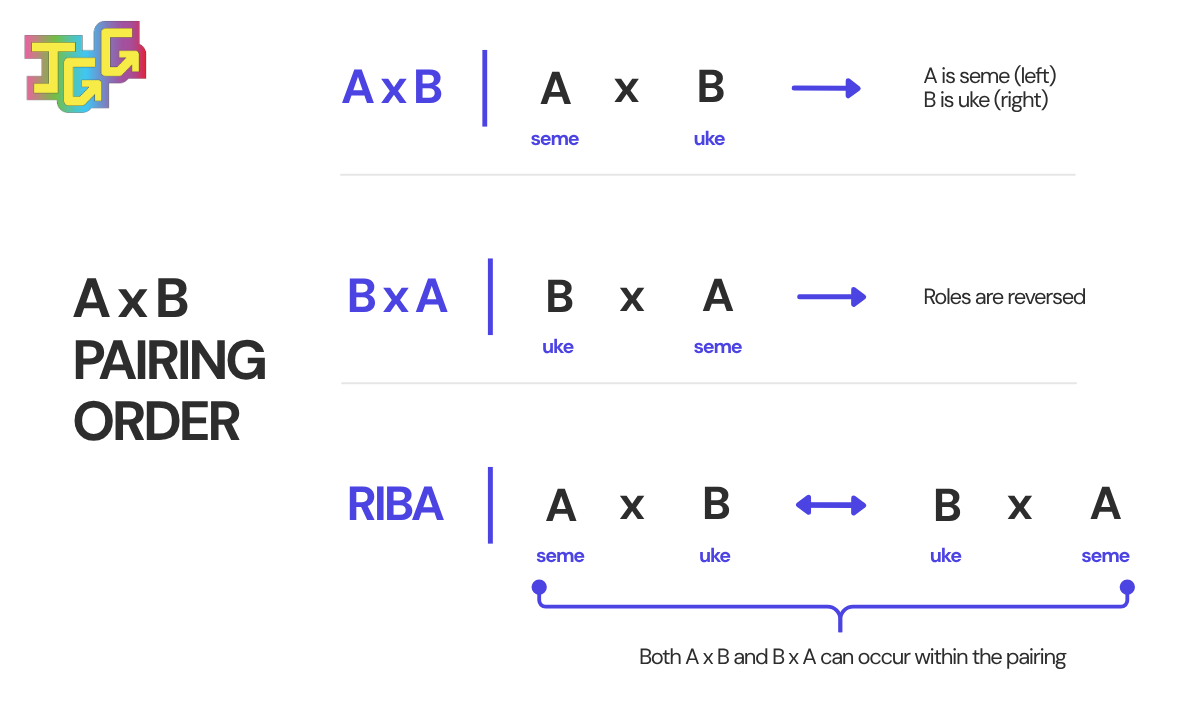
Japanese BL pairing notation conventionally follows the order 攻め × 受け: seme first, uke second.
So, if a pairing is written as A × B, A is conventionally the seme and B is the uke. You may also see these positions described as the left and right sides of the pairing.
The order is significant. B × A represents the opposite seme/ uke configuration rather than simply another way of writing the same pairing.
This is why appearance or personality alone is not a reliable way to guess the roles. A quieter character does not automatically belong on the right, and a more confident character does not automatically belong on the left.
Of course, not every pairing keeps those roles fixed.
Riba and Reversible Roles
リバ (リバ) is short for ‘reversible’. It generally describes a pairing in which the seme and uke roles are not fixed and can switch.
This is different from simply reversing a pairing.
If A × B means A is the seme and B is the uke, then B × A reverses those roles. A riba pairing allows both configurations within the relationship.
These conventions are useful for understanding how BL fandom discusses fictional relationships. They should not, however, be carried over automatically to real people.
Do Seme and Uke Apply in Real Life?
Seme and uke are most useful as BL and fandom terms. Real relationships are more varied, and BL conventions do not necessarily reflect how people describe themselves or their relationships.
In Japanese sexual-role or dating contexts, readers may instead encounter terms such as たち, ネコ そして riba. Usage varies between people and situations, so no single set of labels applies to everyone.
As with fictional characters, body type, masculinity, femininity, or personality do not necessarily indicate a person’s sexual role. Someone can be confident without being a top, or feminine without being a bottom.
Seme and uke are ordinary terms when discussing BL, but outside that context they can bring assumptions from fictional character archetypes that may not fit real people.
For a closer look at tachi, neko, and riba in Japanese contexts, see our dedicated guides. You can also explore our wider guide to Japanese gay slang for more LGBTQ+ and BL terminology.