


日本同性恋俚语:男生恋爱中的同性恋术语大全

托比亚斯-沃特斯

If there’s one passion that unites any and all fandoms, it’s creating niche vocabulary. It not only helps to clarify things that might not map on to “typical” terminology, but is a helpful shibboleth for identifying fellow fans. Nowhere is this more true than in the community of Boys Love (BL) aficionados.

With a long history of popularity in Japan, and increasing recognition overseas, slang from Japan is becoming increasingly common among English-speaking audiences. For newer fans, or those who dabble, however, the BL slang (a subsection of gay slang) can often be a little confusing at first. So, we’re taking the opportunity to enlighten our as yet uninformed readers.

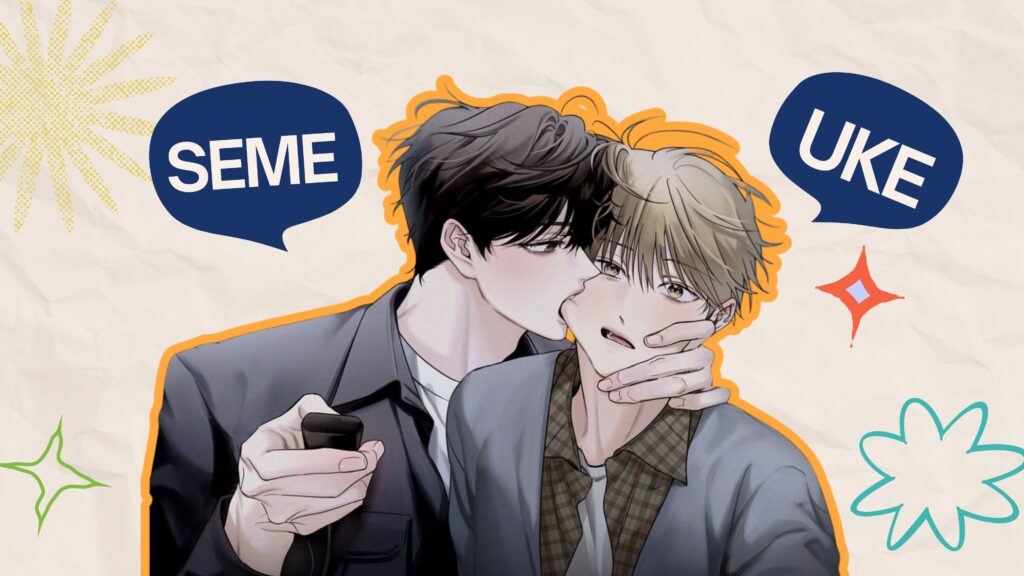
Uke (ウケ) and Seme (セメ)

seme uke

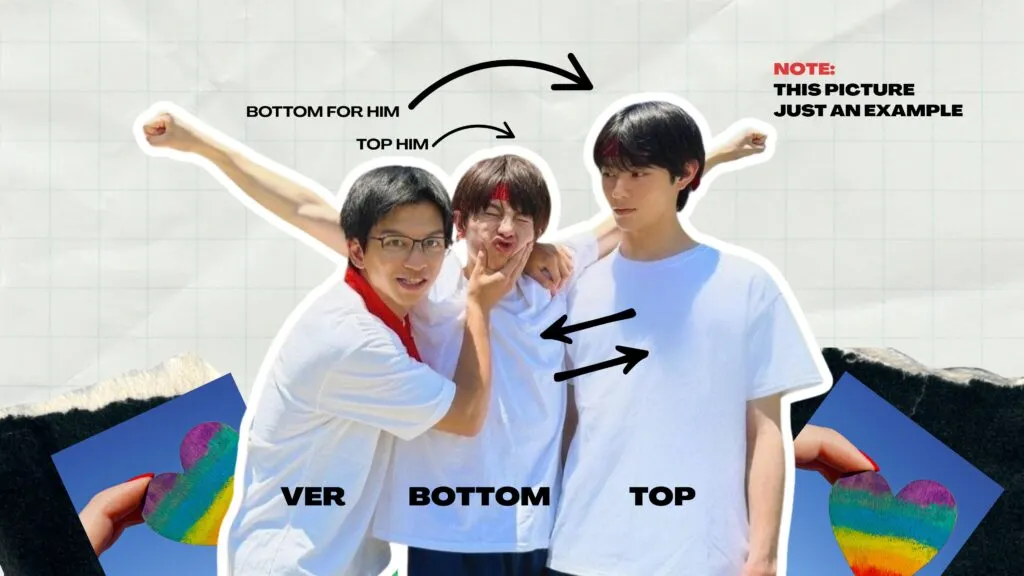
These two terms are, essentially, equivalent to the English “bottom” and “top,” respectively. “乌克” comes from “受け,” which means “to receive,” and so sets them up as the bottom sexually. Conversely, “精子” is from “攻め,” which is the equivalent of “attacker.” This might sound aggressive, but is essentially “top.”

These two terms are most often confined to describing manga and/or anime characters, but as BL media has become more and more popular, you may also find people describing themselves in these terms — especially on dating apps. However, it is important to realize that this does not mean that you should address someone else this way without getting their say-so, as it can be offensive.

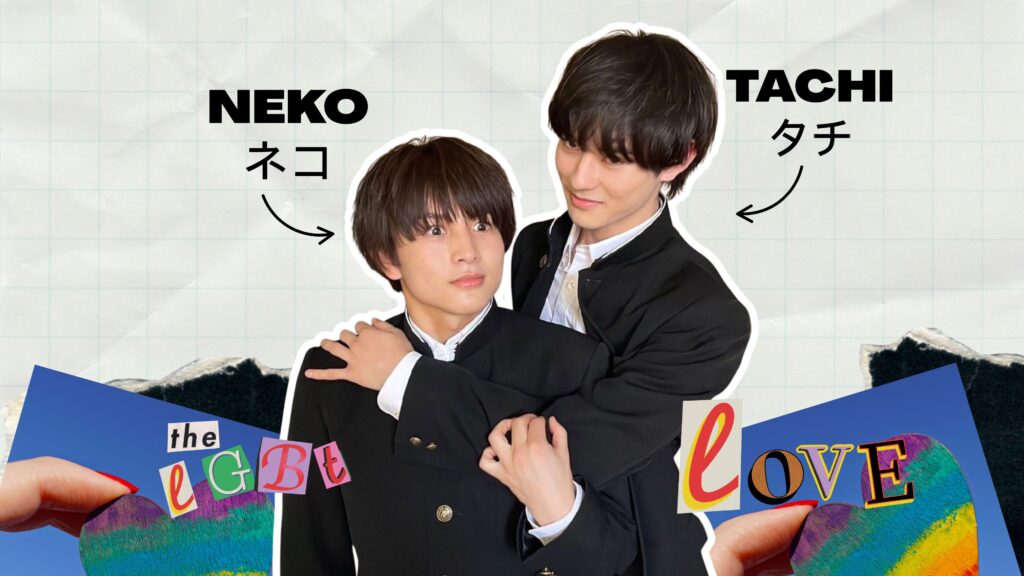
Neko (ネコ) and Tachi (タチ)

neko tachi

Neko and Tachi are also terms for bottom and top, respectively, but unlike uke and seme, they are considered more neutral and less problematic. Neither of these words have well-defined origins, but 壁虎 is thought to be a contraction of 萱草 (寝る子), general slang for “someone I’m sleeping with,” or from the word for a wheelbarrow, referring to how the bottom’s legs might be held.

Tachi may come from the kabuki word 立白 (立ち役), or “standing role,” the lead role in a play. It could also be derived from たち, as in 太刀, or “long sword,” or — more simply — from 起ち, or “to stand up,” slang for a hard penis.

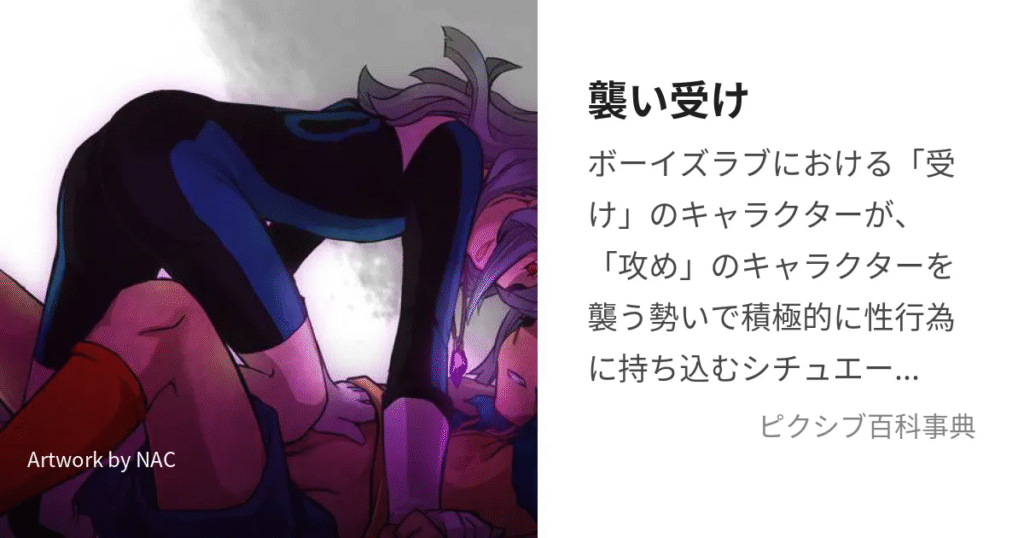
襲い受け (Osoi-Uke) – The Aggressive Uke

图像 10
消息来源 pixiv

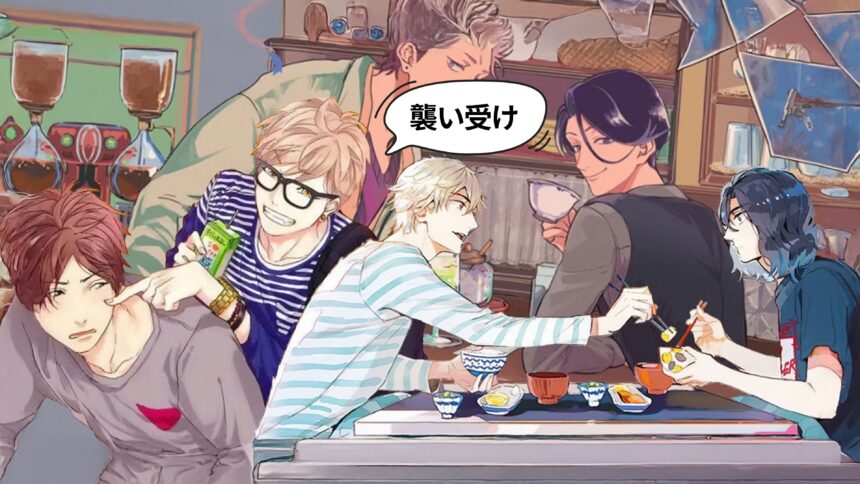
This term is used to describe the kind of bottom character who is highly proactive in pursuing the object of their affection. The osoi-uke is to be compared with the sosoi-uke (誘い受け): where a sosoi-uke might say, “I’m so sweaty, I simply must take off my shirt,” and flirt with their potential beau, the osoi-uke is more forceful, perhaps even resorting to harassment. While they may be a “bottom,” they do not take no for an answer.

横攻め (Yoko-Zeme) – The Seme Going After a Straight Man

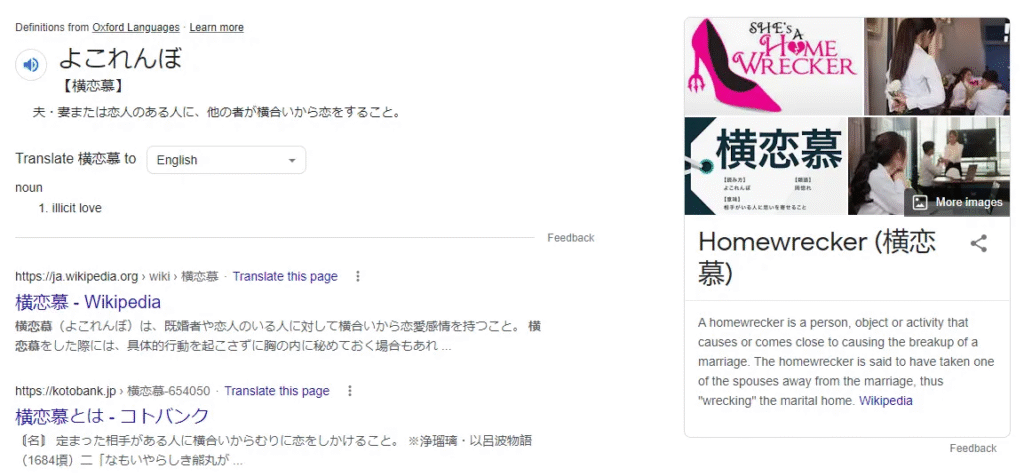
Now we’re getting a little spicy: the yoko-zeme (”zeme” being the same as “seme,” though the “s” becomes a “z” thanks to the way that Japanese works) is a queer male character who is pursuing a straight character — or at least, a character in a straight relationship. While it literally means “side attack,” it comes from “横恋慕” (yokorenbo), which means “illicit love,” and can be used to describe affairs.

图 11
消息来源 scripting japan

Riba (リバ)

图片 12

Short for “reversible,” this is a term for people who are neither strictly (nor necessarily preferentially) either top or bottom. In English, we might use the term vers to describe such a person.

冈山 (おかま)

图像 13

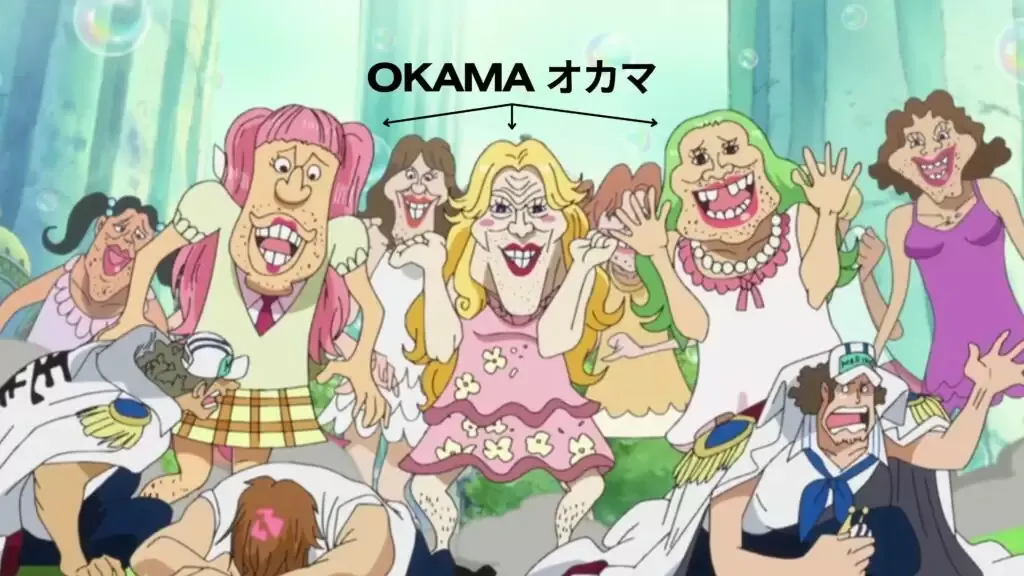
冈山 is an old-fashioned term for “homosexual man,” and occasionally for drag queens, and is generally considered offensive today. While someone may describe themselves as “okama,” it is not something that you should say about someone else, and certainly not without permission. It literally means “cooking pot,” but is slang for effeminate men. Archaic and offensive, don’t ever say this to someone you’re not familiar with.

BL Slang vs Real-Life Terms

As you can tell, there are some BL slang and terms that, while they might be acceptable to describe fictional characters, whose feelings cannot be hurt, they may be unacceptable to say to a real-life person. As such, proceed with caution.

Why These Words Matter

BL slang, and gay slang in general, can be useful both for making friends and navigating in an environment where people may be using in-jokes like “osoi-zeme.” Remember, though, not to confuse fiction with real life, and always be respectful to the people you’re talking to.

托比亚斯从事编辑和作家工作已有十余年,最初在伦敦一家法律出版社工作,2019 年移居东京。 搬到日本首都后,他撰写或编辑了各种主题的文章,包括汽车、医药、电子游戏、经济、葡萄酒、教育和旅游。他甚至评论了日本推出的首款 CBD 啤酒! 业余时间,他喜欢看电影、玩电子游戏、唱卡拉 OK 和去当地的温泉。他最喜欢的神奇宝贝是神狐,最喜欢的食物是咖喱。他从不谈论 2008 年金融危机如何影响了现代世界的一切。