

Okama (おかま / オカマ) is a Japanese word that literally means a cooking pot, but it is also a slang term historically used for feminine gay men, cross-dressers, transgender women, and other people seen as not fitting traditional male gender roles.
Because the word has often been used mockingly or to stereotype LGBTQ+ people, okama can be derogatory or offensive when applied to someone else. However, some LGBTQ+ people, entertainers, and nightlife venues in Japan still use the term about themselves.
There is therefore no single English translation of 冈山 that works in every situation. Its meaning depends heavily on the person, context, and way it is being used.
日语中“Okama”是什么意思?
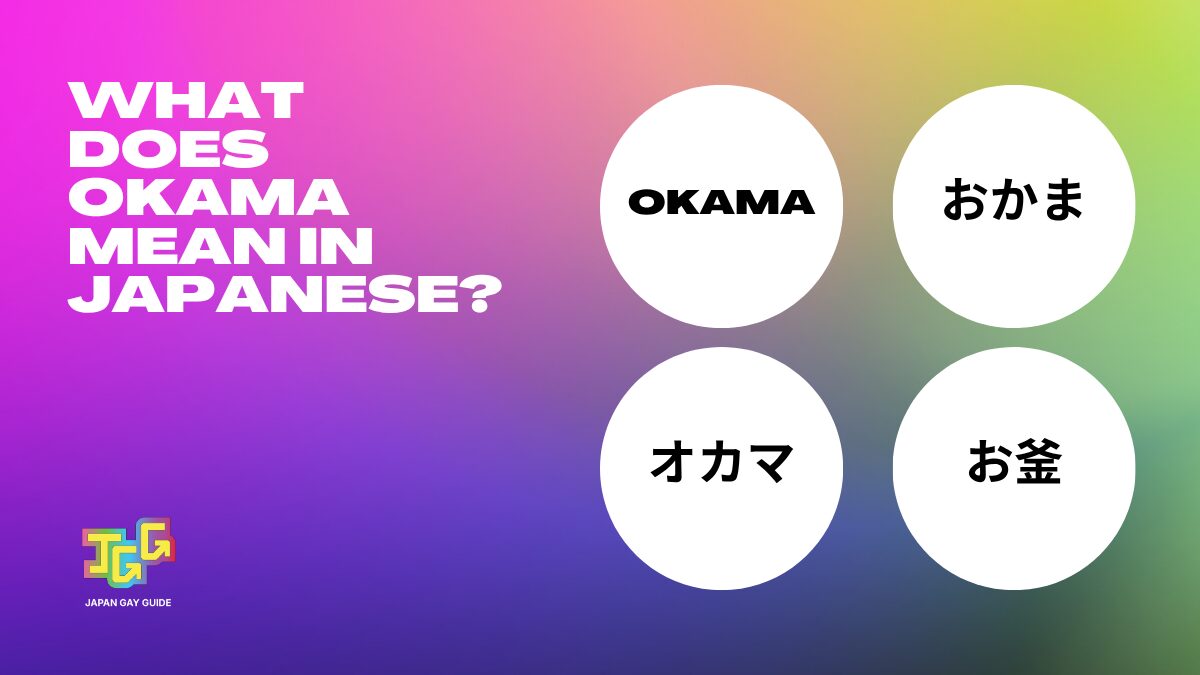
The meaning of 冈山 changes depending on the context.
Written as お釜, 冈山 literally means a pot or cooking vessel, particularly one used for cooking rice.
但是 オカマ is also a longstanding Japanese slang term connected with sexuality, gender expression, and femininity.
Historically, the word has been used for:
- Feminine or effeminate gay men
- Men who cross-dress
- Drag performers and entertainers
- Transgender women
- Men perceived as behaving or speaking in a feminine way
These are very different identities.
A gay man is not necessarily feminine, a drag queen is not necessarily transgender, and a transgender woman is a woman rather than a type of gay man.
The fact that 冈山 has historically grouped these different people together is one reason the term can be problematic today.
What Is an Okama?
There is no precise modern identity that corresponds to the word 冈山.
Historically, it has been used as a broad label for people, usually assigned male at birth, who were perceived as gay, feminine, cross-dressing, transgender, or otherwise outside conventional masculine gender roles.
So if you see someone described as an 冈山 in older Japanese media, you should not automatically assume that the person is gay, transgender, a drag queen, or any other specific identity.
The surrounding context matters.
Literal Meaning of Okama
You may see the word written in several ways:
- おかま — hiragana
- オカマ — katakana, commonly used for the slang sense
- お釜 — kanji, commonly associated with the literal meaning of a cooking pot
The slang usage has a long history in Japanese and has developed several overlapping meanings over time.
This is why translating 冈山 simply as “gay” or “transgender” can be misleading.
人妖冒犯人吗?
Okama can be offensive or derogatory, particularly when someone uses it to label another person.
The word has historically been associated with stereotypes about feminine gay men, transgender women, cross-dressers, and entertainers.
Someone who simply identifies as a gay man or a transgender woman may therefore find 冈山 both inaccurate and insulting.
At the same time, context matters.
Some LGBTQ+ people in Japan use 冈山 about themselves, and the word is still used by certain entertainers and nightlife venues.
Self-identification is very different from applying the word to somebody else.
Is Okama a Slur?
In some contexts, yes.
冈山 has a history of derogatory use and can function as an insult or slur. However, some people have also reclaimed or self-identify with the term.
A simple rule for visitors to Japan is:
Do not call somebody an okama unless you already know that they use the word for themselves and are comfortable with you using it.
If you know how someone identifies, it is usually clearer and more respectful to use that specific term instead.
Okama in Japanese Culture
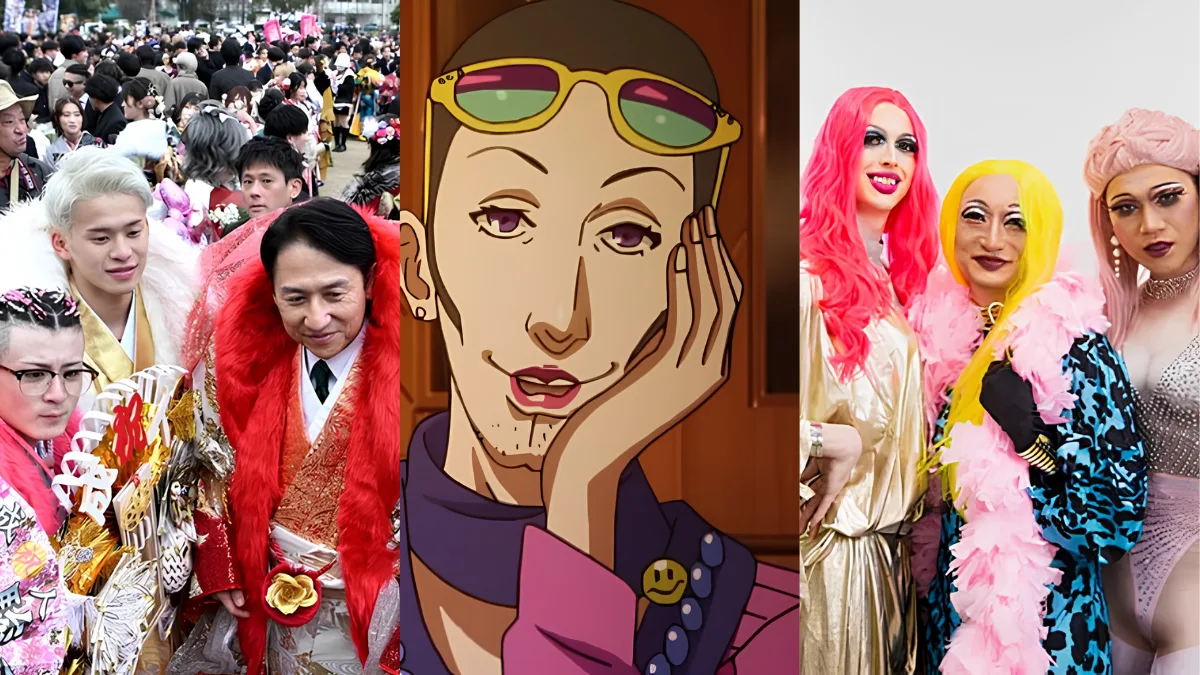
The meaning of 冈山 has been shaped not only by language but also by Japanese television, entertainment, nightlife, and popular culture.
For many years, Japanese media frequently portrayed feminine gay men, cross-dressing entertainers, and gender-nonconforming performers as exaggerated or comedic characters.
People with quite different identities could all be described using the 冈山 label.
These performers gave queer and gender-nonconforming people visibility in mainstream entertainment, but the portrayals also reinforced stereotypes about how LGBTQ+ people looked and behaved.
Today, more specific terms such as gay (ゲイ) 和 变性人 (トランスジェンダー) allow people to describe their identities more accurately.
然而 冈山 has not disappeared from Japanese culture. You may still encounter it in older television, anime and manga, entertainment, conversations about LGBTQ+ history, and nightlife.
When you encounter the word, it is worth considering who is using it, who they are describing, and whether it is being used neutrally, humorously, self-referentially, or as an insult.
什么是Okama Bar?
一个 okama bar (オカマバー) is a type of Japanese nightlife venue traditionally associated with feminine-presenting hosts, cross-dressing entertainers, transgender women, drag-style performers, or other entertainers who play with gender presentation.
The exact format varies between venues.
Some focus largely on conversation and humorous interaction with customers, while others may include singing, costumes, comedy, or performances.
The term survives partly because some venues and performers continue to use 冈山 as their own established label.
However, the fact that a venue describes itself as an okama bar does not mean every person working there identifies as 冈山.
Staff members may identify as gay, transgender, drag performers, or something else entirely.
一个 okama bar is also not necessarily the same thing as a Japanese gay bar. Gay bars generally cater primarily to gay customers, whereas 冈山酒吧 have traditionally placed more emphasis on hosts, entertainment, and gender presentation.

Okama vs. Gay, Transgender and Drag Queen
冈山 should not be treated as a synonym for every LGBTQ+ identity.
| 学期 | General meaning |
|---|---|
| Okama / オカマ | Broad traditional slang associated with feminine gay men, cross-dressers, performers and transgender women; can be derogatory |
| Gay / ゲイ | Describes sexual orientation, commonly referring to gay men in Japanese |
| Transgender / トランスジェンダー | Describes someone whose gender identity differs from the sex assigned to them at birth |
| 变装皇后 / ドラァグクイーン | Someone who performs a feminine drag persona; drag is a form of performance rather than a gender identity |
The safest approach is to use the term the individual uses for themselves rather than trying to place them under a broader label.
What Does Okama Mean in English?
有 no exact one-word English translation of okama.
Depending on the context, the word has been used for feminine gay men, cross-dressers, drag performers, transgender women, or people perceived as gender nonconforming.
It can also be derogatory.
For that reason, translating 冈山 automatically as “gay,” “transgender,” or an English slur can change the original meaning.
例如
- If someone is being mocked for being feminine, the derogatory tone matters.
- If an entertainer calls themselves 冈山, translating it with a harsh English slur may exaggerate the meaning.
- If a venue describes itself as an okama bar, simply translating it as “gay bar” may lose part of the cultural meaning.
In explanatory English, it is often better to keep the word 冈山 and explain the context.
What Does Okama Mean in One Piece?

Many English speakers first encounter the word 冈山 through 海贼王.
The series uses the term for flamboyant and gender-nonconforming characters, including characters associated with Emporio Ivankov, Bentham (Bon Clay), and the Kamabakka Kingdom.
海贼王 draws on real Japanese ideas surrounding 冈山, but it also exaggerates them within its fictional world.
For that reason, an 冈山 character in 海贼王 should not automatically be treated as representing one specific real-world LGBTQ+ identity.
The same applies when you encounter 冈山 elsewhere in anime or manga: look at the individual character and context instead of assuming the word always means “gay,” “transgender,” or “drag queen.”
What Should You Say Instead of Okama?
There is no universal replacement because 冈山 has historically been used for several different groups of people.
Instead, use the specific term that actually applies.
That could include:
- Gay / ゲイ
- Transgender / トランスジェンダー
- Transgender woman
- 变装皇后 / ドラァグクイーン
- Cross-dresser, when that is how the person describes themselves
- LGBTQ+
Most importantly, follow the terminology a person uses for themselves.
If you do not know someone’s sexual orientation or gender identity, there is usually no reason to guess.
The main exception travelers may encounter is a business that explicitly describes itself as an okama bar. In that case, you can use the venue’s own terminology without assuming that every person working there personally identifies as 冈山.
常见问题
Okama在日语中是什么意思?
冈山 literally means a cooking pot when written as お釜. As slang, オカマ has historically been used for feminine gay men, cross-dressers, transgender women, and other gender-nonconforming people. The slang meaning can be derogatory.
What is an okama?
There is no single modern identity that means okama. It is a broad Japanese slang term historically applied to people perceived as gay, feminine, cross-dressing, transgender, or gender nonconforming.
奥卡玛会让人反感吗?
It can be. Okama has frequently been used as a derogatory label, although some LGBTQ+ people and entertainers use the word about themselves. It is generally best not to apply it to another person unless you know they are comfortable with the term.
Is okama a slur?
Okama can function as a slur depending on the context, speaker, and intention. Some people also use or reclaim the term for themselves.
《海贼王》中的“Okama”是什么意思?
在 海贼王, 冈山 is used for various flamboyant and gender-nonconforming characters. The fictional use of the term should not be treated as one exact modern LGBTQ+ identity.
What does okama mean in English?
There is no exact English equivalent. Depending on context, it can refer to a feminine gay man, cross-dresser, transgender woman, drag performer, or gender-nonconforming person.
What is an okama bar?
An okama bar is a Japanese nightlife venue traditionally associated with feminine-presenting hosts, cross-dressing entertainers, transgender women, drag-style performers, or other gender-nonconforming entertainers.