

In Japan’s LGBTQ community, you may hear the terms tachi (タチ) 和 neko (ネコ) in conversations, dating profiles or LGBTQ bars.
They generally describe the active (top) and receptive (bottom) roles, particularly among gay men. But the meanings aren’t always exact translations of the English terms, and their nuance can vary. This depends on the individual, community and situation.
This guide explains what たち 和 壁虎 mean, how riba, 巴里塔奇 和 barineko fit into Japanese LGBTQ slang, how these terms are used in both gay male and lesbian/ sapphic communities, and how they differ from the anime and manga terms 精子 和 乌克.
Tachi 和 Neko 是什么意思?
虽然 たち 和 壁虎 are often translated as top 和 bottom, the labels can carry a little more nuance in Japanese LGBTQ communities. Depending on the person and the situation, they may describe not only preferred sexual roles but also broader relationship dynamics.
So where would you find these being used? In practice, you’ll encounter these terms on dating apps, in online profiles, and in conversations within LGBTQ spaces.
Importantly, these terms do 不 define someone’s identity, personality, masculinity, femininity or appearance. Someone who identifies as たち is not necessarily masculine; someone who identifies as 壁虎 is not necessarily feminine.
Like the English terms ‘top’ and ‘bottom’, not everyone uses or identifies with these labels. Some people prefer other terms, while others don’t use role labels at all. There is no expectation that everyone should identify with one of these labels.
Here’s a quick glossary of the most common role terms you’ll encounter:
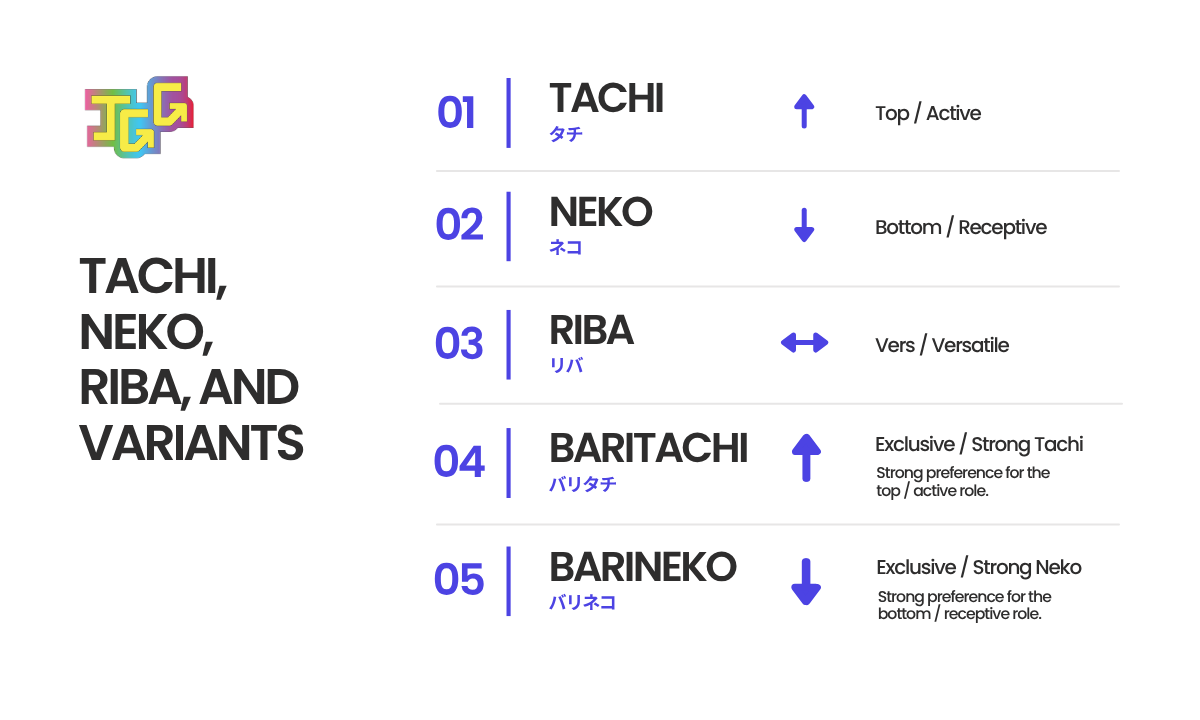
These definitions provide a useful starting point, but how the terms are used in everyday conversations can vary.
How Are Tachi and Neko Used in Japanese LGBTQ Communities?
Knowing the definitions is only the starting point. In practice, たち 和 壁虎 are used a little differently depending on the person and the community.
They may refer to sexual roles, broader relationship dynamics, or act as convenient shorthand. Rather than a rigid classification system, they are best understood as flexible labels that some people use and others do not.
Tachi and Neko Among Gay Men
Among Japanese gay men, たち, 壁虎 和 riba are role terms that have been documented in both academic research 和 community usage.
When it comes to sexual positions, たち generally refers to the active or inserting role, , 尽管 壁虎 refers to the receptive role. In some contexts, uke (ウケ) is used instead of, or alongside, 壁虎 to describe the receptive role.
That said, not every gay man identifies as たち, neko, 或 riba, and these labels should not be treated as universal. Likewise, a person’s role cannot be inferred from their appearance, body type, masculinity, femininity or personality.
Tachi, Neko, and Riba in Lesbian and Sapphic Contexts
While these terms are commonly associated with gay men, they’re also used by some people in Japan’s lesbian and sapphic communities. Their usage can vary between individuals and social groups. Generally, たち describes a preference for a more active role, while 壁虎 describes a preference for a more receptive role. 里巴 is also used to describe someone comfortable with either role.
Some people use more nuanced combinations or choose not to identify with any of these labels at all. Importantly, たち 和 壁虎 should not be interpreted as meaning the ‘man’ and ‘woman’ in a relationship. Role preference and gender expression are separate. A person’s appearance, clothing or presentation does not indicate how they identify. These role labels are also different from another pair of Japanese terms – 精子 和 乌克 – which are often confused with たち 和 壁虎.
If you’d like to learn more about lesbian terminology in Japan, including other commonly used community terms, see our dedicated guide:

Tachi and Neko vs. Seme and Uke: What’s the Difference?

One of the most common points of confusion is the difference between tachi/ neko and seme/ uke. Although they’re sometimes translated the same way in English, they aren’t used interchangeably.
This article focuses on たち 和 壁虎 as role terminology used in Japanese LGBTQ communities. By contrast, 精子 和 乌克 are strongly associated with Boys’ Love (BL), where they describe the dynamics between characters. However, they are also used by some people in real-world LGBTQ conversations.
If you’d like to explore how 精子 和 乌克 are used in both BL and LGBTQ contexts, read our full guide:

What Do Riba, Baritachi, and Barineko Mean?
If you’ve learned たち 和 壁虎, you’ll probably also come across three related terms: riba, 巴里塔奇 和 barineko.
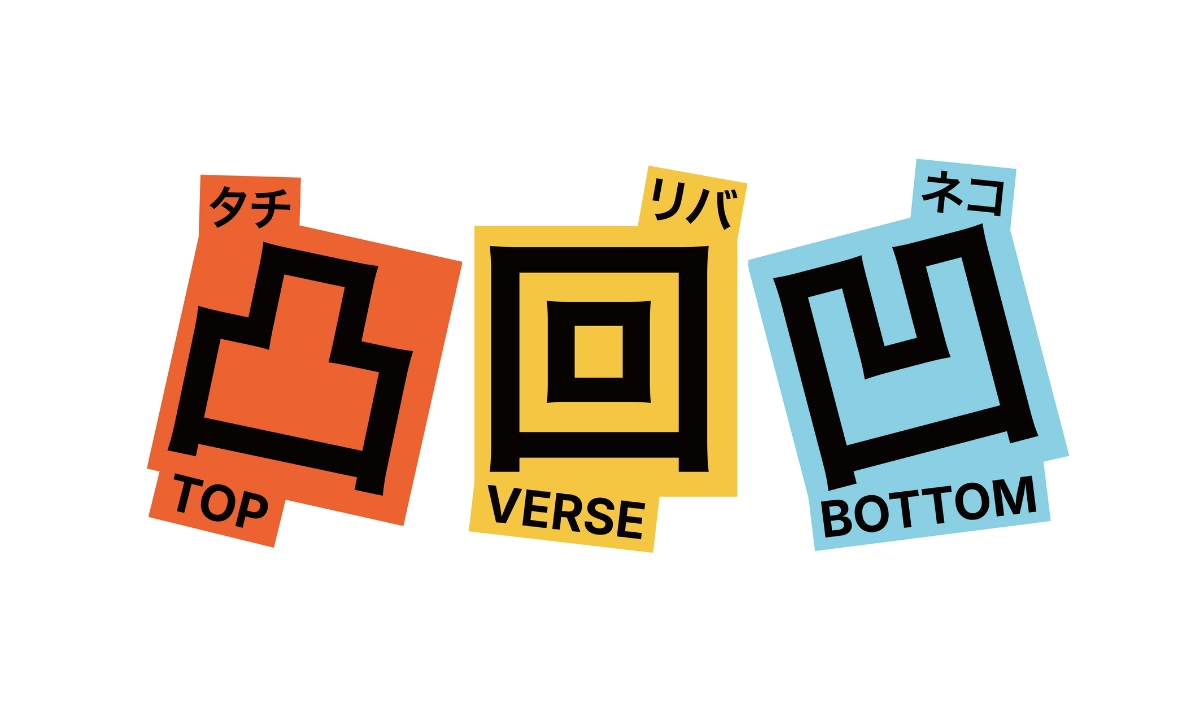
- Riba (リバ) comes from the English word ‘reversible’ and refers to someone who is comfortable taking either the たち 或 neko/ uke role. It’s broadly similar to the English terms versatile 或 与, although a person doesn’t need to have an exact 50/ 50 preference to identify this way
- Baritachi (バリタチ) describes someone who strongly or exclusively identifies with the たち role
- Barineko (バリネコ) describes someone who strongly or exclusively identifies with the 壁虎 role
Like many LGBTQ labels, these preferences exist on a spectrum. Some people use these terms to describe themselves, while others prefer not to use role labels at all. They are helpful ways of communicating preferences; they are not fixed categories that everyone is expected to fit into.
Are Tachi and Neko Offensive?
If you’ve started seeing these terms online, you might wonder whether it’s appropriate to use them. Tachi 和 壁虎 are established terms used within Japanese LGBTQ communities and are not normally offensive or slurs. However, like many identity and role labels, whether they’re appropriate to use depends on the context and situation.
The biggest mistake is assigning these labels to someone based on stereotypes. When referring to a real person, it’s best to use the terminology they use for themselves. Don’t make assumptions based on appearance or first impressions.
Where Do the Terms Tachi and Neko Come From?
Like many LGBTQ slang terms, the origins of たち 和 壁虎 aren’t completely clear.
According to the Japanese LGBTQ terminology website Gladxx, たち is thought to derive from tachiyaku (立役). This word means a male lead or heroic role in traditional Japanese theatre. This is presented as one explanation rather than a universally accepted etymology.
Outside LGBTQ contexts, neko (ネコ) is the ordinary Japanese word for ‘cat’. However, its origin as an LGBTQ term is less certain – commonly repeated explanations are not well supported by reliable sources. For that reason, it’s best to focus on how the term is used today rather than on unverified theories around its origin.
结论
Whether reading a dating profile, chatting in a bar or learning more about LGBTQ culture, understanding たち, 壁虎 and related terms can make those conversations much easier to navigate.
Just remember that these labels describe preferences for some people – not everyone. Their meaning can vary depending on the individual and the context.
If you’d like to learn more, explore our guides: