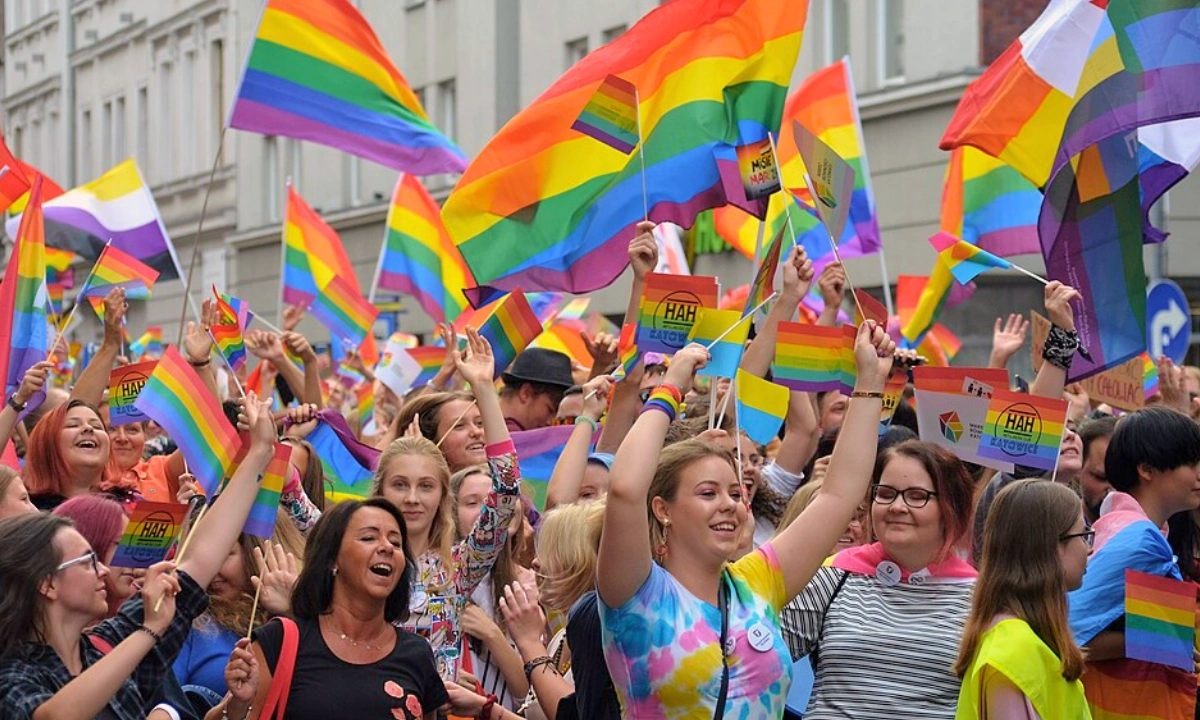



The transgender pride flag is the five-stripe design of light blue, pink, and white created by trans activist Monica Helms in 1999. It is widely used as a symbol of trans pride, visibility, solidarity, rights and remembrance. However, its meaning can vary between individuals and communities.
This guide explores the meanings Helms gave to the colours. We’ll also explore the history behind its creation, the significance of its design, and alternatives.
What Do the Transgender Flag Colours Mean?
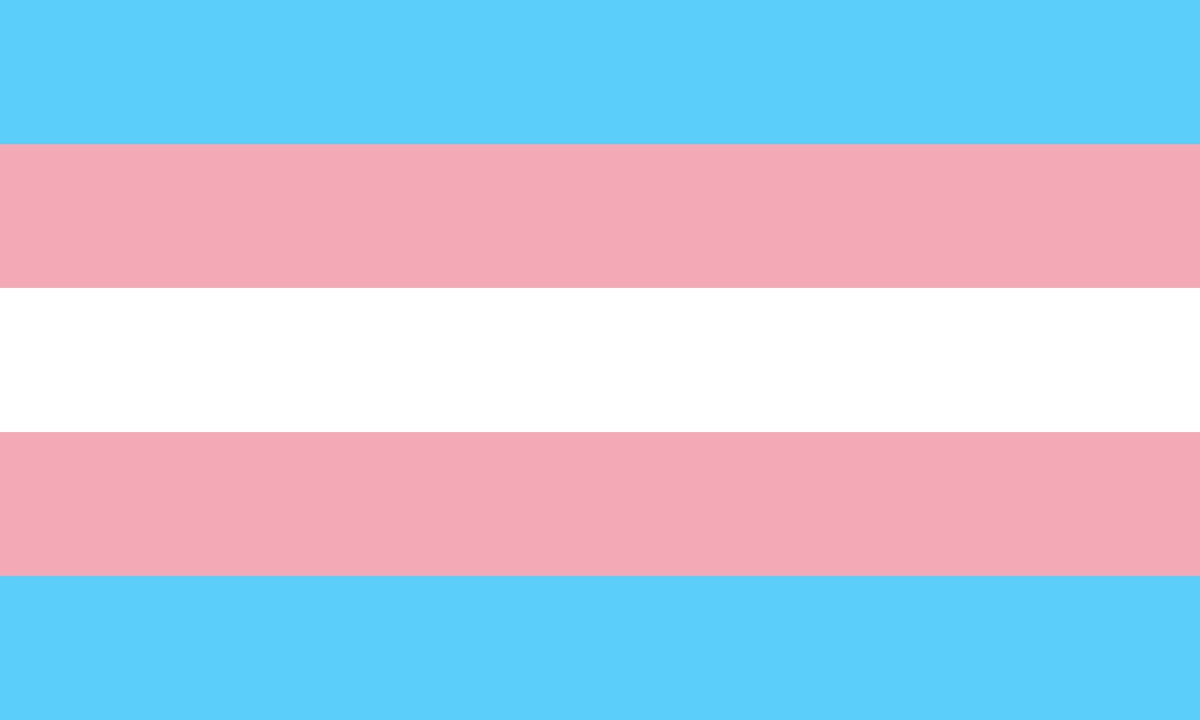
The standard transgender pride flag consists of five equal-width horizontal stripes: light blue, pink, white, pink and light blue. While the flag has become a symbol of trans pride and visibility, its colours have specific meanings based on Helms’s explanation.
| Colour & Hex | Position | Meaning in Monica Helms’s explanation |
|---|---|---|
| Light blue #5BCEFA | Top and bottom | The traditional colour for baby boys |
| ピンク #F5A9B8 | Second and fourth | The traditional colour for baby girls |
| 白 #FFFFFF | Middle stripe | People who are intersex, transitioning, or consider themselves to have a neutral or undefined gender |
Helms chose light blue and pink to reflect the traditional colours associated with baby boys and girls. The white represents people who are intersex, transitioning, or consider themselves to have a neutral or undefined gender.
The stripes are arranged symmetrically so that the flag looks the same whichever way it is displayed. This was an intentional part of Helms’s design.
These meanings are Helms’s historical explanation of her original design, rather than universal definitions of gender. Individuals and communities may understand or use the flag in different ways.
Who Created the Transgender Flag?

The flag was designed by Monica Helms, a trans activist and U.S. Navy veteran, in 1999. The idea followed a conversation with Michael Page, creator of the bisexual pride flag. Page suggested that the transgender community could have its own flag and encouraged Helms to create a simple design.
About two weeks later, Helms recalled that the image of the flag came to her. She drew the design, contacted the company that had produced Page’s bisexual flag, and selected fabric swatches for the colours.
Helms first displayed the completed flag at a Pride parade in Phoenix, Arizona, in 2000, marking its first public debut.
The original flag was eventually preserved by the Smithsonian National Museum of American History. In 2014, Helms donated it to the museum, where it became part of the institution’s LGBTQ+ history collection.
Page’s involvement also links the flag to the wider history of LGBTQ+ symbols. His bisexual pride flag helped inspire the idea that transgender people could have a flag representing their community.
Why Is the Trans Flag Symmetrical?
The standard transgender pride flag is vertically symmetrical. This means the stripes are mirrored around the white in the centre. Because of this, it looks the same whichever end is placed at the top.
Helms also gave the symmetry a personal meaning. She explained that the pattern represents the idea that the flag is ‘always correct’. This reflects the experience of transgender people finding themselves and being affirmed in their identity. This symbolism is part of Helms’s own explanation of her design rather than a universal interpretation of the flag.
Are There Other Transgender Flags?
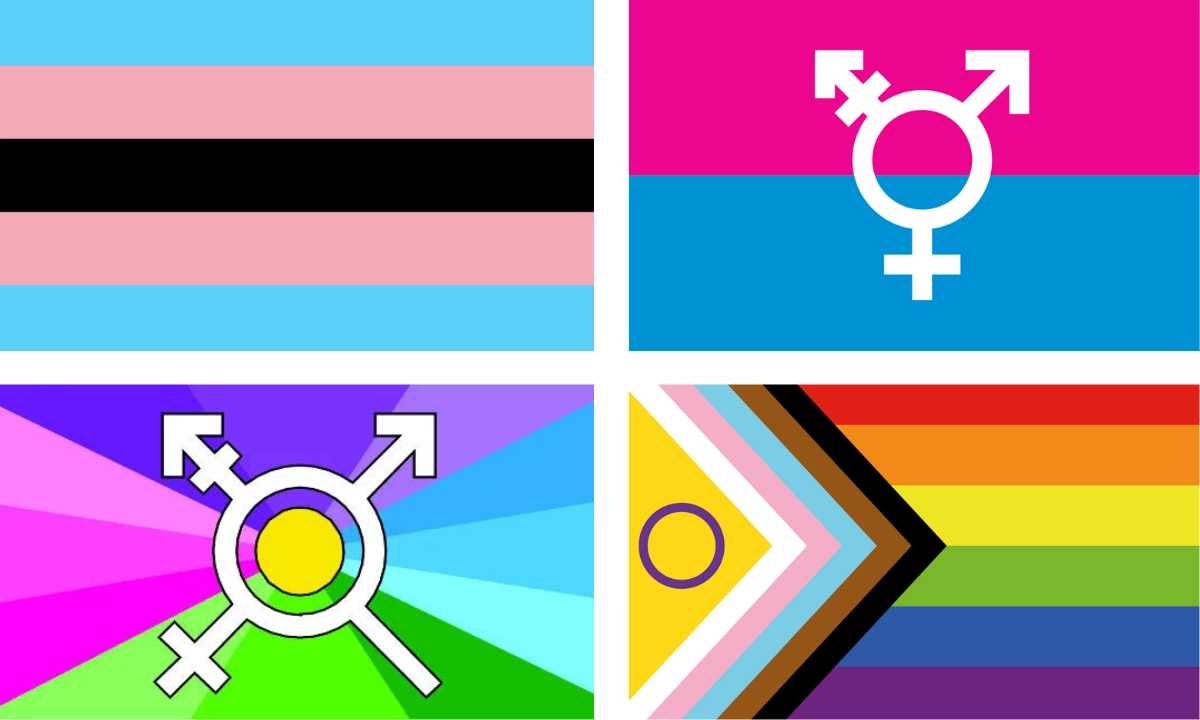
Helms’s blue, pink and white flag is the most widely recognised transgender pride flag. However, it is not the only design created for trans communities. Individuals and communities have developed other flags to highlight particular identities and experiences.
| Design | Creator or community and date | How it differs from Helms’s flag | Context or intended emphasis |
|---|---|---|---|
| Black Trans Flag | Raquel Willis, 2015 | Replaces the white centre stripe with black | Created by Black trans activist and writer Raquel Willis to centre Black trans experiences |
| Michelle Lindsay design | Michelle Lindsay, in use by 2010 | Uses magenta and blue fields with a white transgender symbol | Designed by Ottawa graphic designer Michelle Lindsay and used at Transgender Day of Remembrance events in the Ottawa area |
| Trans Kaleidoscope | Members of the Toronto Trans Alliance, 2014 | Uses multiple colours and an expanded gender symbol | Created to represent a spectrum of gender identities and experiences |
について Black Trans Flag was created by Raquel Willis in August 2015. Willis’s design replaces the standard flag’s white centre stripe with black. The intention of this is to centre Black trans experiences.
Michelle Lindsay’s design was in use by 2010 and features magenta and blue fields with a white transgender symbol. It has been used at Transgender Day of Remembrance events in the Ottawa area.
について Trans Kaleidoscope was created by members of the Toronto Trans Alliance in 2014. Its multicoloured design and expanded gender symbol represent a broader spectrum of gender identities.
These are just three documented examples. Other regional and community-specific transgender flag designs also exist. But they should not be treated as replacements for Helms’s original design, and this is not an exhaustive catalogue.
How Is the Progress Pride Flag Different?
について Progress Pride flag is sometimes confused with the transgender flag. This is because it incorporates the light blue, pink, and white colours associated with Helms’s design. However, it is a broader LGBTQ+ Pride flag, not an alternative transgender flag.
デザイン Daniel Quasar in 2018, the Progress Pride flag places the trans colours in a chevron alongside the rainbow and black and brown elements inspired by the Philadelphia Pride flag. In 2021, ヴァレンティーノ・ヴェッキエッティ created an intersex-inclusive version by adding the intersex flag’s yellow field and purple circle to the design.
This distinction is particularly useful when identifying flags with black elements. Helms’s standard transgender flag has no black stripe. A black centre stripe indicates the separate Black Trans Flag. Whereas black and brown elements arranged in a chevron indicate a Progress Pride design.
For a broader guide to the rainbow, Progress Pride, intersex, and other LGBTQ+ flags, see our guide: