

Getting tested for sexually transmitted infections (STIs) in Japan is easier once you know where to look. Whether you’re after free and anonymous testing, an English-speaking clinic, or the convenience of testing at home, there are three main options:
- Public health services for free, anonymous HIV testing and, at some locations, other STI tests.
- Private clinics for a wider choice of tests, medical advice, and potentially more flexible appointments.
- Mail-in testing for collecting samples at home and sending them to a testing provider.
The best option depends on your needs, but knowing where to go is only part of the picture. If you have symptoms or a partner has been diagnosed with an STI, contact a healthcare professional rather than relying on routine screening.
If you may have been exposed to HIV within the past 72 hours, seek urgent medical advice about post-exposure prophylaxis (PEP). This medication can help prevent HIV infection if started in time.
In this guide, we’ll explain where to get STI testing in Japan, how each option works, and what to check before booking so you can find the right service for you.
Your main STI testing options in Japan
In Japan, there are three main ways to get tested for STIs. Public health services can be a good starting point if you’re looking for free and anonymous HIV testing. Private clinics may offer more flexibility in appointments, language support, and test choice. Mail-in testing allows you to collect a sample yourself and send it to the testing provider.
Free and anonymous HIV testing is widely available through public health centers, but the availability and cost of other STI tests vary by facility.
Here’s a quick comparison table to help you decide where to start:
| Testing option | Cost and privacy | Access and booking | Tests and English support | Results and follow-up |
|---|---|---|---|---|
| Public health services | HIV testing can be free and anonymous. Other STI tests may be free or paid, depending on the facility | Usually requires checking local testing days and whether an appointment is needed | HIV testing is widely available. Other STI tests and language support vary | Results and follow-up arrangements depend on the service. Confirmatory testing is available through appropriate public or medical facilities |
| Private clinics | Testing is generally paid, with prices depending on the provider and tests selected. Privacy arrangements vary | May offer appointments and access at times that suit you better. Check directly with the clinic | Test menus and English-language support vary by provider | Result times, consultations, treatment and referrals depend on the clinic |
| Mail-in testing | Usually a paid service. Samples can be collected without an in-person visit, but privacy arrangements differ between providers | Order a kit, collect the requested sample and send it to the testing provider or laboratory | Available tests, sample types and instructions vary by kit. English support depends on the provider | Result delivery and follow-up support vary. A result suggesting HIV infection requires further testing through an appropriate healthcare facility |
Free and Anonymous Testing Through Public Health Services
Public health centers are a useful starting point if you want to get tested for HIV in Japan without paying or providing your name.
Japan’s Ministry of Health, Labour and Welfare (MHLW) provides an STI Testing and Consultation Map and facility finder. You can search by prefecture or keyword and narrow the results by the STI being tested for, language support, cost, anonymity, and whether an appointment is required.
For English-language HIV information, MHLW also provides an HIV Testing and HIV/AIDS Counseling Map, which includes information about the testing process, multilingual testing sites, and counseling services.
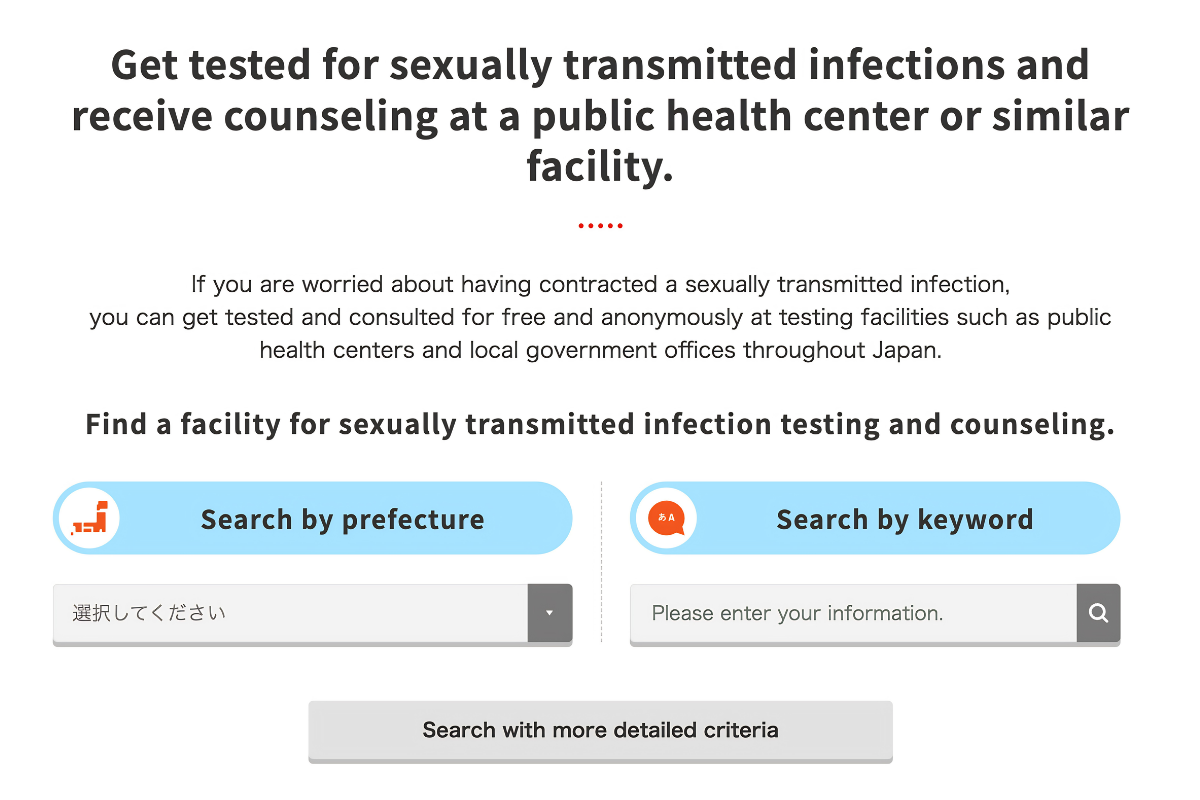
Public health centers provide free, anonymous HIV testing. Some also offer tests for other infections, including syphilis, chlamydia, and gonorrhea. However, the range of tests available and whether additional tests are free depend on the facility.
An example: Shinjuku’s public testing service
Shinjuku City provides a useful example of how a local public STI testing program can work.
Its HIV and STI testing service offers free, anonymous HIV testing, with optional tests for syphilis, hepatitis B, and chlamydia. The service also provides English-language information and online reservations.
These arrangements are specific to Shinjuku. Check the latest testing dates and reservation details before attending.
When a Private Clinic May Be More Practical
Public testing is not the only option. You may prefer a private clinic if you need an appointment that fits your schedule, want to discuss your circumstances with a healthcare professional, or are looking for a particular combination of tests.
Some clinics also provide services in English. However, the level of language support, available tests, and appointment options differ between providers. It’s best to check these details before booking.
Private testing is generally paid for out of pocket, and the final price depends on the clinic, the tests chosen, and your circumstances. Don’t assume that every test is covered by Japanese health insurance or that all clinics follow the same pricing policy.
例えば、, IDATEN Clinic in Osaka lists its STI tests, prices, sample types, and insurance arrangements on its English-language website. Its testing options include gonorrhea and chlamydia tests for different body areas, showing how a private provider may offer more choices than a public screening program.
These details are specific to IDATEN Clinic and shouldn’t be treated as standard across Japan.
Before booking, check the clinic’s current information, including its available tests, prices, and language support.
Mail-in STI Testing
Another way to get tested without attending a healthcare facility is through mail-in STI testing.
With this option, you order a testing kit, collect a sample yourself as instructed, and send it to the testing provider or laboratory for analysis. Depending on the provider, you may receive your results online or through another method.
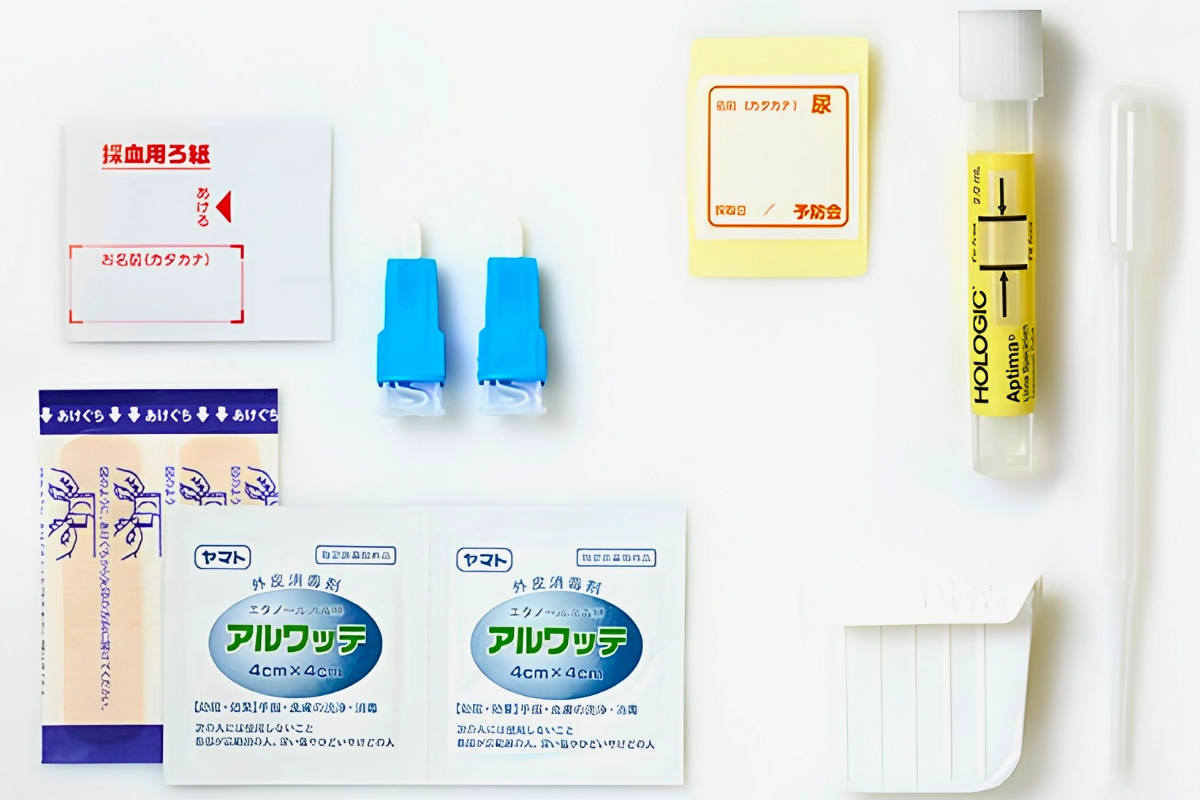
For some people, this approach is more convenient. You can collect the sample at a time that works best for you, and you don’t need to attend an appointment to provide it.
However, mail-in testing services differ in their testing methods, quality controls, privacy arrangements, consultation support, and routes to follow-up care.
Before choosing a kit, check which infections it tests for, what samples you need to collect, and whether the provider offers medical advice or referrals if a result suggests an infection.
What About Mail-in HIV Testing?
The MHLW explains mail-in HIV testing in its guide to different types of HIV tests.
According to the guidance, mail-in HIV testing is a preliminary test, sometimes called a pre-test. You collect a sample, such as a small blood sample, and send it to a testing provider.
This can make testing more convenient, but it doesn’t replace the testing process needed to confirm an HIV diagnosis.
If a mail-in HIV test suggests that you may have HIV, you need further testing at an appropriate healthcare facility. A preliminary result alone does not establish an HIV diagnosis.
Mail-in HIV testing is therefore best understood as a convenient first step, rather than a replacement for medical assessment or confirmatory testing.
Where to Start in Tokyo
If you are looking for STI testing in Tokyo, there are public services, private clinics, and a free mail-in HIV testing program.
For public testing, start with the Tokyo Metropolitan Government’s testing location finder. It lists public HIV testing locations across Tokyo and provides information about testing schedules and reservations.
Shinjuku is one option if you need English-language information. As described above, its public testing service offers free HIV testing alongside optional STI tests. Check the Shinjuku City website for current testing dates and bookings.
Tokyo also has おうちでHIV検査 TOKYO (At-Home HIV Testing TOKYO), a free mail-in HIV testing service for people who live, work, or study in Tokyo.
The current application period runs from 1 October 2026 to 28 February 2027, subject to capacity. You collect a small blood sample yourself, send it to the testing provider, and view your results online.
The program is specifically for HIV testing, and follow-up arrangements are available when a result requires confirmation. Check the Tokyo Metropolitan Government’s program information before applying, as availability may change.
If you would prefer a private clinic, Japan Gay Guide also has a profile of Personal Health Clinic in Ueno.
This profile provides general information about the clinic, including its location, contact details, and listed opening hours. For current test availability, prices, and appointments, check the clinic’s own website.
Finding STI testing outside Tokyo
Outside Tokyo, start with the MHLW STI facility finder to find testing services in your area.
Once you have found a suitable facility, check its local information for the exact tests offered, costs, booking requirements, and language support.
An example: Osaka
Osaka provides a good example of why it is worth checking individual services rather than assuming that every public testing program offers the same tests.
Osaka City lists HIV, syphilis, and chlamydia testing at certain ward health centers, while chotCAST offers HIV, syphilis, and hepatitis B testing.
These services have different test combinations and reservation arrangements. For details, see Osaka City’s testing information, including its links to multilingual guidance.
Check the latest information before attending.
What to check before you get tested
Once you’ve found a testing service, take a moment to check that it’s suitable for your needs. A little preparation can help you avoid an unnecessary visit, an unexpected cost, or getting a test that doesn’t cover what you need.
Before booking or attending, check:
- Which infections are tested for? Don’t assume that an HIV test automatically includes tests for other STIs
- How much does it cost? Confirm whether the test is free or paid, including any additional tests or consultations
- Can you remain anonymous? Public HIV testing can be anonymous, but arrangements differ between services
- Do you need an appointment? Check the booking process and available testing times
- Is English-language support available? Confirm what the service can provide if you need support in English
- What samples and body areas are tested? Different tests may require blood, urine, or swabs. For infections such as chlamydia and gonorrhea, testing may need to cover the throat or rectum, depending on sexual exposure. A urine test alone won’t detect an infection in those areas
- When should you get tested? The right time depends on the infection and the type of test. Ask whether you need to wait or return for another test
- How will you receive your results? Check when results are expected and whether you need to return in person or access them online
- What happens if a result needs follow-up? Check whether confirmatory testing, medical advice, or a referral is available
One important thing to understand is the window period. This is the time after an infection when a test may not be able to detect it yet. If you test too early, you could receive a negative result even if you have an infection.
Window periods differ by infection and test. If you’ve recently had a possible exposure, ask a qualified healthcare professional when to get tested and whether you may need to test again.
When to Contact a Medical Professional
If you have symptoms, have been told that a sexual partner has an STI, or receive a positive or potentially positive result, contact a qualified healthcare provider rather than relying on routine screening.
They can advise you on the right tests, any confirmatory testing needed, and treatment or follow-up care.
You should also seek professional advice if you’re unsure whether you need testing or which service is right for your situation.
For more information about support and services for LGBTQ+ people in Japan, explore Japan Gay Guide’s LGBTQ+ sexual health resources in Japan.
🗣 This guide is designed to help you find STI testing in Japan. It cannot tell you whether you have an infection or determine which tests and treatment you personally need.