
Q&A with Yuri Expert and Historian, Erica Friedman

Tobias Waters

Yuricon: A Con-venient History

Today, yuri manga and anime is broadly accepted as its own genre, and every year the yuri media released is becoming both more numerous and more widely recognized for its quality. It’s now pretty common for anime conventions in Japan and abroad to have yuri-specific panels, exhibitions, and creators populating Artists’ Alley.

This wasn’t always the case, however. For a while, yuri was considered by some to be too niche to attract serious attention or warrant serious discussion — especially in the west. However, a dedicated few staked their claim to a space where yuri was taken seriously (which we hasten to add does not mean without humor), first online, then in the physical world. Today, we’ll take a look at the history of Yuricon, the first yuri-focused convention in the USA, through the eyes of its founder, acclaimed author of By Your Side: The First 100 Years of Yuri Anime and Manga, and yuri expert Erica Friedman.

In The Beginning

Could you introduce yourself to any of our readers who may be unfamiliar with yourself or your work?

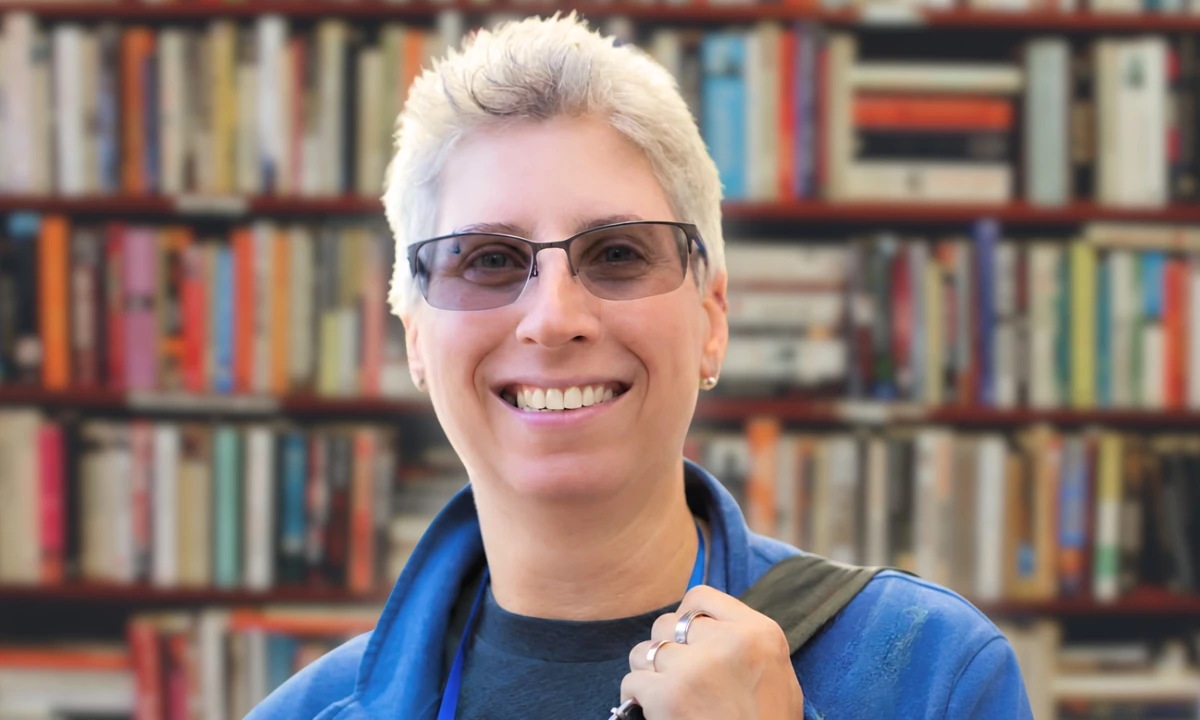
Hello! My name is Erica Friedman, I have been reading, watching, thinking about, writing and speaking about lesbian-themed Japanese animation and comics — a genre we call “Yuri” — for more than 20 years.

Could you tell me about the beginnings of the AniLesboCon web community? How did it start, and how active was it/how did it grow in the early years?

Back in the early days of the public Internet, in the mid-1990s, Usenet was the happening place to talk about one’s hyperfixations. Anime and manga (and related media like fanfiction, fanart and self-published comics) started really taking off in fan spaces. Around the turn of the 21st Century, I felt that there needed to be somewhere where fans of Yuri could talk about the series we watching and the characters we liked — y’know, fan stuff — without other people intruding, or being rude.

So I created the AniLesboCon Mailing List on Yahoo!Groups, which was the cutting edge technology at the time. The “AniLesboCon” name was a joke: it came from a fanfiction as the name of a fictitious convention for “animated lesbians.” Our original motto was “for people who like their lesbians…animated.” Predictably, a lot of people did not get it. That helped me weed out folks who lacked the sense of humor or social skills I wanted for the community. Some of my dearest straight friends found the name scandalous, which always made me laugh.

In 2001, Yahoo!Groups purged all their LGBTQ+ groups in one of those biannual protestant  “all queer things are porn and all porn is evil” cleanups we still see on every single platform. Overnight, everything was gone. So I started the group up again as the  Yuricon Mailing List.

Could you tell me a little about the motivation to start Yuricon? In By Your Side you recount that you were encouraged to do so after being told that Yuri was too niche for women anime fans, but did anything else spur you on?

The fandom was growing online, but at the time, we were trying to find space for Yuri in other conventions. Events run for women/girls about content for women/girls tended to focus on male/male content. When it became clear that I was going have to make that space myself… so, I did.

I started with a mailing list.I chose to use the word “Yuri” consciously, reaching back to the “Yurizoku,” which meant Lily Tribe, a nickname for lesbians from a 70s-era Japanese gay magazine, Barazoku (where “Barazoku” means Rose Tribe). We were happily doing online contests, sharing fiction and art and chatting about Yuri anime and manga on the ML and someone suggested a run a real event….so, I did, haha!

In June 2003, in Newark, NJ, we ran Yuricon 2003. This was followed by a few other large events, but our last in-person was the Yurisai in 2007. The global depression at that time, and corporatization and political bullshittery since has made it no fun to try and run a 3-day event, but I happily travel to other events to speak.

The first Yuri event you organized was at the iconic Meow Mix Bar in 2002, but I was curious: would you consider this gathering the first Yuricon, a sort of “Yuricon 0,” proof-of-concept?

yuricon
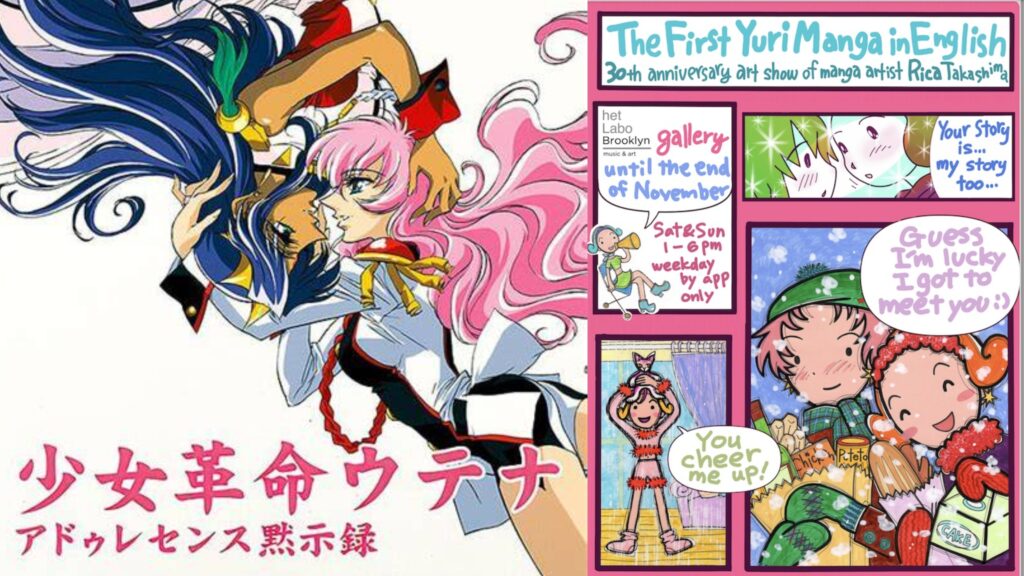
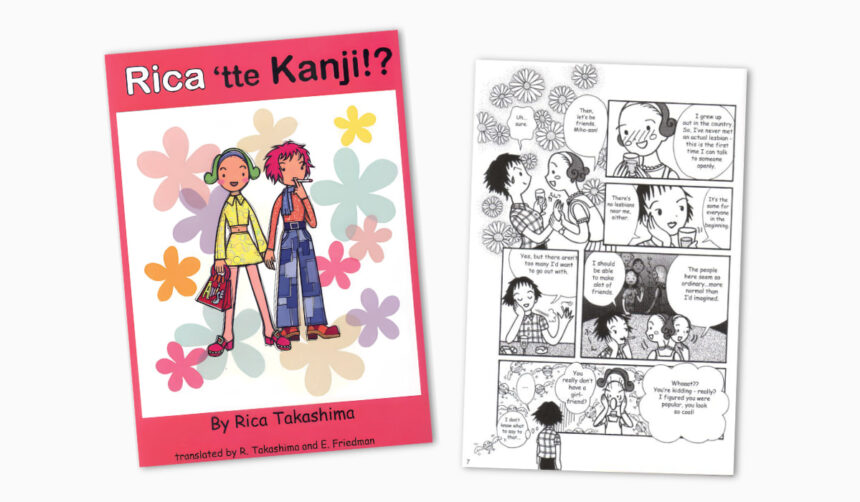
Left: Cover artwork for the anime feature film Revolutionary Girl Utena: The Adolescence of Utena (Directed by Kunihiko Ikuhara, J.C.Staff). Right: Exhibition poster showcasing the 30th-anniversary retrospective of manga artist Rica Takashima

Absolutely, yes! The Meow Mix Bar event was a test to see if anyone might actually show up! We showed Revolutionary Girl Utena Movie: The Adolescence of Utena, ran some contests, gave away prizes and had a nice party. Manga artist Rica Takashima showed up and since that day, she and I have been working together on various projects. She’s so talented: she did the art for my book cover. I love her work. It always just absolutely gets to the heart of what I am trying to say. We both feel like our meeting was the hand of fate.

The First Yuri Convention

yuricon dragonballZ
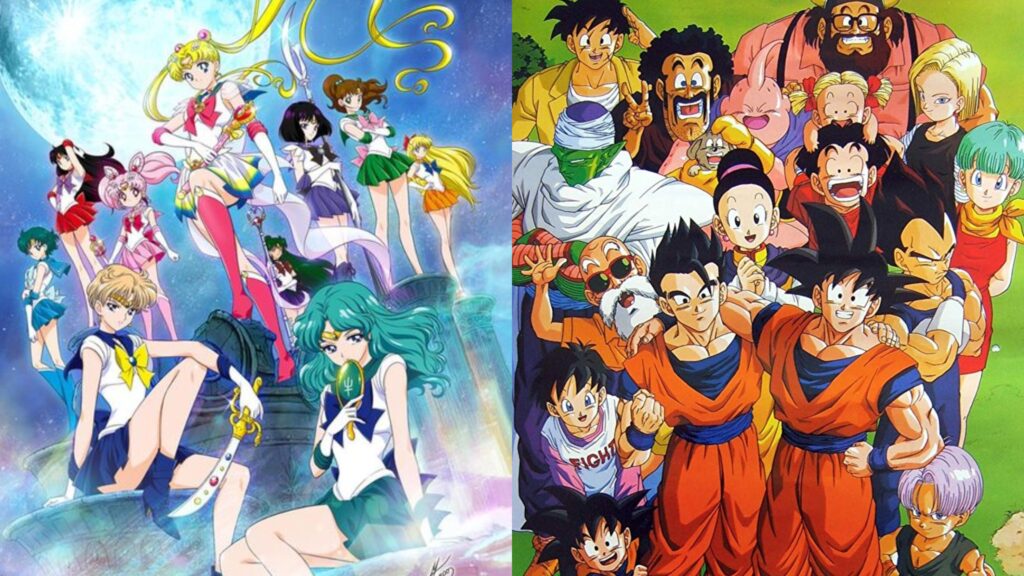
Left: Promotional artwork for the third season of the anime series Sailor Moon Crystal (“Death Busters” arc, © Naoko Takeuchi / PNP / Toei Animation). Right: Dragon Ball Z promotional poster (© Akira Toriyama / Bird Studio / Shueisha / Toei Animation).

Both Yuricon in Newark and the first Yuri convention in Japan took place in 2003. In retrospect, are there any trends or confluences of feeling that led to the early-mid 2000s in general, and 2003 in particular, being such a break-out time for Yuri?

You know… I have asked myself that same question many times. I learned that a Yuri event happened just before Yuricon took place, in Japan. So clearly, there was something that made it the right time and place.  I can’t be sure, but here is my theory:

The anime 美少女战士 was one of the two defining series in the mid-to late 1990s and it, along with 龙珠 Z, contributed to the global spread of anime and manga. The explosion of Internet use came just around that same time. That allowed the global anime and manga fandom to communicate.

As the Internet became more common, online communities sprung up for lots of niche interests, and by the early 00’s, it was easy to find people who were interested in what you were interested in. After 10 years of this, people had grown up  these communities and were comfortable with it. They wanted to get together and do stuff with other queer nerds. Boys’ Love fans were holding cons and meetups, so why not Yuri?

The very first Japanese book about Yuri Studies was published this year, and it’s amazing to realize that all the kids who grew up with Yuri as a distinct genre in existence are just now getting old enough to write academic books.

How supportive was the industry of the first Yuricon?

Pretty supportive, honestly. Their primary goal is to sell stuff, of course, and a new audience or focus is always welcome. Most of the folks in the anime industry are fans of anime and they thought it was pretty cool. I got a lot of support from a few NJ/NYC area companies at the time and made some good friends with them, many of whom I still stay in touch with.

Could you tell me about the fan reaction to Yuricon 2003, before, during, and after the event?

Before I do, let me clarify what I mean by “fans.” There are, in every pop culture world, some subsets of people who are negative. They hate new series, other new fans, any changes from the day they discovered the media at 14 years old. Those are the people everyone seems to care about when they complain about old, very diverse series, going “woke.” I do not consider those people fans at all. They are merely interested in recapturing the dopamine hit they got a teenager.

So when I say “fans were positive” it is, yes, because I consider people who love to complain to really not be fans at all. Fans love the media they love. Of course they are excited about events and merchandise and new titles.

We never got any negative feedback from the Yuri community, only from people outside it who “warned” us about whatever, or were “concerned” about whatever. Since they weren’t part of the community, we never cared. We had a fun event, and that was all that mattered.

Could you tell me about Yuricon 2005? What was it like to hold a convention in Tokyo?

Nerve-wracking. I could not have done it without Rica and my wife who both kept me functional and smiling that whole day. I was in front of famous artists and writers, and felt completely out of my league. But again, people had fun, which is all I cared about. And I made contacts I still treasure to this very day.

In 2018, I visited an event in Tokyo and was “introduced” to a manga artist. We laughed and asked each other, “how are things?” We had met 13 years before that at Yuricon 2005 in Tokyo. The organizers were blown away. The most important thing that day was a room full of writers, artists, a magazine publisher about to launch a Yuri manga magazine and me all agreeing to use the word “Yuri” going forward.

The End of the Yuricon Era

Could you tell me about 2007’s Yurisai? How did you feel holding the event, knowing that it would likely be the last Yuricon? What was the experience like for your fans?

It was actually a really sweet day. I had my entire Yuri manga and 同人誌 (small press and self-published works) collection out of the house for the very first and last time ever, so people could read through books they’d never otherwise get to see. It was good to see online friends again and get some Yuri-anime premieres.

The Yurisai was the last Yuricon live event, but later that year, I co-chaired Onna! (the Japanese word for “woman”) with the chair of Shoujocon, a defunct event for fans of girls’ manga and anime. We used that event to celebrate manga and anime for girls and women, including Boy’s Love and Yuri. That was the last 3-day event I ran. It was a good year to close out that period of my life. But my Yuri life is far from over — and I ran an online anniversary event, Yuricon 2023, which is all up on Youtube!

Yuri is more accepted as a genre, and is a major part of mainstream cons, without gatekeeping, which is obviously a good thing. Still, I couldn’t help but feel a twinge of sadness when reading that most of the Yuri-only cons were now gone. How do you feel about this state of affairs?

yuricon the guy she was intrested in wasnt a guy at all
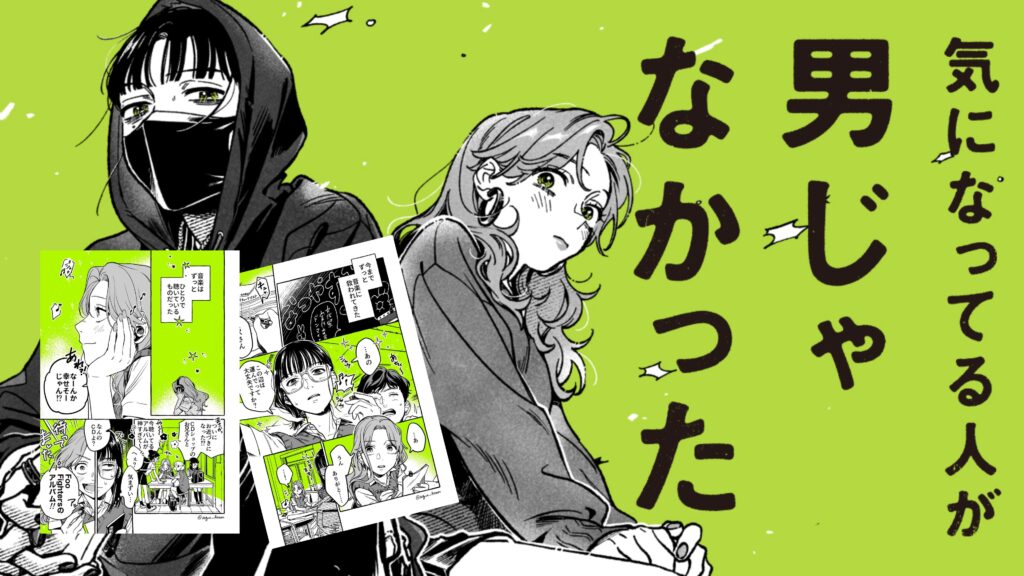
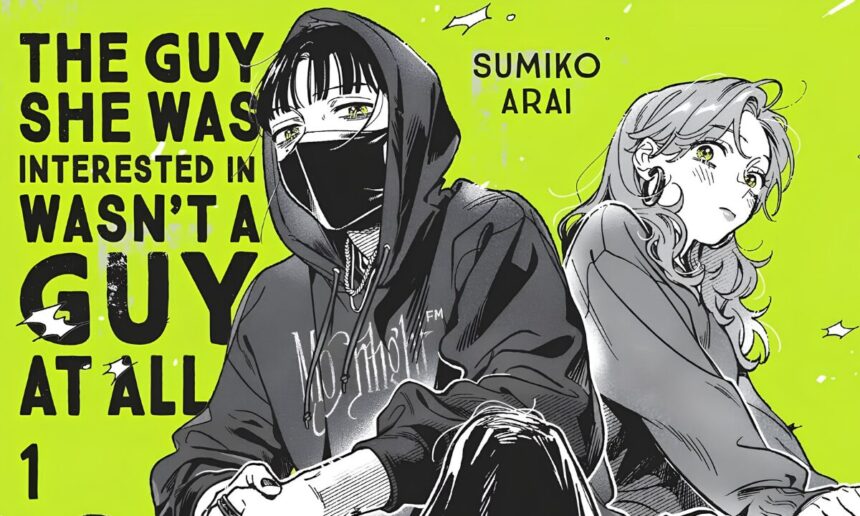
Promotional illustration for the manga series The Guy She Was Interested in Wasn’t a Guy at All (Kininatta Otoko ga Otoko Janatta), created by Sumiko Arai. Image courtesy of Sumiko Arai / Kadokawa.

Overall, I think it’s a positive thing when larger events have Yuri elements. That gets those artists or premieres in front of more people than Yuricon could have. I’m not very nostalgic, so I don’t tend to pine “for the old days.” More Yuri is a good thing! And more Yuri fans means more Yuri. It’s a self-propelling system. More fans mean more money, more money means more investment.

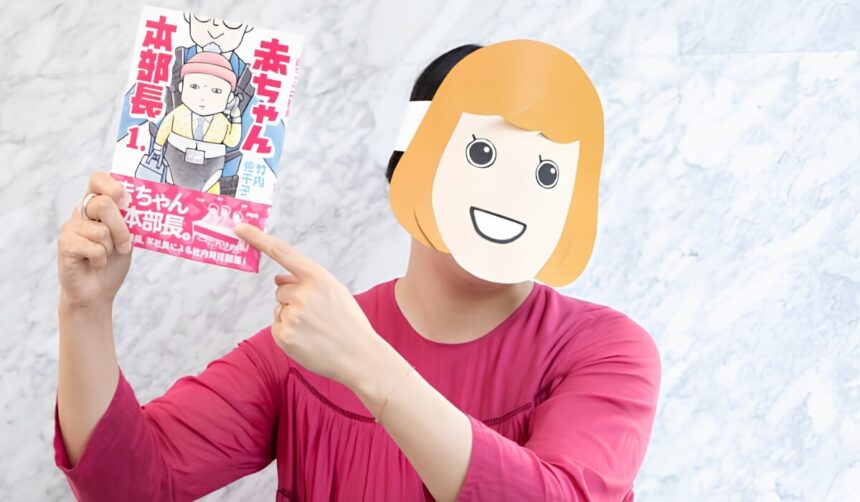
We’re seeing that with last year’s breakout hit, 1.她感兴趣的男人根本不是男人, by Sumiko Arai. It won the American Manga Awards Best Manga of the Year, and it broke the major merchandising barrier for a Yuri series. Now we’re seeing more and more Yuri series getting merchandise collaborations in Japan, and bookstore chain Kinokuniya held a global collaboration for 1.她感兴趣的男人根本不是男人. That’s progress — at least in a capitalist society!

Gatekeeping is a weird thing. I see folks trying to gatekeep specific terms for the genre, but language is fluid. I’ve see people go on rants that “Yuri” is porn, but…no. A bunch of queer creators sat in a room, and we all agreed that we’d use that word. Now “GL”  or Girls’ Love is taking off globally and I can’t be mad about language changing… even if GL was pushed by publishers who already were successful making “BL”, Boys’ Love.

The thing I always say is “Yuri is  anyone, and Yuri is 对于 everyone.”

Some people have a hard time with a fandom that is genuinely inclusive, but when they see that that means them, too, it’s usually a non-issue.

What would you say to anyone looking to go to a Yuri convention (like Girls’ Love Festival) or even start one of their own?

Definitely start one! Invite me and I’ll try to make it! I’m not kidding, this is my #1 piece of advice for people: do things. It’s okay if you fail. Just doing the thing will teach you a lot. More importantly, don’t wait for other people to do things for you. Yen Press, publisher of 1.她感兴趣的男人根本不是男人, ran a Yuri Café in NYC this past winter and people kept asking if they’d run one in their town. Yen folks replied that people could try to run their own Yuri cafe in their area. I 100% agree.

I couldn’t take Yuricon on the road to be in everyone’s town, but you could make a flyer and say you’re doing a meetup in your area. Make art, work on a menu with a location, ask folks to come with books to read and talk about and voila! you’re running a Yuri event. Definitely go to a Yuri event, if there is one! Buy some fun art, comics, tees, whatever and don’t forget to say hello to other people. You might end up making a friend. Write me and let me know you’re going and I’ll ask for a report for Okazu. If your local con doesn’t have a Yuri panel, apply to run one. If you’d like them to bring a Yuri artist or writer as a guest, ask them. Get involved. Ask for what you want. Be the Yuri event you want to see in the universe.

For anyone inspired to get in touch with Friedman to write for her yuri website, Okazu, or to connect with her more generally, please find the following links below.

Yuricon: https://www.yuricon.com/

Okazu: https://okazu.yuricon.com/

Discord: https://discord.gg/4NPHGH7Vc4

Patreon: https://www.patreon.com/Okazu

Bluesky: https://bsky.app/profile/okazu.yuricon.com

托比亚斯从事编辑和作家工作已有十余年,最初在伦敦一家法律出版社工作,2019 年移居东京。 搬到日本首都后,他撰写或编辑了各种主题的文章,包括汽车、医药、电子游戏、经济、葡萄酒、教育和旅游。他甚至评论了日本推出的首款 CBD 啤酒! 业余时间,他喜欢看电影、玩电子游戏、唱卡拉 OK 和去当地的温泉。他最喜欢的神奇宝贝是神狐,最喜欢的食物是咖喱。他从不谈论 2008 年金融危机如何影响了现代世界的一切。
0 Comments
内联反馈
查看所有评论
0 Comments
内联反馈
查看所有评论