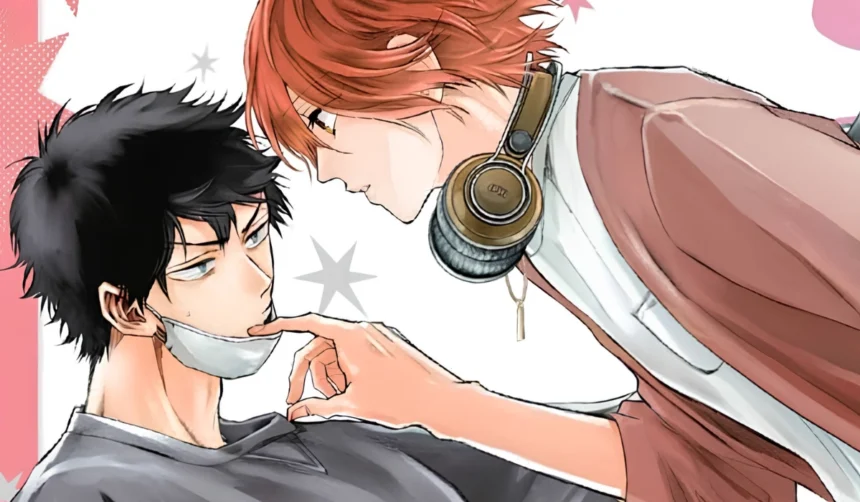

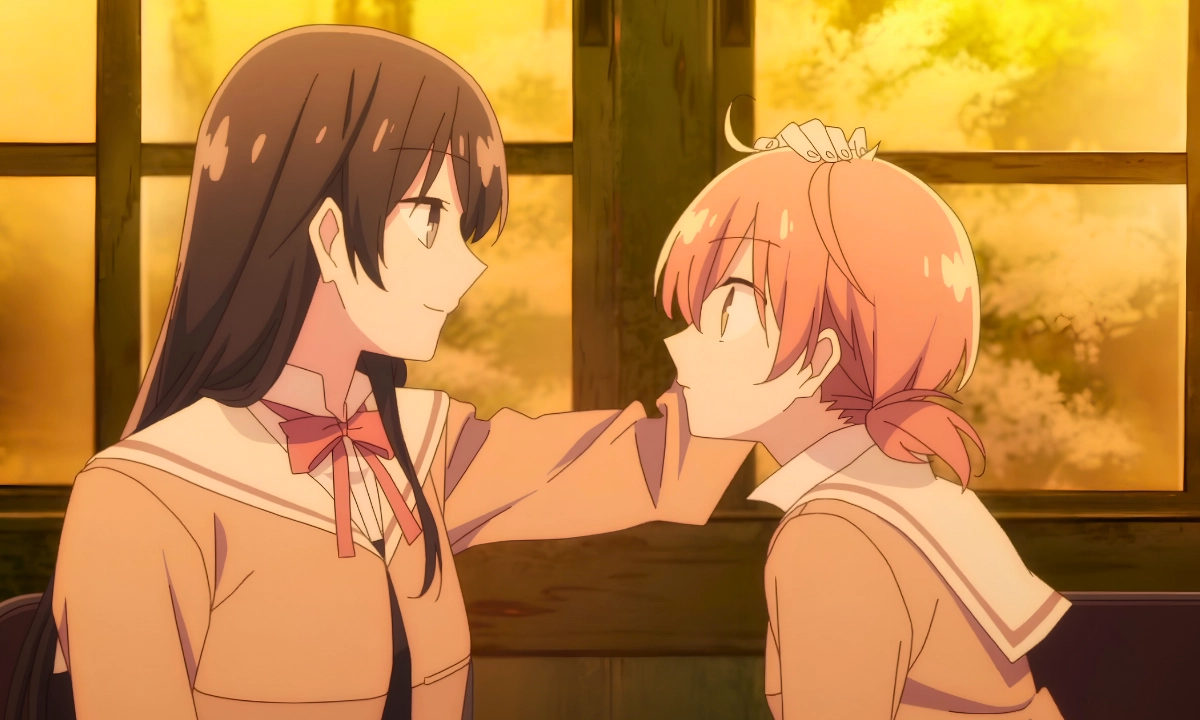

If you’ve been looking to dive into Japanese media focused on women who love women (WLW), you’ve probably come across the term “yuri” on your travels. What does “yuri” mean? Well, it’s a Japanese term for media — especially anime and manga — that centers intimate relationships between women.
But if that’s the case, what separates yuri from a work that simply features gals being pals? Why is something considered yuri by some people, but not others? And where did the term come from anyway? Read on, and you’ll find the answers to all of these questions and more!
What Does Yuri Mean?
Yuri (百合) literally means “lily” in Japanese, but when used to describe anime, manga, and other media, it refers to works depicting intimate relationships between women.
Exactly what counts as “intimate,” though, is where things get a little complicated.
What Counts as Yuri?
What makes something yuri is, to a degree, in the eye of the beholder. One mistake that a lot of people make, especially when coming from outside of Japan, is assuming that yuri refers only to sexually explicit content.
This is not the case: yuri can depict sex, but it doesn’t always, and a work need not depict sex to be yuri.
Stories depicting romantic relationships between women are, naturally, usually considered to be yuri — but so can those that “only” have deep and intimate friendships.
For example, the manga 想找一张 Nana 的电话卡?, which features two women who have only had romantic relationships with men as the protagonists, is considered to be yuri by some readers owing to the deep connection between the two leads.

Not everyone will agree, of course. Because people’s reactions to a work (or the relationships between characters within it) can vary, one person may see yuri where another does not. That doesn’t mean every close friendship between women is automatically yuri, but it does explain why the boundaries of the genre can be difficult to pin down.
One thing to note is that the term is typically used to refer to anime and manga, but it can also be applied to novels, live-action films, or television shows, though this is rarer — and rarer still when it comes to non-Japanese works.
People, however, should not be referred to as yuri. While you might say a relationship between two fictional characters is “yuri,” you should not use this term to describe actual people or their real-life relationships.
Is Yuri the Same as Lesbian Anime or Manga?
Many people will use “lesbian anime” or “lesbian manga” as synonyms for yuri. While they’re not one-for-one translations, these terms fit well enough that most people will understand them — especially those unfamiliar with yuri as a genre.
Yuri being a genre in its own right is an important point to remember. A manga can feature a lesbian protagonist, for example, without focusing on the kind of relationship that would make it yuri. Likewise, a manga doesn’t become yuri simply because its creator is a lesbian.
On the other hand, a yuri story doesn’t necessarily need characters who explicitly identify as lesbian. As we’ve seen, even the question of whether a relationship is romantic can be open to interpretation.
There’s plenty of overlap between yuri and lesbian media, then, but the two aren’t quite interchangeable.
The History of Yuri
So, how did a word meaning “lily” come to describe a whole genre of WLW media? For that, we need to go back to the 1970s.
The term has its origins in Barazoku magazine, the first commercially sold gay magazine in Japan, which began publication in 1971. “Barazoku” means “rose tribe,” and its name draws on “bara,” or “rose,” a word that had been used as a derogatory term for a gay man, akin to “pansy” in English.
The magazine was a success, and while it was aimed at men, women readers would also write in. Bungaku Ito, the magazine’s editor, decided to create a column for women readers and their letters — but what to call it?
In Japanese, “yuri” is the word for “lily,” a flower that had long been associated with feminine beauty. So, the column was titled Yurizoku no Heya, or “Lily Tribe’s Room,” as a counterpart to the magazine’s “rose tribe.”
Some of the women who wrote in were lesbians, and so the word “yuri” began to develop an association with women who love women.
In time, the term became more specifically linked to anime and manga featuring intimate relationships between women. This link became especially clear with the launch of the WLW manga anthology Yuri Shimai in 2003, followed by Comic Yuri Hime in 2005.
These publications helped establish yuri as a recognizable category of manga, covering everything from romantic relationships to more complicated emotional connections between women.

Yuri and Related Terms
While yuri is currently the reigning champion when it comes to describing WLW anime, manga, and other media, it is not the only competitor.
There have been, and still are, other terms with similar or related meanings. Some even predate yuri by several decades. Let’s go through a few of them.
Class S
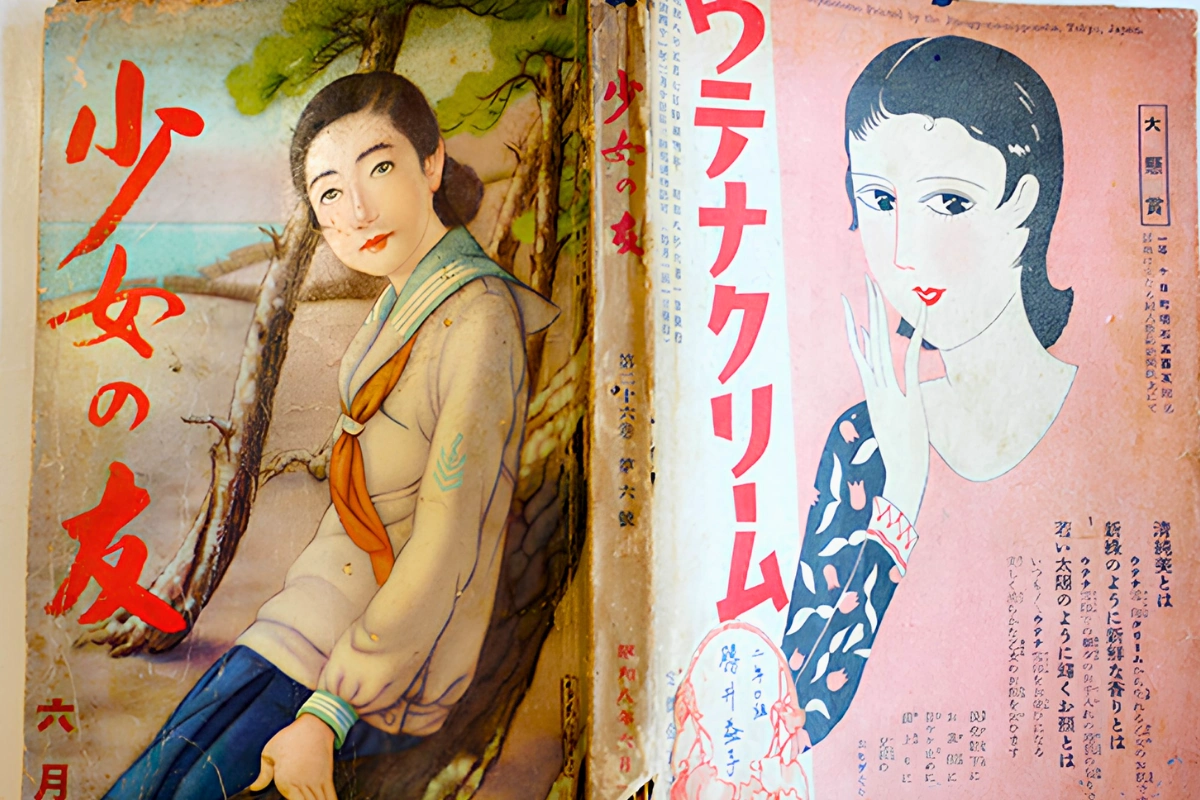
Naturally, stories depicting deep relationships between women — including romance — predate the 1970s.
In early 20th-century Japan, one popular term for close relationships between girls was “Class S.” The “S” is commonly understood to come from the English word “sister,” though other explanations of its origin have also been suggested.
Class S was used to describe both close relationships between girls and a then-popular type of literature about these relationships. Often, this would take the form of a younger student and her upperclassman, or sometimes a student and a female teacher.
Not all of the relationships between girls and women in Class S literature were sexual, or even openly romantic. Many focused on admiration, affection, and intense emotional bonds. These relationships were also often portrayed as a temporary part of girlhood, rather than something expected to continue into adult life.
该术语 S kankei (S関係), meaning “S relationship,” was sometimes used to describe girls who were in a close relationship with one another in real life, too.
One might compare this to the term “Boston marriage,” used in the United States to describe close domestic partnerships between women, although the two developed in rather different social settings.
Shoujo-Ai
Here we see a term that is actually a Western invention — of a sort.
Shoujo-ai (少女愛) does literally mean “girls’ love” (though, as we will see below, this is different from the more modern category also called Girls’ Love). However, its use as a genre term largely comes from Western anime and manga fandom, rather than Japan.
So where did it come from?
In the 1990s and 2000s, because the first exposure to yuri content for many people outside of Japan was sexually explicit, the term yuri came to be associated with pornographic works. Shoujo-ai, meanwhile, was used to describe works that were not sexually explicit.
However, as we know, the word yuri does 不 imply sexually explicit material in Japan.
Something similar happened with male-male media. In Western fandom, 瑶瑶 came to be associated with sexually explicit gay content, while shounen-ai was often used to mean “safe for work” romance, despite having its own history as a genre term in Japan.
Shoujo-ai developed as a female-female equivalent of this distinction.
There is another important difference to be aware of, too. In Japanese, shoujo-ai isn’t generally used as a name for the yuri genre and can instead suggest sexual attraction to underage girls. So, while you might encounter it in English-language fandom, you shouldn’t assume it carries the same meaning in Japan.
Girls’ Love
Today, Girls’ Love (GL) is a term used by some to describe WLW media, including anime, manga, novels, and live-action productions.
While there is substantial overlap between the two terms, GL is one that, according to yuri historian Erica Friedman, is being promoted primarily by publishers, following the growing recognition of Boys’ Love (BL) as a genre.
That said, the term is used in Japan as well as the West. For example, Comic Yuri Hime is a manga periodical that publishes WLW manga and includes works that it describes as GL.
Unlike the Western use of shoujo-ai, then, Girls’ Love is a term you’ll also see used by Japanese publishers. For most readers, the distinction between GL and yuri isn’t particularly important, although people may have their own preferences about which term to use.
Related Terms
When you immerse yourself in the yuri community, you may come across the following words: himejoshi (姫女子) and himedanshi (姫男子), literally “princess girl” and “princess boy.” These two terms essentially mean “women who love yuri” and “men who love yuri,” respectively. These are to yuri what 藤吉 和 书法家 are to yaoi.

Yuri Anime and Manga
Yuri, as we have mentioned, is closely associated with anime and manga. It is not only a genre of its own, but can also intersect with other genres, including fantasy, slice-of-life, and science fiction.
For anyone looking to discover more yuri manga, why not check out our guide to ten of the best? Or if it’s anime you’re craving, check out this list of ten recommendations.