

Newhalf (ニューハーフ, nyūhāfu) is a Japanese slang term that has historically been used as a broad label for people assigned male at birth who express or live in ways that do not conform to conventional expectations of masculinity. The term has been applied to people with a range of gender identities and experiences. For example, some transgender women, gender-nonconforming people and performers, particularly in entertainment and nightlife.
However, people described as newhalf have not all understood or identified themselves in the same way. Some have used the term as part of their own identity, while others have rejected it or preferred terms such as transgender woman.
Today, the term remains commonly associated with nightlife, entertainment, and media. Some people continue to use newhalf for themselves, while others prefer different terms. Its meaning depends heavily on who is using it and the situation in which it appears.
The Direct Meaning of ニューハーフ
The word combines the English words ‘new’ and ‘half’, but it is not an English term. Instead, it is an example of wasei-eigo (Japanese-made English). This is an expression created in Japan by using English words with a meaning that differs from standard English usage.
Historically, newhalf usually functioned as a cultural or personal label rather than a gender identity. People described by the term have not always identified in the same way. Some identify as transgender women, while others prefer different terms or do not identify as transgender at all.
For this reason, newhalf shouldn’t be treated as a direct synonym for ‘trans woman’.
The Origins and Popularisation of Newhalf

The term newhalf emerged in Japan during the early 1980s, but its exact origin is not completely settled. While one origin story is widely repeated, it is important to distinguish between who may have coined the term and who helped make it widely known.
One origin story says Betty, the owner of the Osaka nightclub Betty’s Mayonnaise, together with musician Keisuke Kuwata, reportedly penned the term. However, the available evidence does not conclusively establish this as the definitive origin.
Another example is Rumiko Matsubara, who helped popularise newhalf through media during the 1980s. As the term gained attention, it became linked to Japan’s entertainment and nightlife before entering into public use.
This distinction is important because the person who first coined a word is not always the person who made it widely recognised. The history of newhalf reflects both of these separate developments.
The Reported Betty and Keisuke Kuwata Origin Story
One widely repeated origin story dates the term to around 1980 – 1981, when musician Keisuke Kuwata reportedly used the phrase in connection with Betty, the owner of Osaka’s Betty’s Mayonnaise show pub. According to the account, Betty described herself as a ‘half’ of a man and woman, prompting Kuwata to play on the Japanese use of haafu (ハーフ, ‘half’) and refer to her as a new half.
The story has been repeated by Betty and other sources, but the exact circumstances and wording vary between accounts, and Kuwata has reportedly disputed the claim that he coined newhalf as a general term. It is therefore best treated as a reported origin story rather than confirmed historical fact.
Rumiko Matsubara and Mainstream Recognition
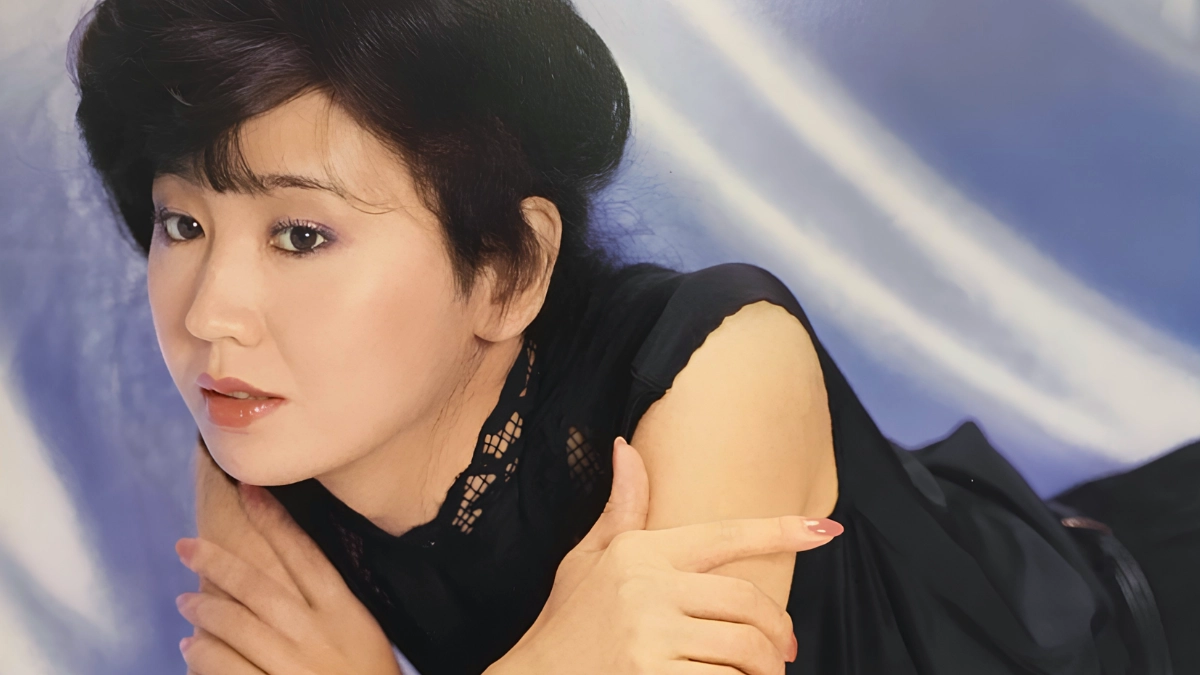
Although Rumiko Matsubara is not credited with coining the term newhalf, she played a significant role in bringing it to a wider audience. According to Kotobank, the term became associated with her 1981 debut and promotional activities. It was used in publicity to describe her image and performances.
As media coverage increased, newhalf quickly entered mainstream public awareness. Over time, the term became closely linked with entertainment, nightlife and television. It was then adopted more broadly in popular culture.
Rumiko Matsubara’s role is best understood as popularising the term, rather than confirmed coinage. While the exact origin remains uncertain, her publicity helped establish newhalf as a familiar term across Japan.
Why ‘Newhalf’ Became Linked to Entertainment and Nightlife
Although the exact origin of the word is debated, its public meaning was strongly shaped by how it was used in entertainment and media. As the term became well known, it also became associated with pubs, performances, television, and nightlife. It also later appeared in some areas of the adult entertainment industry. The visibility of performers and businesses helped shape public awareness of the term.
Because of this history, newhalf functioned as an occupational or entertainment label rather than a gender identity. It became a familiar marketing term in certain industries, helping to shape how the public understood the word.
However, these highly visible settings represented only one part of Japan’s trans-feminine community. Many people had no connection to entertainment or nightlife. As a result, the public image created by media and commercial venues did not reflect the full diversity of their experiences.
Today, those commercial associations are one reason some people consider the term ‘newhalf’ outdated. Whether the term is appropriate depends on the individual and the context – a question explored in the next section.
How Is Newhalf Used Today?
Although the term is still used by some today, some transgender people experience the term as derogatory, while others use it for themselves. Some feel it does not accurately describe their gender identity, while others continue to use it as a personal term.
For some, newhalf is a term they use for themselves, and the personal reasons and meaning behind this can vary.
The most important distinction is between self-identification and applying a label to someone. A person may choose newhalf as the word that best represents them, but that does not mean the term should be used for other people without their consent.
In practice, the safest approach is simple:
- It is fine to use newhalf when explaining the term historically or discussing it as part of Japanese language and culture
- It is appropriate when quoting or referring to someone who openly describes themselves that way
- Avoid assigning the label to a transgender or transfeminine person unless you know they use it themselves. When in doubt, use the terminology that the individual prefers
Newhalf vs. Trans Woman, Okama, Onee, Crossdresser, and Drag Queen
These terms can often be confused because they appear in similar conversations, but have their differences. Some relate to gender identity, some to expression, some to performance, and some to Japanese cultural categories.
| 学期 | What it means | Usage warning |
|---|---|---|
| Newhalf (ニューハーフ) | A historically broad Japanese cultural, entertainment, commercial, or personal label associated with some transfeminine people | Not a synonym for trans woman. Some people use the term positively, while others do not identify with it. Meaning varies by person and context |
| Trans woman | A woman who is transgender | Not every trans woman in Japan uses the term newhalf. The two terms should not be treated as interchangeable |
| 冈间 (オカマ) | A broad term with a varied history, used in different contexts for feminine men, gay men, transfeminine people, and others | Can be derogatory, although some people may reclaim or use it themselves. Context and speaker matter |
| Onee (オネエ) | A term associated with feminine speech, mannerisms, presentation, personality, media personas, or social roles | Does not automatically indicate someone’s gender identity or sexuality |
| Crossdresser | Someone who wears clothing culturally associated with another gender | Describes 性别表达, not necessarily gender identity |
| 变装皇后 | A performer who uses exaggerated gender presentation as part of drag | Drag is a performance or art form and does not necessarily reflect someone’s everyday identity or gender |
These terms can overlap in some contexts, but they should not be treated as interchangeable. A person’s identity, expression, occupation, or performance should not be assumed from a label alone.
For more context, explore our guides explaining 冈山 和 Onee and how these terms are used in Japan.
What Should English Speakers Say Instead?

When writing or speaking about gender identity in English, the best term depends on the person and the context. Newhalf does not translate directly into ’trans woman’ in English. It shouldn’t automatically become ‘trans woman’ in every historical, media, or self-description context. If someone identifies as a woman and is transgender, ‘trans woman’ or ‘transgender woman’ are the standard terms. However, always prioritise the words a person uses for themselves rather than applying a label based on assumptions.
For everyday situations, using someone’s name, pronouns, or stated identity is the simplest and most respectful choice.
Avoid outdated or derogatory English terms found in some older translations and adult media. These do not reflect modern respectful language.
For more information, see our guide to Transgender life and experiences in Japan.
What If Someone Calls Themselves a Newhalf?
If someone clearly chooses to describe themselves as newhalf, it is respectful to use the language they have chosen. A person’s own self-description should be respected rather than corrected or debated.
However, this applies only to that individual. One person’s use of the term does not mean it is appropriate to apply the label to other people.
If clarification is needed in an appropriate situation, it can be asked politely and in the right context. But strangers should not be questioned or asked to explain their identity, body, or personal history.
The simplest rule: respect the language people choose for themselves, but do not assign that label to anyone else.
Japanese LGBTQ terminology reflects the country’s history, culture, and changing communities. Understanding the context behind these words helps visitors use terminology accurately and respectfully.
Continue exploring Japanese LGBTQ terminology: