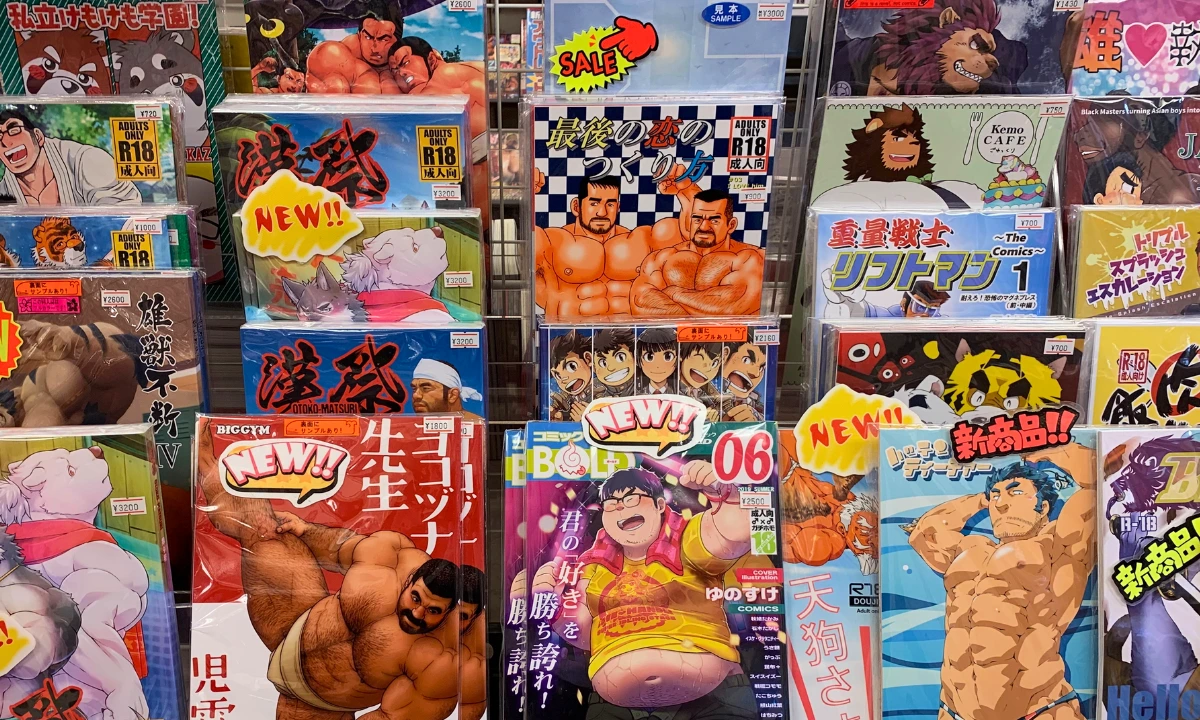

In English, the term ‘Bara Manga’ is used mainly to describe a type of manga featuring men who love men (MLM). These works are often, but not always, created by gay men for gay men. Western fans also tend to distinguish bara from other MLM material, such as yaoi or Boys’ Love (BL), by its larger-bodied, muscular, or stockier male characters.
In Japan, however, ‘bara’ is not commonly used in quite the same way today. The term gei komi (ゲイコミ; an abbreviation of ‘gay comics’) is more commonly used for gay manga made by and for gay men, while ‘bara’ has older historical associations.
So, what exactly does bara mean, why did its usage change in Japan, and why has the term remained popular overseas? We’ll go through all of that in this article.
バラ漫画の意味
The word bara (薔薇) means ‘rose’ in Japanese, and was once a pejorative term for homosexual men. We might think of the term ‘pansy’ as an English equivalent. Because of this association, bara was sometimes used in Japan, especially in the 1970s and 1980s, to describe gay media. That usage is now considered outdated.
Nevertheless, the term has remained popular in the West. Fans often use it for works featuring larger, more muscular, or chubbier male characters. Appearance alone, however, does not define a work as bara, and the absence of muscular characters does not mean that it cannot be considered bara.
Works classified as ‘bara’ outside Japan are often, but not always, erotic. They can also include drama, romance, and humor, depending on the work and its author. ジライヤ, for example, is widely associated with bara manga and incorporates comedy into his sexual manga work.
How Bara, Gay Manga and Gei Komi Are Used in Japan
‘Bara manga’ is generally considered outdated in Japan. So what terms are used to describe MLM manga here?
For gay manga in general, gei komi (ゲイコミ; an abbreviation of ‘gay comics’) is more common in Japan today, particularly for gay manga made by and for gay men. In this sense, gei komi serves much of the purpose that ‘bara’ once did in Japan and still does in some English-language discussions.
What, then, is the relationship between bara manga, BL, and yaoi? How do they differ?
How Is Bara Different From BL or Yaoi?
BL, or Boys’ Love, is the broader modern genre category for media about romantic and/or sexual relationships between men. It can include manga, light novels, audio dramas, and other formats.
Yaoi overlaps heavily with BL today, but the term has a different history.
It developed alongside shounen-ai (少年愛), which means ‘boys’ love’ but is distinct from today’s BL. Shounen-ai became a popular manga genre in Japan in the 1970s, while yaoi was initially associated more closely with amateur and self-published works. That distinction is much less important today.
In the West, people sometimes use BL to mean material that is not explicitly sexual, while yaoi is often understood as more pornographic. These definitions are not strict, however. Some BL depicts sex, while some yaoi focuses heavily on romance rather than physical passion.
Another common distinction is based on creators and audiences. BL and yaoi have historically been strongly associated with female creators and a presumed female audience, while works described as bara or gei komi are more often associated with gay male creators and readers.
That can be useful context when reading Western discussions of these categories, but it should not be treated as a firm definition. A creator’s gender, the presumed audience, the characters’ body types, and the amount of sexual content do not by themselves determine which label applies to an individual work.
These terms overlap, and their meanings have changed over time. There is no single, unchanging definition that cleanly separates all of them.
A Brief History of Bara in Japan
Although bara once had derogatory associations, gay men in Japan began reclaiming the term in the middle of the 20th Century. One of the clearest examples came in 1971 with the launch of Japan’s first commercially available gay magazine, バラゾク, whose name meant ‘rose tribe.’
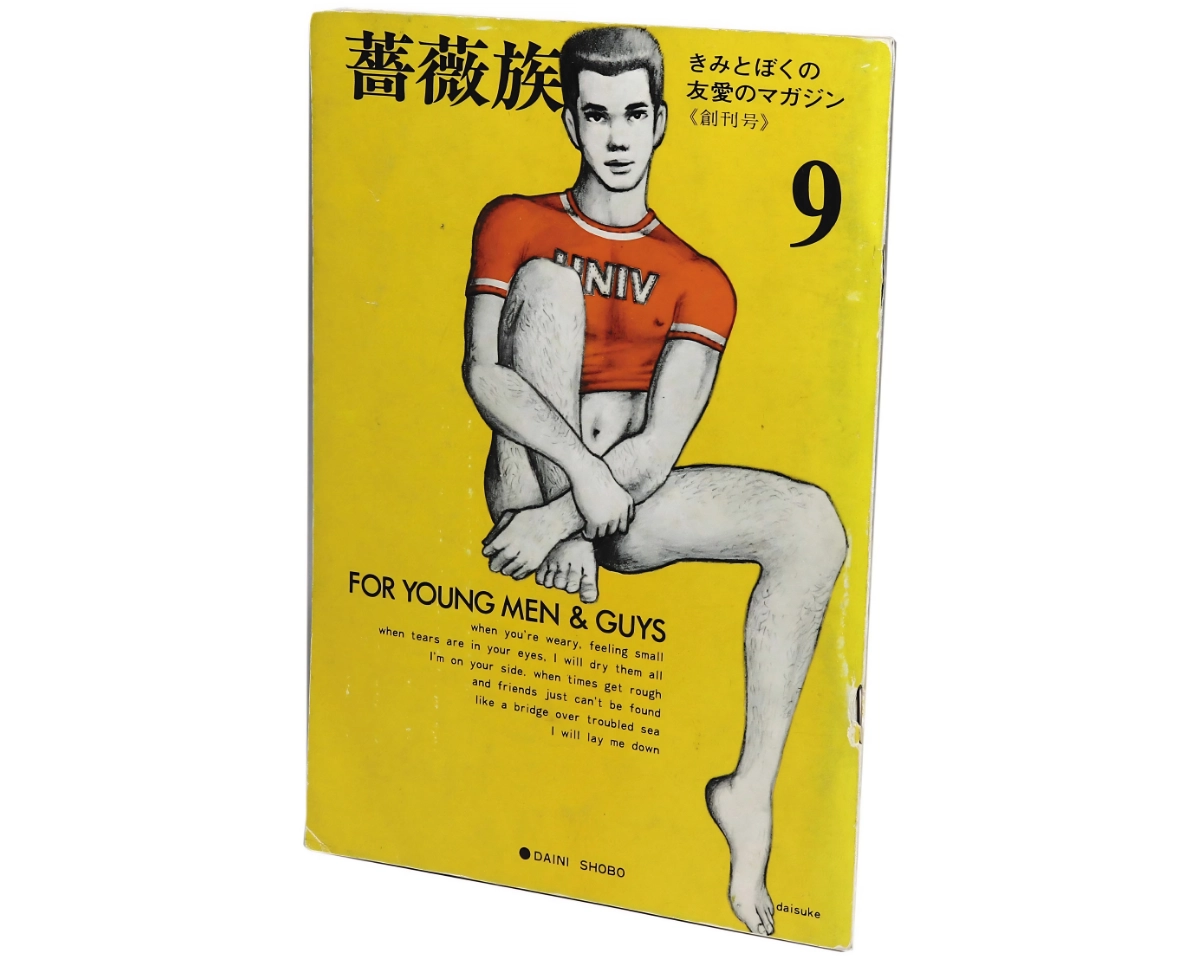
The magazine tapped into a then-underserved gay market in Japan and became a major success. It went on to publish the first interview with an AIDS patient in Japan and even helped give rise to the term ‘yuri,’ which now refers to lesbian-focused media.
用語 バラ映画 also emerged to describe ‘gay movies,’ which were usually pornographic. As バラゾク grew, it began investing in the distribution of gay videos, which came to be known as Barazoku-eiga (Barazoku movies).
Over time, however, the imported term ‘gay’ became more and more common in Japan as an adjective for male homosexuality. Unlike bara, it did not carry the same historical baggage and was also widely understood internationally. As ‘gay’ became more common, the use of ‘bara manga’ declined in Japan and terms such as gei komi became more prominent.

Indeed, Gengoroh Tagame, often considered one of the most prominent artists whose work is labelled ‘bara’ outside Japan, does not consider himself a bara manga artist. He has previously described the Western use of the term as a misappropriation, although he has also acknowledged that it has some utility.
Explore Gay Manga Further
In short, ‘bara’ remains a useful and widely recognized term among many English-speaking manga fans, but it does not map neatly onto contemporary Japanese terminology. In Japan, gei komi is generally the more relevant term for gay comics made by and for gay men, while BL and yaoi have their own histories, audiences, and overlapping meanings.
For those curious to explore this genre further, please check out our articles here: