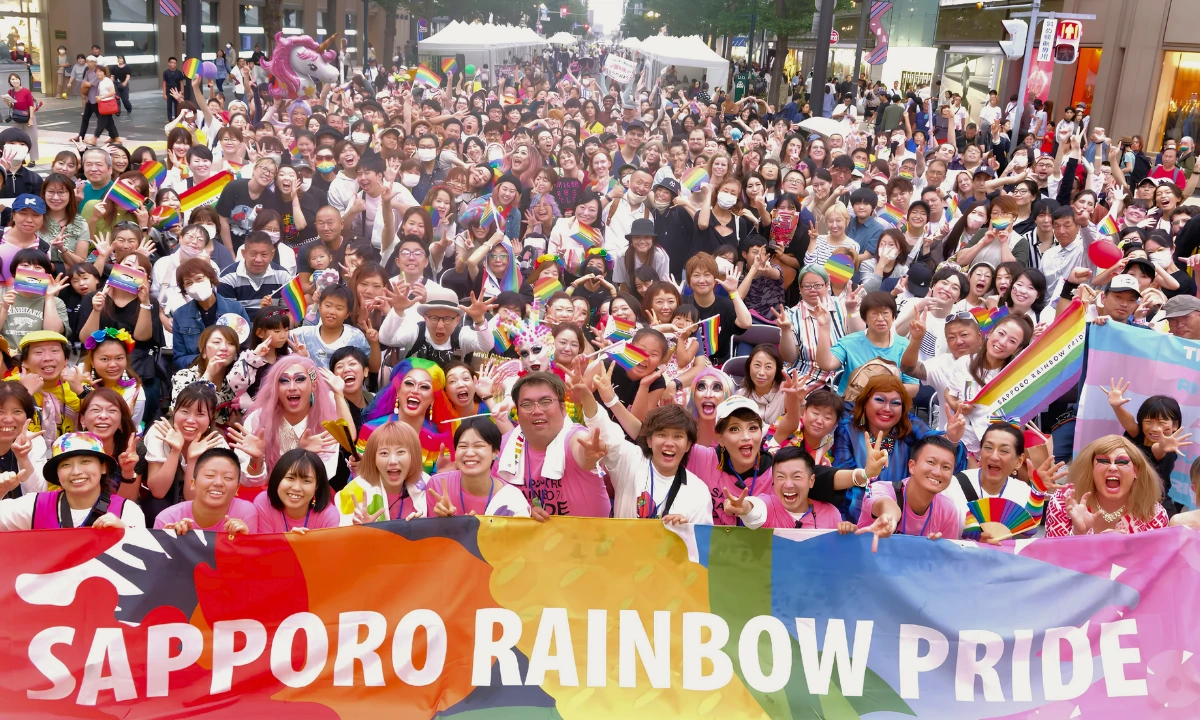

As the nights begin to get longer, it’s time to celebrate Sapporo Rainbow Pride and the 30th anniversary of one of Japan’s longest-running Pride parades!
Hokkaido, Japan’s northernmost main island, is renowned for being a cold place with warm people. This is never truer than during the annual Sapporo Rainbow Pride.
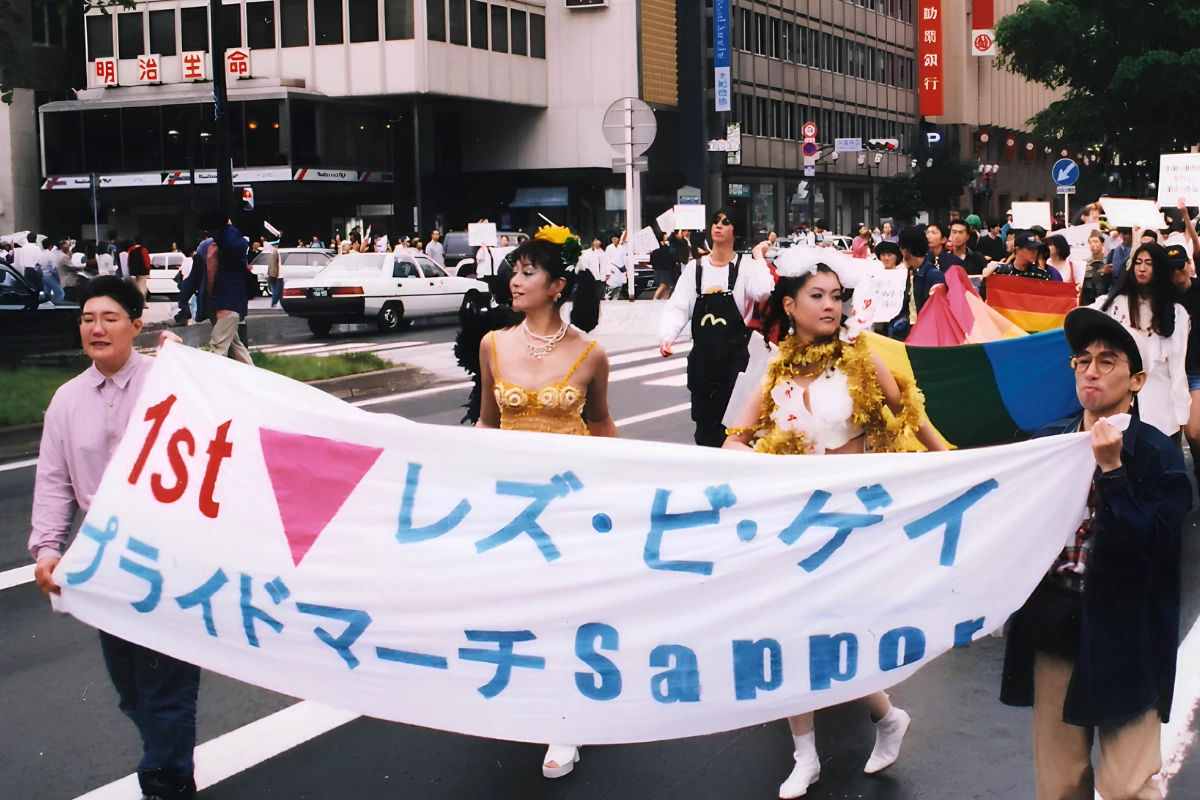
The Sapporo Rainbow Parade began in 1996, originally as the LesBiGay Pride March Sapporo. Now the second-oldest Pride Parade after Tokyo, the temperatures may be cool, but the vibes are going to be hot!
Here’s everything you need to know to have the time of your life at Sapporo Rainbow Pride!
Sapporo Rainbow Pride 2026 at a Glance
- Dates: 26–27 September 2026, 11am – 4:30pm
- 場所は? 2-chome and 3-chome, Minami 1-jo-dori, Chuo-ku, Sapporo (pedestrianized section named Rainbow Street for the occasion)
- Entry: 無料
- Closest station: Odori Station, around one minute away
- Sapporo Rainbow Parade: Sunday 27 September
- Parade assembly: From 1:30pm
- Who can march: Anyone, regardless of gender or sexuality
- Parade requirement: Participants need a wristband, available from the Registration Desk on the day (deadline: Sunday 27 at 1pm)
Sapporo Rainbow Pride Highlights
Sapporo Rainbow Parade
The Sapporo Rainbow Parade is the highlight of Sapporo Rainbow Pride.
Anyone is welcome to march, regardless of gender or sexuality. There are six distinct marching groups:
- Dosanko, at the front of the Parade
- Kaderu, marching for marriage equality
- Namara Ally!, for corporate allies
- Kepparu, a youth group
- Sapporo Women’s Project, a float to uplift women
- Shitakke, for those who want to walk at their own pace
This year, participants should begin assembling at 1:30pm for groups 1-3 and 1:45pm for groups 4-6 on Sunday 27 September in Odori Park. The march starts at 2pm and will take approximately one hour to complete.
To take part, you’ll need a wristband. These can be picked up from the Registration Desk on the day of the Parade. You can register throughout Saturday, with the final deadline being 1pm on Sunday.
札幌レインボープライド
Sapporo Rainbow Pride in its current form has been held since 2018 and has become a staple of the Japanese LGBTQ+ calendar. It has attracted thousands of participants each year, with roughly 25,000 visitors in 2025.
The Parade itself has a much longer history. It was first held in 1996, organized in part after the success of the Tokyo parades up to that point. Organizers felt it was important to have local parades alongside a “main” parade in the capital. However, after the 1996 Tokyo Pride event ended in disaster, the Sapporo Parade became the main bearer of the flame for queer pride for years.
This year, Sapporo Rainbow Pride is going all-out to celebrate the Parade’s 30th anniversary.
メインステージ
The main stage is where many will want to make their way when they arrive at Sapporo Rainbow Pride, and it’s no wonder. To celebrate 30 years of the Sapporo Rainbow Parade, a big selection of performers is coming to entertain attendees.
The MCs for the first day are Gogo Boy GABU and Emino Nakamura, who has twenty years’ experience as a reporter and hosts an LGBTQ+ radio show. Acts on Saturday 26 include the gay idol group Nijigumi Fights and Shinjuku Eisa Shin-Niji, a Shinjuku-based group that performs traditional Eisa dance from Okinawa. Drag superstar Dorian Lollobrigida will headline the day.
On Sunday 27, the MC is Teruko Mitsushima, a legend in the Sapporo cross-dressing scene and star of the HBC Radio program Shitakke Radio. Acts include Satsukipon and the Nekoneko Dancers, the Pride Choir Tokyo, and a drag show with queens Dandelion Pot Beauty, Goma Dango, and Teruko Mitsushima.
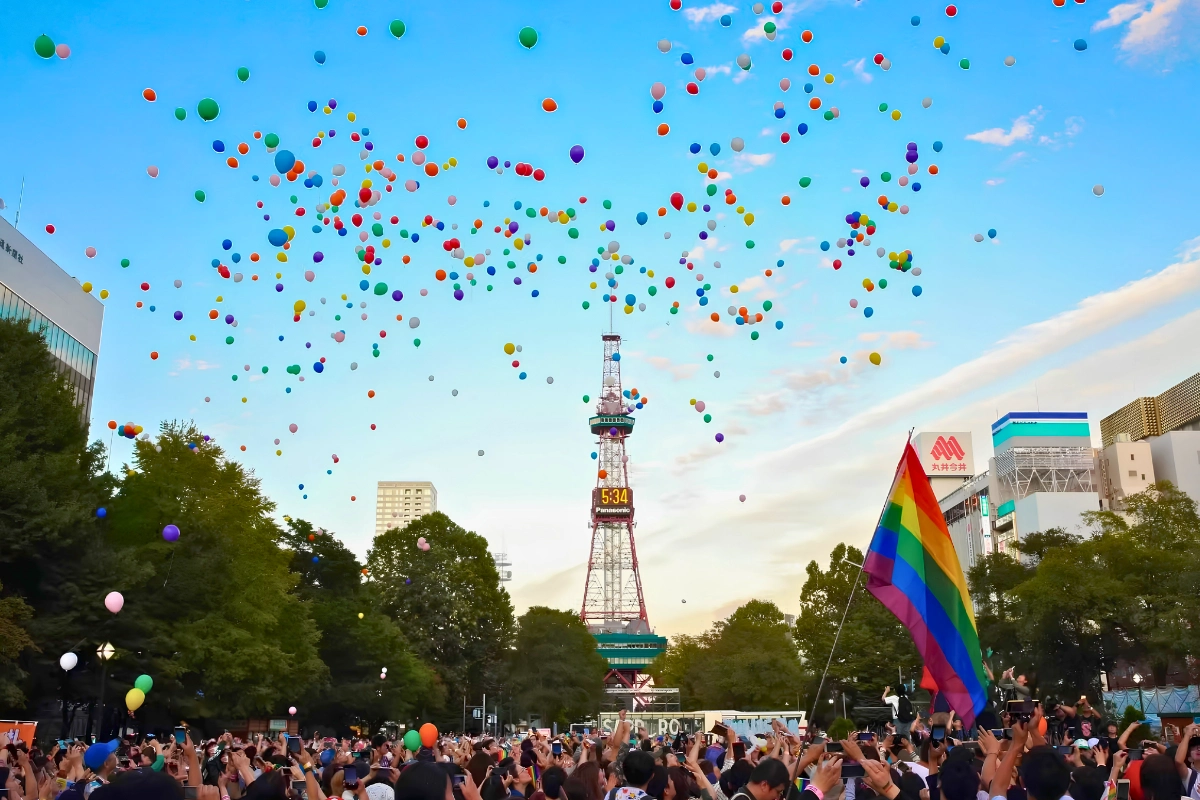
Sapporo Rainbow Pride is then brought to a close with a Sapporo Rainbow Pride tradition: the Bubble Release. All the gathered attendees blow bubbles into the air, which float freely on the wind as the sunlight reflects rainbow colors off the soapy spheres.
ブース
There is a wide range of ブース to visit this year. These include Baby Balloon, a balloon artist; the Sapporo Bar Association; Marriage for All Japan; and a “My Body” art exhibition.
There will also be food trucks for tasty treats, such as dogkuudo hot dogs and Natural Food Cafe Ore no Yuukorin.
After-Parties and Other Events
On Sunday 27 September, the club Super Snack will be hosting Change!, the official after-party of Sapporo Rainbow Pride.
Open to those 20 years old and above, entry is ¥5,000. There is a ¥500 discount for anyone wearing something rainbow-themed and a ¥1,000 discount for anyone wearing a wristband from the Parade.
The party will feature performances from Gogo Boy and Usak, star of ボーイフレンド, as well as dancer AYA SATO.
Getting Around Sapporo Rainbow Pride
Sapporo Rainbow Pride takes place along Minami 1-jo-dori, Chuo-ku.
最寄りの駅
The easiest station to get to Sapporo Rainbow Pride is Odori Station. It is approximately a one-minute walk from Odori Station to Sapporo Rainbow Pride.
宿泊先
If you want to stay within easy walking distance of Sapporo Rainbow Pride, there are several options nearby.
ALPHABED INN Sapporo Odori Park
A well-reviewed hotel a short walk from Odori Station. It has free WiFi and a balcony for every room.
A very short walk to Odori Park, it has all the amenities one would expect of a modern hotel, with 24-hour desk service.
In addition to its proximity to Odori Park, and therefore Sapporo Rainbow Pride, the Wyndham Garden has a restaurant serving New York-style pizza and buffalo wings, as well as a bar.
入場および注意事項
Entry to Sapporo Rainbow Pride is totally free!
Be aware, however, that it will be crowded, especially around the opening and closing of the festival each day. This will be particularly true on Sunday 27 September, when people gather for the Sapporo Rainbow Parade.
アクセシビリティ
Odori Park is wheelchair-friendly, as is Odori Station. Minami 1-Jo-Dori is flat land, traversable for anyone with additional mobility needs.
文化的配慮
Visiting Japan and Sapporo Rainbow Pride is a lot of fun! But remember that there are a few things to be considerate of, both inside and outside the festival.
日本のLGBTQ+ライフ
Sapporo Rainbow Pride itself is an openly LGBTQ+ environment, as are other queer events and parts of Susukino, Sapporo’s nightlife district.
Outside those spaces, everyday interactions in Japan tend to be a little more reserved. Public displays of affection are generally less common than in many other countries, regardless of sexuality — even the hettys get side-eyed if they start canoodling.
写真
Sapporo Rainbow Pride has a celebratory atmosphere, but that doesn’t mean everyone wants to end up in somebody else’s camera roll.
Even if someone is wearing a flamboyant outfit, unless they are clearly posing for photos, ask before taking a picture.
The same goes for physical contact. If you’re taking a pic with a drag queen, gogo dancer, or anyone else, ask before putting your hand on their shoulder or around their waist. Better to ask than make someone uncomfortable.
Frequently Asked Questions about Sapporo Rainbow Pride
How much is it to go to Sapporo Rainbow Pride?
無料です!
クレジットカードは使えますか?
一部のブースではキャッシュレス決済に対応していますが、日本では依然として現金しか受け付けていない場所もあるため、いくらか現金を持ち歩くことを強くお勧めします。.
Is Sapporo Rainbow Pride family-friendly?
Yes! While there may be people in some suggestive outfits, Sapporo Rainbow Pride is a family-friendly environment.