
The Global Gay Sensation
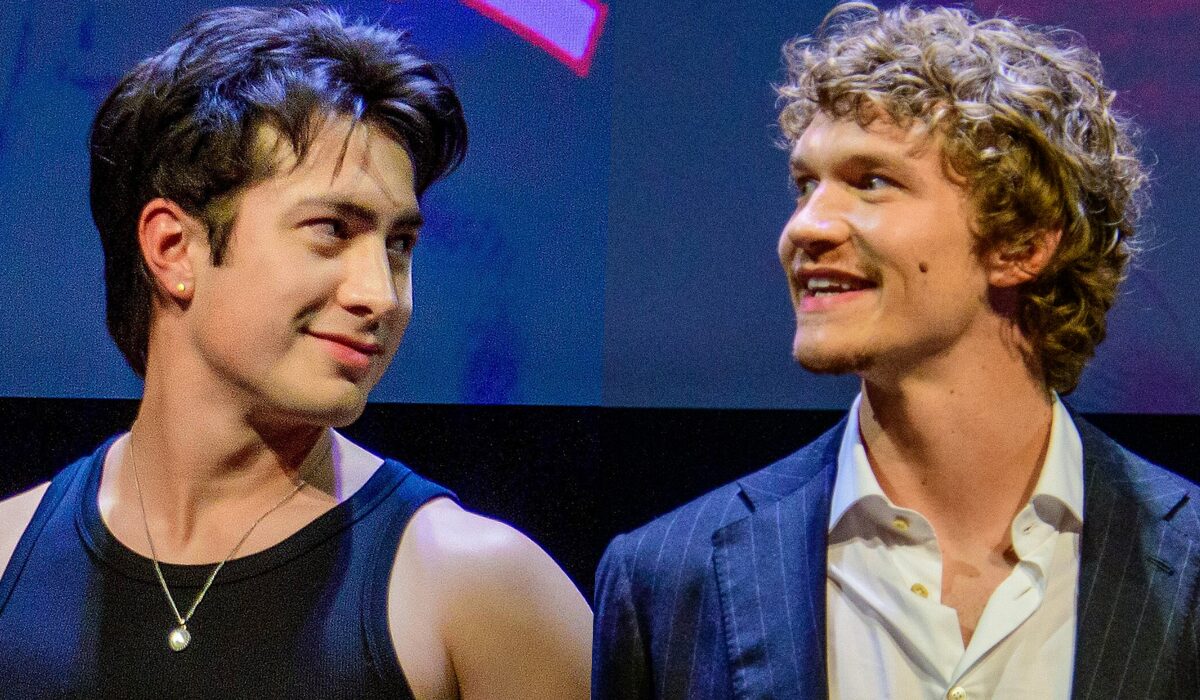
If you haven’t heard of Heated Rivalry, you must have spent the last six months living under a rink. A six-episode television drama based on Rachel Reid’s novel of the same name, itself the second volume in her Game Changers series of books, it took the world by storm when it was released by the Canadian streaming service Crave in November 2025.
Its overnight success has been evidence of what many in Japan have known for a long time: there is a huge market — among men, women, and those betwixt and beyond — for gay content that don’t fit the typical strictures of representation on TV and film, which can often be tragic stories of doomed love, or slow, delicate explorations of sexuality. Heated Rivalry, instead, became famous for its lustful, hungry sexuality against the backdrop of the unacknowledged but ever-present homophobia in the world of sports. Let’s take a look at the show that has a two-man advantage over everything else on TV, and beware spoilers!
Plot Synopsis
Heated Rivalry covers ten years in the lives of professional Canadian hockey player Shane Hollander and the Russian Ilya Rosanov, as their personal and professional lives clash over and again. Beginning the series as up-and-comers who have yet to be drafted into professional league teams, they soon find themselves on opposite sides in the Major League Hockey (MHL; a thinly-veiled version of the real life National Hockey League), when Ilya is picked up by the Boston Raiders, and Shane instead goes to the Montreal Metros.
Clashing on the ice repeatedly, the fans and the press begin to pick up on a rivalry between them — something that is only amplified by their coming into competition for prizes like Rookie of the Year and other MHL awards. Behind the scenes, however, the two develop a sexual relationship, with Ilya taking the lead in guiding Shane through what could be considered his gay awakening.
Often separated by geography (both as their teams are in different countries in North America, and because Ilya makes regular trips to Russia to train and play for his national team) and fearing damage their reputation could take if their relationship is discovered — a particular concern for Ilya, who if discovered may not be able to return to a Russia gripped by institutional homophobia — they rendezvous in secret, and sext each other under the aliases “Jane” and “Lily.”
As the series progresses, they are forced to confront their feelings for each other, and what they could mean for themselves as individuals, as a couple, and as athletes — especially after a late-season twist that could change everything.
Characters and Cast of Heated Rivalry
Heated Rivalry has a large cast of main, featured, and guest characters, and so we do not have the time or the space to go through all of them, unfortunately, but here is my list of the show’s top four stand-outs.
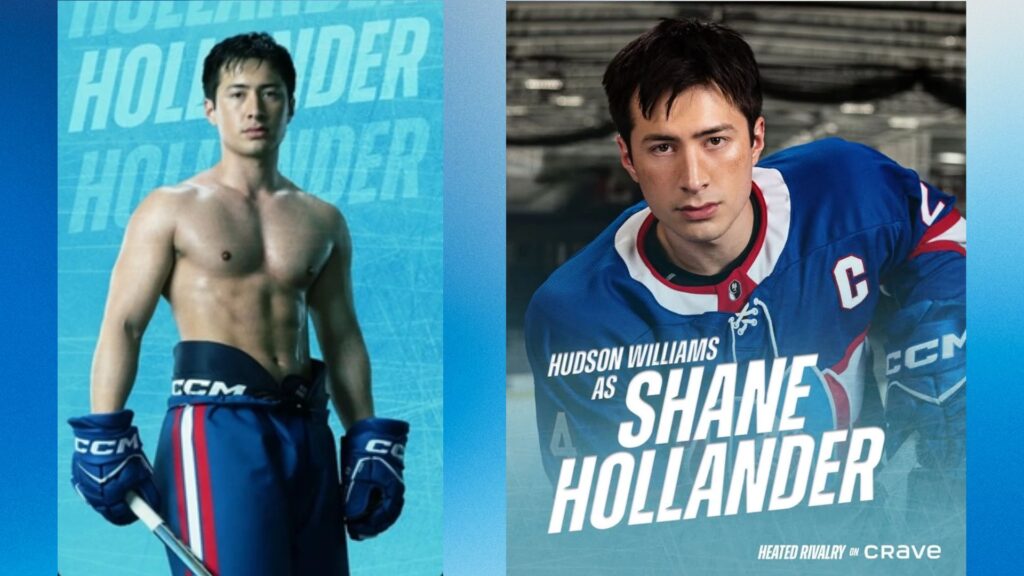
Shane Hollander/Hudson Williams

One of the two central figures, Shane is a Japanese-Canadian who is thought of by fans as the quintessential “Canadian” hockey player: he is dedicated, hard-working, honest, and keeps to a strict diet in order to be at peak performance during the hockey season… but he’s also a little boring. He is also portrayed in the show as being autistic, which Williams portrays by his use of occasionally speaking in a flat manner, or cooking too many hamburgers, because the idea of modifying the recipe and its measurements doesn’t occur to him.
It is this combination of traits that mean that he is not as daring in exploring his sexuality as Ilya: to do so would mean going against ingrained conventions and rules, as well as potentially jeopardizing the career he has worked so hard to cultivate. But it is exactly this attitude that makes him such a good foil to Ilya.
Williams’ performance in the role is top-notch, and his anxiety and trepidation not only come through clearly, but make the moments when he does surrender to his desires with Ilya.
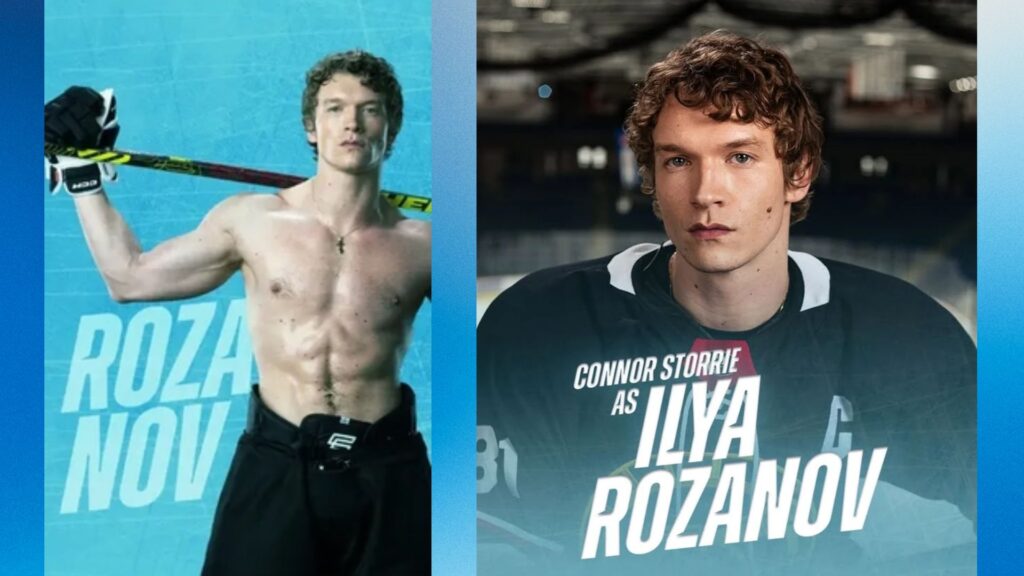
Ilya Rosanov/Connor Storrie

The second of our dual protagonists, Ilya is, in contrast to Shane, highly confrontational when playing hockey, and is known for irritating opponents and teammates with his brash, cocky attitude — especially annoying as he has the skill and talent to back up his bluster. He is also, in contrast to the straight-laced Shane, an eager party animal, regularly heading to clubs to dance and drink.
He’s also known as a womanizer, although those closest to him know that he is bisexual, and when outside of Russia has flings with men… though it seems that his relationship with Shane is the first time that he has been with anyone long-term (other than his friend, Svetlana). Beneath his carefree and brash exterior, however, he struggles with his family, with his brother acting like a freeloader even as Ilya sends money to help care for his father, who suffers from dementia — and was abusive when Ilya was younger.
Storrie’s performance as Ilya is both nuanced and commanding (in more than one sense, on occasion). He has been praised for his excellent work in Russian, both in the speaking and in terms of his accent, to the extent that Russian extras believed he must be a second generation immigrant. This comes through most clearly when he calls Shane and speaks to him in Russian, to express his feelings without burdening Shane with them.
Scott Hunter/François Arnaud
Arguably the second lead, with an entire episode dedicated to him and his burgeoning relationship with Kip (more on whom below), as well as getting what many consider to be the emotional peak of the show in the penultimate episode.
Hunter is the captain of the New York Admirals, and while he makes a number of small appearances in the first two episodes, the third spotlights him and his story. While he is the Admirals’ captain, he has been on a cold streak lately, scoring very few goals. One morning, he gets a customized smoothie from Kip, who is working at a juice bar, and suddenly his luck turns around, and he scores several goals. Being a superstitious sort, he buys the same smoothie from Kip for each home game — and makes sure to flirt with him.
While the relationship between Hunter and Kip becomes sexual in nature, they are not quite as intense as Hollanov, but still struggle with similar problems. Hunter is unwilling to reveal his sexuality publicly until he retires from hockey at the earliest, which forces them to be discrete, despite the fact that they live together, and even attend the same events (albeit, Kip is usually catering.
Arnaud plays Hunter with a quiet strength that is, like Shane and Ilya, held back by the strictures of the world of hockey. While some in Kip’s life wonder whether Hunter is just using Kip as a booty-call for whenever he’s back on home turf, the viewer is never left in any doubt as to his devotion to his smoothie-sweetheart.
Christopher “Kip” Grady/Robbie G.K.
So let’s get right back into it with Kip. As mentioned, he works at a juice bar, and is saving money in anticipation of going to graduate school, and is waiting on his applications when he meets Hunter for the first time. Kip doesn’t recognize him as a hockey superstar, just as a cute guy who makes him melt whenever he speaks Kip’s name aloud, but after one customer tells Kip who he’s been talking to, he suddenly finds himself a hockey convert.
Kip’s friends, most notably Elena (played by Nadine Bhabha) tease him about his secret beau, but soon see the strain that Kip is under having to hide things from them, and from his loving father. Kip, for his part, denies that they are even dating (even as their relationship goes from fun hypothetical to obvious to undeniable), but the weight of the secrecy begins to pile up.
This is shown exquisitely through G.K.’s sweet, shy, and vulnerable performance as someone clearly taken at first sight, but who knows that — at least as things stand — he can’t go on like this. The third episode culminates with Kip inviting Hunter to his birthday at a local gay bar (though Kip in a heart-breakingly sweet moment tells Hunter, “though, thanks to me, now it’s basically a hockey bar”), but Hunter’s fear of being seen at a gay bar holds him back and marks the end of their relationship.
That is, until the end of the fifth episode, considered by many fans to be the best in the series. Despite the difficulties the Admirals have had over the season, they eventually manage to pull out a victory in the finals of the Not Stanley Cup, and win the whole league. After Hunter, as the team’s captain, has raised the cup, he beckons to Kip, watching from the crowd, to join him on the ice, and kisses him, on camera, in front of the hockey world. After the difficulties and sadnesses that they both experienced, it is deeply cathartic to see Kip happy, and for Hunter to essentially declare, “I’ll Love Who I Want, I’m the Gay King of Hockey, Fuck You.”
Critical Response and Impact
From the beginning, Heated Rivalry was met with huge fan and critical acclaim. As mentioned, episode five, ‘I’ll Believe in Anything,’ was seen as the jewel in the crown (at one time tying with Breaking Bad’s ‘Ozymandias’ as the only TV episode on IMDb to have a perfect 10/10 rating, as well as a 100% positive score on Rotten Tomatoes), but all of the episodes were highly acclaimed.
The passionate sex scenes were singled out for their raw physicality, eroticism, and for feeling more tactile than tacked on. They are charged, but usually serve to move the story or the characters forwards. In an era where there has been something of a backlash against what are considered to be be unnecessary sex scenes (or, indeed, a period when sexuality and physicality can sometimes seem to be divorced from one another) this stands out as a terrific achievement.
Interestingly, it also sparked an uptick in interest in hockey, with fans all over the world picking up a stick and a pair of skates, or just tickets for a local game — if they could get their hands on any.
Where to Watch Heated Rivalry
Outside of Japan, Heated Rivalry can be viewed on Crave in Canada, the show’s home and native land, on HBO Max in the USA, and on Sky TV in the UK. Here in the Land of the Rising Sun, however, things are not so simple. We have received a veritable torrent of inquires about where to watch it. I’ve spoken with all of my knowledgeable colleagues, thinking that such peer-to-peer networking might offer up a solution.
However, there are no easy TV fixes, leaving us like a pirate without a map. Pirates, I might note — someone who has resorted to piracy to get what they want, because what they want cannot be found legally in their immediate vicinity, proximity, or nearby (known in pirate vernacular as VPN) — may not always be welcome, especially by the authorities, and nobody would recommend piracy as a way to obtain something (even if it is sometimes necessary).
What Do We Think?
In terms of quality, readers who have stumbled from their six-month slumber to be surprised by the sudden success of Heated Rivalry (known to your grandma as The Gay Hockey Show), should believe the hype. The story is compelling, the characters fully fleshed-out and believable (even the more minor figures), and the acting exceptional.
I personally rate the B-plot between Hunter and Kip to be the highlight of the show (if you couldn’t tell by the disproportionate attention I gave it above), but moments like Ilya’s Russian confession, or Shane’s nervous, awkward coming out to actress Rose Landry (played by Sophie Nélisse) he briefly dates are deeply moving.
One other aspect that we would be remiss not to mention is the importance of Shane’s Japanese heritage. Confirmed to be half-Japanese, Shane makes note that he is one of the few Asian men represented in hockey in Canada — and his Japanese mother Yuna (played by Christina Chang) tells him that many Asian children will be looking up to him. During his brief relationship with Rose, he also notes that he wasn’t the only Asian kid who played hockey at school — but that since the other kid had an Asian surname, he got bullied for his background, not Shane. Others have made convincing arguments that the racial aspects of the show are touched on too briefly (indeed, some people I know who love the show totally forgot Shane even は half-Japanese until reminded of it), but it is a worthy inclusion.
One area I felt a little… let down by was the sex scenes. I had heard that they were “more erotic than porn” from some who saw the show before me, so I was prepared for filth that even 意外とやんちゃな深見 couldn’t match. So I was a little disappointed that it wasn’t as erotically charged as I had been led to believe: there’s some butts, simulated sex (especially oral sex), and two, maybe three moments of light power dynamic play. Once we get around to the third episode, however, I recalibrated my expectations and started to enjoy Heated Rivalry a lot more.
Another thing that could be considered both a strength and a weakness is the lack of time actually placed on hockey. To be fair, the show is about the characters, not the sport, and so, much like Apple’s Ted Lasso, the ins-and-outs (as it were) of the sport are less important than the interactions themselves. While this does mean that you can enjoy Heated Rivalry even if you can’t tell the difference between a body check and a butt-ending, for those who prefer to have at least a little education about the sport they’re watching, as in Yuri on Ice!!! または 10ダンス, it might feel a little hollow in this regard.
Regardless, Heated Rivalry is unmissable TV. While I thought the hype for the raunchiness was a bit overblown, this meeting of heat and ice is definitely steamy. Anyone who doesn’t check it out has probably had a check to the head.