
The History of HIV/AIDS in Japan

托比亚斯-沃特斯

What is HIV/AIDS?

I’m sure that almost none of our readers will need a refresher on what HIV/AIDS is, but just in case, to cover our bases, we’ll give a brief overview. HIV is an abbreviation of the human immunodeficiency virus, which attacks the immune system. Without treatment, eventually this will develop into AIDS, or acquired immunity deficiency syndrome. While the condition is not in and of itself deadly, by neutralizing the immune system, it makes it impossible for the body to fight off even more minor infections.

HIV/AIDS in Japan: The Earliest Cases

While it is most well-known for being transmitted through sexual intercourse, the first known cases in Japan appear to have instead come from contaminated blood products. According to Dr. Hiroshi Inoue of the Open University of Japan, 1,400 people in Japan suffered from drug-induced HIV infection as a result of plasma imported from the US in the early 1980s. However, because HIV acts so slowly before symptoms manifest, they were not recognized until years later.

The first direct diagnosis of AIDS in Japan was in 1985, from someone who had returned to Japan after living in the US for an extended period of time. In the intervening time, new cases of HIV in men, especially those in the age-range of 20-39, have superseded those caused by contaminated material. One may expect this, as arresting the spread through tainted blood products is much easier than preventing a disease that was difficult to detect at the time. But how did the spread of the disease progress as officials became aware of its presence?

Government Lack of Interest in HIV/AIDS

While the Japanese government, which was not as hostile as the US government (as there wasn’t the same level of institutionalized homophobia) when it came to reacting to the AIDS crisis, there were nevertheless a number of mistakes that were made which led to serious issues. Despite HIV/AIDS being known of in the US in 1981, Japan didn’t enact a program to track the disease until 1984. As such, despite the first case being detected one year later, there was plenty of time for the slow-acting virus to spread through sexual contact and tainted blood products.

Additionally, the lower number of cases in Japan compared to the rest of the world meant that it was not taken as seriously by the general public. Indeed, due to the higher number of infections per capita in other countries, and the first confirmed Japanese case being that of an artist who had lived abroad, it came to be known as a “foreign disease.” As a result of this, many prevention efforts were half-hearted, and some gay foreigners experienced discrimination on the basis that it was thought that they carried and could spread the disease.

Response by Activists

Health Minister Japan

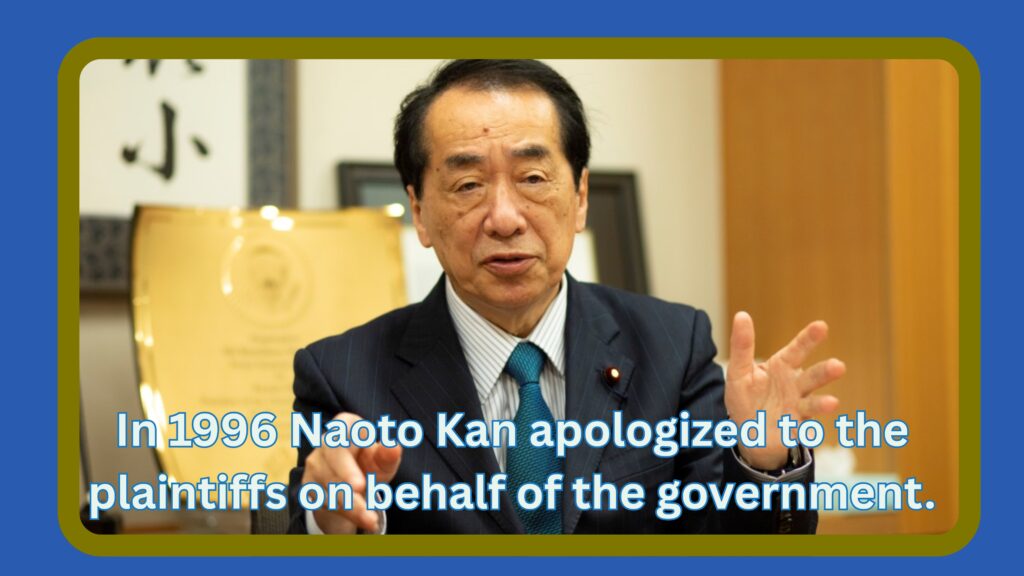
In 1989, victims of what would come to be known as the tainted blood scandal filed a lawsuit against the Ministry of Health and Welfare, as it then was, as well as five Japanese pharmaceutical companies. In 1996, the government settled the case, and then Health Minister (and future Prime Minister) Naoto Kan apologized to the plaintiffs on behalf of the government.

Due to the relatively lower rate of infected in Japan, there was a smaller amount of public protest or awareness campaigns from non-government actors. However, a combination of sufferers surrounding the Ministry of Health and Welfare in a human chain made headlines, and 1990 saw the establishment of the [Japan AIDS & Society Association](https://www.asajp.net/en/#:~:text=Japan AIDS & Society Association (JASA) was launched in November,the benefit of the whole.).

The State of HIV/AIDS in Japan Today and Resources

hiv in japan

Today, roughly 27,000 people in Japan have been diagnosed with HIV/AIDS. In a country of 122 million, this is a very small number. However, the importance of supporting those who have the disease, and of not repeating the mistakes of the 1980s and 1990s, has not been forgotten.

Today, organizations like akta, based in Shinjuku Nichome, Japan’s number one gayborhood, continue to create and disseminate information about HIV/AIDS, conduct testing for anyone who wants proof or peace of mind, and hand out condoms to anyone who wants them. HIV/AIDS did not scar Japan in the same way as it did countries like the US or the UK, but that doesn’t mean that prevention, education, and care are not deeply required.

托比亚斯从事编辑和作家工作已有十余年,最初在伦敦一家法律出版社工作,2019 年移居东京。 搬到日本首都后,他撰写或编辑了各种主题的文章,包括汽车、医药、电子游戏、经济、葡萄酒、教育和旅游。他甚至评论了日本推出的首款 CBD 啤酒! 业余时间,他喜欢看电影、玩电子游戏、唱卡拉 OK 和去当地的温泉。他最喜欢的神奇宝贝是神狐,最喜欢的食物是咖喱。他从不谈论 2008 年金融危机如何影响了现代世界的一切。