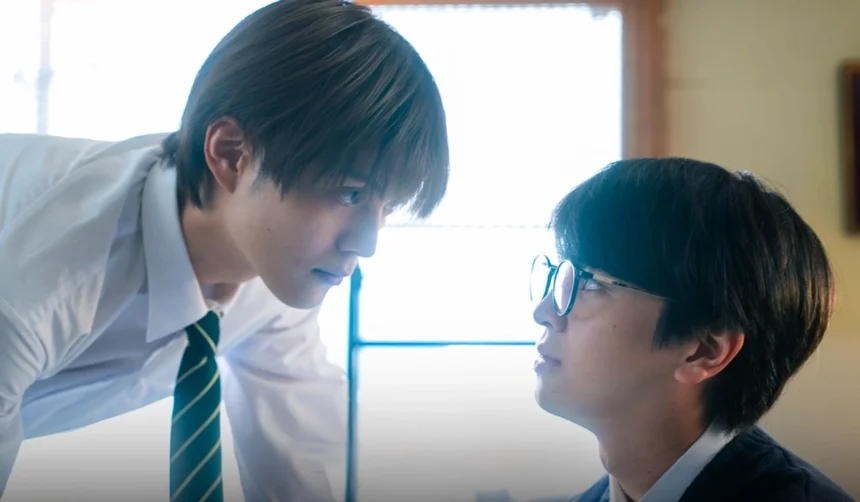


Have you ever wished you could go back in time and talk to your younger self? What would you say? Would you give yourself stock trading tips, or the answers to an upcoming test? Or would you tell them something about who they are — something they don’t even realize yet?
The Trans Girl Next Door, directed by Shoji Tsuyoshi, is a new comedy with a science fiction twist. A transgender woman travels back in time ten years to help him to begin his transition sooner… but will he appreciate the “help” of his older self?
The Plot
Protagonist Yuta Tanaki (Sota Takahashi) is living a pretty average life for a 13-year-old in 2016. He lives in the working-class Osaka district of Nishinari with his chiropractor mother Keiko (Ai Haruna), goes to school with his best friend Masaki (Takeshi Terayama), and is a member of the school’s basketball club. His biggest worry is whether he’ll be able to see his favourite idol in concert.
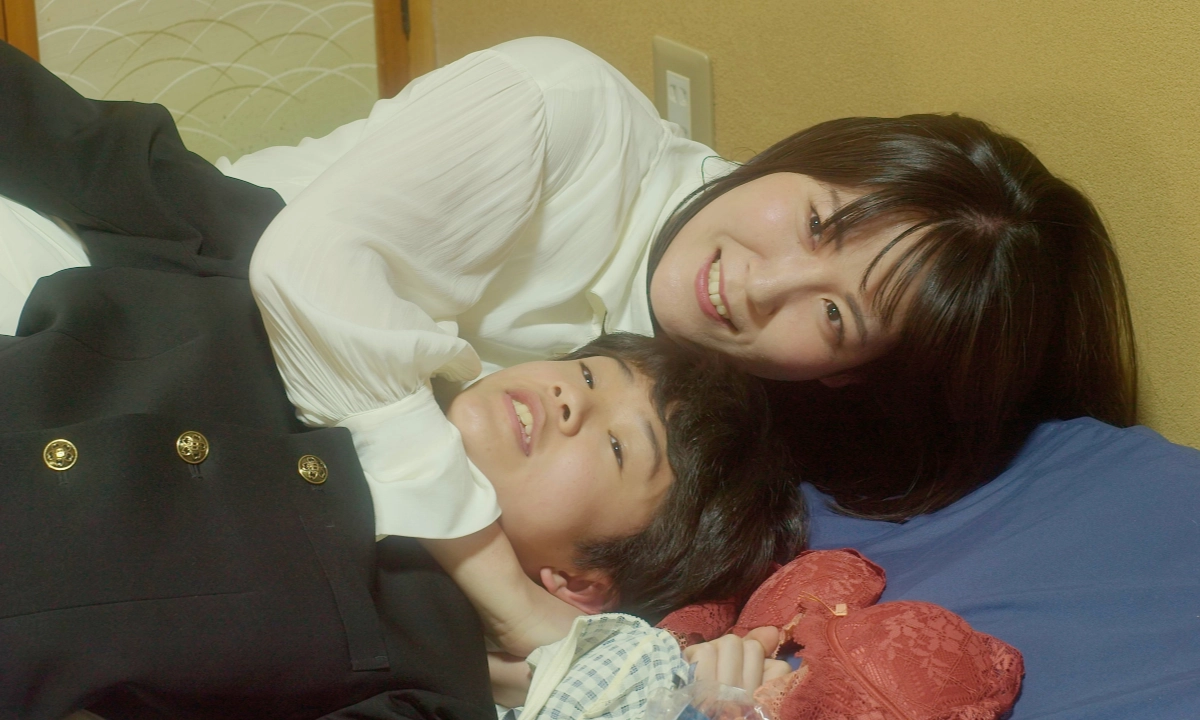
All this changes when, one day, he finds a strange woman sleeping in his bed, Yuuka (Miyu Nakagawa). Yuuka explains that she 是 Yuta from ten years in the future, who has transitioned and is now a woman. She says that, because she is happy now that she is living as her true self, she wants Yuta to start transitioning earlier than she did. To do this, she brings hormones from the future so that he can start hormone replacement therapy (HRT) before his body becomes more masculine.
Yuta is, understandably, more than a little surprised at this, and is resistant to Yuuka’s attempts to try and change him. But after an incident at school on the eve of his 14th birthday, he begins to reconsider what he wants, and who he is. Was Yuuka right after all?
我的想法
The first thing to say about this movie is that it’s very funny. We’re hit with a little slapstick right at the start, just as Yuta is hit with a basketball, but the laughs keep coming throughout. Making the film funny was a priority for Tsuyoshi, who told Japan Gay Guide that it was important to him to make a film that depicts a trans woman who is living an enjoyable life in an enjoyable story.
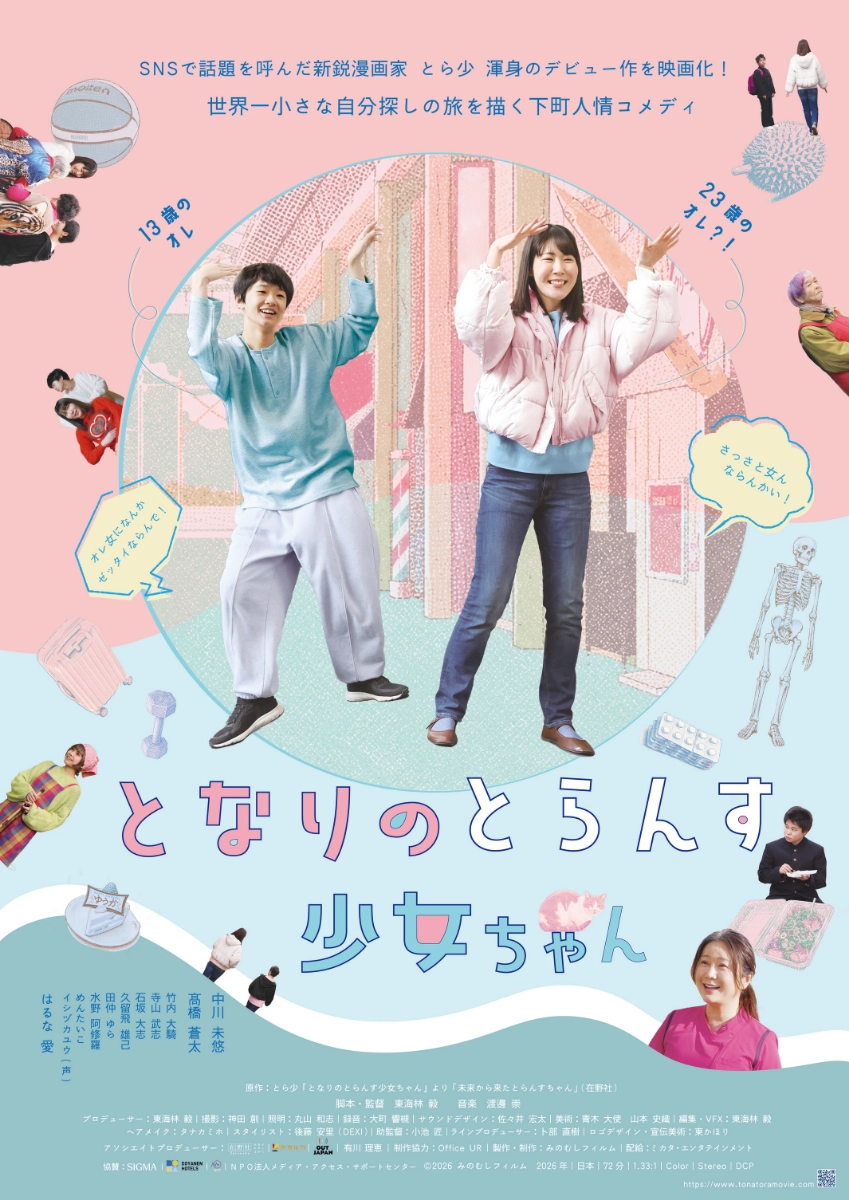
“There are already so many sad stories and painful stories depicting transgender people. Almost too many,” he says. “But happy stories, enjoyable films with happy endings, are hard to find. And if enjoyable films like that don’t exist, I think transgender youth might start feeling that perhaps there’s nothing enjoyable waiting for them in their own futures.”
The dialogue, setting, and performances all merge to make a movie that kept me giggling throughout. This is in no small part due to the perfect adaptation of the humorous Kansai dialect dialogue from the original manga by Tora-sho. Tora-sho is herself from Osaka, which informs the natural humor of the quick-witted banter between the characters. There are, of course, non-dialogue aspects that are hilarious, too, including an early moment where a horror-like scene is undercut when Yuuka, in a costume akin to that of Sadako Yamamura from The Ring, is revealed to be more sleepy than scary.
The headlining performances are, as one might expect from the cast, superb. Nakagawa, fresh from her award-winning turn in 蓝男孩试验, shows that her comic skills are just as potent as her dramatic ability. Tsuyoshi said at a screening of the film that she was chosen for the role thanks to her fulfilling three essential qualities needed for this role: she is a skilled actor, she is actually transgender, and she is a native speaker of the Kansai dialect. This trifecta of qualities in Nakagawa results in a performance that is as authentic as it is hilarious.

That isn’t to say that her talent for more weighty moments goes untested. While there is more focus on a lively, upbeat performance, she exhibits stirring moments of quiet strength when needed, like when she is reminiscing about a problem in her past (i.e. Yuta’s present).
The other stand-out performance in the film is Ai Haruna’s portrayal of mother Keiko. Haruna fits so naturally and easily into the role that I regularly forgot that she even 是 acting, and just accepted her character almost as a real person who happened to be being filmed. I also felt that her calming presence stopped the fast-paced and high-energy duo of Yuuka and Yuta from feeling overwhelming.
The two younger main actors, Takahashi and Terayama, also accomplish their goals with aplomb. Takahashi deftly pulls off a balancing act between Yuta’s playful and boyish side, while giving hints of his feminine aspect that will eventually blossom into Yuuka. Terayama’s turn as the kind-hearted Masaki also charms in his role. He provides a dash of somewhat naïve sweetness that aims to push Yuta forward while also slowing Yuuka, allowing the two to achieve synthesis by the end of the film.
Aging and Acceptance
Two central themes of The Trans Girl Next Door are self-acceptance and aging. The idea of accepting who we are to live a happy life might seem obvious to many. It’s such a simple, uncontroversial message that it’s even plastered on the wall of Yuta’s classroom. The film, however, is eager to interrogate the sentiment: what does it mean to be yourself?
To Yuuka, it seems obvious. Yuuka struggled before and during her transition, recounting to Yuta how she disliked her body becoming more masculine as she endured puberty, and that delaying her transition was the source of a lot of pain for her. It seems obvious to her that helping Yuta to self-actualize can be easily done by speed-running the process: tell him that he will transition in the future, give him the medication necessary to commence HRT and prevent masculinizing puberty.
It becomes obvious early on, though, that her methods have little chance of paying off. The more she pushes Yuta to accept the future, the more Yuta pushes back. It becomes clearer and clearer that, despite Yuuka’s best intentions, she cannot force the change that Yuta will undergo to become who they are meant to be. Yuuka recalls herself that she didn’t wake up one day and realize that she was a woman, wanting to wear skirts or put on make-up: she discovered who she was through a gradual process of change.
I’m sure that many of us have, at one point or another, thought to ourselves, “if I knew then what I know now, I’d do things differently.” If we could go back and make a different choice, though, then we would never have had the experiences that led us to want to change the past. So it is in this film that, although Yuuka may know the destination, the important thing is for Yuta to make the journey.
This connects with the theme of aging. Much of the story revolves around the point of Yuta’s 14th birthday, as changes take place both socially and physically. Yuuka regrets how she aged before undergoing HRT, and we can see this beginning to take shape as Yuta, examining his slender body in the mirror, becomes a little despondent when Keiko attempts to reassure him by saying, “a boy can get muscle as he grows up.”
While they differ a lot in how they see the world, one thing that Yuta and Yuuka both agree on is that they wish that people didn’t grow older. Yuta because he wants to stay where he is, handling the day-to-day issues of childhood, and Yuuka because she is dreading, on Yuta’s behalf, what she knows — or at least, believes — is coming. Indeed, their favorite cafe, Peter Pan, is named after the boy who never grows up.

At the end, though, we see both Yuta and Yuuka accept the limits of their knowledge of one another — and of themselves. The message is that transgender people do not need to fear the future, or worry that they will lose themselves.
I thoroughly enjoyed The Trans Girl Next Door. A novel story, told with convincing and compelling performances, and with a resonant message, I would say it is essential viewing for anyone with an interest in transgender stories, Japanese LGBTQ+ movies, or anyone who wants to see a good comedy. And don’t just take my word for it: it was recently recommended by the Tokyo Metropolitan Government as an excellent film for the sound development of the youth. Go watch it — don’t wait to be told by your future self!
The Trans Girl Next Door premieres on 7 November 2026 at K’s cinema in Shinjuku. Information about screenings can be found 这里.