




The Japanese government’s recent statement on conversion therapy has drawn attention for putting its position on the public record while also exposing the limits of current legal protections in Japan.
Japan does not currently ban conversion therapy. However, the government has described psychological attempts to change a person’s sexual orientation or gender identity against their wishes 作为 “undesirable”.
This position was set out in a written reply on 17 July 2026 in response to questions submitted by House of Councillors member Lasalle Ishii. In the same reply, the government stopped short of explicitly stating that gender identity itself is not a subject for treatment, despite concerns about the wording of Japan’s new LGBTQ+ Basic Plan.
In this article, we explain what the government said and why the wording prompted concern. We also look at how the response relied on ICD-10, the WHO’s 10th revision of the International Classification of Diseases, and what the reply does — and does not — change in Japan’s approach to conversion therapy.
What Japan’s New LGBTQ+ Basic Plan Says
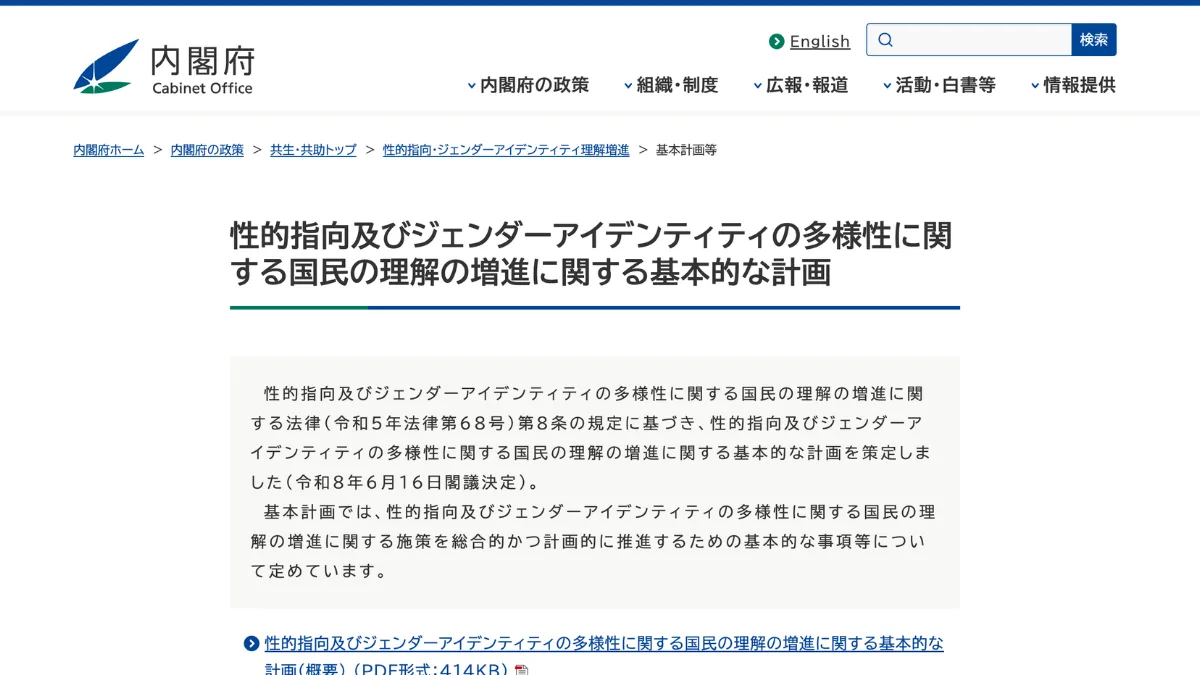
On 16 June 2026, the Cabinet adopted the Basic Plan for Promoting Public Understanding of the Diversity of Sexual Orientation and Gender Identity. This is under the 2023 Act on the Promotion of Public Understanding of the Diversity of Sexual Orientation and Gender Identity. The plan provides a framework for promoting understanding of sexual orientation and gender identity through education, public awareness, consultation services and research.
The plan states that sexual orientation is not a subject for treatment. However, it does not include an equivalent statement for gender identity. Elsewhere, it says neither sexual orientation nor gender identity can be changed through a person’s own will. Still, it does not explicitly state that gender identity itself is not a treatment target.
The wording difference prompted House of Councillors member Lasalle Ishii to submit a formal written question on 7 July 2026. His questions extended beyond the wording of the Basic Plan and also asked how the government viewed conversion therapy.
What Japan Said About Conversion Therapy

Lasalle Ishii described conversion therapy as a psychological intervention intended to change someone’s sexual orientation or gender identity.
The government replied that it has not established an official definition of the practice. As a result, it did not state that it is scientifically unsupported, inappropriate treatment, or a rights violation.
Instead, the government said that psychological attempts to alter a person’s orientation or gender identity against their wishes are “undesirable.” It also confirmed that it has no plans to conduct a factual survey into the practice or legally prohibit it.
The wording of the response is relatively narrow. It addresses attempts against someone’s wishes, but does not explain how the government views “voluntary” practices. It also does not discuss situations where family, religious, or social pressure may influence whether consent is voluntary.
The response does not create a legal ban, penalties, enforcement mechanism, or compensation system. Instead, it records the government’s current position while leaving broader legal questions unresolved.
For a wider overview of the country’s legal framework, see our guide to LGBTQ+ rights and laws in Japan.
Why This Response Matters
The significance of the response is that it places the government’s current position on the public record. While it does not change Japan’s laws or create protections, it provides clarity on how the government views unwanted attempts to change sexual orientation or gender identity.
Why the Government Cited ICD-10
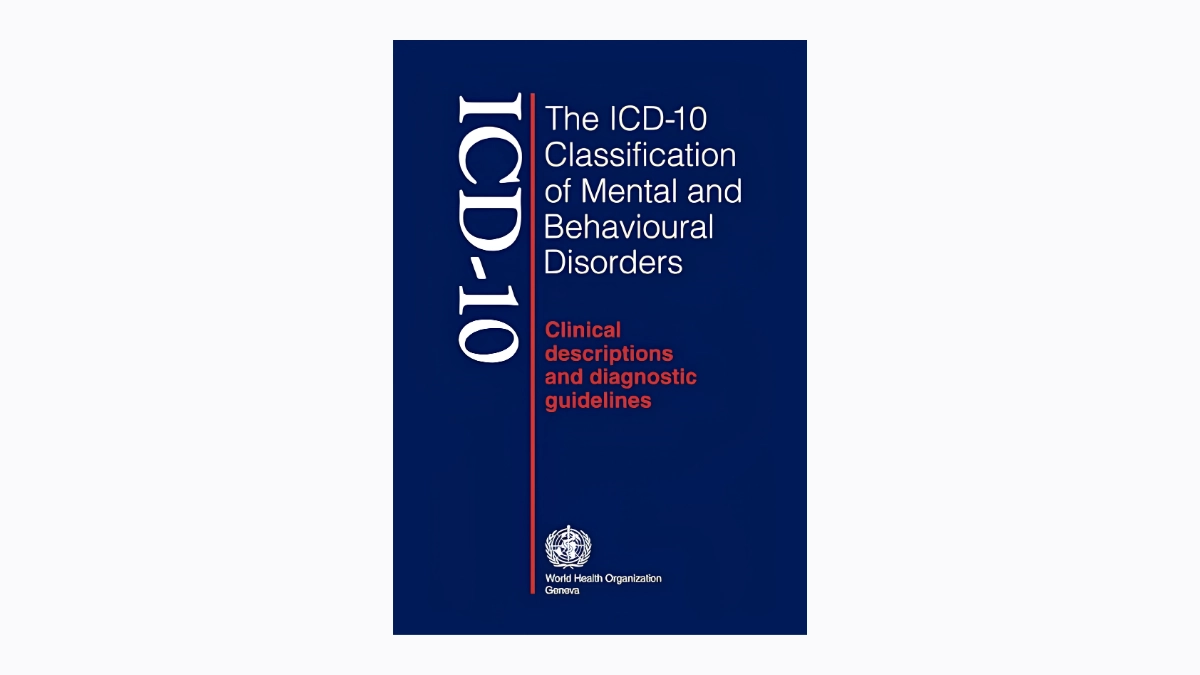
In its written reply, the government said the wording in the Basic Plan was based on ICD-10. This is the World Health Organization’s previous International Classification of Diseases.
Under ICD-10, sexual orientation was explicitly described as not being a disorder. However, gender-related diagnoses remained within older categories, including conditions historically described as gender identity disorders. Unlike its wording on sexual orientation, ICD-10 did not contain a statement that gender identity itself is not a disorder.
The government said this difference was the reason the Basic Plan refers to sexual orientation not being a subject for treatment. It said it was difficult to provide the recognition in Ishii’s written request that gender identity is not something to be treated.
The reply did not state that gender identity is a disorder. Rather, it explained that the wording was based on ICD-10, which does not contain an equivalent statement for gender identity.
This distinction matters because international medical guidance distinguishes between providing healthcare for gender dysphoria or gender incongruence and treating a person’s gender identity itself as an illness. WHO guidance instead says that transgender and gender-diverse identities are not mental health conditions, while gender incongruence remains classified to support access to care.
Why Japan’s 2027 Move to ICD-11 Matters

The government’s reliance on ICD-10 is also significant, as Japan is scheduled to introduce an ICD-11-aligned statistical classification on 1 January 2027. ICD-11 may give the government a reason to revisit or clarify its ICD-10-based explanation.
Under ICD-11, the WHO replaced older gender identity disorder diagnoses with gender incongruence. The condition was also moved out of the chapter on mental and behavioural disorders and instead placed in a chapter covering conditions related to sexual health.
According to the WHO, this reflects that transgender and gender-diverse identities are not mental health conditions. At the same time, the diagnosis remains in ICD-11 so that people who need gender-related healthcare can continue to access appropriate treatment and insurance systems. Inclusion in ICD-11 does not mean that a person’s gender identity is itself considered an illness.
Because the government’s reply relied on ICD-10, its explanation for the wording used in the Basic Plan may need to be reconsidered once Japan begins its ICD-11-aligned classification. However, no revision of the Basic Plan or change to the government’s position on conversion therapy has been announced.
It remains unclear whether the introduction of ICD-11 will lead to any policy changes.
For more on the experiences of transgender people, see our guide on the experiences of transgender people in Japan.
What the Response Changes – and What It Does Not
The government’s reply provides clarification, but its practical impact remains limited. It does not introduce new rights, restrictions or enforcement measures, nor does it change Japan’s legal framework or determine how courts would rule. Likewise, the government’s statement that it has no current plans to conduct a factual survey or legally prohibit the practice ****reflects its present position rather than ruling out future legislative or policy changes.
Whether Japan will revisit this wording after adopting ICD-11-aligned classifications, and whether future governments will introduce protections or regulations, remains unanswered.
For broader context, read our guides below: