

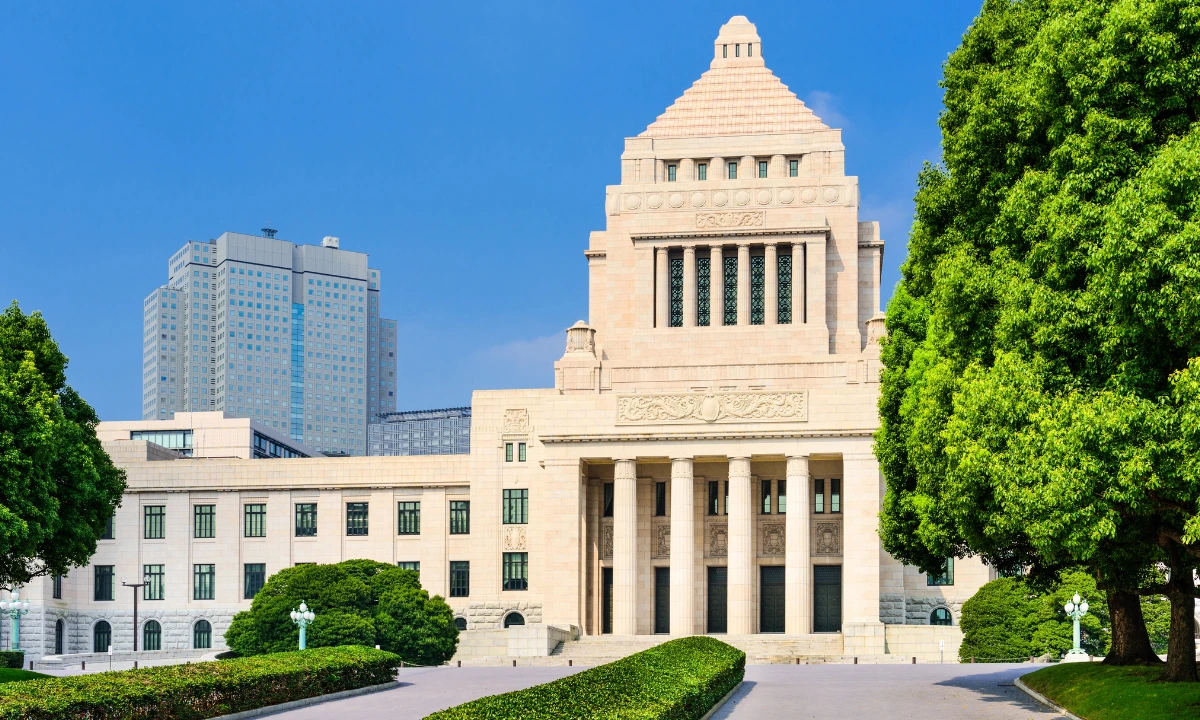

The most frequent question regarding LGBTQ+ laws in Japan is probably, “Is same-sex marriage legal yet?” As of September 2026, the answer is: no, marriage equality has not yet been achieved in Japan. You can read about the legality of marriage equality in Japan 这里.
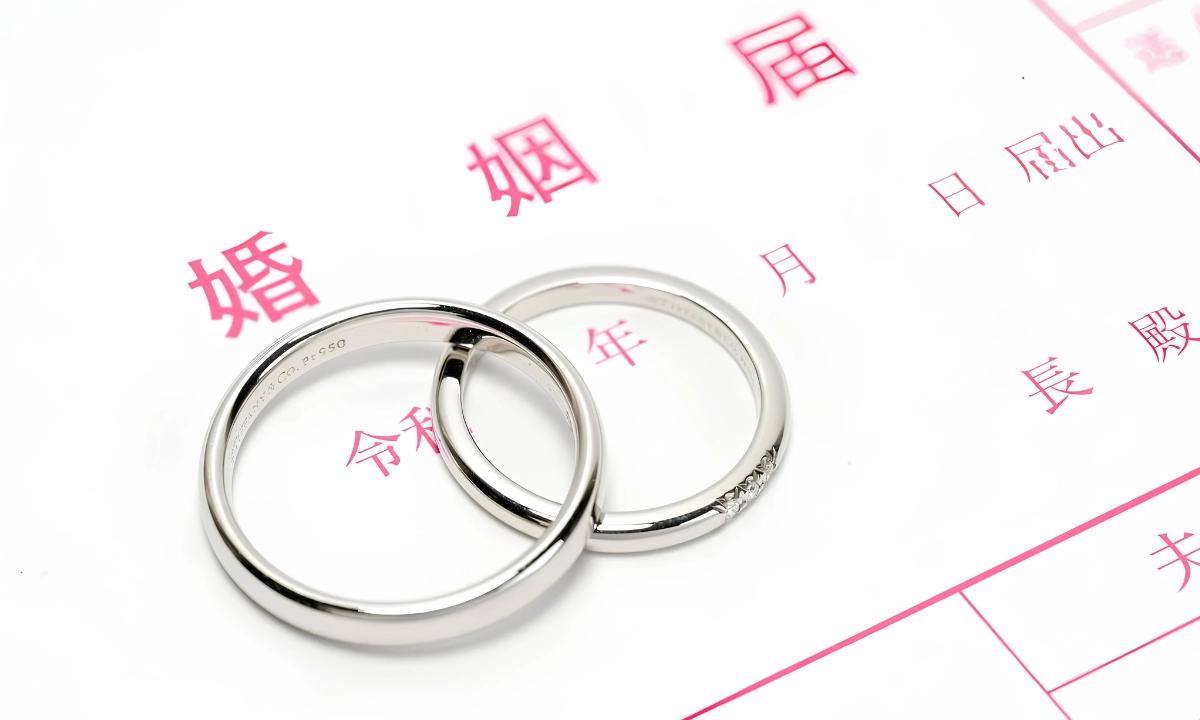
There are, however, other laws and local systems that affect LGBTQ+ people in Japan. Partnership certificates can help with access to certain services, and some laws recognize same-sex partners for specific purposes. The scope of that recognition matters, particularly for those living and working in Japan. Here is what these systems do, where their limits lie, and how they affect everyday life.
LGBTQ+ Rights in Japan at a Glance
| Issue | Current position | Practical meaning |
|---|---|---|
| Same-sex marriage | No nationwide marriage recognition | Same-sex partners do not have the general legal status of married spouses. |
| Partnership certificates | Available through local systems | Certificates can help with services that accept them, but do not create a marriage. |
| Specific partner benefits | Some laws may include same-sex partners | Eligibility depends on the law and the couple’s circumstances. |
| Parenting and adoption | National adoption rules apply | A familyship certificate does not make someone a child’s legal parent. |
| Legal gender recognition | Available through a family court procedure | The former sterilization requirement is invalid; other conditions still need attention. |
| Discrimination | No comprehensive national law specifically protecting LGBTQ+ people from discrimination | Workplace rules and local measures may offer protection in particular situations. |
Is Same-Sex Marriage Legal in Japan?
No, same-sex marriage is not legal in Japan. Partnership Oath Certificates do not change this, so couples do not receive the full range of marriage-based rights involving tax, inheritance, and other spousal matters.
The legal position is being challenged. Article 24 of the Constitution of Japan refers to the consent of “both sexes,” but its meaning is disputed. Some argue that it does not prevent legislation allowing same-sex marriage. Others also point to its emphasis on individual dignity and equality.
Five High Court rulings have found the lack of recognition unconstitutional, while one has found it constitutional. On 25 March 2026, the Supreme Court decided to hear the cases in its Grand Bench. A May 2026 analysis from Meiji University says a ruling is likely in early 2027. That is an expectation, rather than a confirmed decision date.
You can read more about the legality of marriage equality in Japan here.
What Partnership and Familyship Certificates Actually Do
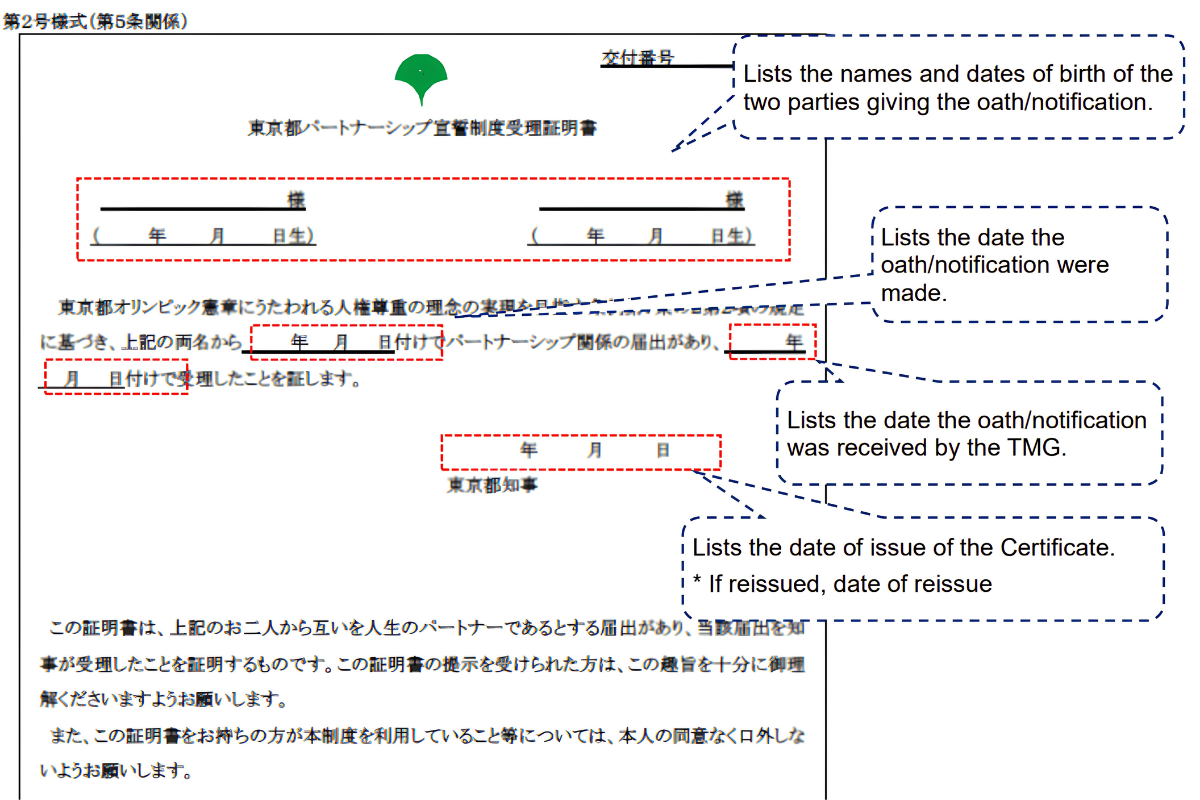
Local partnership certificate systems, pioneered in Tokyo’s Shibuya Ward in 2015, record a couple’s declared partnership. Some localities also offer familyship declarations, which can include children. Neither system creates a marriage or establishes legal parenthood.
Getting a Partnership Oath Certificate does help with access to certain services. One example under the Tokyo Partnership Oath System is an application for Tokyo Metropolitan Housing. The distinction is that a service can accept the certificate as evidence of a partnership without the couple becoming legally married.
Eligibility, required documents, and accepted services depend on the issuing locality. Some have agreements with other localities that make it easier to move without starting the registration process again.
Matters such as inheritance, tax, immigration, parentage, adoption, or medical-decision rights are therefore not guaranteed by a Partnership Oath Certificate. Before relying on one, check the relevant provider’s rules. For example, ask a hospital whether it accepts the certificate, what it allows your partner to do, and whether it requires any other documents.
Benefits That May Recognize Same-Sex Partners
Some national laws may recognize same-sex partners even without marriage equality; however, this depends on the wording and purpose of each law.
In March 2024, the Supreme Court ruled that a surviving same-sex partner could fall within the crime victim benefit law’s definition of a de facto spouse. This means a partner in a relationship similar to marriage, even though the couple is not legally married. The case concerned a benefit previously denied to the partner of a murder victim.
The government has since reviewed similar wording in other laws. Its September 2025 update expanded the list of laws and ordinances that could include same-sex partners to 33. These cover matters including certain housing, domestic violence, and disaster-related provisions.
This does not give couples general spousal status. If you are applying for a particular benefit, ask the responsible authority whether same-sex partners are eligible and what evidence of the relationship is required.
Parenting and Adoption Rights
Adding a child to a local familyship declaration does not, in and of itself, complete an adoption or confer legal parentage. Adoption is governed by national rules and requires a separate process.
Under the Civil Code, some adoptions are dependent on spousal status. Ordinary adoption generally keeps the child’s legal ties to their birth family, and being unmarried does not itself rule it out. Adopting a minor generally requires family court permission. Other conditions also apply, as explained in the court’s adoption guide.
Special adoption generally ends those ties and requires married adoptive parents. As same-sex marriage is not permitted in Japan, same-sex couples cannot use this route together. The court’s special adoption guide sets out the requirements.
If you want to become your partner’s child’s legal parent, get advice from a specialist about whether adoption is possible and how it would affect parental authority. This is particularly important for issues related to medical care, schooling, inheritance, and custody.
Changing Legal Gender in Japan
Applications for changing one’s legal gender are handled by the family courts. They are governed by the Act on Special Cases in Handling Gender Status for Persons with Gender Identity Disorder of 2003.
On 25 October 2023, the Supreme Court held the requirement to have no reproductive glands, or a permanent lack of their function, to be unconstitutional and invalid.
The official court guidance still lists the following requirements, alongside a separate condition concerning the appearance of the genitals:
- Be diagnosed by two or more doctors, using the law’s term “gender identity disorder”
- Be 18 years of age or older
- 未婚
- Have no minor children
The condition that the genitals must resemble those of the other sex has also been challenged in the courts, though it currently remains part of the official guidance.
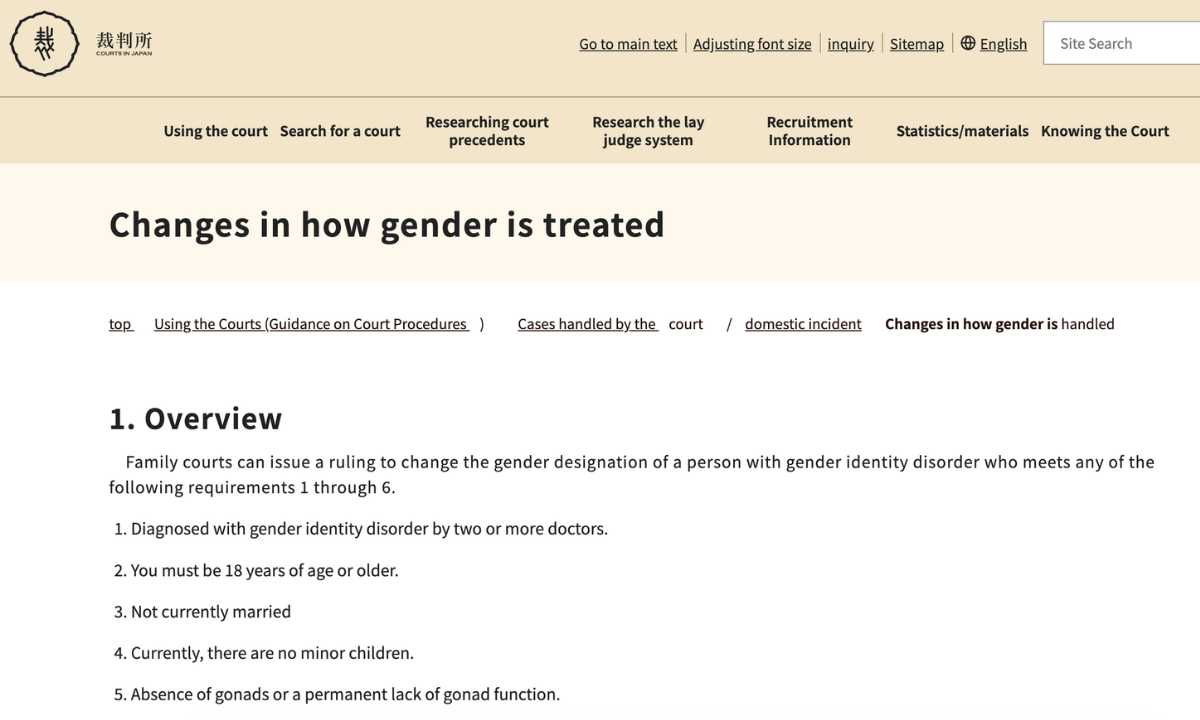
For the latest fee, documentation, and filing updates, check the official court website. Additionally, consult with medical and legal professionals about how the current requirements apply to you.
Protection From Discrimination
In June 2023, the Diet enacted the Act on the Promotion of Public Understanding of the Diversity of Sexual Orientation and Gender Identity. The Act calls for national and local governments, employers, and schools to promote understanding of diversity in sexuality and gender. It also calls unjust discrimination based on sexual orientation and/or gender identity “unacceptable.”
That said, the Act does not give comprehensive protection across every setting for LGBTQ+ people. It promotes understanding, but does not itself provide a process for pursuing discrimination complaints or obtaining compensation.
Other protections may still apply. For example, national workplace harassment guidelines identify insults about sexual orientation or gender identity, and disclosure of that information without consent, as examples of conduct that can constitute workplace power harassment. Employers have duties to prevent and respond to such harassment.
For housing, schools, and other services, the applicable rules depend on the setting and locality. A provider’s policy may also offer a complaints process, though it is not the same as a legal remedy.
If you have suffered a specific act of discrimination, you should document your experiences, including dates, messages, and any response to your complaint. For workplace issues, a prefectural labour bureau can advise on the relevant consultation service. The Ministry of Justice also offers human rights counselling in multiple languages.
How to Verify Your Rights in a Specific Situation
Advice or remedy for issues that may confront you will vary from situation to situation. Nevertheless, there are some steps that one can take. First, identify the issue you need help with. Next, find out whether the relevant authority is the government, a court, an employer, or another service provider. Confirm the current rule, eligibility terms, and documents needed, and request written confirmation.
For issues related to marriage status, parentage or adoption, inheritance, immigration, employment disputes, or legal gender procedure, it is advisable to consult with a lawyer. If you are unsure where to start, Houterasu’s Multilingual Information Service provides information about Japan’s legal system and can direct foreign residents to relevant services.
For a broader look at everyday life and travel, see our guide to whether Japan is LGBTQ+ friendly.
? Last legally verified on 3 September 2026. This article is for general informational purposes and is not legal advice.