


A Century of Yuri In the Palm of Your Hand
As is the case all across the world, lesbians have been a part of Japan and Japanese history for as long as women have been. However, owing to the lower status of women in Japanese society until relatively recent times, the experiences of women — including queer women — were not always as well recorded and preserved as those of men.
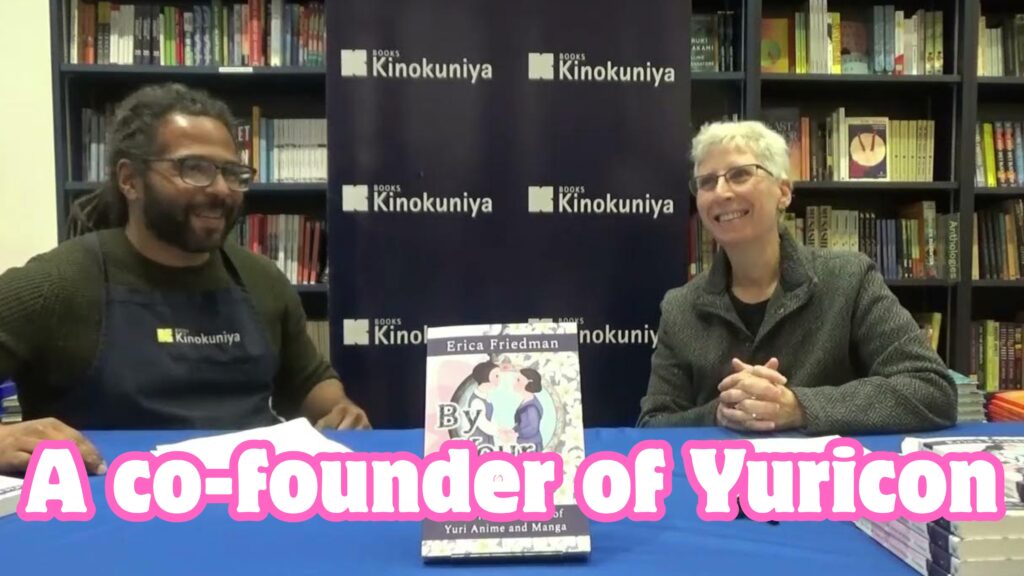
However, this is not the case when it comes to modern lesbian anime and manga, collectively known — as our readers will know — as yuri. In recent years, alongside yaoi and BL media, yuri media has been increasingly studied and analyzed, both in terms of its content and its history. Today, we’ll be looking at arguably the most comprehensive work to explore both of these aspects: By Your Side: The First 100 Years of Yuri Anime and Manga, by Erica Friedman.
Who Is Erica Friedman?

Friedman is widely considered to be an authority on yuri anime and manga, having been involved with the scene since its inception in the US, starting and actively participating on online groups and message boards before the Internet became a major part of everyday life. She has since gone on to found ALC Publishing, which pioneered publishing yuri works in English and outside of Japan, and she was also a co-founder of Yuricon, the first convention of its kind to bring together fans of yuri anime and manga.
As an academic, in addition to writing By Your Side, she has contributed to Manga A Visual History and Hajimete no Yuri Studies: Queer/Feminist no Shiten Kara, and has also given lectures at Harvard University, Kanagawa University, MIT, University of Illinois, Keio University and more, as well as at events such as the San Francisco Lesbian and Gay Film Festival and the London Lesbian and Gay Film Festival. Today, she continues to keep yuri fans updated with news and reviews on her blog, Okazu.
The Format of By Your Side
By Your Side is made up of a collection of essays, many of which were originally published on Okazu (named for a “side-dish,” as in many early hentai films, depiction of lesbian sex was considered a “side-dish” to the “main course” of heterosexual intercourse), as well as drawing on works of hers published elsewhere, as well as some original pieces just for the book.
As such, the 13 chapters of the book can be more or less read in any order, depending on the reader’s preference. For example, while ‘Recommended Reading — Where Should I Start If I’m Interested in Yuri?’ is the final chapter, there is no reason that the avid neophyte cannot jump straight here to find highlights among the genre, and discover what the best yuri anime for them could be.
As a consequence, there can be a touch of repetition here and there, but I personally didn’t find this obtrusive. This is in part due to Friedman’s writing style, which, true to its blog origins, is written fairly informally, but without talking down to the reader. While having a degree of knowledge of yuri may be useful, it is not necessary, as a comprehensive glossary will help even the uninitiated to keep up with and understand Friedman’s examination of the genre’s history.
Yuri Anime and Manga Insights and Revelations

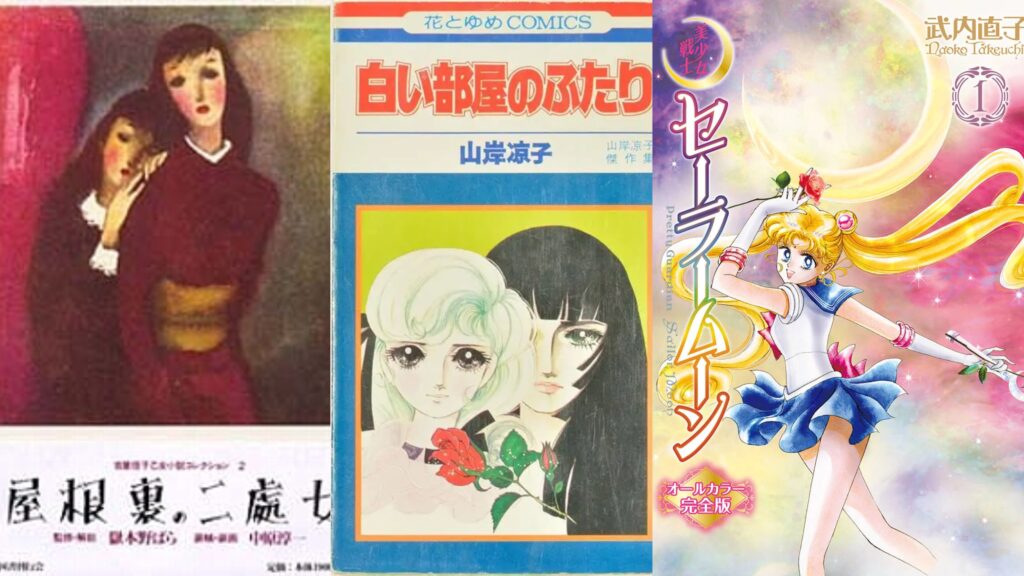
So then, what can one learn from By Your Side? Well, a lot. The history of yuri, as Friedman defines it, can be traced back over a century to 1919’s Yaneura no Nishojo通过 Nobuko Yoshiya. Though this is a novel, and not a manga, it is responsible for many of the tropes that those familiar with yuri will be familiar with today: an all-girls’ Christian school; a piano duet; and the deep, deep yearning.
She then traces the development of yuri through mid-20th Century works that, following Yoshiya’s lead, focus on so-called “Class S” relationships, which is to say, those between younger and older women and girls, until we arrive at Shiroi Heya no Futari (or Our White Room), which Friedman considers to be the first yuri manga. It, too, establishes visually what have become common in yuri manga, with the two main characters, Resine and Simone being opposites in temper and in appearance (though both are beautiful), but who soon become friends, and then more than that.
From here, Friedman tracks the rise of yuri in magical girl anime, which was the introduction to the genre to many in the west with the airing of 美少女战士, and which came to something of a crescendo with 革命少女乌天娜 in the early 2000s. She tracks the revival of Catholic School yuri anime and manga with the rise of Maria-sama Ga Miteru, as well as other yuri works which were arguably for a male audience, such as Strawberry Panic!.
Additionally, she lays out the history of yuri fandom itself, as it went from a niche within a niche in university anime clubs where laser discs and well-worn VHS tapes were passed around, to the bulletin board system message boards of the early Internet, all the way to the greater recognition that yuri has achieved today.
Throughout, Friedman also makes sure to guide the reader through the nuances of the perception of yuri, both within the fandom and outside of it. This includes a number of personal experiences (including being told by an event focusing on anime for women and girls that yuri was “not representative” of what they wanted, which helped fuel the desire to start Yuricon) as well as an observation that, whether intentional or not, a lot of yuri content — by both men and women — could represent “lesbian content without lesbian identity,” a dilemma that has not been totally resolved yet, though things are doubtless improving.
The State of Yuri Today

This brings us neatly to the present day. ALC Publishing is no longer publishing new works, and Yuricon has also seen its last convention. Additionally, a number of yuri anthology books that began publishing in the late-2000s to mid-2010s in Japan faltered and had to close down. However, these did not signify a lack of interest or enthusiasm among their audience: they were simply, in most cases, too ahead of their time.
Today, with web-based publishing, many yuri artists are flourishing in ways that they wouldn’t have been able to in the traditional Japanese publishing industry. Additionally, yuri has been recognized by both fans and publishers as a genre unto itself:as Friedman describes it, by being free of any one audience, demographic, or set of tropes, “Yuri is the very first genre that belongs to everyone.”
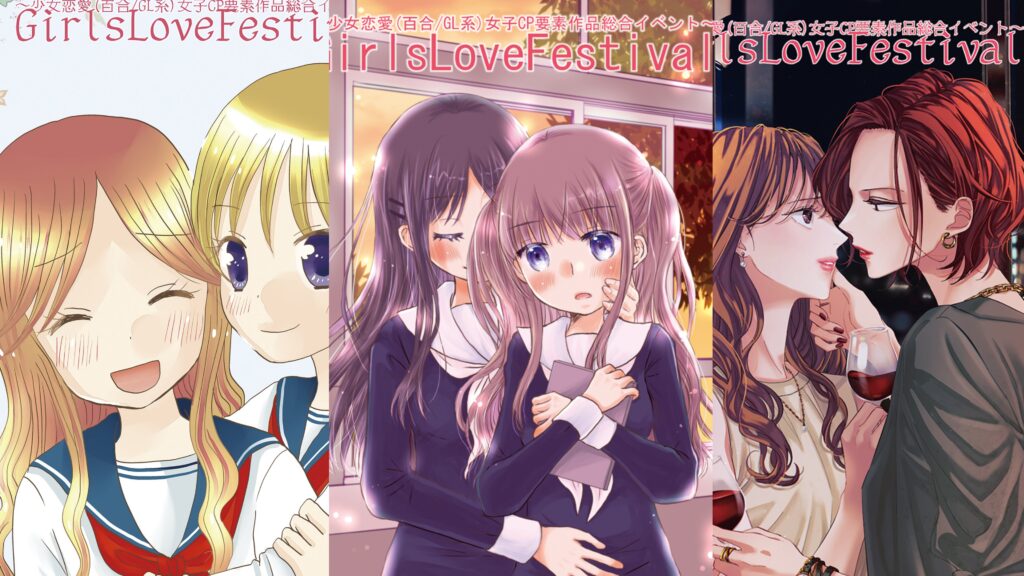
Additionally, while there are a few yuri-specific events and conventions (most notably the thrice-annual Girls Love Festival in Japan), the gradual acceptance of yuri into the mainstream means that it flourishes now even within the larger, more “normie” anime and pop culture conventions, which means that specialized cons are no longer needed.
When I read about these developments, towards the end of the book, I did feel a twinge of sadness for the end of these yuri-only events (even if I had never attended one), but Friedman makes it clear that this is a good thing: by being a recognized part of a larger whole, yuri can be enjoyed by anyone without gatekeeping or being worried that your interest in the genre could be dismissed as too niche.
By Your Side is an invaluable work for anyone interested in yuri. Telling the story of the genre’s history, while giving both Friedman’s personal insights into major yuri works, interweaved with her own personal experiences and anecdotes, I cannot recommend this book highly enough.