
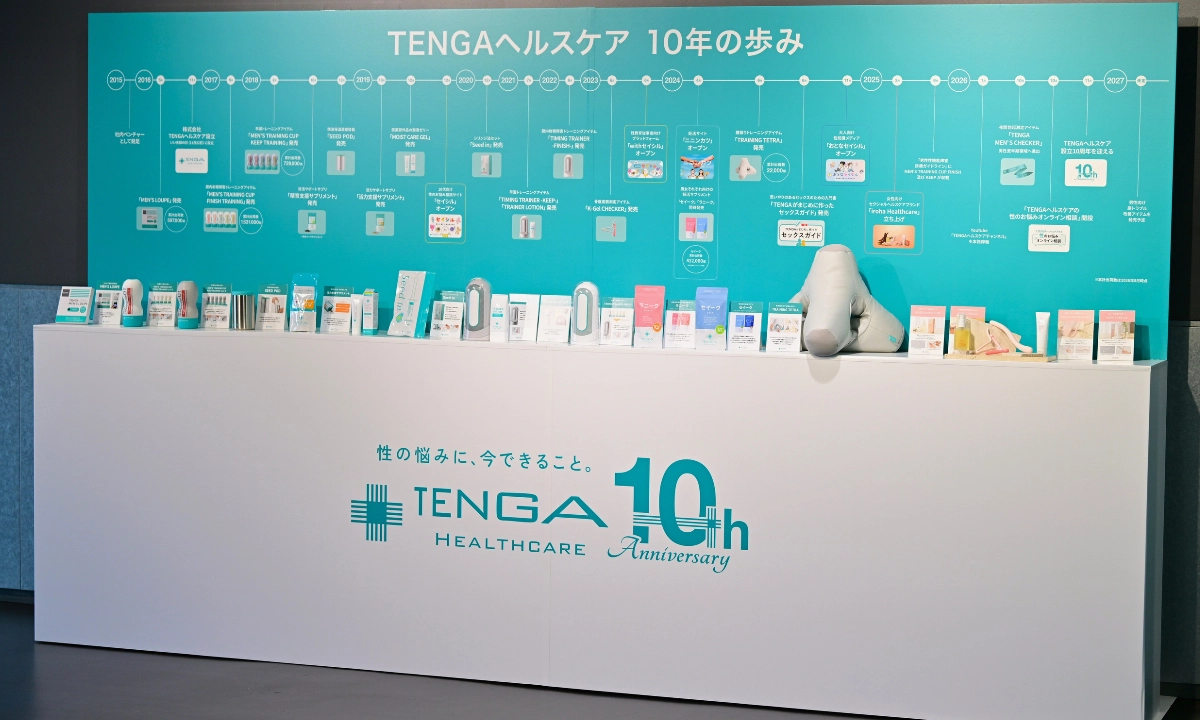

Sexual health and sexual pleasure go hand in hand. For two decades now, TENGA has been at the forefront of enhancing men’s sexual pleasure, first in Japan and then around the world. For ten years, TENGA Healthcare has also been creating products that help with sexual dysfunction and fertility, bringing the joy of sex to those who didn’t believe they could experience it to the fullest.
Now, TENGA Healthcare is taking the next step in helping people have better, more fulfilling sex lives. On 29 October 2026, Japan Gay Guide was fortunate enough to attend the announcement for its new service, TENGA Healthcare Online Consultation. Prior to the event, we also spoke separately with TENGA Healthcare Director Masanobu Sato to learn more about the thinking behind the service and its relevance to gay men.
TENGA and TENGA Healthcare
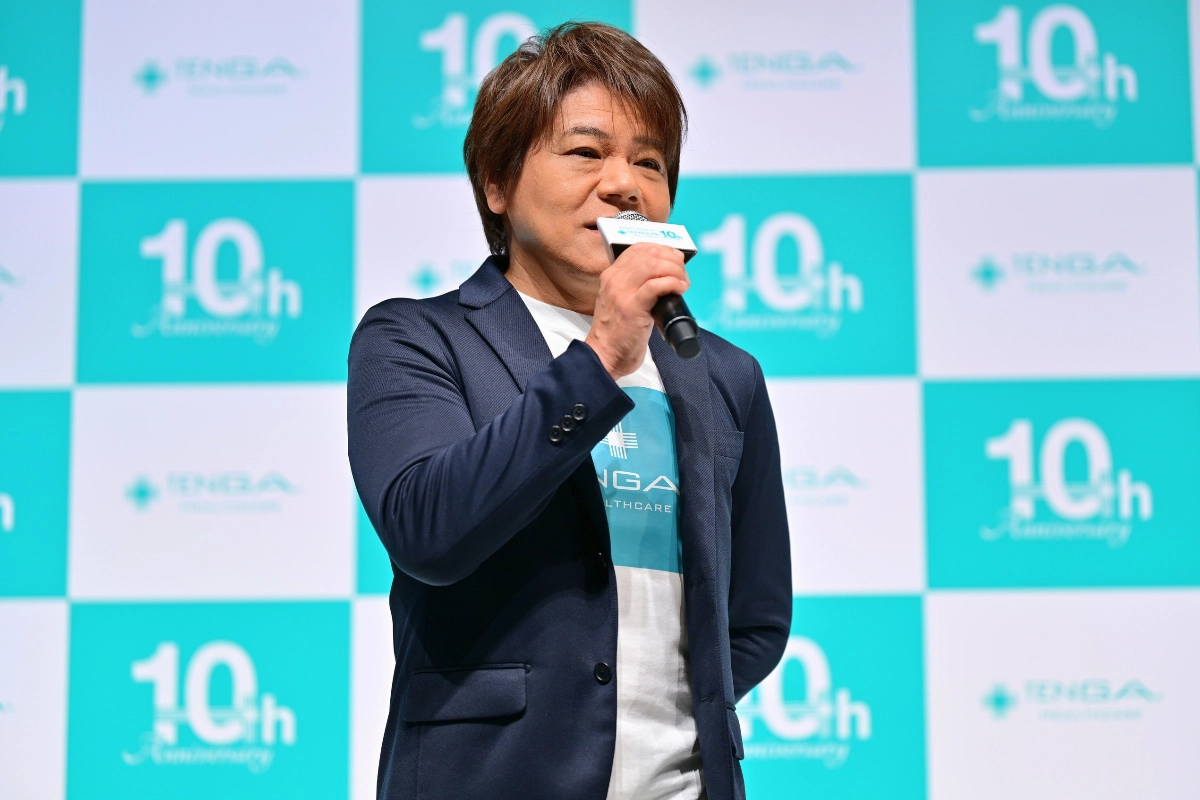
During the press conference, President and CEO of TENGA and TENGA Healthcare Koichi Matsumoto reflected on why the company was founded in 2005: to demystify sexuality and bring it into the open.
“TENGA began with the vision of bringing sexuality into the open and making it something everyone could enjoy,” he told the audience. “We wanted people to be able to enjoy their sexuality as a natural part of everyday life, without feeling embarrassed or guilty. Through various initiatives, TENGA gradually expanded.”
Over the years, TENGA’s products have gained strong popularity within Japan’s gay community. In our separate interview, Sato explained the factors that set the brand’s design philosophy apart from conventional items:
“I’ve known for some time that TENGA has been well received by gay men. I think a major reason is that our approach to product design was different from that of many male masturbation products available at the time of our launch in 2005,” Sato said.
“Back then, many products were designed primarily with heterosexual men in mind. Some were shaped to resemble female genitalia, and packaging often featured adult film actresses or sexually suggestive images of women. TENGA instead asked a different question: how can we make masturbation more pleasurable for someone with a penis?
“Rather than trying to imitate a vagina, we focused on sensation and function. We also chose simple, stylish packaging that didn’t rely on images of women. I believe that idea, together with a design that people can feel comfortable choosing regardless of their sexual orientation, is a key reason TENGA has resonated with gay men.”
However, despite the success of its products in helping to make sex and masturbation more enjoyable, TENGA soon realized that there were barriers that were getting in the way for some people.
“Although we wanted people to enjoy sex, we discovered that many people couldn’t enjoy it because they were struggling with sexual concerns in the first place,” Matsumoto said at the announcement event. “When we realized this, we strongly felt that we wanted to help solve those problems and address those concerns ourselves so that more people could enjoy fulfilling sexual lives. And so, with the vision of creating a world free from sexual concerns, we established TENGA Healthcare in 2016.”
In our interview, Sato outlined the scope of TENGA Healthcare’s operations:
“While TENGA focuses on enhancing sexual pleasure, TENGA Healthcare addresses the concerns and difficulties that can prevent people from enjoying their sexuality.
“In Japan, our activities include developing self-care products for sexual function concerns, such as premature and delayed ejaculation, as well as fertility-support products. We also operate the sexuality education platforms Seicil and Otona Seicil and provide sexuality education programs for schools and companies.”
These specialized products have been examined across dedicated urological studies. Research published in The International Society of Sexual Medicine demonstrated that structured training protocols with the MEN’S TRAINING CUP [KEEP TRAINING] can significantly extend intravaginal ejaculatory latency time (IELT) and improve erection hardness scores for men unable to delay ejaculation. In clinical practice, therapeutic tools have also formed part of multimodal interventions in office urology for conditions such as intravaginal ejaculation disorder. However, individual sexual concerns are multifaceted, and self-care tools alone cannot resolve every challenge. That gap motivated the creation of the TENGA Healthcare Online Consultation service.
TENGA Healthcare Online Consultation
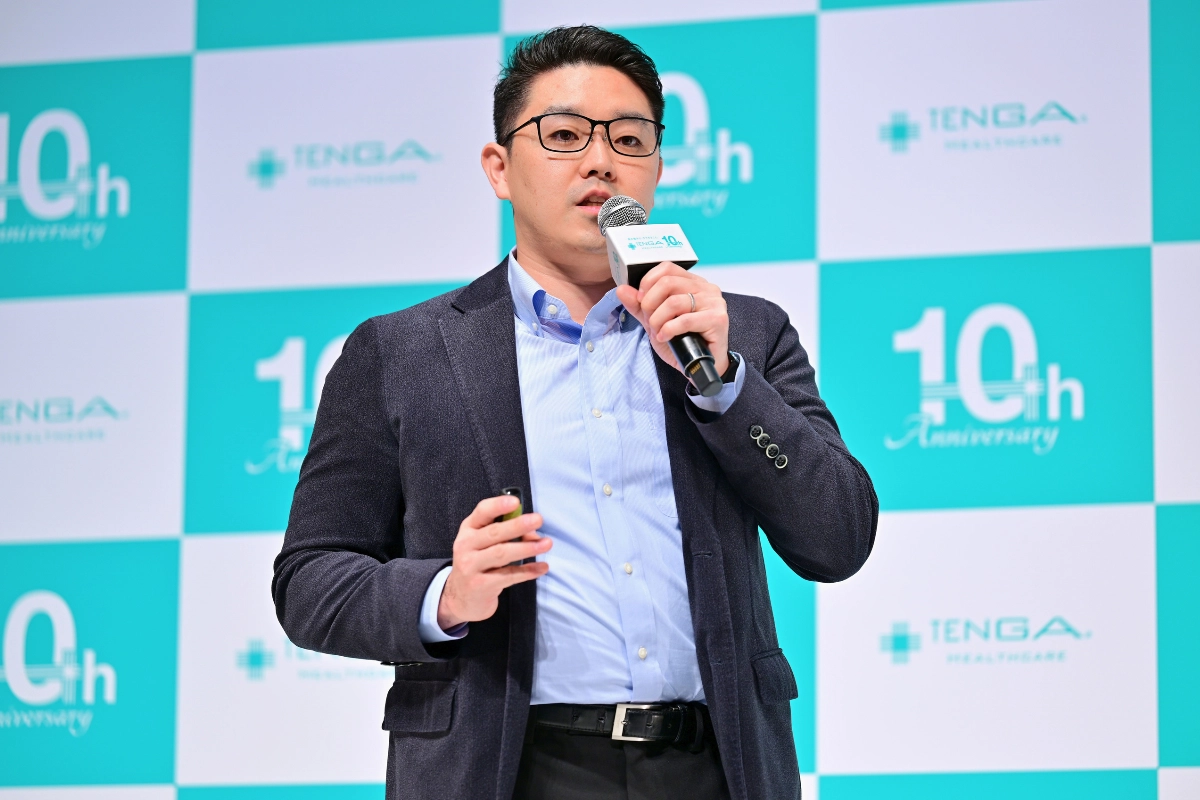
Introducing the service at the press conference, Kenta Ushiba, a director at TENGA Healthcare, shared findings from a survey of 4,000 men aged 20 to 59. The study revealed that 33.7% — approximately one in three respondents — reported experiencing some form of sexual concern, yet very few felt they had an avenue to discuss these worries.
“Normally, when we’re struggling with something, seeking advice from someone else is a very natural thing to do; but when it comes to sexual concerns, that simply isn’t the case,” Ushiba says.
“Until now, we’ve worked to address sexual concerns through our products and the information we provide. But beyond those efforts, we’ve come to strongly recognize the need for a place where people can safely discuss their sexual concerns and find a starting point toward resolving them.”
In our discussion, Sato elaborated on why human support remains irreplaceable:
“Today, people can find information easily through the internet and AI. But we believe there is a different kind of value in having someone genuinely listen to you and work through your concerns with you.
“That is why we are launching our online consultation service: to create a safe and welcoming place where people can openly talk about their sexual concerns.”
The service addresses a wide variety of sexual health issues that affect men. Three of the most prominent worries among men of any age when it comes to sexual problems are erectile dysfunction, premature ejaculation, and delayed ejaculation. TENGA, as mentioned, has products that can help with these, but it is often reassuring to speak to a real person who can give you advice, and point you in the right direction.
Under the service’s 利用規約, consultants can also address general anxieties surrounding HIV and other sexually transmitted infections (STIs). They provide objective information, help users sort through their feelings, and assist in identifying appropriate next steps, such as directing clients to specialized clinical testing or medical facilities.
However, TENGA Healthcare Online Consultation operates strictly as a remote health consultation service and is not a medical institution. In accordance with its terms, consultants do not provide medical examinations, formal diagnoses, individual infection-risk assessments, prescriptions, treatments, or emergency care.
Accessing TENGA Healthcare Online Consultation
Accessing and using TENGA Healthcare Online Consultation can be done entirely online using a computer or smartphone and is available exclusively in Japanese. Reservations began on 29 October, and the first consultations will be taking place on 4 November.
Those interested should visit their website これ. Consultations cost ¥3,300 for an initial 30-minute discussion, with subsequent talks being ¥5,500 for a 45-minute session. To protect client privacy, consultants keep their cameras off by default. Clients are also not required to show their faces, camera usage is entirely optional, and consultations may be booked under a pseudonym or nickname. The service is only open to those aged 18 or over, and although it is for men’s sexual issues, partners may also join if they wish.
It should be noted that video is not recorded, though audio is recorded, and transcripts are created by AI. Your consent for this must be obtained before using the service.
Supporting the LGBTQ+ Community
Despite our more liberated society, talking about sexual issues can be a difficult matter for many people. However, TENGA’s goal is to reduce the taboo around sex and make discussions easier. During Mr. Ushiba’s presentation, the change in society’s perception regarding sexual minorities is given as an example as to how social awareness can gradually evolve.
“Until relatively recently, many people regarded sexual minorities as a subject that shouldn’t be discussed openly,” he says. “Of course, even today, it isn’t something that should be approached insensitively. However, LGBTQ-related topics are now discussed in the news, and understanding of diversity has continued to develop. I believe society’s attitudes have clearly been changing.”
But TENGA Healthcare doesn’t just draw inspiration from the advances that the queer community has made over the past few decades. Sato believes that the new online service can be of great benefit to gay men.
“Sexual concerns can affect anyone, regardless of their sexual orientation or gender identity. Gay men may also experience concerns about erections, ejaculation, sexual confidence, or relationships with their partners,” he says.
“In Japan, many people already find it difficult to talk openly about sexual matters. For some LGBTQ+ individuals, having to explain their sexual orientation or personal circumstances may create an additional barrier to seeking support. We believe it is important to listen to each person without assuming they are heterosexual or that there is only one ‘normal’ way to experience sexuality.
“Although our service initially focuses on men’s sexual concerns, we don’t believe access to support should be limited by sexual orientation. We are not currently a specialized LGBTQ+ counseling service, but we want to create a welcoming environment where gay men, too, can feel comfortable discussing their concerns.”
Indeed, although initially aimed towards men’s sexual health, TENGA Healthcare has plans to expand into giving women advice on their sexual health through its sister brand, iroha Healthcare, according to Ushiba. In time, it hopes to help create a world where sex and sexuality can be openly discussed and enjoyed by everyone.
“Sexual concerns can be difficult in themselves, but the feeling that ‘there must be something wrong with me’ can make them even more painful. We believe there is no single right way to experience sexuality, just as there is no single definition of happiness,” says Sato.
“We want to improve access to sexual health education and create environments where people can seek support without fear of judgment. Ultimately, our goal is to help build a society where everyone can feel comfortable with their own sexuality and live a happier, more fulfilling life.”