


A 26-minute Short Lesbian Movie
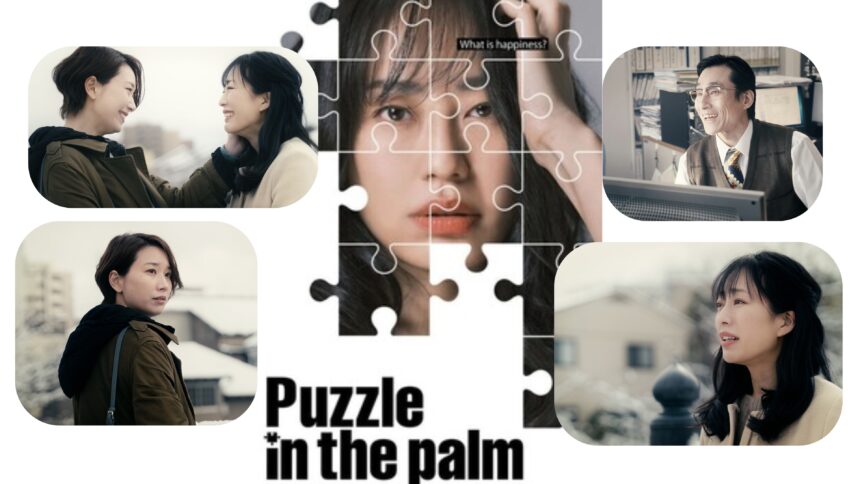
Puzzle in the Palm delivers a quiet but deeply emotional story about love, identity, and what happiness really means.
Risa and Takumi, both born and raised in Kanazawa, have been together for a year and a half. As they turn 30, people around them start casually asking, “So, when are you getting married?” That pressure slowly pushes them into moving in together. And at first, it feels perfect. Waking up in the same space, sharing meals, and spending their everyday life together. Those simple, normal moments bring comfort and a sense of security.
But the more time they spend together, the more small differences begin to show. What used to feel natural starts to feel slightly off. Differences in values, unspoken emotional distance, and a subtle mismatch when it comes to their future, especially around marriage.
Then, after a certain incident involving Risa’s close friend Mako, something inside Risa begins to shift: she starts questioning what love really means to her. She begins to wonder if the version of happiness she believed in is truly her own.
This is what makes Puzzle in the Palm stand out as a lesbian film. It is not just about a lesbian relationship, but about questioning the expectations placed on love, marriage, and life itself.
This lesbian film has a powerful story behind it
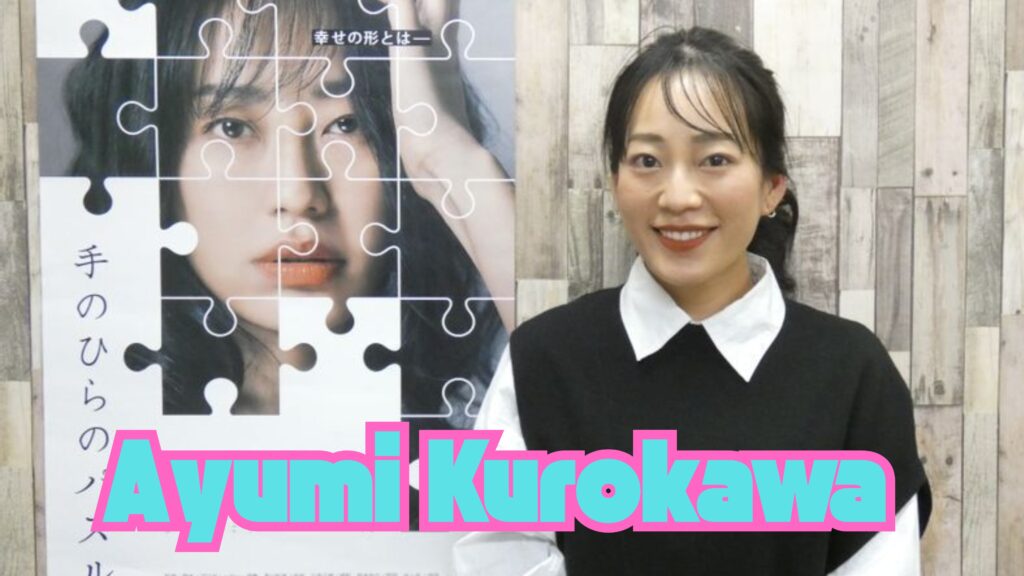
The inspiration for the film came when Ayumi Kurokawa was listening to the audio app Clubhouse, where she happened to hear real voices from LGBTQ+ people. Those conversations had a huge impact on her, and she felt driven to turn those voices into a story.
That motivation quickly led to one simple but important realization: that she should direct it herself. She did it, and more. She did everything: Kurokawa took on directing, writing, editing, and production responsibilities, and also stars in the film.
Puzzle in the Palm went on to screen internationally, starting with the Silicon Valley Queer Film Festival, followed by festivals in Hong Kong, Kansai, London, and more. It ended up winning awards at 14 different film festivals!
A Lesbian Story Told Using Real Voices
Director and actor Ayumi Kurokawa built this lesbian film by collecting real words and emotions from LGBTQ+ people. She wrote them down one by one, then combined them into a single story.
One of the key themes she chose was marriage.
She talks about how, once she reached a certain age, people around her began asking questions like, “When are you getting married?” and “Don’t you want kids?” Even though she understands those expectations, it can feel exhausting.
When she spoke with LGBTQ+ people, she realized that this pressure is even more intense. Many shared how painful it is to be asked about marriage or children, especially when those options are not equally available.
This is where the lesbian perspective becomes so important.
The idea that “marriage equals happiness” is taught to everyone, but lesbian couples and other LGBTQ+ people are often excluded from that system. That gap is something this lesbian film explores in a very real and grounded way.
Kurokawa intentionally used marriage as an entry point so that even people who are not familiar with LGBTQ+ topics could connect with the story. Instead of presenting it only as a lesbian film, she wanted it to first feel like a relatable romance.
Your Typical Lesbian Movie?
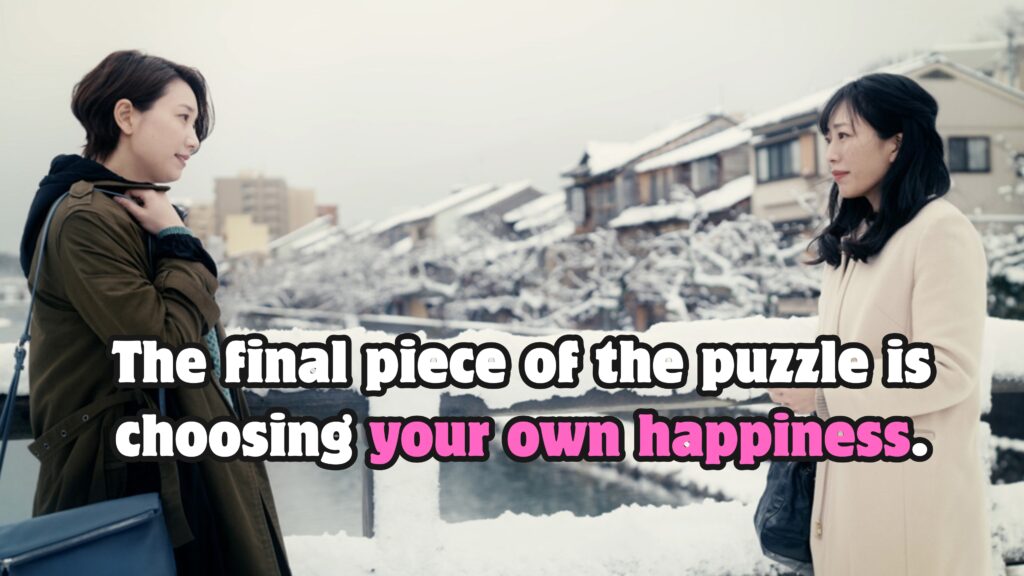
Honestly, at first I thought this would be a pretty typical lesbian film, but it really surprised me. Puzzle in the Palm makes you think deeply about marriage, identity, and what it means to live authentically.
There is a very real anxiety that permeates the film. Not “I want to marry this person because I love them,” but “Maybe I should get married because I am 30.” It’s the kind of unpleasant but real feeling that a lot of queer people have had to endure. It makes you question things, like, “What does it mean to be yourself?” and “What does happiness actually look like?”
A Scene That Says Everything
The film begins at a real estate office. Risa and Takumi are looking for a place to live together. At the end, we see a similar scene, but this time Risa is with Mako.
The agent asks, “Are you roommates?”
Risa replies, “No, we are living together.”
That one line carries so much meaning.
In that moment, it feels like Risa has finally chosen her own version of happiness. It shows her determination, her acceptance of herself, and her willingness to live honestly. It is a small moment, but a powerful one, especially in the context of a lesbian film.
Puzzle in the Palm: Quiet but Powerful
Puzzle in the Palm does not rely on dramatic moments or loud storytelling. Instead, it gently makes you reflect on your own life and choices. The fact that it is based on real voices from LGBTQ+ people makes it feel like an authentic lesbian story, grounded in reality, emotion, and truth.
If you are looking for a lesbian movie that goes beyond romance and really makes you think, this is definitely one to watch.