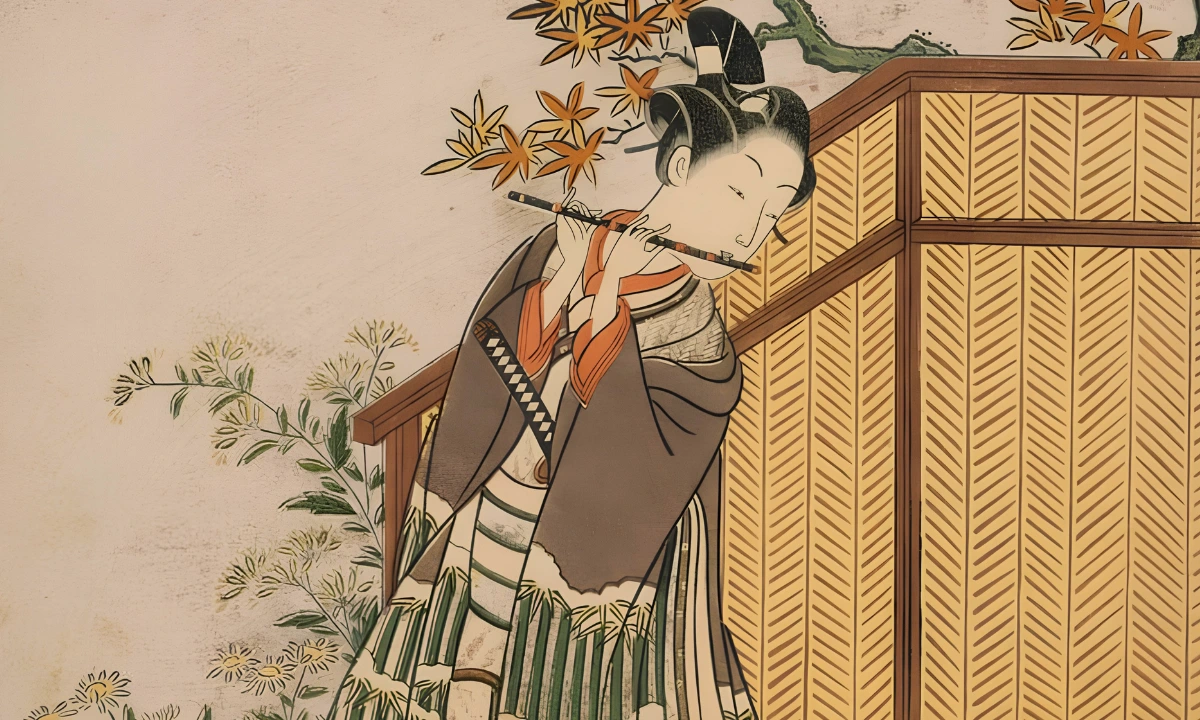

若州 (若衆) was a historical Japanese term for a male youth in the stage between childhood and adulthood, especially in Tokugawa or Edo-period Japan. Hairstyle, clothing, and coming-of-age customs helped make this status visible, but it was not defined by one universal age.
Wakashū could also carry aesthetic and erotic significance. This is why modern writers sometimes describe the category as a ‘third gender’. That description can be useful for explaining how distinct wakashū were from both children and adult men. However, this is a modern interpretation – not a literal translation of 若衆 or a direct equivalent of a contemporary LGBTQ+ identity.
Below, we’ll look at how the category was recognised, how it related to ナンショク そして shudō, and how wakashū appeared in Edo-period art and kabuki. We will also explore why the category changed as Japan entered the Meiji period.
The Meaning of Wakashū in Edo Japan
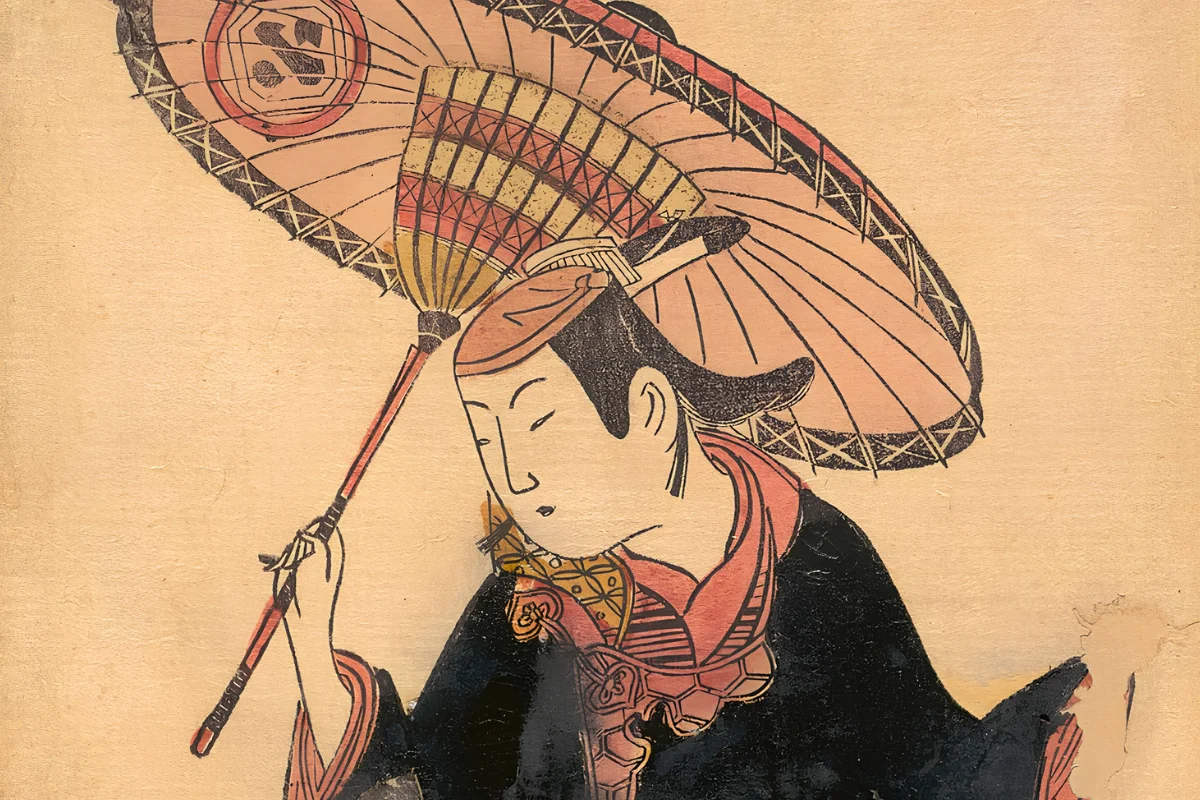
The Japanese word 若衆 (若衆) can be translated as ‘youth’ or ‘male youth’. In Tokugawa Japan, however, it referred to more than simply someone’s age. It described a recognised social stage between childhood and adult manhood.
Gregory M. Pflugfelder, Associate Professor of Japanese History at Columbia University, describes wakashū as the interval between childhood and manhood within Tokugawa Japan’s age/gender system. In principle, males passed through this youth stage before entering recognised adult manhood.
There is an important limitation here. Pflugfelder cautions that this generalisation rests heavily on urban print sources. Further research is needed to determine how widely the same pattern applied in village society.
The boundaries of wakashū status were not fixed according to a single number of years. Tokugawa Japanese age calculation also differed from the modern system, and neither chronological age nor one particular physical characteristic determined exactly when someone entered or left the category.
Instead, appearance and social custom helped make the distinction visible.
This is the key to understanding wakashū. It was not simply an old Japanese word for ‘teenager’. It was a historically specific youth status with its own visible markers and social expectations.
How Someone Was Recognised as Wakashū
If wakashū status was not defined by a fixed age, how did people know who was one?
Mainly through appearance. Hairstyle and clothing were important social markers in Tokugawa Japan. They could communicate age, gender, status, and stage of life. For wakashū, these markers made youth status visible.
ヘアスタイル
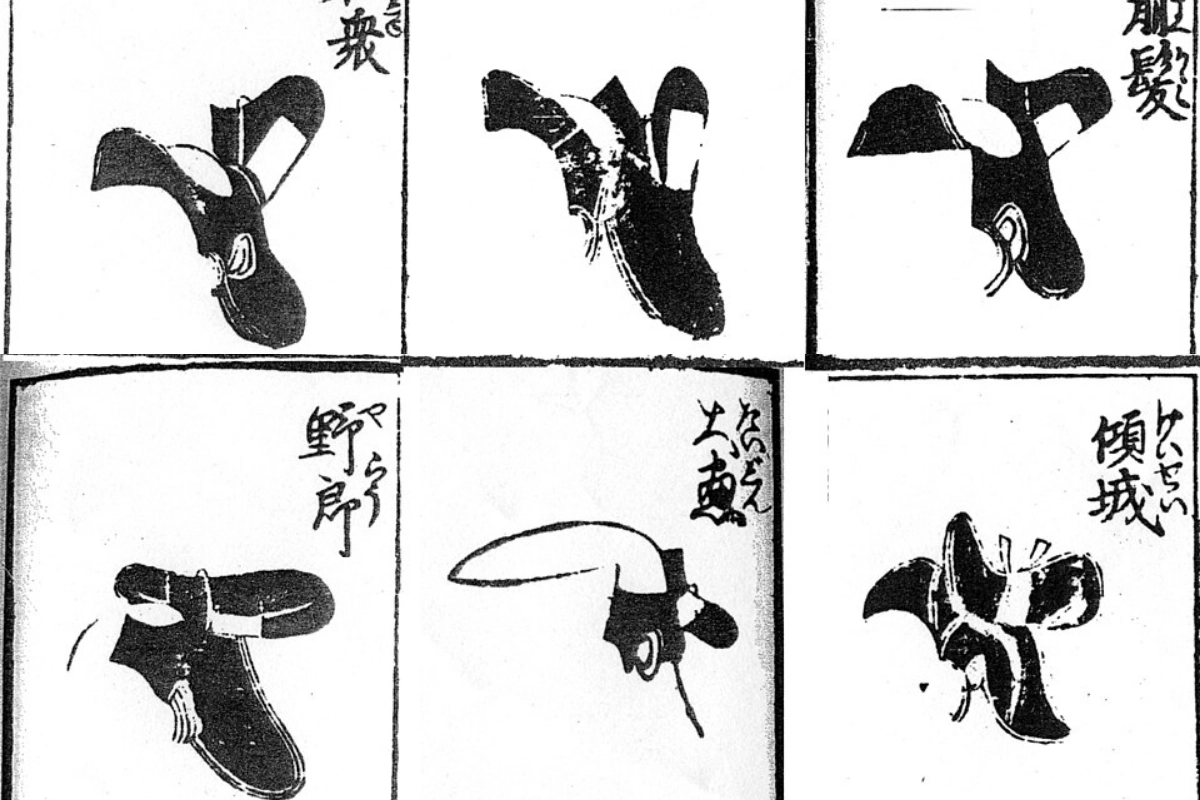
Hairstyle was one of the clearest markers. A wakashū wore a distinctive topknot with part of the crown shaved, while the forelocks at the front were left intact. This helped distinguish a youth from both children and adult men.
The transition to adult manhood brought another change: the forelocks were removed. This was associated with genbuku (today commonly pronounced genpuku), a coming-of-age rite that marked the end of wakashū status.
衣類
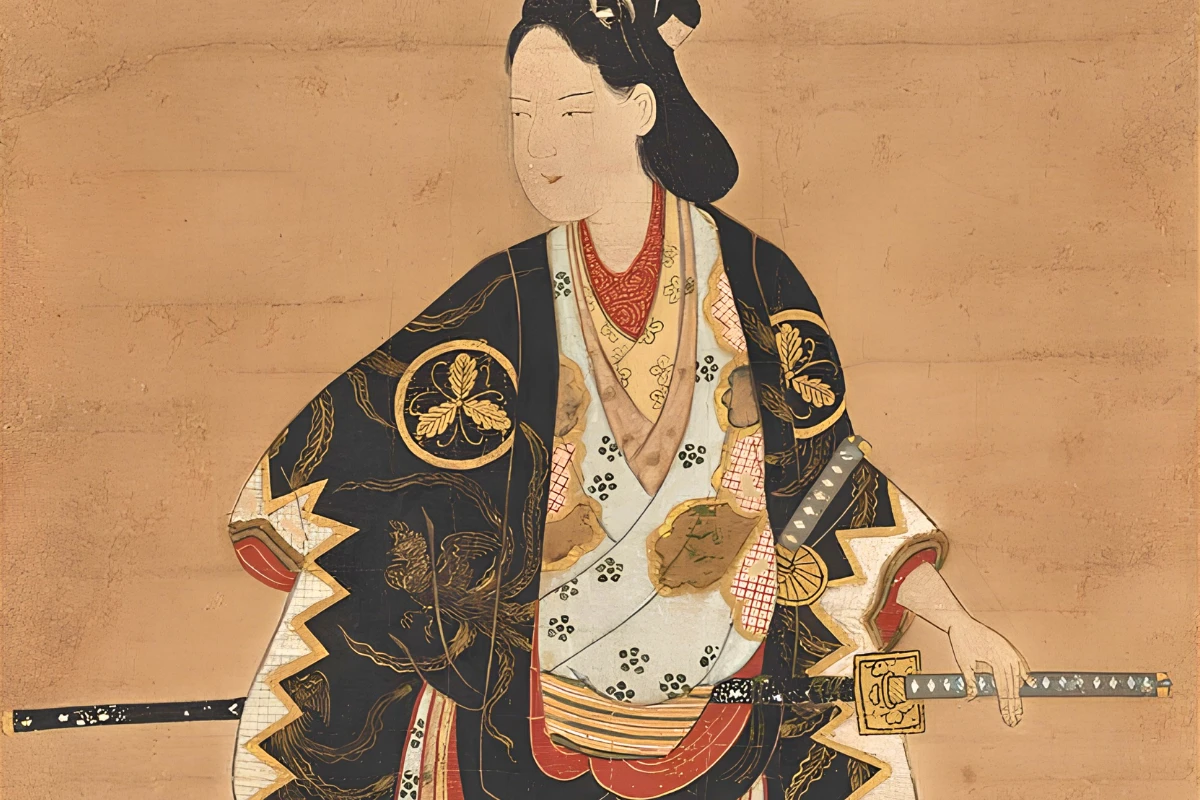
Clothing could reinforce the distinction. Among samurai and townsmen, becoming an adult could involve moving away from styles associated with youth. For example, furisode, with their long kimono sleeves, could be associated with wakashū.
These changes show why wakashū should not be understood as a biological stage. Social markers mattered more than a particular age or stage of physical development.
The category could also be flexible. Hairstyles and clothing could be changed, allowing wakashū status to be extended or ended at different points. Pflugfelder gives examples of households performing genbuku early, and of workers in the pleasure industry retaining youthful markers beyond the age we might expect.
So wakashū was a socially marked age/ gender status, not a fixed biological category.
These visible markers made wakashū status recognisable in everyday life and in art. That distinct position also shaped erotic conventions, although status and sexual participation were not the same thing.
Were Wakashū a ‘Third Gender’?
Calling wakashū a ‘third gender’ captures something important about Tokugawa society: wakashū were not simply treated as younger versions of adult men. They occupied a distinct position within the age/ gender order, marked through hairstyle, clothing, aesthetics, and social expectations.
Pflugfelder’s analysis is particularly useful because he treats age and gender together. In Tokugawa Japan, the distinction between childhood, youth, and adulthood carried social meanings that do not line up neatly with the categories most people use today.
Wakashū occupied the position between childhood and recognised manhood, and that position could carry its own gendered and erotic meanings.
This is where the phrase ‘third gender’ can be useful, but it also needs qualification.
The phrase is a modern label. It’s not the literal meaning of 若衆, nor can we assume that every person recognised as wakashū understood their own gender in the same way. Wakashū combined things modern societies often treat separately: age, gender presentation, social status, appearance, and erotic expectations.
Calling the category a ‘third gender’ can highlight that complexity. It becomes misleading when treated as a direct equivalent of modern transgender or nonbinary identities.
Wakashū, Nanshoku, and Shudō
Wakashū status was closely connected to male-male erotic culture in Tokugawa Japan, but the terms describe different things.
Nanshoku (男色) was a broad term for male-male eroticism.
Shudō (衆道), or wakashudō (若衆道), referred more specifically to conventions surrounding male-male desire centred on wakashū. The pursuing partner was more typically imagined as an adult man, although he could also be another wakashū.
若州, meanwhile, described the youth’s social status, not a sexual practice.
This meant that wakashū could be associated with male-male desire without every wakashū necessarily participating in these relationships. Age and social status were important to these historical conventions, so they do not map neatly onto modern ideas of sexual orientation.
Wakashū in Edo Art and Kabuki
Edo-period art provides useful examples of how wakashū could be represented, particularly through hairstyle, clothing, and other visual markers.
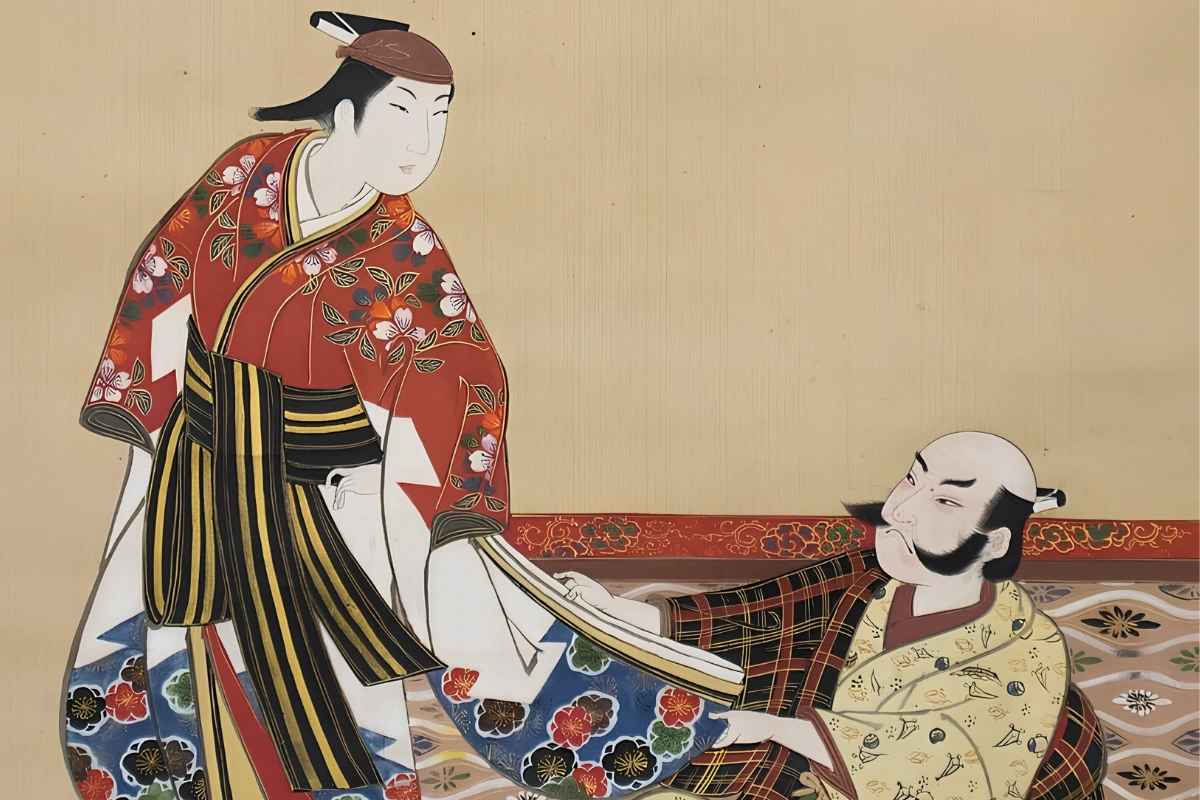
で Samurai and Wakashu (Male Youth), a painting by Miyagawa Isshō dating to the early 18th century, the Metropolitan Museum of Art identifies the figure on the left as a gender-ambiguous young male kabuki actor, or wakashū. The figure on the right is an older suitor attempting to seduce him.
The youth wears a yarō bōshi, a kerchief associated with wakashū actors who had shaved their foreheads.
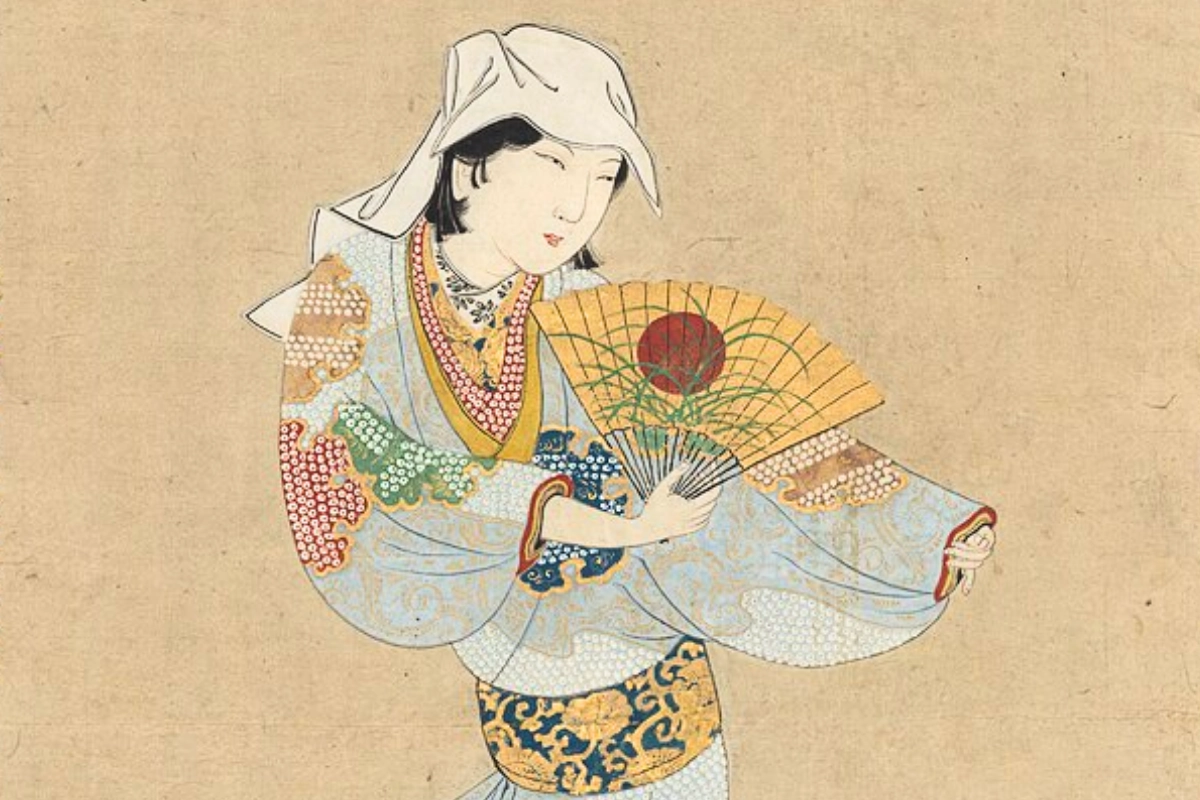
A second example, Wakashu (Male Youth) Dancer with a Fan, dates to around 1670-80. The figure may initially appear to be female, but the Met identifies the dancer as a male youth cross-dressed as a stylish woman. The white kerchief covering the hair is an important clue.
The museum places the work within kabuki after female performers were banned from the stage in 1629.
Together, these paintings show how youth status, gender presentation, theatrical performance, and male-male eroticism could overlap without becoming the same thing.
They also help explain why modern viewers can find wakashū difficult to interpret. Visual markers that communicated clear social meanings in Edo Japan do not always have obvious equivalents today.
These are still individual artworks, however, and should not be treated as evidence that every wakashū looked, behaved, or experienced gender in the same way.
For a broader introduction to the performance tradition and where to experience it today, see 歌舞伎とは何か?.
Why the Wakashū Category Changed in the Meiji Period
The wakashū category did not simply disappear because Japanese society became ‘Western’. Its transformation was tied to broader changes in how the emerging Meiji state organised age, gender, citizenship, education, appearance, and public life.
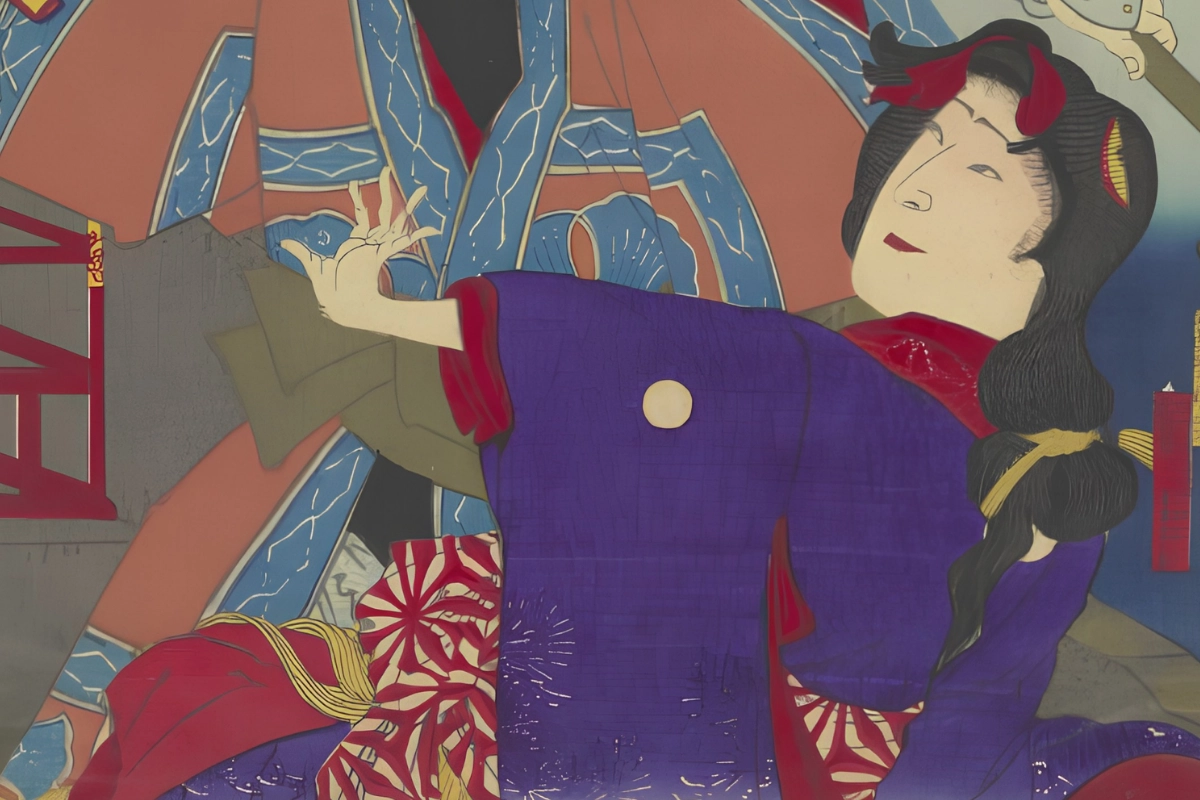
Westernisation formed part of the wider context, but the key change was the Meiji state’s reorganisation of age and gender. Age became increasingly tied to standardised chronological and biological models, while sex and gender were organised around more fixed categories. Regulations and changing social expectations also reshaped hairstyles, clothing, education, and the public roles associated with different stages of life.
These changes weakened a system in which age and gender status could be communicated through markers such as hairstyle, clothing, and the timing of coming-of-age practices. Pflugfelder describes this broader transformation as a reorganisation of the age/ gender system as Japan developed a centralised nation-state.
The result was that 若衆 gradually ceased to function as the socially recognised status it had once been.
This does not mean that gender diversity or same-sex desire disappeared from Japan. Rather, the social category connecting youth, appearance, age, gender, and erotic conventions lost its place within the social order.
Related Terms, Clearly Distinguished
These terms overlap in the history of Japanese gender, sexuality, and performance, but they are not synonyms.
| 学期 | Plain-English function | How it differs from 若衆 |
|---|---|---|
| Wakashū (若衆) | A socially recognised male-youth stage between childhood and adult manhood in early modern Japan | The term describes an age/ status category rather than a sexual practice or modern gender identity |
| Nanshoku (男色) | A historical term associated broadly with male-male eroticism | Nanshoku concerns erotic culture; 若衆 identifies a particular social status |
| Shudō (衆道)/ Wakashudō (若衆道) | The ‘way of youths’, referring to conventions surrounding male-male desire involving wakashū | Shudō describes an erotic and social convention rather than the youth’s status itself |
| Onnagata (女形/ 女方) | A male kabuki performer specialising in female roles | 女形 is a theatrical role or performance specialisation; it is not another name for wakashū |
| Bishōnen (美少年) | Literally a ‘beautiful’, ‘pretty’, or handsome boy/ youth | Bishōnen is an aesthetic description, not the specific historical social status represented by 若衆 |
The distinction between 若衆 そして bishōnen is particularly useful. Bishōnen describes an aesthetic or appearance, whereas 若衆 identifies a historically specific social category. The two ideas can overlap in representations of beautiful young men, but one is not a translation of the other.
女形 should also not be treated as the same as wakashū. Edo-period wakashū could appear in feminine roles or clothing, but 女形 specifically refers to male kabuki performers playing female roles.
The Met’s collection records provide a useful example. They distinguish wakashū from adult male 女形 performers even where both share particular visual conventions.
The safest approach is to keep status, erotic practice, theatrical role, and aesthetic description separate rather than treating them as different names for the same thing.
Modern LGBTQ+ labels can help us think about these histories. But they should not automatically be assigned to people simply because their lives or appearances resemble a modern category.
What Wakashū Means in One Sentence
若州 (若衆) was a socially recognised male-youth status between childhood and adult manhood in early modern Japan, marked by hairstyles, clothing, coming-of-age practices, and social expectations. The status could also carry aesthetic and erotic significance, but being a wakashū did not determine sexuality or gender identity.
The phrase ‘third gender’ can help describe the category’s distinct position within the Tokugawa age/ gender system. However, this is a modern term, not a direct translation of 若衆. It is also not evidence that all wakashū shared a modern transgender or nonbinary identity.
Understanding this distinction makes the history more interesting. Wakashū were neither simply ‘gay boys’ nor direct equivalents of a modern LGBTQ+ category. They belonged to a social system in which age, gender presentation, appearance, sexuality, and adulthood connected in ways that do not map neatly onto the categories we use today.
To explore the wider history, continue with JGG’s guides: