
A critical hit since its manga debut that reached new levels of popularity with its anime adaptation, 光之死的那个夏天 has had many audience members asking: “Is this gay?”
The short answer is: 光之死的那个夏天 is queer, though neither of its main characters has been explicitly labelled gay. Creator Mokumokuren describes the series as queer and as a “youth horror,” but not as a romance.
That distinction matters. 光之死的那个夏天 isn’t what is typically considered 男孩的爱(BL), but its central relationship is filled with intimacy, longing, alienation, and moments of unmistakably erotic horror.
So, why do so many people see it as gay or BL? Let’s get into it. Be aware that there will be spoilers for the premise and early episodes of this supernatural queer horror.
是 光之死的那个夏天 gay or BL?
As mentioned, neither term quite describes 光之死的那个夏天 on its own.
Mokumokuren said in November 2024 那 光之死的那个夏天 is a “youth horror” and also queer, but explicitly not a romance.
“I believe it should be a story that sympathizes with people who have been left out of conversations about romance and sex, so I describe it as ‘youth horror,’” Mokumokuren said. “I think the key is the fear of not being able to be ‘normal’ and having no place to belong, which is something that many people share.”
Horror and BL are not incompatible, but BL generally centers romantic and/or sexual relationships between men. 光之死的那个夏天 does not quite fit that definition, and Mokumokuren has also not labelled either of the two main characters — Yoshiki Tsujinaka and Hikaru Indo — as gay.
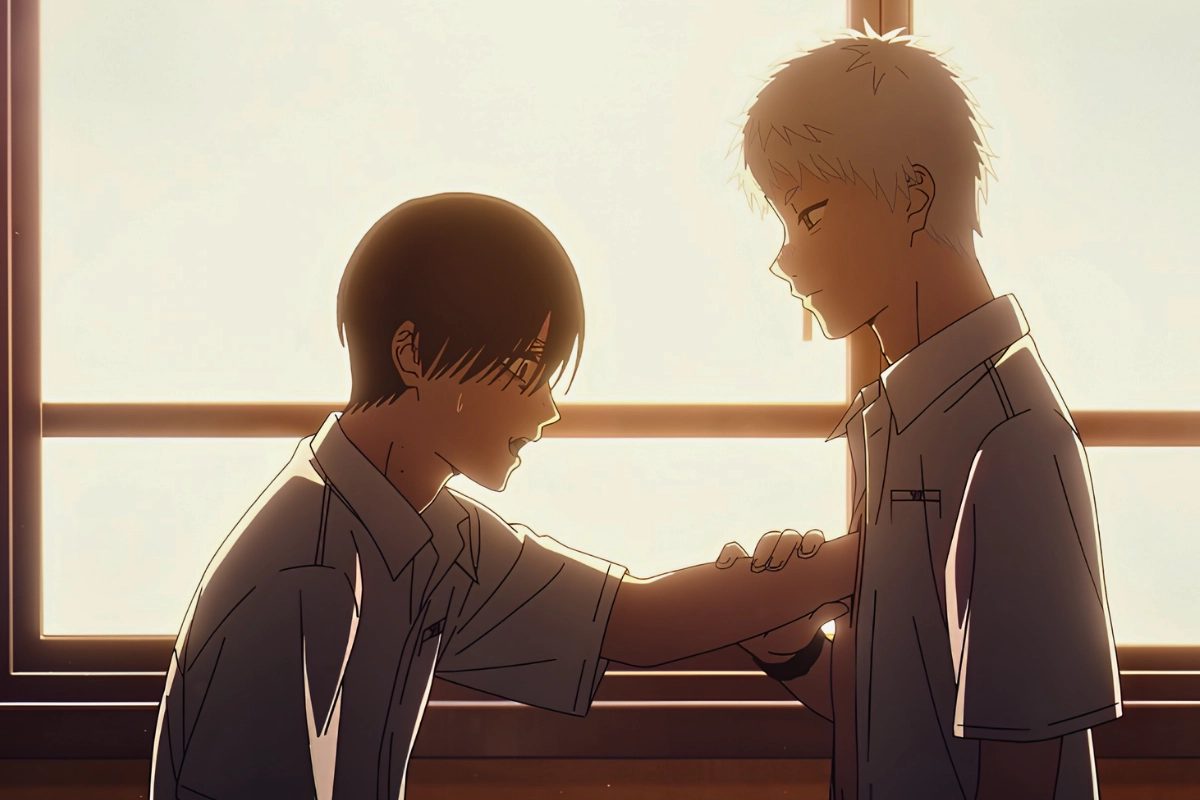
So why do so many people think of it as a BL or gay anime?
One reason is the initial mislabelling of the manga as BL by some translation websites in the months after its release.
More importantly, there is the relationship itself.
Even if you watched the anime without knowing anything about the BL mix-up, many viewers would probably agree that there’s something… 那儿 between Yoshiki and the thing that looks and sounds like Hikaru. The series may not present their relationship as a conventional romance, but it deliberately plays with intimacy, desire, grief, and the fear of being different.
To explain why, we need to discuss what happened to Hikaru.
前提
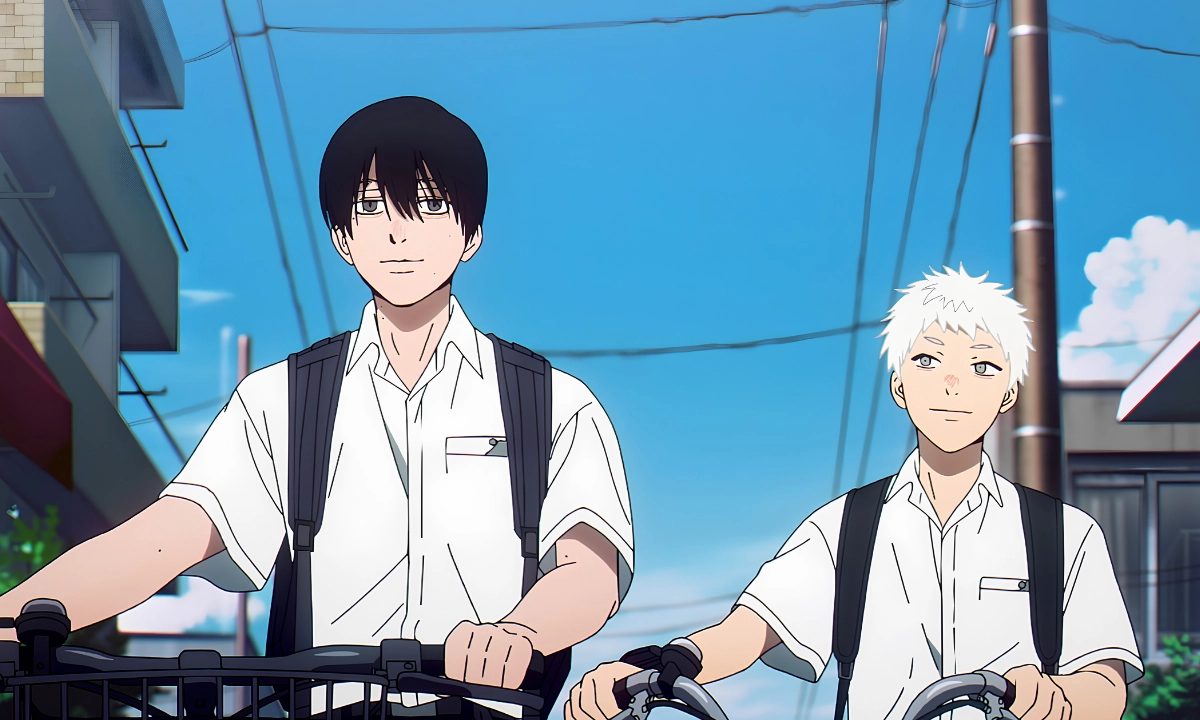
This is a fairly high-concept anime. Yoshiki Tsujinaka is best friends with Hikaru Indo, whom he has known since childhood in their rural mountain town.
We open with the two of them interacting, Hikaru joyful and jovial. But Yoshiki, always the more reserved of the two, doesn’t share in his happiness. He seems unsettled, because although this person looks like Hikaru, walks like Hikaru, and talks like Hikaru… he can tell: it isn’t Hikaru.
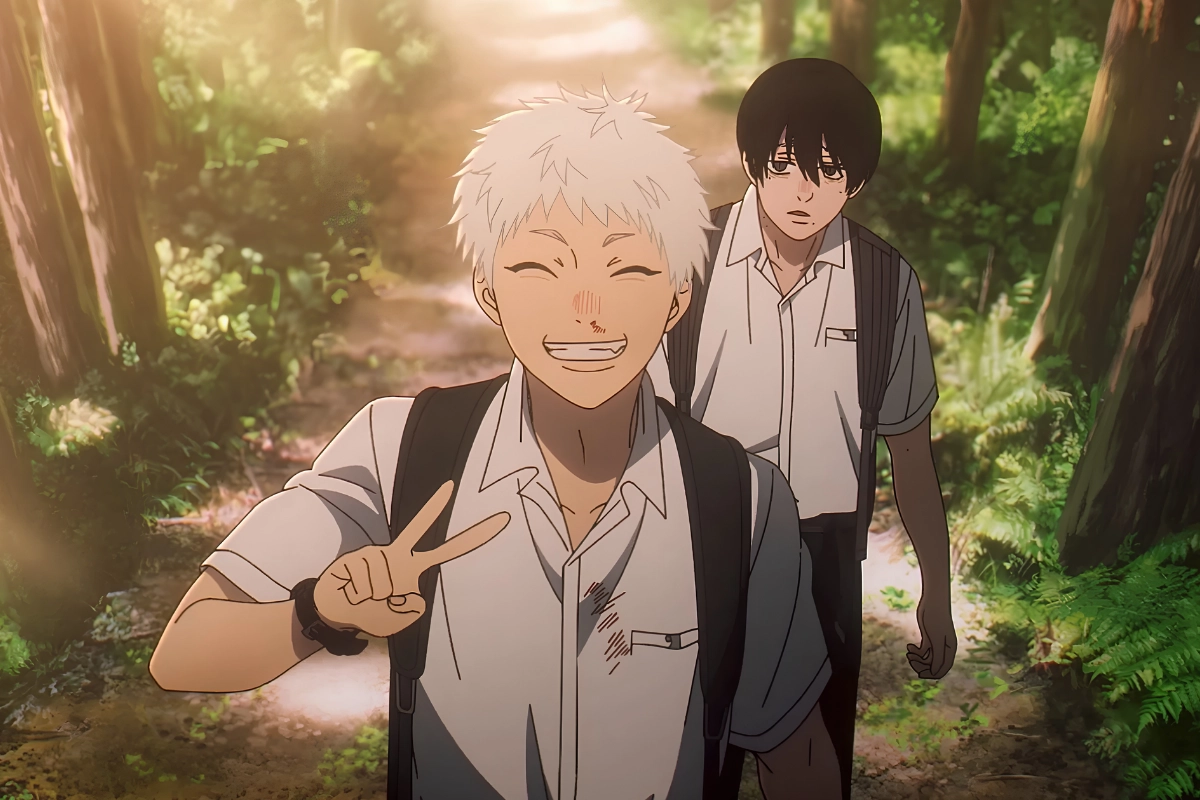
The name of the anime is no bluff: Hikaru is dead.
He died on a haunted mountain, and as he breathed his last, a ghostly being whose true nature is unknown even to itself inhabited Hikaru’s body. It restored the body to life, but with something else in place of Hikaru’s soul.
This “Hikaru” has all of the original’s memories. It knows what Hikaru liked, how he acted, and how he spoke. But Yoshiki was so close to him that he can tell something is wrong.
When confronted, the inhabitant of Hikaru’s body admits the truth. Hikaru is dead, and he is never coming back.
But the creature also knows what Yoshiki was to Hikaru, and it feels the same way. It wants to stay close to Yoshiki because whatever Hikaru felt for him, the thing wearing his body inherited it.
And Yoshiki wants it to stay, because he can’t let Hikaru go.
That is where so much of the queer reading comes from. There’s something in the way “Hikaru” clings to Yoshiki, and something in the way Yoshiki cannot let him go, even as he becomes increasingly aware that this thing wearing his friend’s life will never be a substitute for the real Hikaru.
然而,随着剧情的发展,似乎不管是什么东西披着彦春的外衣从山上下来,都开始从山顶释放出更多的混乱力量。至少山中小镇的一些长老知道释放的是什么,以及他们多年前激怒的是什么:野贯领主。
恐怖与情色
长期以来,恐惧、肉体和幻想一直交织在一起,而 光之死的那个夏天 weaves them together masterfully. Yoshiki is increasingly frightened of the Hikaru-shaped thing in his midst, yet incapable of turning away from it, especially when it tells him the things he wished Hikaru had said while he was alive. The faux-Hikaru is also exceedingly protective. It promises that, even if it could, it would never kill Yoshiki, and it kills spirits that threaten him.
The clearest merging of horror and eroticism comes when the Hikaru Thing brings Yoshiki alone to an empty gym room, even remarking, “what would people think?” as it removes its shirt. It proceeds to inhumanly open its entire chest, first pulling Yoshiki’s hand, then his arm, and finally nearly his entire body into itself, all while describing how good it feels.
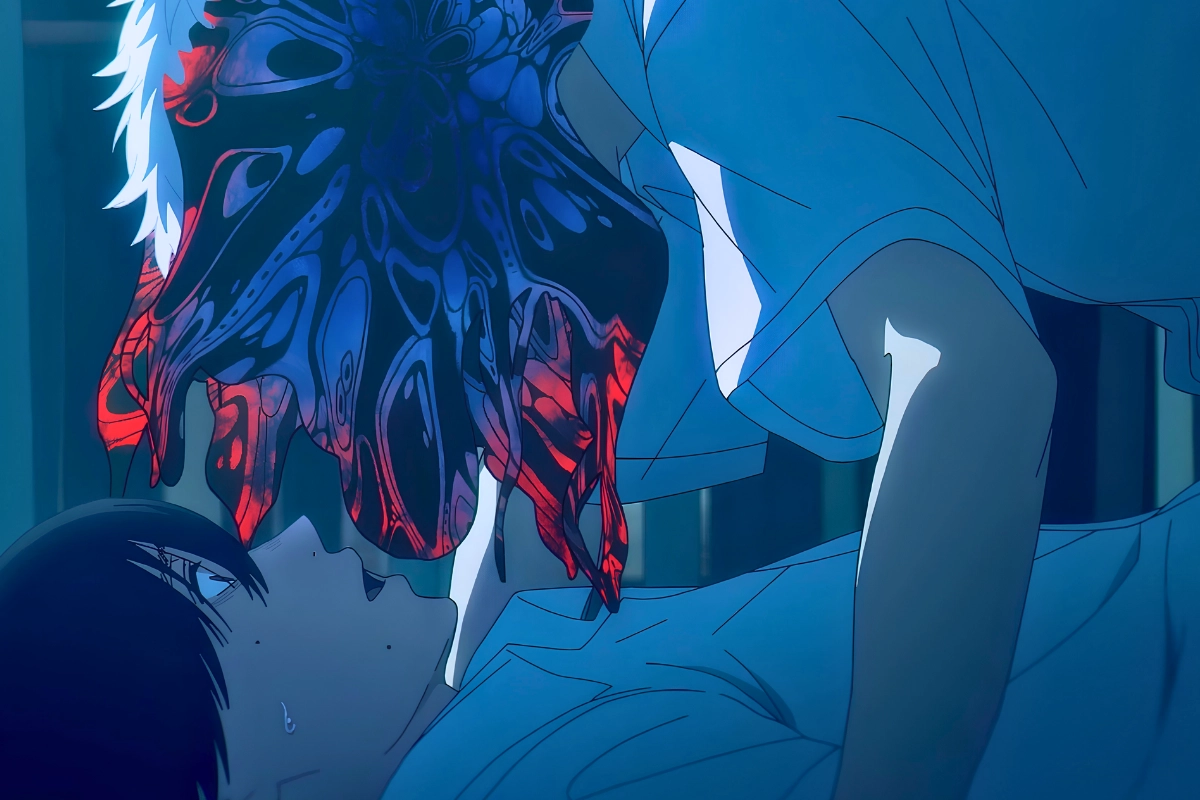
Later, Yoshiki, wracked with indecision, snaps at Not-Hikaru and tells him to go home alone. The creature loses its patience, expands beyond Hikaru’s body, and in a twisting nightmare of eyes and crawling movement, invades Yoshiki’s body.
Yoshiki is disgusted… until he isn’t. Towards the end, before a flash-cut sets him free, he even feels pleasure in being overtaken.
Scenes like these can be deeply uncomfortable to watch, and that’s the point. Fans of horror or the macabre may have seen similar things elsewhere, but newcomers to the genre, such as myself, may find this psychosexual horror equal parts frightening and compelling.
None of this necessarily makes Yoshiki and “Hikaru” a canonically gay couple. But it does make the queer and erotic reading of their relationship very difficult to dismiss.
我的想法
After the opening episodes, I was firmly convinced that this was a series worth following.
The art is excellent, and the subtle contrast between “Hikaru” and the other characters, unless he is using his “true power,” is a compelling piece of art direction. Many shots have a quiet unnaturalness to them that adds to the sense of dread. The “camera” lingers on faces, fingers, eyes, trees, space, just long enough to make you think, “shouldn’t we be looking at something else now?”
The music adds to that creeping sense of unease without becoming intrusive, and the OP and ED songs are impressive. The voice actors, especially Yoshiki’s Chiaki Kobayashi and Hikaru’s Shuichiro Umeda, also put in excellent work, with Kobayashi exemplifying horrified need and Umeda making Hikaru feel like a devoted threat.
Even in those early episodes, I found the series deeply compelling.
If you’re looking for a regular BL anime, this won’t scratch that itch. But I recommend it anyway. There is little else like it, and its themes will appeal to many LGBTQ+ people who have experienced feelings of confusion, dissociation, alienation, or simply the fear of not fitting into what other people consider “normal.”
So, is 光之死的那个夏天 gay? Not in the straightforward sense of being a canonically gay romance. But it is intentionally queer, and its strange mixture of intimacy, desire, grief, and horror is central to what makes the relationship between Yoshiki and “Hikaru” so compelling.
The complete first season of 12 episodes is available to stream now on Netflix.