

We do a lot of media reviews here at the Japan Gay Guide: movies, TV shows, manga, a bunch. This is because we believe they are very important to our audience, and that spotlighting LGBTQ+ media is an important function for Japan’s premier English-language queer website (it definitely isn’t because your humble writer has deadlines and they’re fun and easy to write).
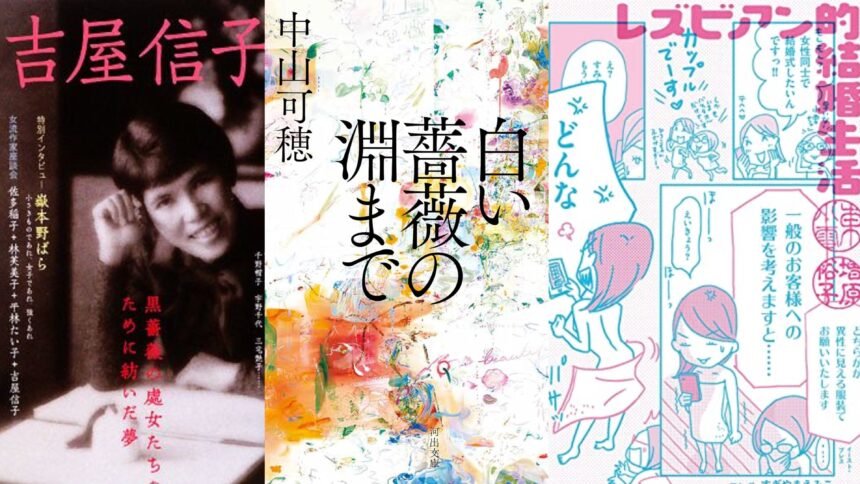
But what about the form of art that everyone loves (or at least pretends to): the written word? Well, we have covered arguably the most famous gay Japanese author before, but what of Japan’s numerous sapphic writers? Where are their flowers (specifically, lilies)? Today, we’re going to give you a brief list of Japanese lesbian writers whose works should absolutely be on your to-read list.
Nobuko Yoshiya
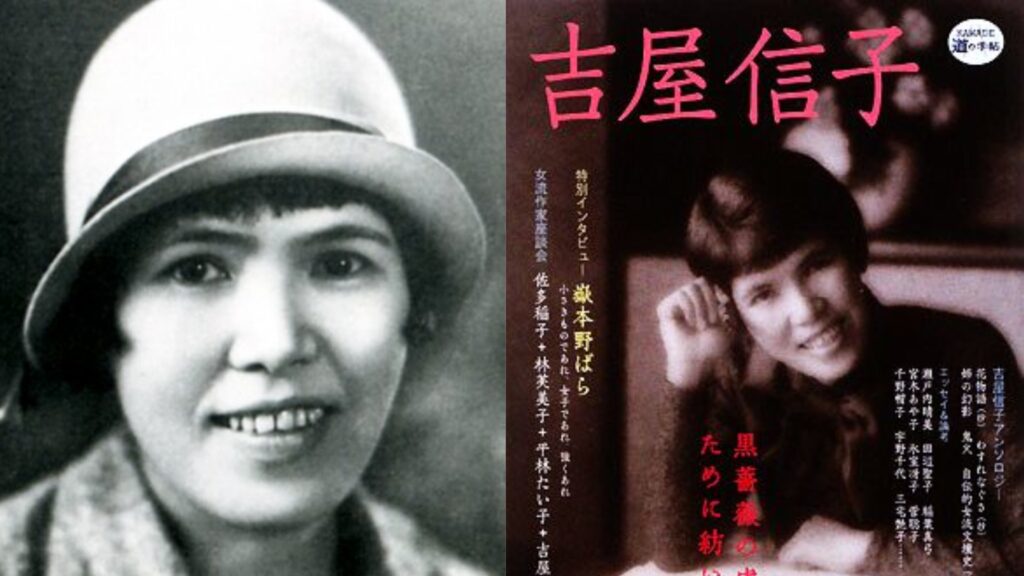
Born in 1896, Nobuko Yoshiya is arguably the pioneer for Japanese lesbian novels. The progeny of samurai families, she came of age in the Taisho and Showa eras, which were marked by political instability and — as you may know — militarism. This has, for some, stained Yoshiya’s reputation: she was a reporter during the war, and while it would have been difficult (if not impossible) for her to express feelings against the militarist feelings. Nevertheless, she did produce pro-Imperialist reporting.
However, as a creative writer (and as a person) she was stridently progressive for the time. She dressed in an androgynous style, and was openly in a relationship with another woman. She even adopted her partner, Chiyo Monma, which was at the time (and in some senses, still is) the only way to guarantee certain rights for lovers of the same-gender.
Her writing was notable for its unabashed depiction of love between women, and could even be considered ground zero for the category of Class S fiction, wherein older schoolmates are in relationships with younger ones (especially in relationships between women). Indeed, her writing has long been an influence on shoujo manga, and the sense of yearning that can be felt between women who love women — especially in the time that these stories were written — has resonated throughout generations.
Kaho Nakamura
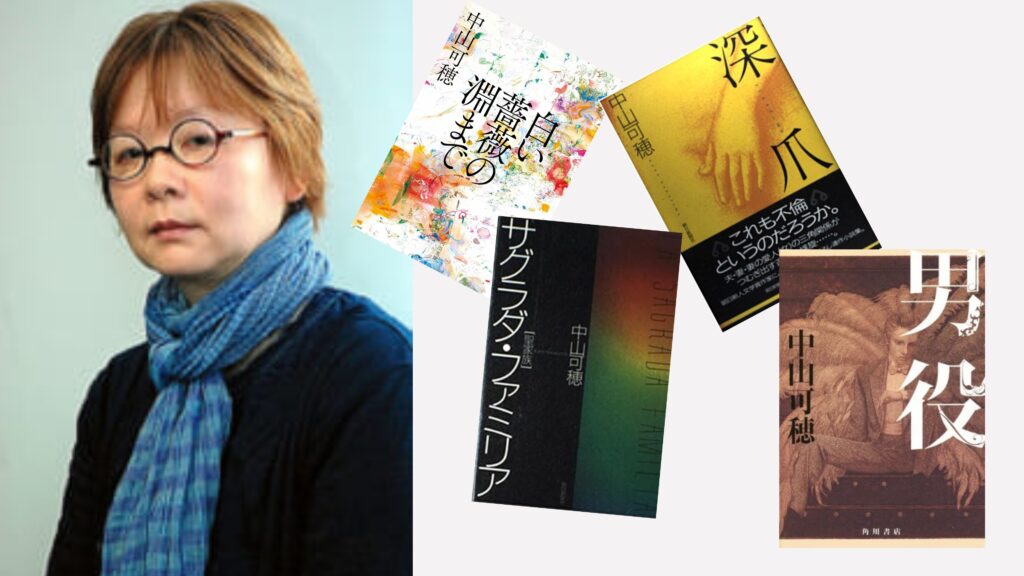
Born in Nagoya in 1960, Kaho Nakamura’s work has long been admired for its sensitive, heartfelt depictions of relationships. Nowhere is this more true than in her 2000 novel Sentimental Education, and the 2001 work To the Depths of a White Rose, which were praised for their delicate and sensitive portrayals of lesbian relationships. Her short story 闪亮的雨 was also chosen as the title for a collection of short stories by Japanese women who love women translated into English, where it met with critical acclaim.
However, despite being (at the time) “Japan’s only contemporary self-identified lesbian novelist,” according to the Routledge Handbook of Sexuality Studies in East Asia, she disliked being pigeon-holed as a “lesbian writer.” Indeed, her work covers a broad range of topics, including those between gay men, and also more platonic forms of love, such as that between friends. An unmissable author.
Koyuki Higashi
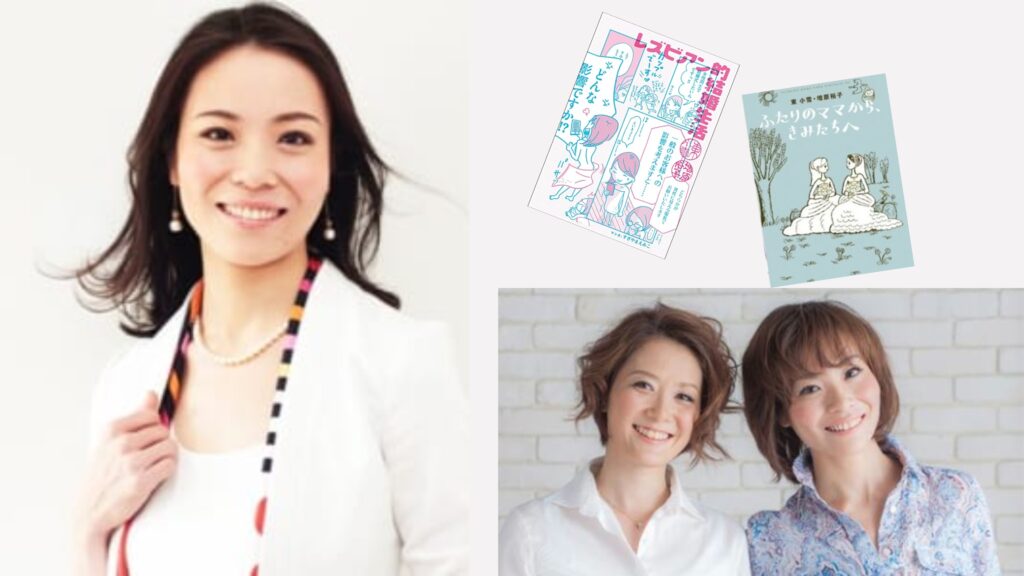
One of the most visible LGBTQ+ activists of the last decade, Koyuki Higashi was actually one of the first people to enter into the partnership oath system with her then-partner, when it came into effect in Shibuya. She has also been active in the community advocating for victims of sexual abuse.
A major part of this activism is her written work. Her debut Lesbian-teki Kekkon Seikatsu或 The Life of Married Lesbians, was co-written with her wife at the time, Hiroko Masahara, and illustrated as a manga by Emiko Sugiyama. It details their lives together, how they got engaged, married, and the struggles that they have faced — but also the love and support, with yuri scholar Erica Friedman even saying in her review that “[Hiroko’s] father’s speech at their wedding is illustrated with guests bawling happily and I was no different. Hiroko-san’s parents were, in some ways, the real heroes of the book.”
They also wrote the follow-up manga, Our Journey to Lesbian Motherhood, wherein they discuss their desires to have a child, and the difficulties that they anticipate along the way. These deeply relatable and moving yet funny stories have been critically acclaimed in Japan and abroad for their wit, honesty, and insight.
There are many more LGBTQ+ writers out there for you to explore, but hopefully this trio of terrific sapphics will be a good start for a year of literary fulfilment!