

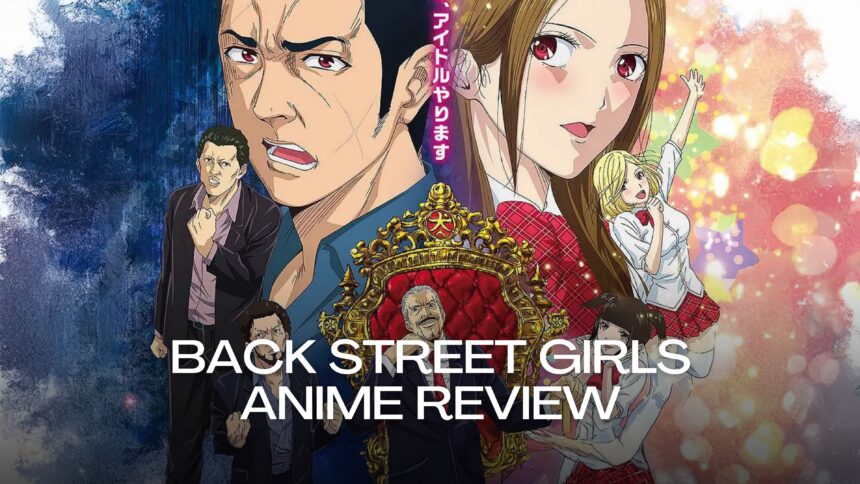

Anime has a somewhat chequered history when it comes to representation of transgender people (as has the vast majority of mass media). However, there have been positive depictions in anime (from time to time) for decades.
As far back as 1985, Dirty Pair was shouting “trans rights,” Pretty Guardian Sailor Moon has featured not only the bigender Haruka Tennoh, but also the gender-fluid Starlights, and the 2018 anime Zombie Land Saga introduced Lily Hoshikawa, whose identity was received both by the characters and the audience — so much so that she spawned an iconic meme.
So, what are we to think of Back Street Girls: Gokudo, released the same year as Zombie Land Saga? Is it positive representation for trans people? Well… that depends on your interpretation. Let’s grab our microphones and our sake and get into it.
Premise
source: Netflix
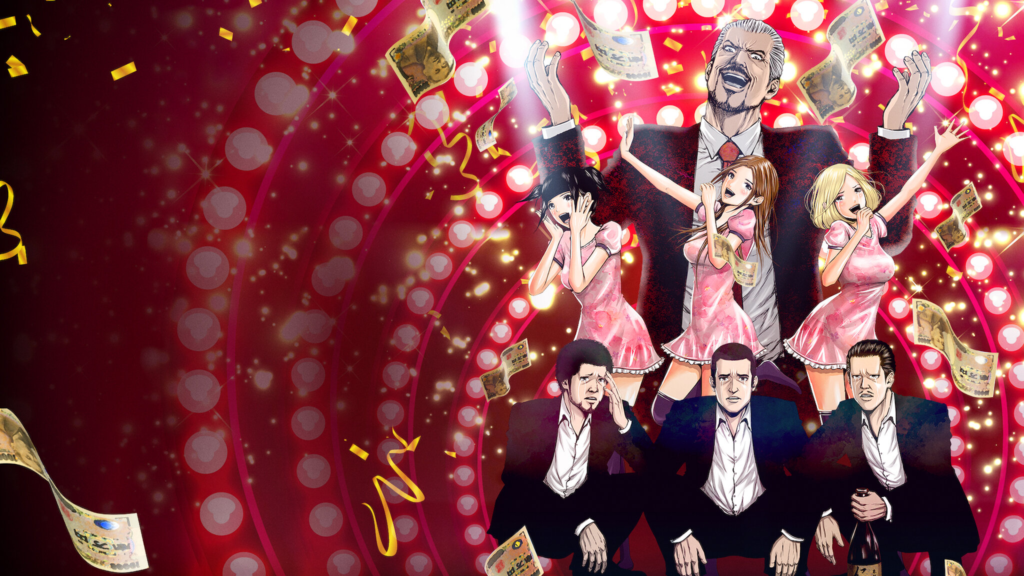
Based on the manga Back Street Girls by writer and artist Jasmine Gyuh, the story follows three central characters. We are introduced in the first episode to Kentaro Yamamoto, Ryo Tachibana, and Kazuhiko Sugihara, three relatively junior members of the yazuka, the Japanese mafia. We see them on their hands and knees begging the boss of their syndicate for forgiveness at what was apparently a major failure, though the nature of this failure is unexposited.
Accepting that they may have to remove a part of their little finger (a stereotypical yakuza symbol of contrition and loyalty), their boss instead has a different idea. Having recently heard from a colleague that idols make more money than even drugs, he wants to start his own group. So he offers the terrified three (who he deems to be quite short) a choice: have both legs amputated, have all their organs harvested, or… go to Thailand for gender reassignment and return as girls to become an idol group, the Gokudolls.
Not wanting to die or lose their legs, the three agree to become women and begin working as idols. After a one year time skip, we pick up the story of Airi Yamamoto, Mari Tachibana, and Chika Sugihara as they experience the dual difficulties of working as idols and for the yakuza… which are more similar than you might initially think.
Idol-like or Idiotic?
source: Anime Hajime
The first thing to say is that this is not an anime meant to be taken seriously. If this were serious, it would have probably been subjected to being dragged harder than Emilia Pérez. It is first and foremost a comedy.
This is in and of itself more than enough to raise an eyebrow, however: trans women are often the subject of lazy, boring jokes about them “really being men” (cf. Ricky Gervais going from beloved funster to uninspired hack), which is hardly challenged (and is arguably reinforced) by protagonists who have been forced to transition, and in many ways (at least in the beginning) still identify as men.
However, there is a rub to this: the show is pretty funny, and that counts for a lot when it comes to winning audience goodwill. As Letterboxd user stepoff summarizes: “That’s messed up. This could be the plot to a (very transphobic) horror movie. BUT IT WAS SO FUNNY.” As such, like an offensive joke that takes you out of yourself for a minute, people sometimes find themselves drawn to the show, despite knowing that they would otherwise be repeled just by the concept.
Comedy, is of course, subjective, so what tickles one may torture another. If you get 10 minutes into the first episode and it’s triggering you, then discontinue. With some exceptions, “don’t worry it gets good six episodes in” is rarely true (Panty & Stocking with Garterbelt being a notable exception), so if it isn’t your style of humor, then put the series aside and move on. So what kind of humor can you expect?
@ber0933 Anime : Back Street Girls: Gokudolls Follow for more #gokudols #BackStreetGirlsGokudolls #comedy #gokudolls #animeclip #anime #animeedit #animeedits #weeb #animescenes ♬ suara asli – Ber~♪ Yakuza Souls in Idol Bodies
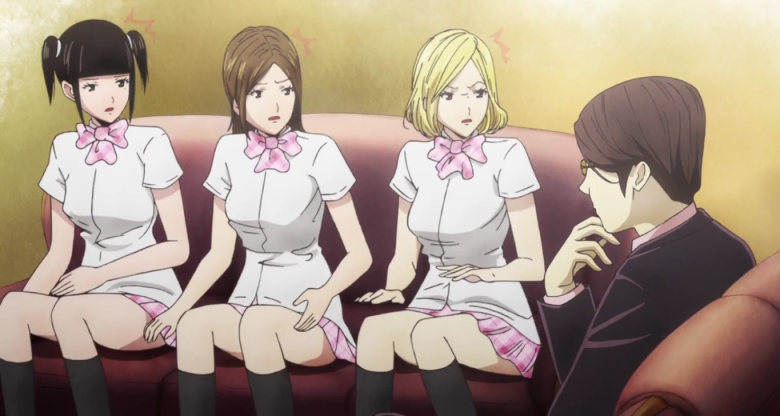
The main gist of the jokes revolve around our troubled trio adjusting to their lives as idols, and as women, while still being distinctly part of the yakuza. One of the things that some may find offensive, and others funny, is that the inner voices of the main characters are those of men, and their previous faces will occasionally pop-up in spectral form to exclaim their inner thoughts (including communicating with one another telepathically when it seems the mask might slip, as they are cis women as far as their fans are concerned).
Part of the humor, however, revolves around how they interact with one another and the world around them, in their new roles (both gender and professionally). For example, their yakuza boss — now their producer — insists on strict bedtimes, limited drinking, and strict training, which mirrors idol lives, but with the yakuza twist that they will be severely beaten for any transgressions, which I think is frowned on even in the strict world of idols.
They also find themselves adjusting to the world of idol-dom differently. Sugihara, for example, while not exactly thrilled about how she got in this situation, finds themselves slipping more easily into a feminine role. Tachibana, still very masculine of mind, likes their new body, but finds themselves jealous of their partners when they receive fewer gifts from fans, their pride as an idol at risk. Finally, Yamamoto is similarly unhappy about their situation (at one point getting blind drunk and screaming out, “give me my dick back!”), but remains a dedicated leader to the others.
Other characters include their manager, Mandarin Kinoshita, who is hugely experienced in turning idol groups into successes, and — as the first man in Japan with a PhD in Women’s Studies — believes it will be easy to fix their “rotten attitudes”, before being continually stumped. Additionally, there are humorous interactions between their assistant, Kimura, who was previously Sugihara’s devoted disciple, and one of the few who knows the secret of the group — and who has a crush on Sugihara.
Sound and Animation
One area that almost anyone can agree on — whether fan or foe — is that the animation is not anything to write home about. With the exception of a few dance scenes, there is very little animation in the early episodes to speak of, with humor derived mainly from dialogue, and movement (and emotion) converyed through camera pans and shaking still characters.
However, as the voice acting is so emotive (with the women and men versions of each character giving it their all) and given that each 22 minute episode is split into three shorter comedic vignettes, it is very forgiveable. The OP animation is also quite fun, with colorful rotoscoped dancers moving to the song with aplomb.
The music itself — the OP, ED, and the score — is largely forgettable, but it’s forgiveable given the emphasis instead on humor and voice work.
Conclusion
Personally, I can see and understand how some might wish to overlook the transphobic elements of this show: you can’t help it if you laugh, right? For me personally, however, while I liked the concept of some of the jokes, I often found that the actual execution left me a feeling a little deflated, and so I kept coming back in my mind to how trans women might feel if they saw this as one of their most popular depictions on Netflix today.
As mentioned, comedy is subjective. In my subjective opinion, if the premise amuses you, you can give it a try, but if you’re apprehensive about watching, you won’t be missing much by skipping it.