



Synopsis
Released in 2023, Seiyoku is a film adaptation of the novel of the same name by Asai Ryo. At first glance, it appears to be a quiet ensemble drama. But beneath the surface, it delivers a sharp and unsettling look at the boundaries of what we call “diversity.”
The story weaves together the lives of seemingly unrelated characters: a public prosecutor, a father struggling to understand his son’s refusal to attend school, and young adults who have experienced deep isolation. They live in different worlds, carry different responsibilities, and appear, outwardly at least, to be “ordinary.”
Yet Seiyoku slowly peels back that surface.
Each character harbors desires they cannot easily name, let alone confess. These are not trivial secrets, but impulses that fall outside socially accepted norms. As the narrative unfolds, the film questions the unspoken rules that define what is considered normal, healthy, or acceptable.
In recent years, diversity has become a widely embraced ideal. Society claims to value difference. But Seiyoku forces viewers to confront an uncomfortable question: What happens when someone’s truth lies beyond even the categories that diversity is prepared to include?
Rather than offering easy answers, the film lingers in ambiguity. It asks us to consider whether our empathy has limits and whether our commitment to inclusion extends to those whose desires challenge our sense of moral comfort.
By the end, Seiyoku leaves us with a quiet but pressing realization: some people exist outside labels… or the boundaries that society considers acceptable. And acknowledging that reality may be far more difficult than we like to admit.
The Characters
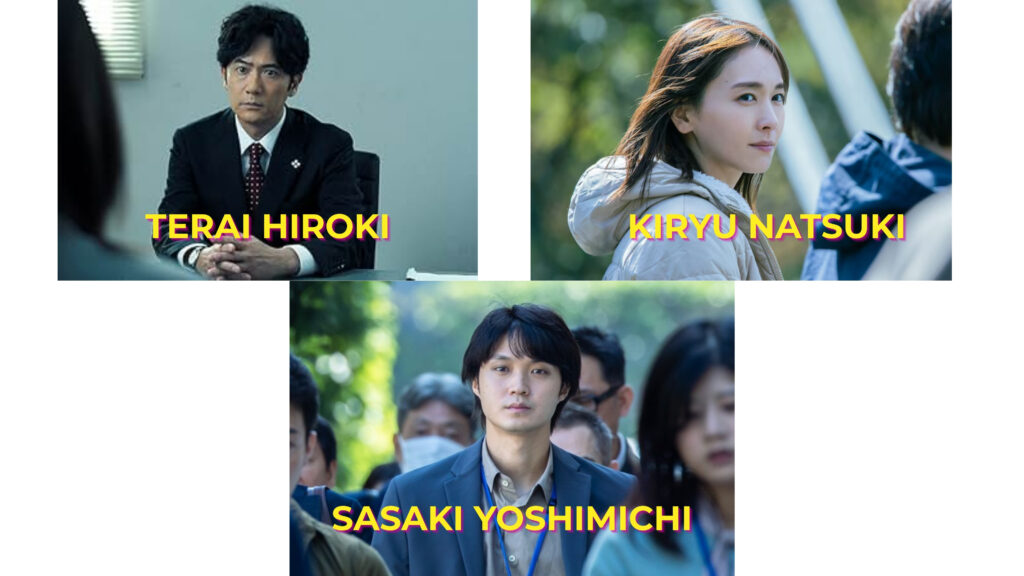
Terai Hiroki
Hiroki is a high-achieving public prosecutor whose career and family life seem perfectly on track. One day, he’s thrown into confusion when his son suddenly stops going to school. Unable to understand what’s happening, he finds himself wishing that his child would just grow up “normal.”
As someone whose job is to uphold social order and define what is “right,” he stands on the side of the law, of structure, of standards. And yet, without even realizing it, he too is bound by a powerful and unquestioned belief in what abnormality is, and what it isn’t.
In trying to protect his son, he reveals something about himself: how deeply the ideas of “acquiescence” and “correct” are ingrained and conflated even in the minds of those who believe they are simply defending what’s right.
Kiryu Natsuki
A woman who has lived in isolation after a traumatic incident in her past pushed her to the margins of those she was once close to.
Ever since, she has carried within her a desire that she believes no one could understand. Something she cannot voice, and something that keeps her at a distance from others even when she longs for connection.
Outwardly, she moves through life quietly. But inside, she is constantly negotiating the gap between who she is and what the world is willing to accept.
Sasaki Yoshimichi
A young man who has always struggled with connecting to others. Social interactions don’t come naturally to him, and he has long felt slightly out of step with the world around him.
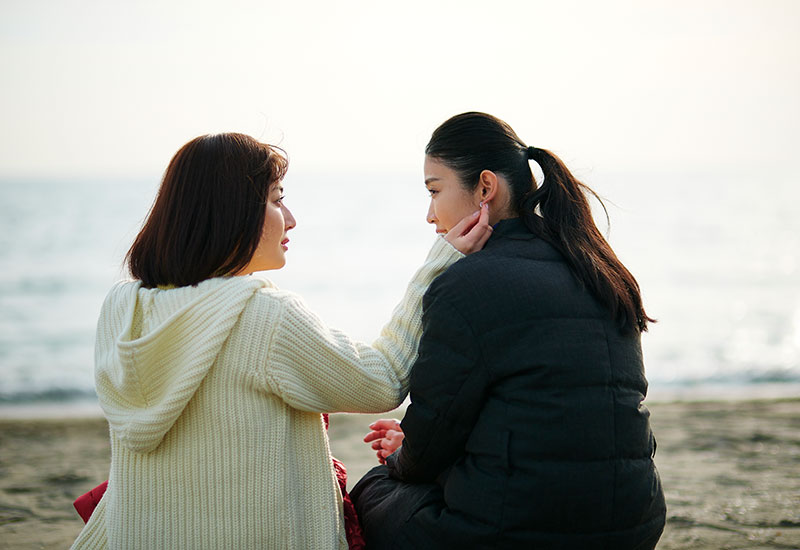
Through a chance meeting, he meets Natsuki. In each other, they begin to recognize something familiar: a shared sensibility, and a feeling that the way they experience the world is quietly, fundamentally the same.
For the first time, he encounters someone who seems to understand him without explanation. And in that recognition, a fragile but powerful connection begins to form.
Thoughts on Seiyoku
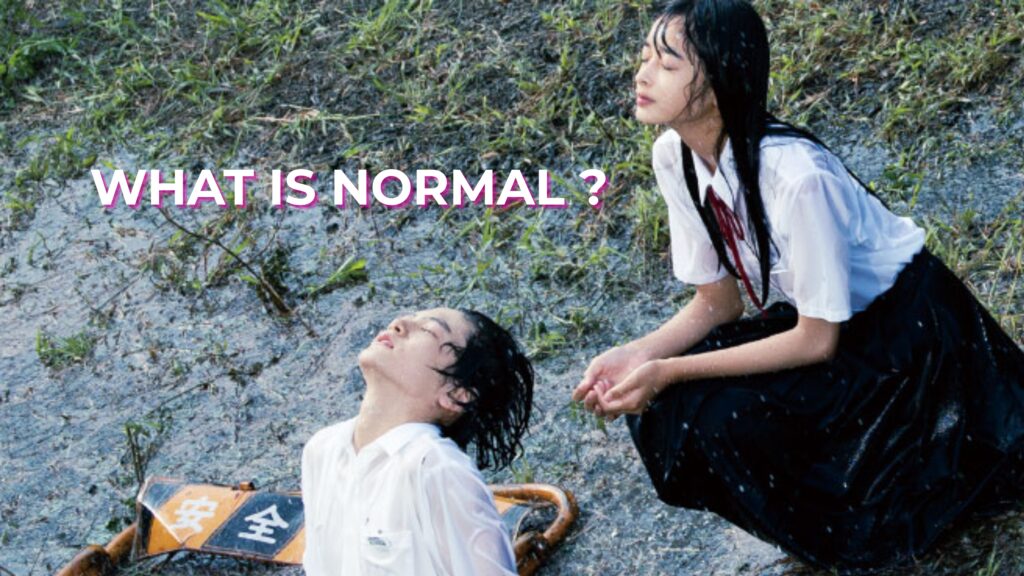
At a time when society claims to value diversity more than ever, Seiyoku felt like a film that cuts straight to an uncomfortable truth.
What if you carry a sexual preference that others still can’t understand, or that doesn’t neatly fit into the categories society is ready to accept? Can we really call this a society accepting od difference?
I found myself turning the question inward. If someone were to confess something to me that I couldn’t understand, something far outside my own values, how would I react?
Honestly, I would probably respond the same way the majority of society does: by distancing myself, but with quiet judgment. After all, I might tell myself, I don’t need to understand their world.
And yet, through this film, I at least came to recognize that such people exist.
Maybe full understanding isn’t always possible. Maybe it isn’t even necessary. But recognition is something we can choose. Simply acknowledging that there are ways of being that we don’t share.
If that counts as a new form of coexistence, then the film gave me a small sense of hope for my own future.
By telling the story through three different characters, the film makes the themes feel universal. Any of us could find ourselves in one of those positions. It quietly suggests that diversity isn’t something distant or abstract: it’s already close to us. We just don’t always see it.