


Arguably the most hotly-anticipated LGBTQ+ movie of the season, after a year of anticipation, Netflix have delivered 10Dance, a gay ballroom dancing romance with style and smoulder. An adaptation of a long-running BL manga, the drip-drip of photos following the trailer that dropped last month have had fans tripping over their feet in excitement.
But does this movie get a perfect 10 from the judges at JGG, or could the footwork be fancier? Take our lead, dear reader, and we’ll take you from Tokyo to Blackpool and back again! Beware, however, for there will be mild spoilers!
Plot Summary
We previously detailed the source material, Sato Inoue’s Boys’ Love (BL) manga of the same name, here (with a special thanks to the top Tumblr blog on *10Dance* for their kind assistance), but here is a brief summary.
We follow Shinya Suzuki, a Latin ballroom national champion, who, after having his pride needled by the sexy but cool-tempered international second-place standard ballroom dancer Shinya Sugiki, into agreeing to train one another for the 10 Dance competition. This is a contest where Latin and standard dancers must perform all five dances in each style, four times in a day, making it a test of athleticism, stamina, and mental focus. It is, in many ways, the ultimate ballroom contest, with fewer than 4% of dancers even attempting it.
Along the way, Suzuki, who is of Japanese and Cuban descent, learns to have more appreciation for his partner, and that dancing just to enjoy himself is not always the best way to connect with the audience, or himself. Sugiki, conversely, begins to understand that his desire for control and perfection in his art are the very things holding him back from being the best. And together, they discover something deeper about their feelings towards one another, going from enemies, to rivals, to…?
Changes to Source Material
Regrettably, I have only had the opportunity to read the first volume of the manga, and this movie goes beyond the scope of just that volume. However, there were some notable changes to the source material that were highly notable to me, and which made the movie its own experience, meaning fans of the manga have something more to look forward to than just a straight (as it were) adaptation.
The first thing to note is that Suzuki’s father is not present in the movie. While he is hardly a main character in the manga, his omission is noticeable for fans — though it is not necessarily a negative, and makes Suzuki more of an independent figure (not to say that he wasn’t in the manga). Additionally, we get to see a little more of Suzuki’s home life, which I we will discuss below.
Another big change is the lack of “manga-esque” humor. This is, in my view, a major positive: some jokes work well on the page but do not translate well to live action. For example, Suzuki’s shocked but quietly astonished expression after being led by Sugiki for the first time is, in my eyes, a better choice than having him cry out, “I feel like I could pop out a dozen babies for you!”, funny as that is in pen and ink.
Sugiki himself, while not exactly a warm and open fellow, warms up to Suzuki more quickly than in the comic (one assumes due to the runtime). I personally appreciated this, as I felt that the constant and consistent air of superiority in the first volume began to wear on the reader somewhat rapidly, so I was pleased to see it reduced in the movie.
One other aspect that surprised me — though perhaps it shouldn’t have, given the release date — is that this is, to a fair degree, a Christmas movie. Especially during the middle sections of the film, Christmas trees are seen in Sugiki’s studio, or in public with Sugiki and Suzuki as they meet one another, almost like a third character witnessing the Christmas miracle of these two opposites attract. There is also another big Christmassy moment that we will also get to.
Otherwise, the film is a faithful reproduction of the story and characters. So, how well do the actors embody those characters?
Performances
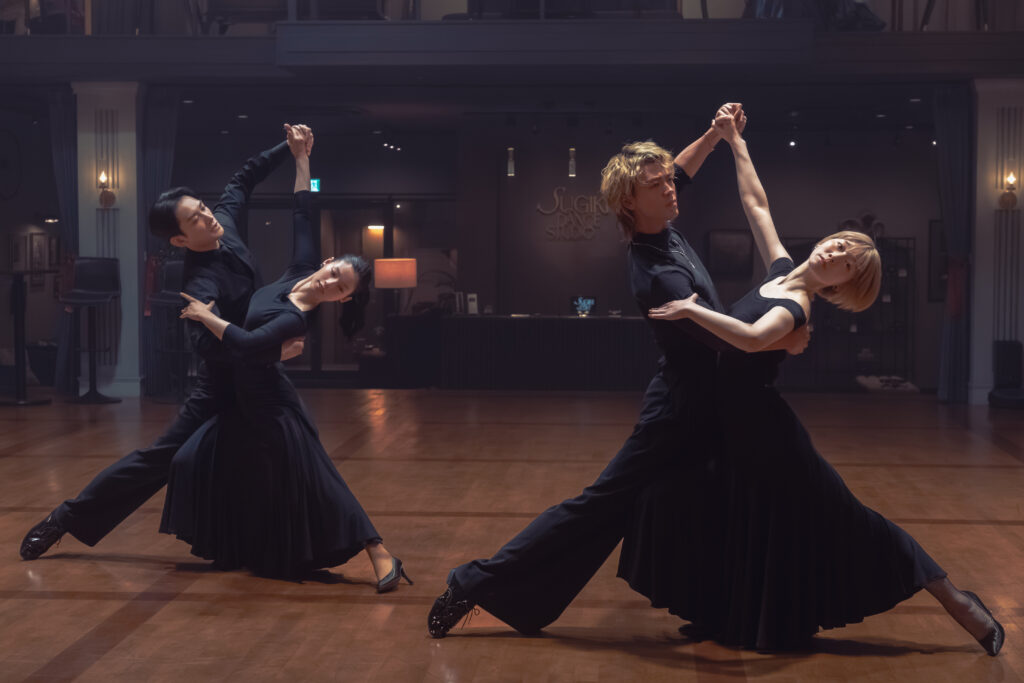
The four main characters, Suzuki, Sugiki, and their dance partners Aki Tajima and Fusako Yagami are played by Ryoma Takeuchi, Keita Machida, Shiori Doi and Anna Ishii, respectively. Overall, I thought the performances of our core four were strong, although there were times I would have preferred a little more depth from time to time.
To begin, Takeuchi’s performance as Suzuki is excellent. He is very good at portraying the lead’s intense sexuality, confidence, and impetuousness, while also being capable of demonstrating his occasional softness and moments of regret (especially after a fight with Sugiki at Blackpool, following the UK Dance Championships). While I am not qualified to judge dancing ability, I was easily convinced that he was playing the role of a highly talented (if amateur) Latin dancer.
Moving on to his partner, Doi’s Tajima, I found myself laughing (and sympathising) with her to a degree I didn’t quite get to in the comics. From her enthusiasm for training with Sugiki and Yagami to her irritation with Suzuki’s lateness at having gotten drunk the night before (and having to kick undressed girls out of his apartment), I got a real sense of her passion for ballroom and friendship for Suzuki. I also liked her budding friendship with Yagami, bonding over how their partners can be so irritating.
Machida, who has form in BL media, having portrayed Yuichi Kurosawa, the main love interest in the live action adaptation of Cherry Magic, also puts on. a strong performance as Sugiki. His poise and stillness, accompanied by his frequent silences and occasional withering remarks certainly give the impression of someone who wishes to be in control. That said, I didn’t often get the impression of a controlling sexuality to him, which is crucial to later aspects of the film — and one scene in particular.
Of the four, Ishii’s Yagami has the least screen time, and the smallest amount of dialogue. Even her backstory is primarily explained by Tajima or Sugiki. I thought this was a bit of a shame, as Ishii is excellent at portraying a quiet yet somewhat injured dignity. It would have been nice to see a little more of her, especially in the context of her friendship with Tajima.
Outside of the main cast, Susie Trayling does a fine job as Martha Milton, Sugiki’s mentor who instills in him the virtue of being a gentleman, but needs to remind him of the importance of letting his love show. Her demeanour matches Sugiki’s, though there is a vulnerability (and perhaps disappointment) that shows a little more emotional depth than that of her protoge — at least for now.
The English performances from the cast, when it was called for, were also decent. Of particular note was when Suzuki hears Sugiki being insulted by spectators, Takeuchi gives an impassioned and furious curse-laden tirade that is rather affecting.
Flawless Footwork: Best Parts of the Movie
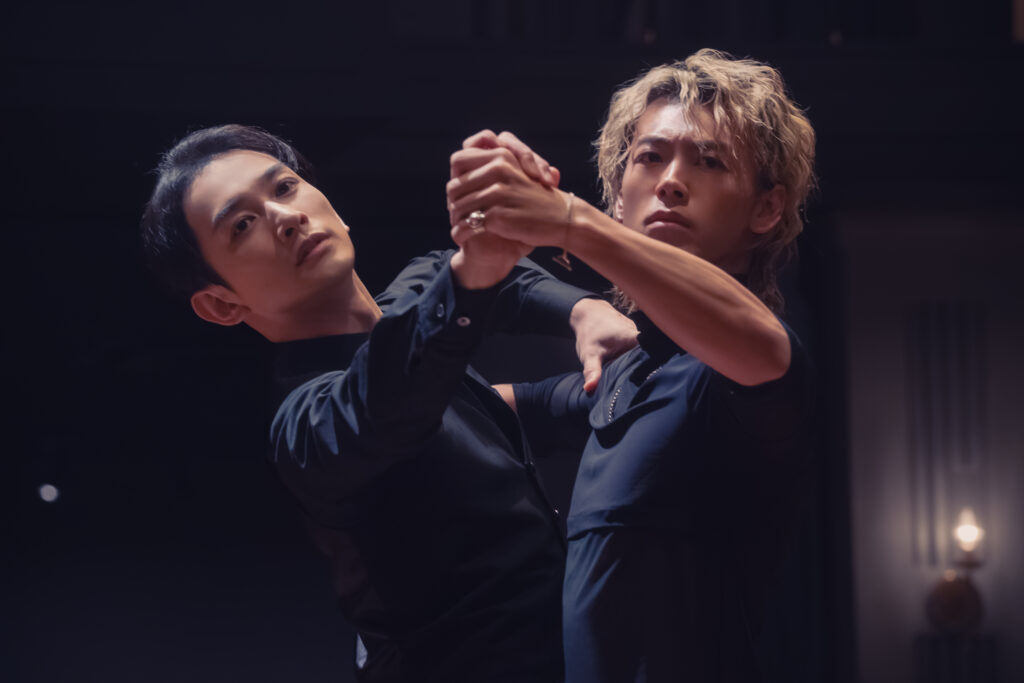
As one might imagine, the dancing and easy introduction to the world of competitive ballroom culture is handled extremely well, and is very close to the page. It is as easy to understand, even for a first-time watcher, as figure skating was for Yuri on Ice, and at no point will the viewer feel lost about what is happening. The quality never matches that of actual professionals, but I think that is too high a bar for actors for whom ballroom dancing is not a part of their normal lives.
I loved that the movie, as opposed to the manga, emphasized the differences in the upbringings of the characters (Suzuki in Havana, Sugiki in the UK) and how that informed their views on dancing and life. In particular, it was nice to see Sugiki’s spacious yet sterile apartment contrasted with Suzuki’s home, which is a little ramshackle but clearly well loved, and surrounded by a Cuban community, a veritable Little Havana (though the actual location is, sadly, obscure to me at present).
One area that is slightly expanded on from the manga is how the differences between the two’s culture extends to their approaches to food and eating. As they share dinner, Sugiki is eager to explain the history behind coronation chicken, a British favorite, as well as the reason certain foods have been put on the place: Suzuki instead eats and drinks eagerly, with elbows on the table, as he is delighted to enjoy delicious food and wine.
Suzuki returns the favor by taking him to his home, where people eat and drink together while loud music plays, pour each other drinks instead of relying on wait staff, and relish dancing together without counting steps or even paying too much attention to the beat: the only sin for them is being boring at a party.
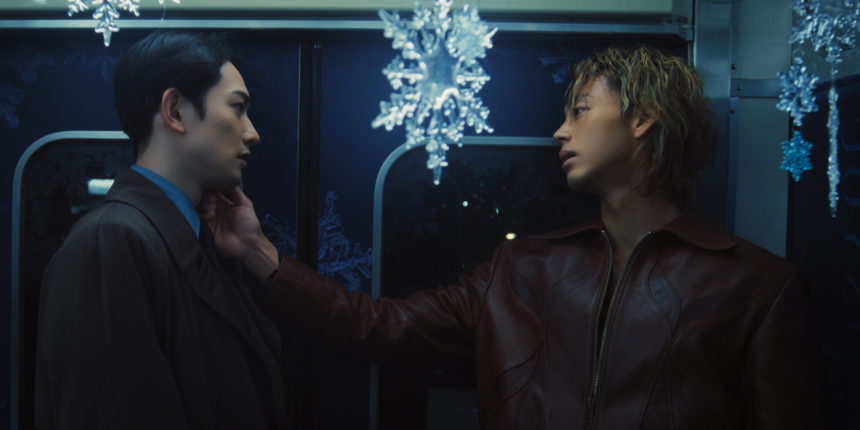
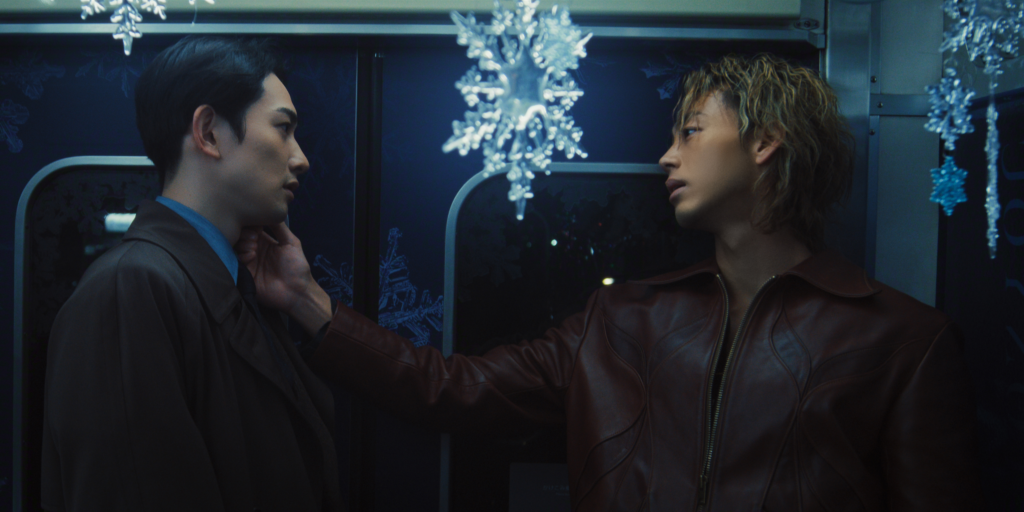
The tension between the two, especially until their first kiss on a train, is well portrayed, and believable. You can fully tell why these two’s initial distain for one another would slowly give way to grudging respect before slipping completely into passion, like the steps of a Latin ballroom dance that sees the couple slowly get closer before not just moving in time together, but moving as one.
Missteps: Areas for Improvement
There are some things that I didn’t quite think lived up to the film’s promise. The first is that, while their initial kiss on a train in Tokyo (though one questions the realism of an empty carriage filled with tinsel) was well filmed and felt real, subsequent kisses and one near sex scene were… somewhat passionless. In particular, a moment where Sugiki begins to sexually choke Suzuki (presumably to asset his control) seemed limp, and I didn’t believe in his choking technique.
The conclusion is also a bit surreal, to the extent that for a moment I believed that it was a dream sequence. When it was confirmed that it wasn’t, I couldn’t help but feel surprised that, in a subculture where following rules and doing things by the book is so important, there were no objections (though it does lead neatly into a sequel).
I also thought that, given the differences between the “elegance” of standard and the “eroticism” of Latin, along with the differences of living situations between Suzuki and Sugiki, it would have been nice to have seen the subject of class be more than just subtext, at least a little.
This is also a minor gripe, but the announcers during the final honor dance announcing what dance was being performed, and how the audience should feel, took me out of the experience a little, and having researched ballroom performances, this is not the done thing. Additionally, I did unintentionally laugh at an otherwise silent narrator yelling, “TEN DANCE!” at the start and end of the movie.
It’s always mean to end on criticisms, but after looking forward to this movie for a while, I can say that I would recommend it to fans. Both of the main actors have had a major glow-up for their roles, and while the dancing is not at a professional level, it is strong enough for a lay audience (among whom I number). The acting is strong, the story is fun, and the first half of the story in particular is exhilarating. 10Dance is an early LGBTQ+ Christmas present from Netflix to you that I would recommend unwrapping.