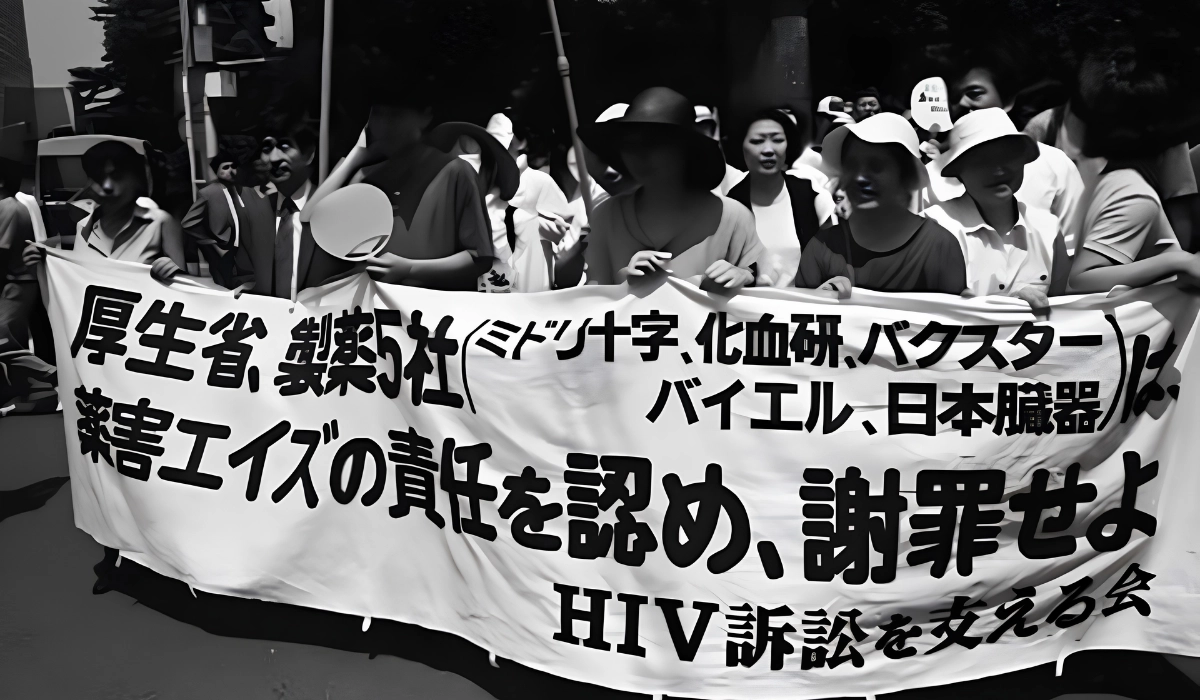


The history of Pride is the history of a struggle. Following the example of the 1970 New York Pride Parade that marked the 1969 Stonewall Riots, today Pride Parades are held all across the world. Since its first Pride Parade in 1994, Tokyo has been no exception. The road to the modern Tokyo Pride has been a journey filled with triumphs and defeats, solidarity and division, struggle and salvation.
Today, we will look back on how it started and how we got here. Tokyo Pride has seen several different organizers, all of whom had distinct motivations, methods, and goals. The history is still being written, and in some way the true purpose of Tokyo Pride remains unresolved.
We’ll explore the Parade’s pre-history, the different priorities Tokyo Pride and its organizers have had throughout its existence, and why they changed, and finally, where Tokyo Pride stands on some of the most important issues facing the LGBTQ+ community and other oppressed peoples today.
Before we begin, I must acknowledge a great debt in the creation of this history to the work of Riko Yamashita, Shuhei Horikawa, and Junya Yanagi, Graham Kolbeins and his film, Queer Japan, as well as the LGBT History Book: Japan Edition, edited by Shinya Yamagata. Please also note that, for the benefit of the reader, in this article the term “Parade” is used to refer to collective Pride events, including Pride-related festivals, except where festivals or other events need to be differentiated for the sake of clarity.
Before Tokyo’s First Pride Parade
Teishiro Minami and the Movement’s Foundations
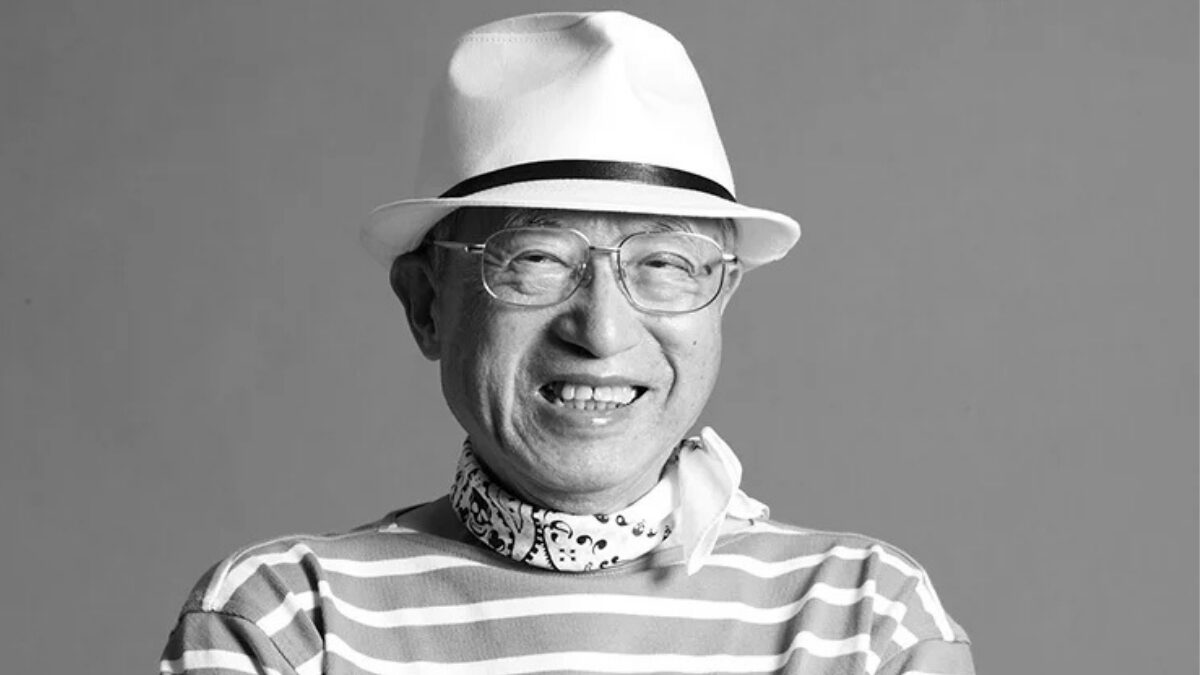
Unlike Stonewall, Tokyo’s first Lesbian and Gay Parade was not a spontaneous event. Instead, it was decades in the making, with the first Parade is often attributed to the efforts of one man: Teishiro Minami. Minami was born in 1931 in present-day Sakhalin, Russia (then part of the Japanese Empire) and moved to Tokyo at 21.
During this time he became active in both the gay community and the Anpo protests of the late 1950s and early 1960s — a series of intense, sometimes deadly demonstrations against the U.S.–Japan Security Treaty. It was his participation in these demonstrations that would inform his belief in collective action to bring about social change, even if the Anpo protests were ultimately unsuccessful.
He was a major figure in the community, and founded the gay tabloid Adonis Boy in 1972 and the gay magazine Adon in 1974. He believed that making positive social progress required collective learning, which would trigger individual breakthroughs and the formation of a unified ‘gay’ identity and movement.
Minami also encouraged learning about gay rights movements abroad, and especially in the US, to emulate their successes and avoid their mistakes.
In 1984, Minami formed the Japan chapter of the International Lesbian and Gay Association (ILGA). This Shinjuku-based organization aimed to serve as a space for anyone to learn about domestic and international LGBTQ+ struggles.
As the number of participants increased, and gay rights movements began to spread across Japan, inevitably a number of disputes arose. Contemporary sources cite two specific major issues: the inability of participants to use ILGA spaces as “living spaces,” (which the ILGA opposed as their spaces were designed to be public) and whether Tokyo or Osaka should take the national initiative in raising gay visibility and awareness.
The Fuchu Youth Center Incident and the Road to 1994
These disputes led to the founding of the splinter group OCCUR in 1986. OCCUR was notably more proactive and legalistic in its actions than the ILGA. This tendency would indirectly form an important motivator for the first Tokyo Lesbian and Gay Parade.
In 1990, OCCUR, as part of a two-day, one-night retreat, booked a stay for participating members at the Fuchu Youth Center in Tokyo. However, they were subjected to homophobic harassment, and after making a complaint, they were told that they were no longer welcome to stay at the youth center again. The center’s reply also implied that no LGBTQ+ people would be welcome. This became known as the Fuchu Youth Center Incident, and in 1991, OCCUR sued the Tokyo Metropolitan Government for discrimination.
Meanwhile, in the ten years since starting IGLA in Japan, Minami had been busy. He had organized an “AIDS Parade” in 1991, and wanted to use this experience to hold a general Lesbian and Gay Parade in Tokyo.
The broader movement had also advanced during this time. More LGBTQ+ magazines and periodicals were being published, and Intersectional organisations, such as the Tokyo Gay Deaf Community had emerged. The young people who joined the IGLA in 1984 had also become more mature, knowledgeable, and confident.
Against this background, Minami believed that 1994 would be the perfect time to hold a Parade. So when OCCUR won its case in the first instance in March 1994, the stars seemed to have aligned: the time for the first Parade had arrived.
1994–1996: The First Parades and an Early Rupture
The First Tokyo Lesbian and Gay Parade
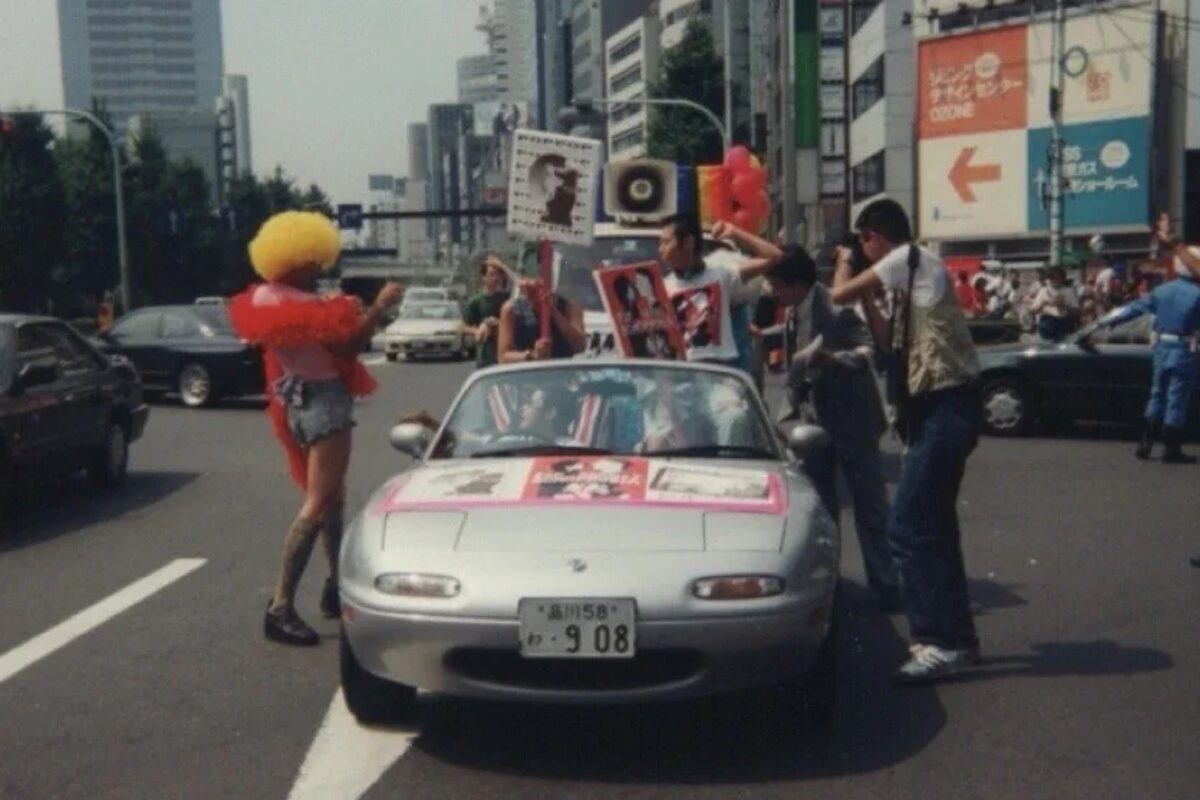
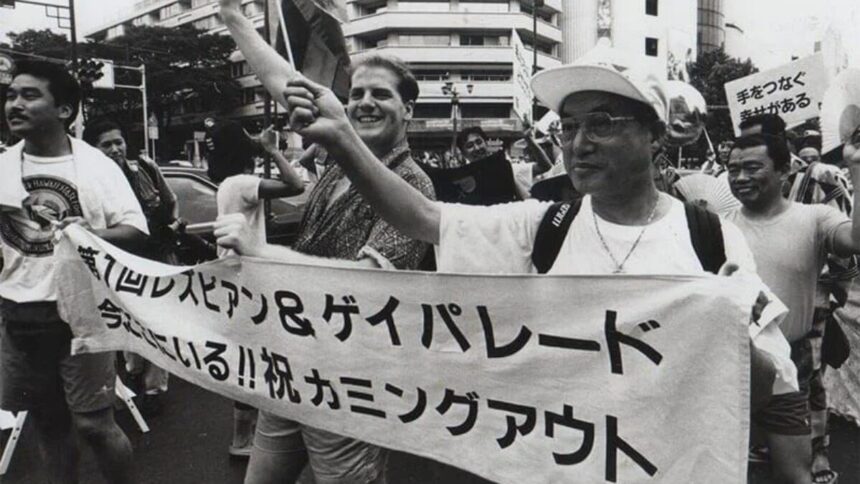
In August of 1994, the first Tokyo Lesbian and Gay Parade took place. Starting in Shinjuku Chuo Park with 544 marchers, the parade grew to 1,134 by the time it reached its endpoint in Miyashita Park. According to Minami’s Basic Philosophy of the 1994 L&G Parade, the primary goals of the Parade were to foster solidarity between lesbian and gay communities, create a unified lesbian and gay culture, and become symbols of the lesbian and gay movements (Shinya Yamagata, ed. LGBT History Book Japan Edition, p.180).
Reactions were mixed. Some members of the public were astonished. Others waved happily at the marchers as they passed. The Parade also attracted coverage in domestic and international newspapers and TV shows. Notably, no stones were thrown — something that the organizers had been worried about.
According to Shuhei Horikawa, the success of the Parade reinforced Minami’s belief that a focus on a message of social change and education during Pride was proof of his philosophy’s worthiness. He decided to make the Parade an annual event.
Why the 1996 Parade Divided the Movement
Unfortunately, the next Parade in 1995’s was far less successful, and received “zero newspaper coverage,” according to Minami. He attributed this failure of visibility (and thus a failure to promote the community’s demands for social change) to a lack of awareness about LGBTQ+ issues among the organizers.
He noted that half of the Parade’s executive committee had been replaced after the first march. The majority of the committee also had no study group or learning activity experience whatsoever. This deepened his resolve to make it clear that the Parade was not just a party, but a time for demonstration and education.
As such, the third Parade in 1996 was made explicitly political, in what Riko Yamashita describes as an “identity-type protest.” This meant that one had to be, in essence, a ‘professional participant.’ Membership of the executive committee was now limited strictly to those who had “a track record of activity in the lesbian and gay liberation movement.”
Additionally, before the march, the executive committee issued a declaration that included demands of the government. This was meant to present the marchers as a unified political block.
These demands included “involving those concerned in policy making… investigate discriminatory expressions in mass media, conduct an investigation into the reality of bullying,” and called on the marchers to “protest against injustice and strengthen solidarity networks to promote fundamental political, economic, social, and cultural rights.”
However, the attendees were not unified behind Minami’s declaration. At the 1996 Parade, many participants made vocal objections as it was read out. The disagreements eventually devolved into chaos when, during a post-march rally, one organizing committee member interrupted an ideological opponent by shouting “What the hell are you doing here, d*ke?!” The committee refused to apologize, leading to scuffles on the stage and disorder in the crowd.
These missteps drove a rift between lesbian and gay activists in Japan for years. It also led directly to the formation of specific identity-focused demonstrations, including the Dyke March. Finally, large-scale Pride Parades in Tokyo didn’t happen again for years. Ironically, Minami’s insistence on centering social issues and education led to the Parade being associated with negative feelings similar to the Anpo protests, the one thing he wanted to avoid. Soon after, Minami’s Adon magazine ceased publication, and Minami himself stepped away from the forefront of Japan’s queer liberation movement.
2000–2010: Pride Returns as Celebration and Visibility
The 2000 Revival
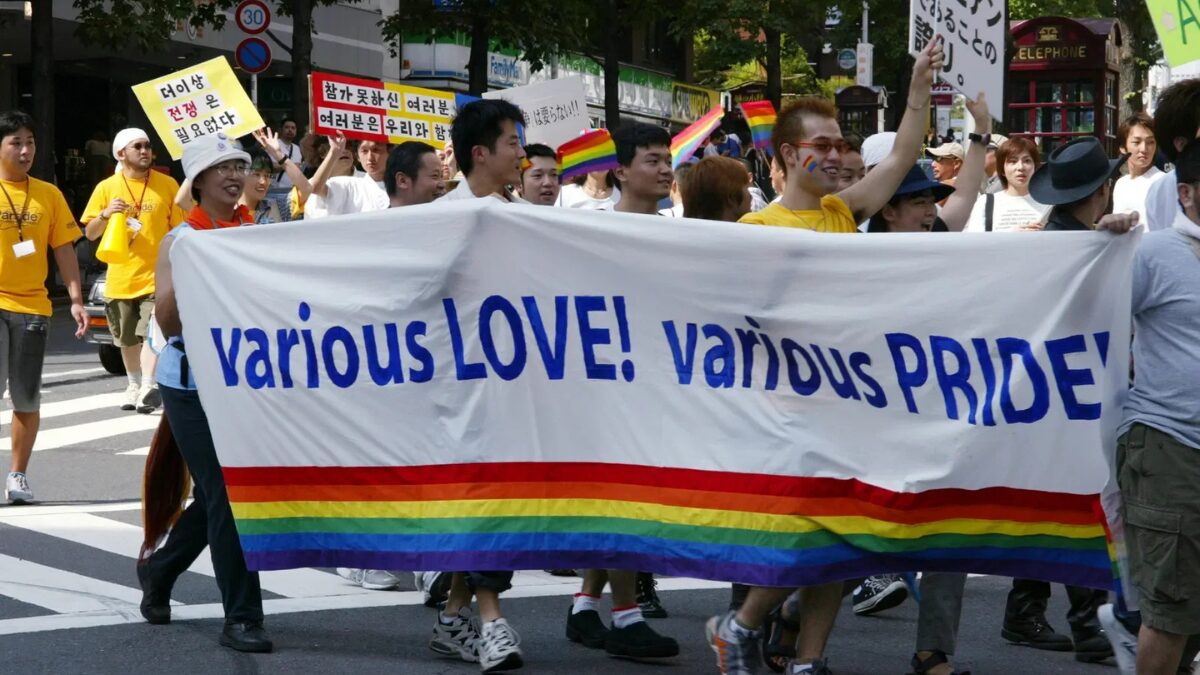
In the years that followed, while small-scale Parades did take place, they were few in number and had fewer attendees than even the 1996 Parade, which had 1,200 participants before it ended in disaster. The image of the Tokyo Lesbian and Gay Parade was now damaged in the eyes of the public, but some believed a change of direction could both save the Parade and help promote the social goals of LGBTQ+ people.
One such believer was Hideki Sunagawa, who had previously worked with Minami at the ILGA. After becoming chair of the Tokyo Lesbian and Gay Parade’s executive committee, Sunagawa decided that the 2000 Parade would not be explicitly political. Instead, it would emphasize the joyful aspects of Pride. According to Horikawa, Sunagawa hoped that, at the turn of the millennium, this approach would both increase visibility for LGBTQ+ people while attracting both allies and people who were not directly affected by, or previously interested in, the challenges facing LGBTQ+ people in Japan.”
To reach these latter groups, Sunagawa believed it was necessary to appeal to those who saw themselves as apolitical. As a result, the 2000 Tokyo Lesbian and Gay Parade declared that it would display no unified political slogans.
That said, Sunagawa didn’t view the Parade as inherently apolitical. As Horikawa notes, Sunagawa argued that “the sight of people enjoying themselves without reservation can be a resistance to the societal image that ‘gays and lesbians live in hiding, and in the dark.’”
In theory, attracting people from outside the LGBTQ+ community would increase participation. This would include allies and LGBTQ+ people who were not yet out but could “blend” into the crowd.
In this sense, the Parade could now be thought of as a “mission-type protest,” rather than “identity-type”. That is, it prioritized visibility, and anyone aligned with that goal could participate, regardless of their personal relationship to LGBTQ+ issues.
After all, large crowds make it difficult for the state and media to ignore sexual minorities in Japan and, in theory, make it easier for LGBTQ+ people to press their demands on society. At the same time, their visible presence could impress upon bystanders that LGBTQ+ people were ‘normal.’
At first, this seemed to be a major success. Noriaki Fushimi, a prominent gay activist during the 1990s, said that “the Japanese gay scene has been qualitatively transformed after August 27, 2000,” and the gay magazine G-Men attributed the success to the lack of political messaging, declaring, “it’s good to be all over the place!”
Repeated Suspensions and Volunteer Burnout
This course-correction from the approach taken in the 1990s initially seemed to be the right decision: the 2001 and 2002 Parades ran without major problems, a new chair was appointed each year, and the pre-Parade GLORY festival in Yoyogi Park was introduced — a precursor to today’s Pride Festival. However, the Parade was suspended in 2003 and 2004 for two reasons: even the most dedicated executive committee members found the chair role extremely demanding, and securing sufficient funding was proving difficult.
To try and once again draw a line under the difficulties of the past, in 2005 the group was reorganized into Tokyo Pride, which aimed to ensure that there would be a Parade every year. The Parade was held in 2005, 2006, and 2007 (in the latter year, the name of the march was changed from “Tokyo Lesbian and Gay Parade” to “Tokyo Pride Parade,” to be more inclusive of other sexual minorities), only for the Parade, the highlight of Pride, to be suspended once again in 2008 and 2009, though small festivals did still take place.
The Parade returned in 2010, with Sunagawa once more at the helm, but confidence in Tokyo Pride had been badly shaken by continued high turnover among committee members and its inability to guarantee an annual Parade.
While the revitalized Pride under Sunagawa succeeded in increasing visibility and creating a fun annual event for LGBTQ+ people and others, some argued that the party atmosphere undercut the need for participants to think about how society might be changed for the better. Instead, they seemed to become complacent, simply hoping there would be another party the following year.
Horikawa points to comments from attendees such as “I hope this continues next year” and “I’m looking forward to the next one,” and says that “one can sense an attitude of wanting someone to set things up for them… [it makes] the attitudes of the participants seem passive.”
Just as Pride as a protest had met its limits in the 1990s, so had Pride as a party appeared to have run out of steam at the close of the first decade of the 21st Century. Once again, something needed to change.
2011–2019: Tokyo Rainbow Pride Professionalizes and Grows
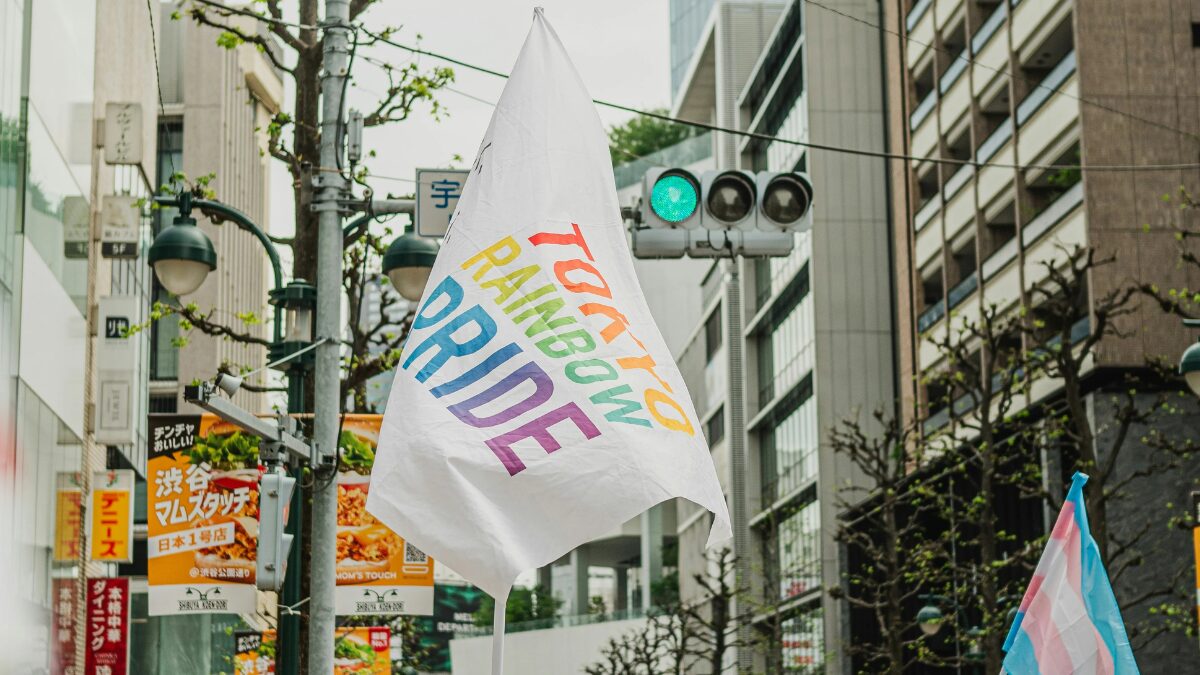
The 2012 Split and the End of the Earlier Tokyo Pride
Minami’s goal of building an explicitly political movement grounded primarily in identity solidarity was ultimately unsuccessful. At the same time, Sunagawa’s politics-free, visibility-first approach ran into many of the same problems of organization and funding. With Tokyo Pride seemingly unable to guarantee that the Parade would take place every year, a splinter group emerged in 2011: Tokyo Rainbow Pride.
The goal of Tokyo Rainbow Pride might broadly be described — at least in the beginning — as the professionalization of Pride. Naturally, this caused friction within the community. Many felt that the work of previous Parades was being discounted and that the split was creating unnecessary division.
Tokyo Rainbow Pride responded that it simply wanted to ensure an annual Parade. It argued that its new organization was not erasing the past, but rather represented an evolution toward a more reliable, formalized structure. It also maintained that it was not “taking” the Parade, but hosting its own, noting that other events, such as the Dyke March, continued independently and that the “original” Tokyo Pride Parade could do the same.
In the end, however, after Tokyo Rainbow Pride held its inaugural Parade in April 2012 with over 4,500 participants, Tokyo Pride’s August march was hastily renamed “Emergency Event! Save the Pride!” and attracted just 600 marchers. The following year, a planned follow-up Save the Pride! event was cancelled, and Tokyo Pride disbanded.
Over the next few years, with no competing Pride Parade in Tokyo, Tokyo Rainbow Pride grew rapidly. Attendance increased year by year, and corporations took notice. The number of booths at the festival rose from roughly 20 in 2012 to around 80 by 2015, after which Tokyo Rainbow Pride incorporated as a non-profit organization.
It was at this point that it declared its goals were to “continue to hold a Pride Parade every year that is appropriate for the characteristics of Tokyo, the capital city, and for the coming era,” and to “conduct support activities for the protection of the rights and other rights of sexual minorities, including LGBT, and thereby contribute to the realization of a society in which the diversity and human rights of all citizens are respected.”
Worthy goals, to be sure. Yet under this framework, maintaining the Parade itself came first, while changing society became secondary — despite the Parade’s original role as a vehicle for meaningful change for LGBTQ+ people. And so Pride changed focus and direction once again, for better and for worse.
Corporate Growth and the Mission-Drift Debate
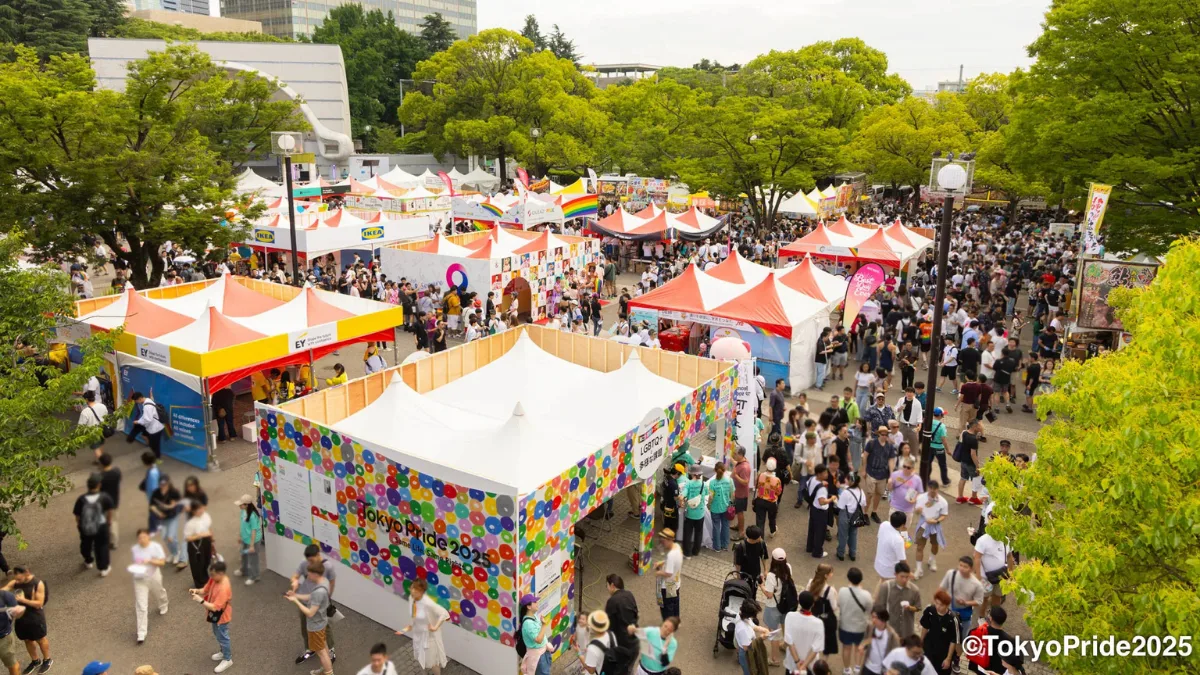
Following its incorporation as an NPO in 2015, Tokyo Rainbow Pride began to grow rapidly. Its first NPO-era Parade drew roughly 70,000 attendees in 2016 and featured 120 booths; by 2019, those numbers had risen to 204,000 and 235, respectively. Over the same period, the fee for a standard booth increased from ¥50,000 to ¥200,000. Large tent booths, meanwhile, cost ¥300,000 in 2016 and ¥1,000,000 in 2019. Today, a regular booth costs ¥400,000 and a large booth ¥2,000,000.
From its founding, Tokyo Rainbow Pride succeeded in its goal of holding the Parade every year. Even during the COVID-19 pandemic, it continued to host events online. Rising corporate sponsorship clearly boosted visibility, fulfilling Sunagawa’s ambition, while also helping the organization remain solvent and weather disruptions such as the pandemic.
Yet it can be argued that this success contributed to what Junya Yanagi calls “mission drift.” Mission drift, he says, occurs when an organization loses sight of its original purpose and becomes increasingly concerned with its own survival, maintenance, and expansion. Where the Parade had once been a means to an end, as described in the organization’s own articles, it had become an end in itself: the reason for holding the Parade was increasingly simply to hold the Parade.
By 2016, some participants were already noticing a marked shift in the Parade’s tone. To them, it seemed neither fully political nor simply celebratory, but increasingly commercial. The growing corporate presence was difficult to miss that year, particularly when Caroline Kennedy, then the US Ambassador to Japan and the first US ambassador to attend Pride in the country, opened her speech by expressing how thrilled she was to see so many American companies represented by booths at the event.
In Graham Kolbein’s 2019 film Queer Japan, two attendees of Tokyo Rainbow Pride 2016 observe that the Parade’s party atmosphere and commercialism seemed to have overwhelmed its political demands. One told the documentarians, “LGBT activism right now is totally about money, and love, and shit like that. I ain’t got no time for love. Every time I go to the public toilet, I get in trouble. I don’t feel safe.”
Another attendee, Masako Seto, noted how rapidly the change had taken place.
“It was less commercialized five years ago,” he said. “It takes a lot of money to hold an event as big as this, so I’m not saying, ‘no sponsors, no sponsors,’ but you have to be accountable.”
2020–Present: Criticism, Reform and the Tokyo Pride Rebrand
The AXA Protest
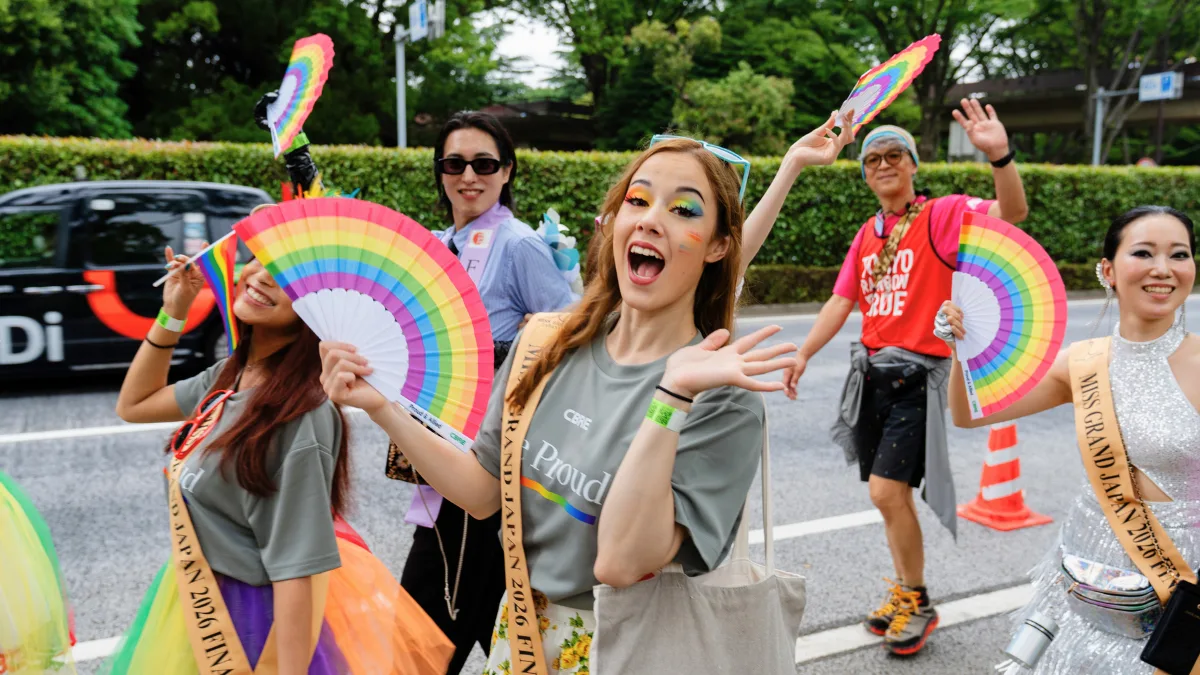
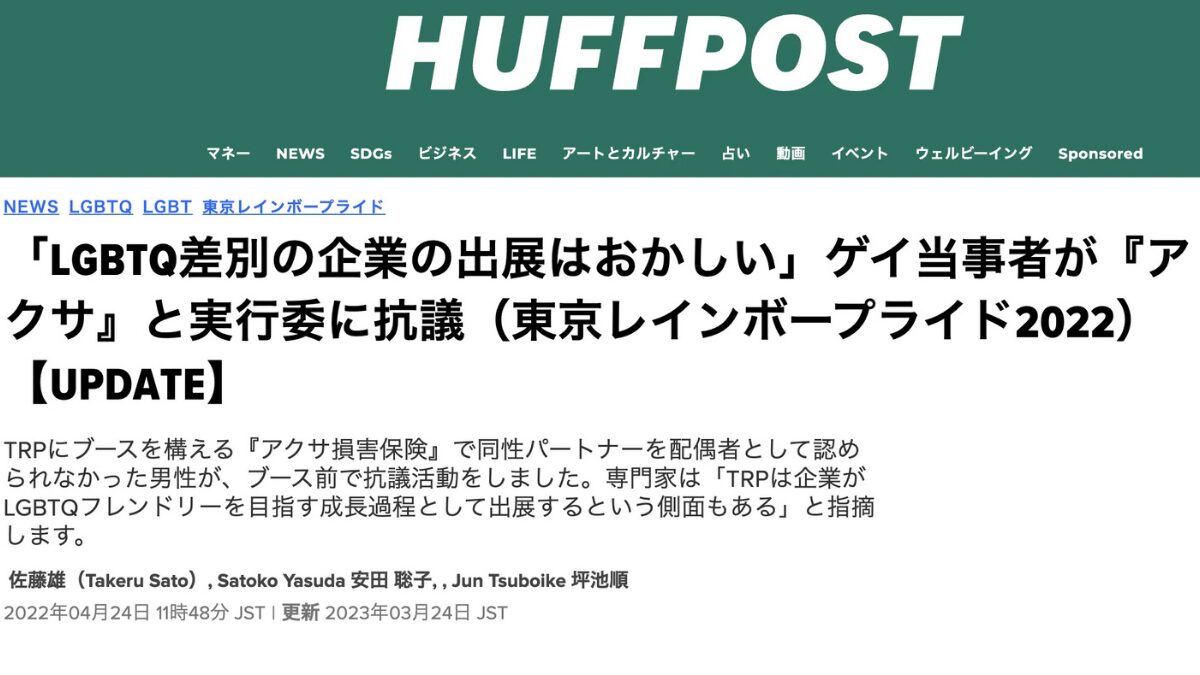
The tension between the activism that is arguably the soul of Pride and the need for funding to keep the Parade alive came to a head during Tokyo Rainbow Pride 2022. A man using the pseudonym Takanori protested both the Tokyo Rainbow Pride executive committee and AXA Group, which was a platinum-level sponsor of the Parade.
Standing in front of AXA Group’s booth, Takanori held a sign that read, “AXA Direct refused to allow same-sex partners to use their services.” Takanori, who had a Partnership Oath Certificate, had been denied access to more affordable spouse-only endorsement car insurance because AXA Direct did not recognize his relationship.
Takanori was protesting not only AXA Direct’s policy, which he viewed as discriminatory, but also what he saw as the hypocrisy of Tokyo Rainbow Pride allowing a company accused of discriminating against LGBTQ+ people to buy its way into the good graces of the community.
Things took an even worse turn for Tokyo Rainbow Pride’s image when the executive committee decided to call the police on Takanori, a decision it later said was made as part of its “counter-terrorism” measures. The police officer who attended the scene, however, concluded that there was no threat and even sympathized with Takanori as the wronged party.
Following the incident and the resulting outcry on social media and in the press, including The Huffington Post, the executive committee released a statement that did not include an apology to Takanori. This further fueled suspicions that the police had been called out of consideration for the Parade’s corporate sponsors rather than the people the Parade was supposed to represent.
Yanagi concluded that the mission drift had, paradoxically, turned Tokyo Pride into an event that excluded the very people it was meant to represent. Rather than being a time to advocate for LGBTQ+ rights, it instead had become a place for corporations to launder their image under a rainbow flag, and for famous singers and performers to put on a show. The attendees were now not activists, but customers.
“The problem is not that Tokyo Rainbow Pride failed as a social movement,” Yanagi says. “The problem is that it ceased to be a social movement.”
New Leadership and a Renewed Advocacy Focus
The widespread discussion of the AXA incident on social media, and the negative reaction that accompanied it, suggested that, just as in 1996, the priorities of the Parade’s organizers had fallen out of step with those of parts of the community.
This time, however, the roles were reversed. The organizers had focused on creating an inclusive, sustainable event in which corporate sponsors played an increasingly important role. Many in the community, meanwhile, were demanding greater recognition of Pride’s explicitly political nature and of the struggles LGBTQ+ people continued to face. As it stood, Tokyo Rainbow Pride appeared ill-equipped to resolve this contradiction.
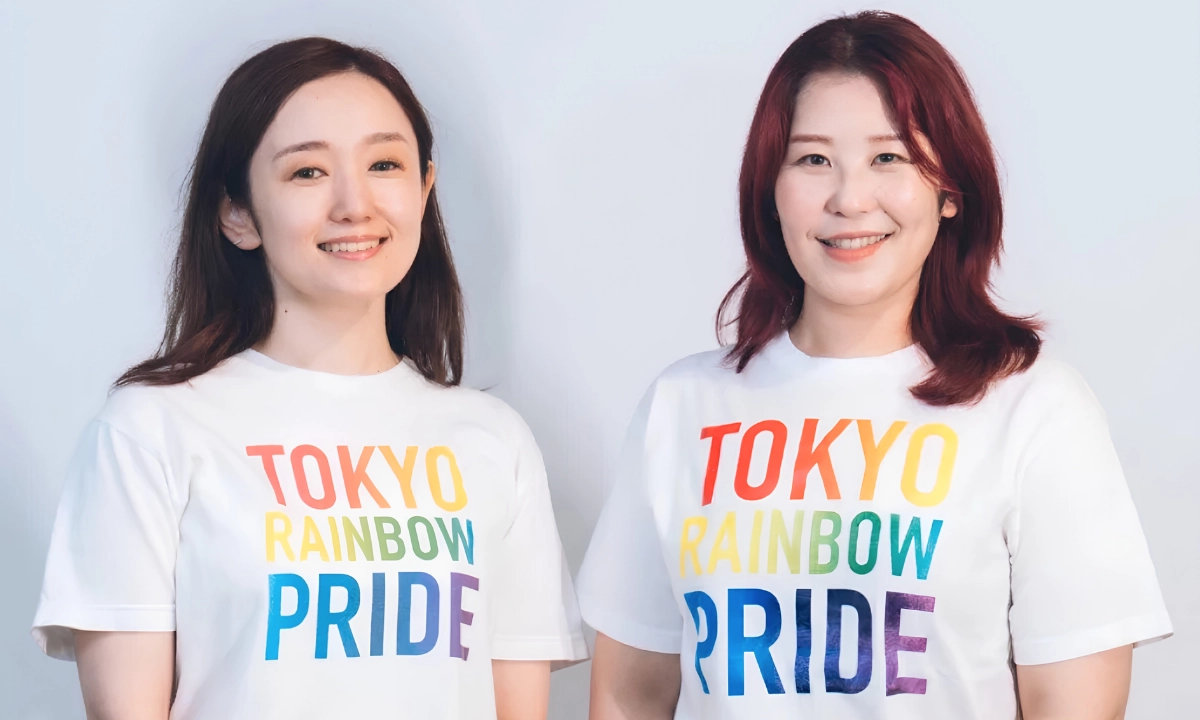
Changes soon followed. In 2024, Tokyo Rainbow Pride announced a significant shake-up to its executive committee, including the appointment of Yuko Sato as co-chair. Sato is an expert in DEI education and was chosen in part for their ability to “[leverage] their various experiences such as growing up abroad, being genderqueer, and experiencing racism, language, education, and regional inequality.”
As part of the announcement, Tokyo Rainbow Pride also acknowledged that the landscape of LGBTQ+ advocacy in Japan and beyond had shifted since its incorporation as an NPO in 2015, declaring:
“Today, LGBTQ+ visibility has become more widely known and accepted by a broader public. Given the results of our efforts to advance visibility, we are entering an era of solving actual issues.
“While visibility is increasing, there is also a growing backlash against LGBTQ+… However, we will face these challenges and continue to work toward the realization of a society where all people can live ‘as they are,’ ‘with joy,’ and ‘in a dignified manner.’”
In another sign that both paid homage to its past, as well as potentially serving as a break from its recent controversies, the Parade was renamed from Tokyo Rainbow Pride to simply Tokyo Pride — the name of the predecessor it had once split from.
It also established four more distinct events aside from the Parade and the Festival. The first of these, Pride Night, the official after-party in the Gay district of Shinjuku Nichome, can be classified as a purely feel-good event, similar in aspect to the more celebratory festival aspects that Sunagawa championed.
Tokyo Pride also expanded its youth-centered events during the Parade into a full Youth Pride event, to take place one week after Tokyo Pride, and help younger LGBTQ+ people meet one another. There is also a month-long Queer Art Exhibition held throughout June, which serves to both highlight queer artists and stimulate discussion among visitors.
Finally, it established a Human Rights Conference, where issues affecting queer people are discussed in panels including academics and activists, as well as those directly affected. This reflected Tokyo Pride’s broader shift toward advocacy and an expectation that its corporate partners engage seriously with human rights, including, but crucially, not only LGBTQ+ rights.
The significance of this approach was tested almost immediately in the context of the war in Gaza. As activism has again become more prominent alongside visibility, awareness of intersectionality has also grown among LGBTQ+ communities in Japan and elsewhere. So too has scrutiny of corporations that participate in Pride while facing criticism over their conduct elsewhere.
This raises an uncomfortable question at the heart of corporate participation in Pride. A rainbow logo or Pride sponsorship does not, by itself, establish that a company’s wider actions are consistent with the values Pride claims to represent. Without greater scrutiny, corporate support can become a form of pinkwashing rather than meaningful solidarity.
Tokyo Pride has taken note, and appears to have responded in a manner that many attendees will support. According to Palestinian Solidarity Movement activist Natsumi Minamoto, Tokyo Pride 2026 has no booths manned by any corporations which are targets for boycotts, divestments, and sanctions (BDS) by the BDS National Committee.
Minamoto does note, though, that there are booths manned by companies that some groups or individuals may consider to be fair targets for BDS, according to their own standards. She also notes that there are some companies with booths that are currently being critiqued by the larger LGBTQ+ community, and could potentially violate the Parade’s advocacy policy. Work, therefore, remains to be done, and vigilance needs to be exercized.
What Tokyo Pride’s History Shows
From the very beginning, Tokyo Pride — and Pride globally — has never had just one meaning, or purpose. To some, it is a time for political activism. To others, an annual celebration of individual and collective achievements. Today, it also includes corporations that are keen to show their solidarity… while some will inevitably still be looking to pinkwash their actions.
These different purposes will inevitably come into conflict when one begins to overshadow the others. Yet throughout Tokyo Pride’s history, they have also reinforced one another.
Without its political drive, there would be no Tokyo Pride. Without the joy and sense of community fostered by its celebratory side, it would likely never have become as popular or influential as it is today. And while corporate involvement deserves scrutiny, corporate funding has also helped turn Tokyo Pride into a stable fixture in the capital’s calendar.
Tokyo Pride may have made many missteps. But it has also been moving forward, one foot after another, since its inception.
It has not been uninterrupted progress. But it has been progress nonetheless.