
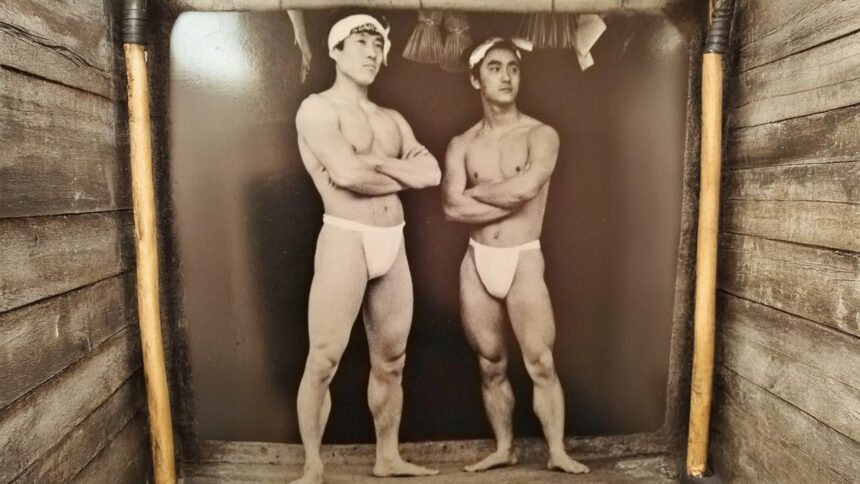

If you’ve ever been to Japan, or even just seen Japan and Japanese people depicting on screen or on the page, you may be familiar with traditional Japanese clothing, like kimono and yukata. But there are other old-school Japanese garments that you might not be aware of. For example: did you really think samurai wore boxer-briefs? Today, we’re going to discuss the traditional Japanese underwear, Fundoshi, and what it means to modern Japanese gay culture.
What is Fundoshi?
As you may have gathered, fundoshi (ふんどし/褌) are a kind of Japanese underwear that were commoly used from antiquity until the end of the Second World War. The first mention of fundoshi can be found in the Nihon Shoki, a history of Japan completed in 720, and the second oldest extant book in Japan. They are typically considered to be the equivalent of the loincloth in non-Japanese cultures.
Fundoshi were, unlike many aspects of Japanese clothing, more or less the same regardless of gender, class, or age: the great leveler of Japanese garments. They come in a number of styles, from simple mokko-fundoshi, in which a cloth is threaded with rope along both ends at the top, and tied around the waist, to the more complex rokushaku fundoshi, which is worn by wrapping the cloth around one’s waist, then taking the remaining length from the front to the back, and tying it at the back, both securing it and creating a “thong” effect.
When are Fundoshi used in the Modern Day?
source: Wikipedia
Fundoshi are far less commonly worn as underwear today. The influence of western norms during and after the occupation, as well as the relative ease of using western underwear, meant that the fundoshi was soon superceded by boxers and briefs before the end of the 1950s.
However, Japanese people still continue to wear fundoshi in certain specific circumstances. The first, which you are unlikely to ever know about, is when wearing kimono or yukata. After all, when wearing traditional outerwear, why not complete the outfit by wearing traditional underwear, even if no-one else will be able to see or appreciate it?
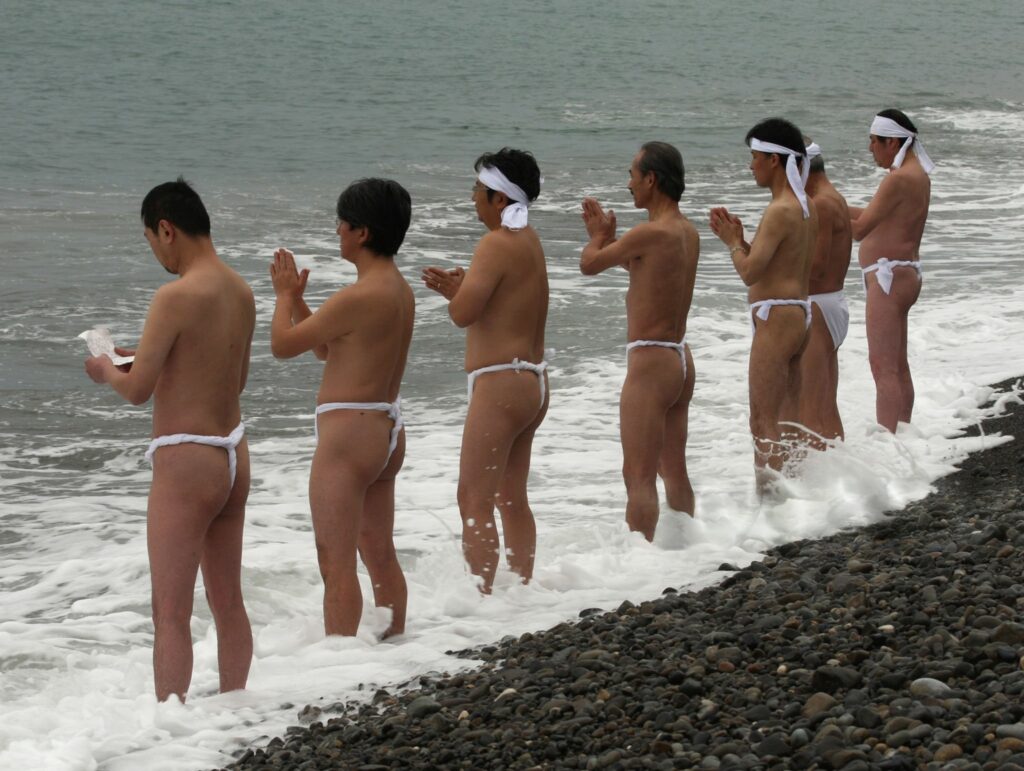
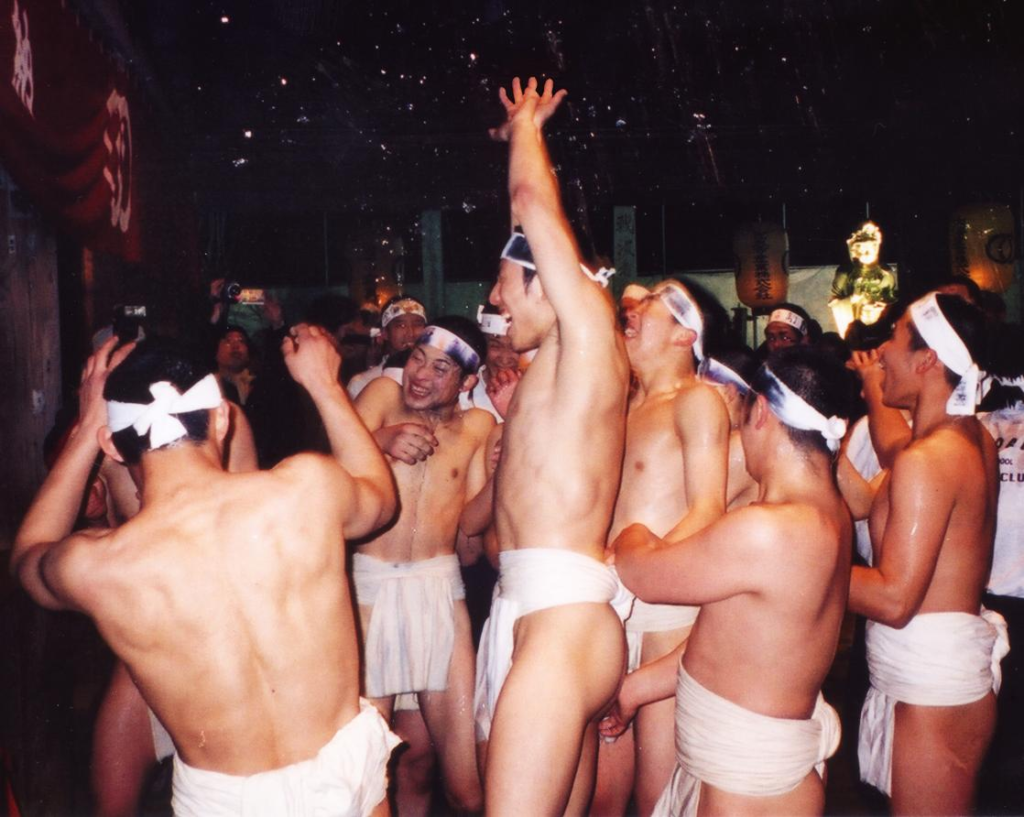
The other place where you are likely to see fundoshi are at certain specific festivals. During festivals like the Hadaka Matsuri (Naked Festival), where up to 10,000 men will wear nothing but fundoshi, and are purified by water in the hopes of good luck in the year to come. Men will also wear fundoshi and happi festival coats during Fukuoka’s Hakata Gion Yamakasa, as they carry very heavy floats through the city.
One place that you will not see fundoshi, however, is in sumo. Despite some superficial similarities in form, sumo actually wear mawashi. These are more elaborate, stronger, and — ideally — are not to be washed, as this is believed to wash away the sumo’s fortune.
How to wear Fundoshi
<iframe width="560" height="315" src="<https://www.youtube.com/embed/ZJFDFNkkrpY?si=6CZlrvN8Xcij0lO2>" title="YouTube video player" frameborder="0" allow="accelerometer; autoplay; clipboard-write; encrypted-media; gyroscope; picture-in-picture; web-share" referrerpolicy="strict-origin-when-cross-origin" allowfullscreen></iframe>
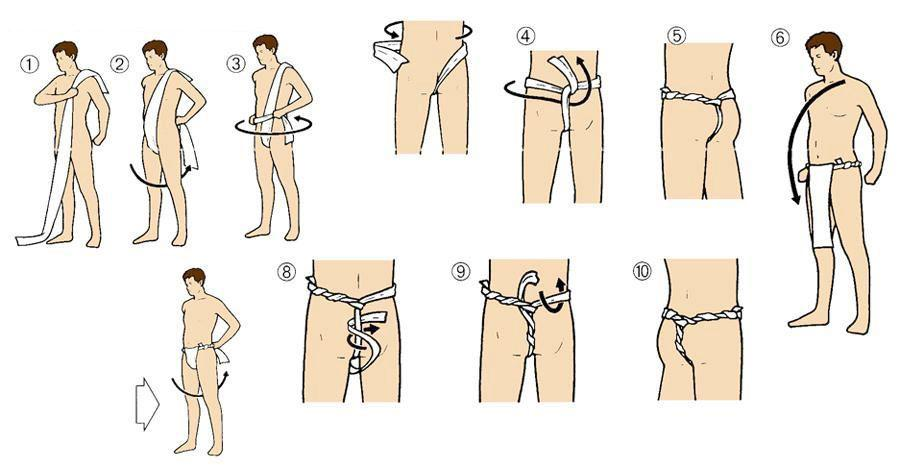
Here are a few steps to wearing etchu-fundoshi, another popular type.
Step 1: Prepare your chigo fudan: make sure it is laid out flat and ready.
Step 2: Place the long fudan behind you, and bring the string around to the front of your body. Tie a bow in the string, making a thin “belt” just above your hips.
Step 3: Pull the wide fudan through your legs, and up and under the string belt. Let it fall down in front of you, so that it covers the bow that you made earlier.
And with that, you’re done!
Fundoshi in Japanese Gay Culture
Okay, all very interesting, but what does this have to do with Japan’s gay culture? Well, because of its unique and revealing nature, as well as something of an appeal to Japanese identity, the fundoshi is a popular item of clothing for many gay men, in a variety of circumstances.
Clubs
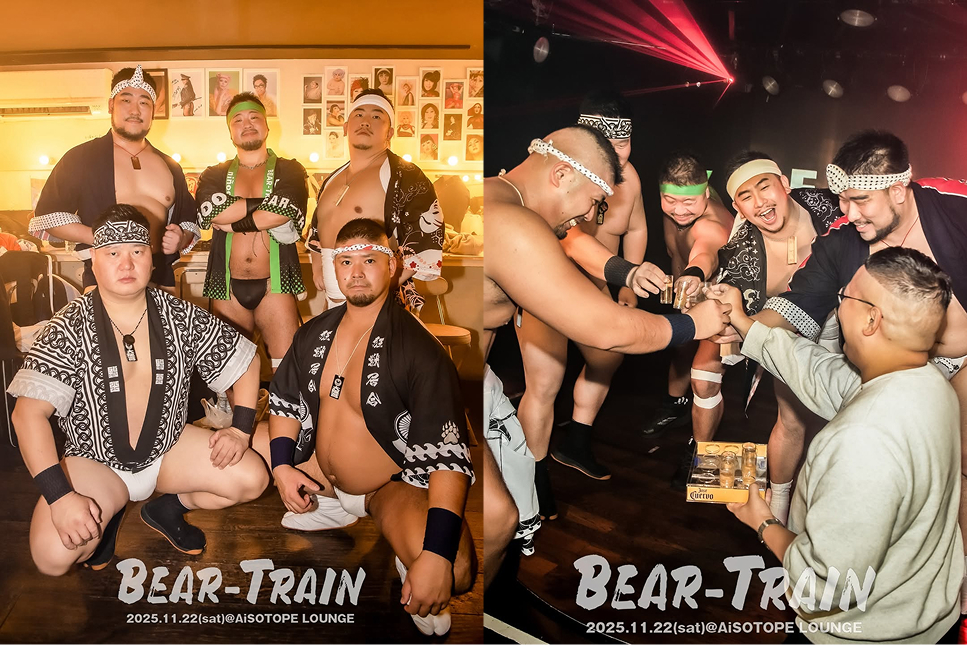
Underwear-only nights are held regularly at certain clubs in Tokyo, and across Japan. These are identical to many other underwear-only parties across the world: the dresscode is underpants-only, which is a great leveler between the rich and poor, the young and old: nothing matters but whether you look good in your underwear.
But in Japan, underwear can also include fundoshi. The revealing thong-like design of the rokushaku fundoshi makes it especially popular. You will find people in fundoshi on underwear nights in AiSOTOPE Lounge, as well as Boiler Room, which is expressly a cruising bar.
Bara Manga
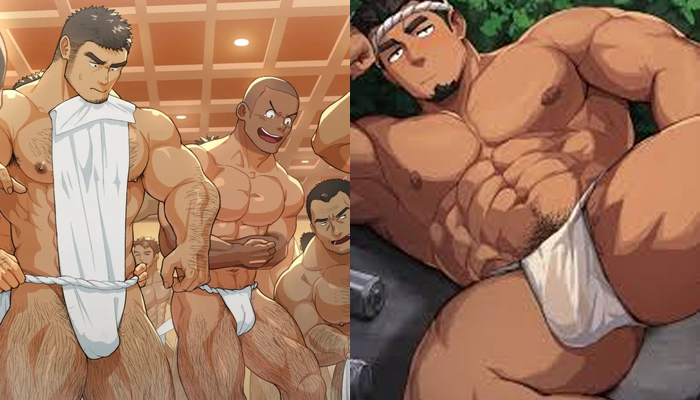
Many Japanese bara manga artists, such as Jiraiya and Gengoroh Tagame, like to highlight not only the large, muscular physiques of their characters, but also enjoy adding distinctive Japanese signifiers, so that there cannot be any confusion on the part of the reader where this art originated. This can be done using things like kimono, uchiwa fans, and, naturally, the fundoshi.
That’s a wrap (sorry)! If this Japanese underwear seems fun to you, there are many places in Tokyo’s Shinjuku Nichome where you will be able to find them.