

There are more films about LGBTQ+ people today than ever before. As society becomes less hostile to queer people, more media is starring gay characters. But even if these films have gay characters or creators, does that necessarily make them queer films?
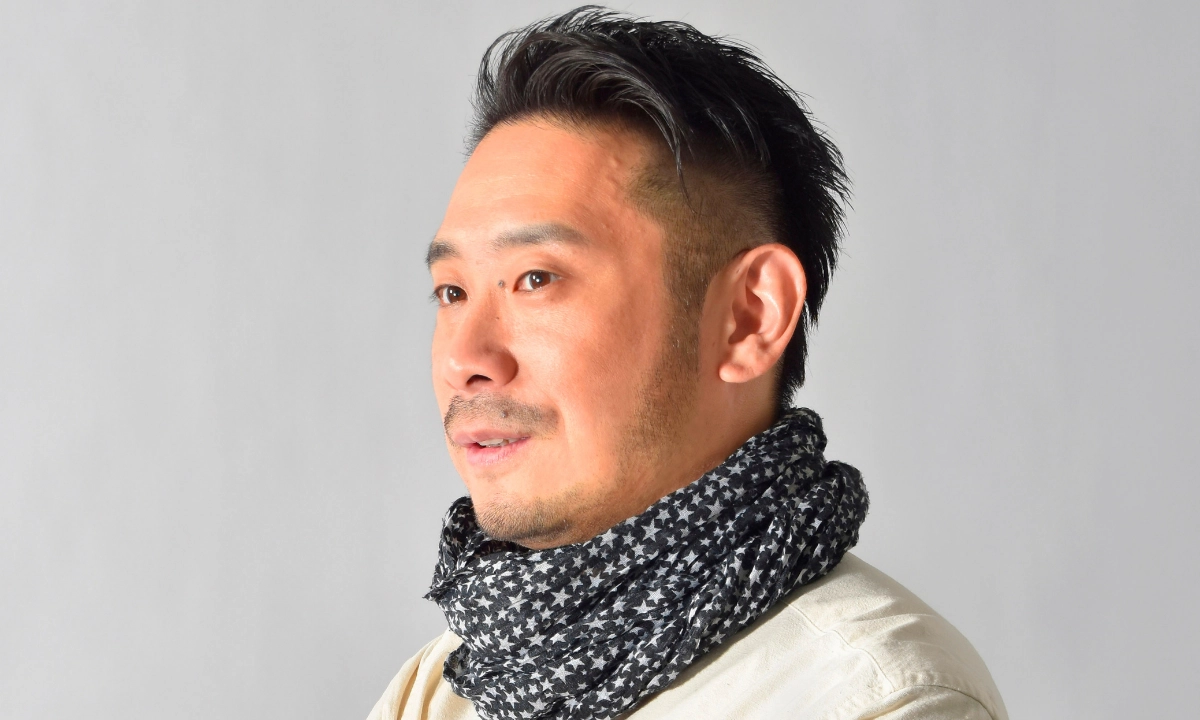
In September, Japan Gay Guide sat down with Shoji Tsuyoshi, himself a bisexual man and award-winning director of the upcoming comedy The Trans Girl Next Door, to discuss what makes a film queer and why queer films are important.
Early Life
Tsuyoshi was born in 1974 in Kanazawa City, in Ishikawa Prefecture. After graduating from high school, he moved to Tokyo to study filmmaking at Musashino Art University. It was there that, at the age of 19, he created his first independent film, Lost in the Garden. His debut went on to win the Special Jury Prize at the 1995 Tokyo International Lesbian & Gay Film Festival.
“In the early part of the 1990s in Japan, there was something of a gay film boom,” Tsuyoshi says.
“Several gay films became extremely popular in Japan, and people who weren’t queer also started watching gay films. At that time, since I was making films as a film-school student, I wanted to make a queer film myself, and I gathered some friends and made a short film.
“One major reason I wanted to do it was that, by making the film, I could use it to come out to the people around me, and I think it worked.”
For a time after leaving university, Tsuyoshi didn’t spend much time creating explicitly queer films. He preferred, instead, to hone his craft outside this space. He wanted to be respected for his skills as a filmmaker who happens to be queer, rather than as a “queer filmmaker.”
“I wanted to be properly recognized for films and video work that weren’t queer films. I wanted society to recognize me for that,” he says. “Also, by making that first queer film, I was able to come out to the friends around me, so there was also a sense that I had become a little satisfied with that.”
More Queer Movies, Less Queer Authenticity
However, he would make a return to making queer movies in the late 2010s, motivated in part by the impact of what was called an “LGBT Boom” in Japan.
In the mid-2010s, Tokyo’s Shibuya and Setagaya wards pioneered the Partnership Oath System in 2015. Marriage equality was increasingly recognized across the world (not least in the USA). Understanding of sexual minorities beyond gays and lesbians became more prevalent around the world and in Japan. Connected to this, there was an uptick in films and television shows that depicted LGBTQ+ people. However, that depiction was not always satisfying to queer audiences — and Tsuyoshi didn’t feel that they reflected his experiences as a queer person.
“I don’t think this gay-film boom around 2015 was a gay-film boom. I think it was a Boys’ Love boom,” he says. “The films that we loved from the 1990s, particularly the ones that came from overseas, I think those genuinely were queer films. I think that, during that period, influenced by those kinds of films, the number of people making queer films in Japan also increased.
“But after that, in Japan, queer films didn’t really continue, while Boys’ Love films became more and more prevalent, and I think those ended up becoming the mainstream.”
The difference is perhaps subtle, but many film lovers will know it when they see it. Tsuyoshi says that, curious about the new gay films he had heard so much about — as well as the sudden popularization of the term ”LGBT” — he sat down to watch them. But when he did, he found that they contained, to paraphrase Erica Friedman, queer content without queer identity.
“This may have just been me, but I thought they weren’t very queer. There were many times when I thought, ‘couldn’t this film still work if you simply replaced the gay relationship with a heterosexual one?’ At the very least, I felt they weren’t the kind of queer films that I had loved. And that made me want to make them myself again.”
But what is a queer film?
The Essence of Queer Cinema
We know, then, that Tsuyoshi doesn’t believe that either the presence of LGBTQ+ characters or of a queer actor, producer, or even director is sufficient to make a film truly gay or queer. So what does he believe makes a film queer?
“If [a film] doesn’t depict how LGBTQ+ queer people are treated within society, and how they relate to society, then I don’t really feel that I can consider it a queer film,” Tsuyoshi tells us.
“But that doesn’t only mean society on a large scale. For example, even if it’s a story just between two individuals, I think society is always present within a truly queer film.”
Real depictions of queer people on screen are important to Tsuyoshi. When he was at school, though, one of the most prominent depictions of a queer man on Japanese television was “Homoo Homooda.” Although looked at today as something of an embarrassment (with Fuji TV even apologizing for a 2017 revival of the character), in the 1980s this stereotype of an overly feminine gay man was the most visible gay “representation” that some people would see.
“It genuinely had a bad effect on me. The reason was that I had just started to realize that I might not be heterosexual, and there was a boy in my class whom I really liked,” he recalls. “And at that time, that kind of bad representation, a character who was a bad representation, became incredibly popular on television. Every day, I went to school thinking, ‘I don’t want people to think I’m the same as that guy.’
“The day after that program was broadcast on television, I sometimes couldn’t bring myself to go to school. Honestly, I was deeply hurt by it, and it caused me to start hiding myself.”
So, when Tsuyoshi chose to return to creating queer film, he knew personally how important proper representation is. He became the change he wanted to see in the world, aiming to accurately depict sexual minorities on screen — including those who are often overlooked.
Real Representation
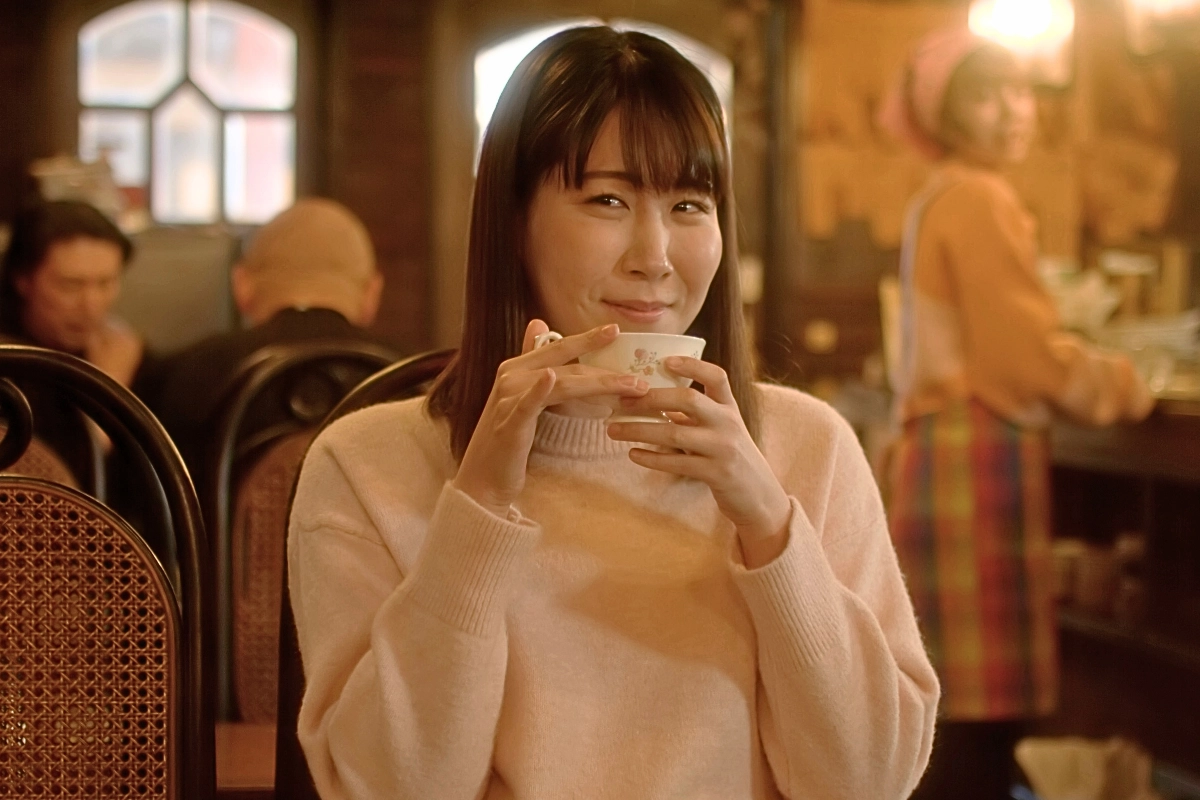
Tsuyoshi’s 2021 short film, The Fish with One Sleeve, was not only a hit at film festivals around the world, but it also made Japanese film history.
“It was the first open call in the history of Japan for a transgender character where we insisted on having a transgender actress,” Tsuyoshi says. “Because I myself had many experiences of being hurt as a child by bad representations like Homoo Homooda, I can understand how transgender people today are suffering. In the same way, they are mostly badly represented in film and drama. I thought that if nobody else was going to [portray transgender people positively], then I should start by changing things myself. That’s why I held that first audition.”
His next feature-length film, Old Narcissus, also highlighted an underserved part of the Japanese LGBTQ+ community: older queer people.
“I think that particularly for groups who are minorities within a minority, the problems faced by that minority bear down on them most heavily and have the strongest impact on them,” he explains. “So, to depict those kinds of problems in film, I think it is very important to put the spotlight on minorities within a minority.”
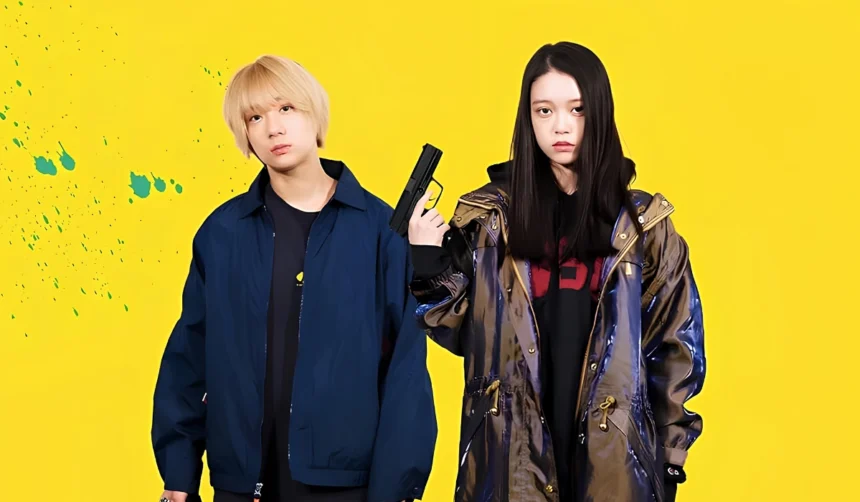
Now, his dedication to representation is going to new lengths in his upcoming film, The Trans Girl Next Door. The film, a science-fiction comedy about a transgender woman who goes back in time to meet her pre-transition self, stars Miyu Nakagawa, the breakout actress of Blue Boy Trial, and trans woman icon Ai Haruna.
“Working with them was an incredibly wonderful experience. Miyu Nakagawa told me that when she was a child, she saw Ai Haruna being successful on television and felt greatly encouraged and empowered by her,” Tsuyoshi says. “I think there is tremendous significance in those two now appearing together in the roles of mother and daughter.
Working with them both not only increases the transgender representation in Japanese film, but also, Tsuyoshi believes, demonstrates the range and ability of transgender actors in the face of skepticism.
“Even in terms of the history of transgender people in Japan, Ai Haruna’s generation is probably the very first generation to use the name “transgender,” he says. “So for her to appear in a film in a mother-and-daughter relationship with Nakagawa, who is from a much younger, newer generation, I think is interesting in itself.
“Another reason I cast Ai Haruna in the role of the mother is that, with The Fish with One Sleeve, when I argued to society that transgender roles should be given to transgender actors, there was a very typical response. People objected, ‘If you say that, transgender, transgender actors will only ever be offered transgender roles.’ So as my answer to that, I wanted to show through this film, ‘Of course that isn’t true. Transgender actors can play any kind of role’.”
The Trans Girl Next Door
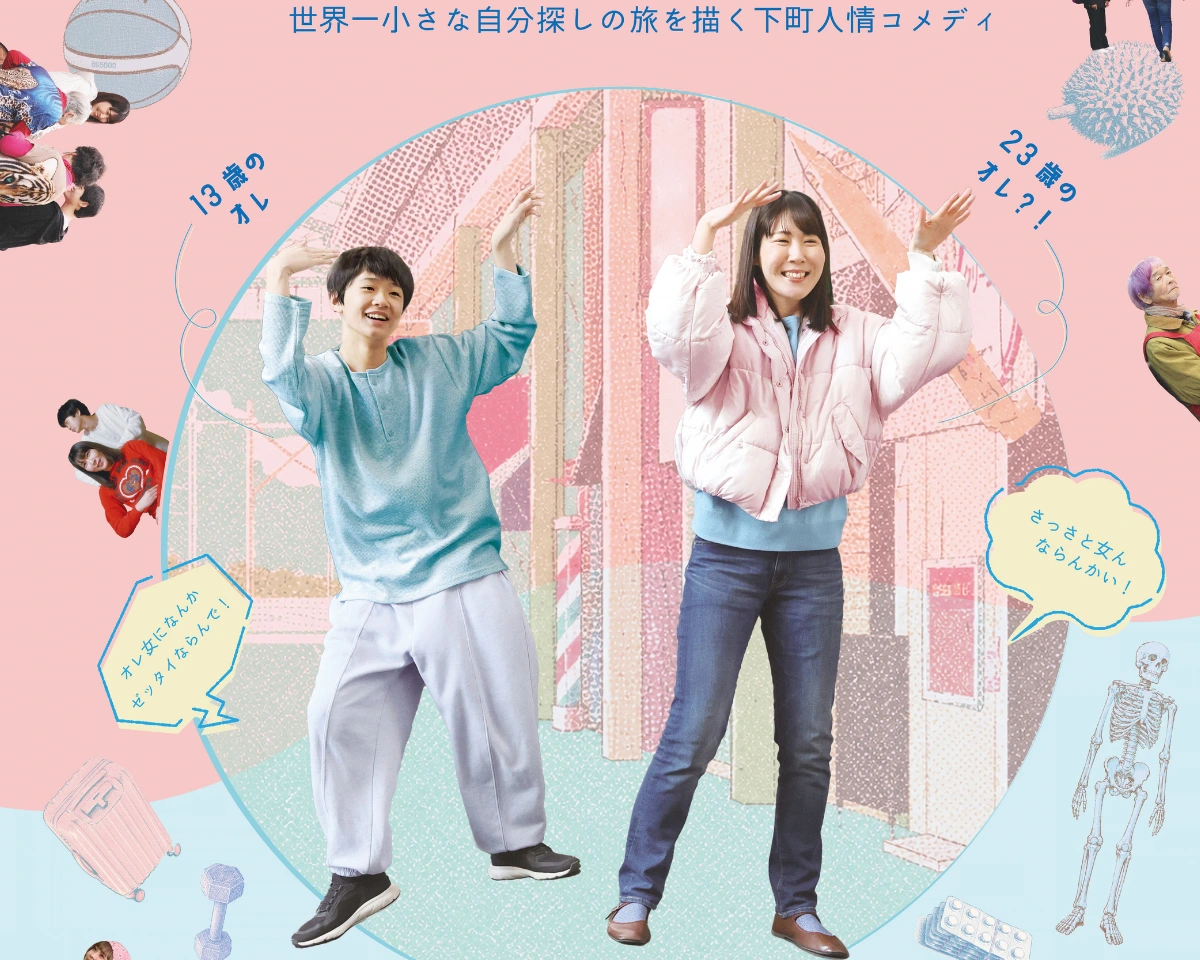
The film The Trans Girl Next Door is based on a short story from an anthology of the same name by manga artist Torasho. The reason that this particular story stood out to Tsuyoshi was, he says, the opportunity to say something meaningful to questioning youth, combined with the potential for comedy.
“In my view, all children who are sexual minorities have problems with self-acceptance during adolescence: wondering who they themselves are, why they are different from the people around them, and ‘What on earth am I?’ I think probably everyone experiences that, but films and dramas basically don’t depict those things. I think there are almost no films or dramas with that theme, works that focus on it.”
He compares his film to 2024’s I Saw the TV Glow. Jane Schoenbrun’s movie also explores transgender self-acceptance, but it effectively conveys this theme through a psychological horror genre. Instead of horror, Tsuyoshi wanted to convey similar ideas through the lens of comedy, noting that there are few comedic films about transgender people, let alone starring them.
“There are already so many sad stories and painful stories depicting transgender people. Almost too many,” he says. “But happy stories, enjoyable films with happy endings, are hard to find. And if enjoyable films like that don’t exist, I think transgender youth might start feeling that perhaps there’s nothing enjoyable waiting for them in their own futures.
“Actually, when I was a child, I also watched gay movies and queer films and thought things like, ‘Are things going to be extremely difficult for us queer people in the future?’ So I hope that, instead of that, films can show people a happier future. There might be painful, painful struggles, but I’d like to show them in films so that you can still live happily.”
The Trans Girl Next Door is about giving advice, taking advice, and facing the future. When Tsuyoshi thinks about the future of LGBTQ+ Japanese film, he hopes that filmmakers will focus less on specific relationships between two queer people and more on the relationship between queer people and society. As for advice? He thinks young LGBTQ+ filmmakers shouldn’t worry if they can’t make their work exclusively queer — especially if they’re just starting.
“Making queer films into your job and earning an income from them is extremely difficult,” he advises. “Rather than setting out at the beginning specifically aiming to make queer films, in terms of developing your own abilities, I think it’s important to value other kinds of work.
“Through that kind of work, you can build up a network, connections, and find people you can work with — and find the funding you need! Then, once you’re prepared, I think you’ll be ready to take on the queer film that you really want to make.”
The Trans Girl Next Door premieres in Japan on Saturday 7 November 2026 at K’s Cinema Shinjuku.
Additional reporting by Yukari Ueno.