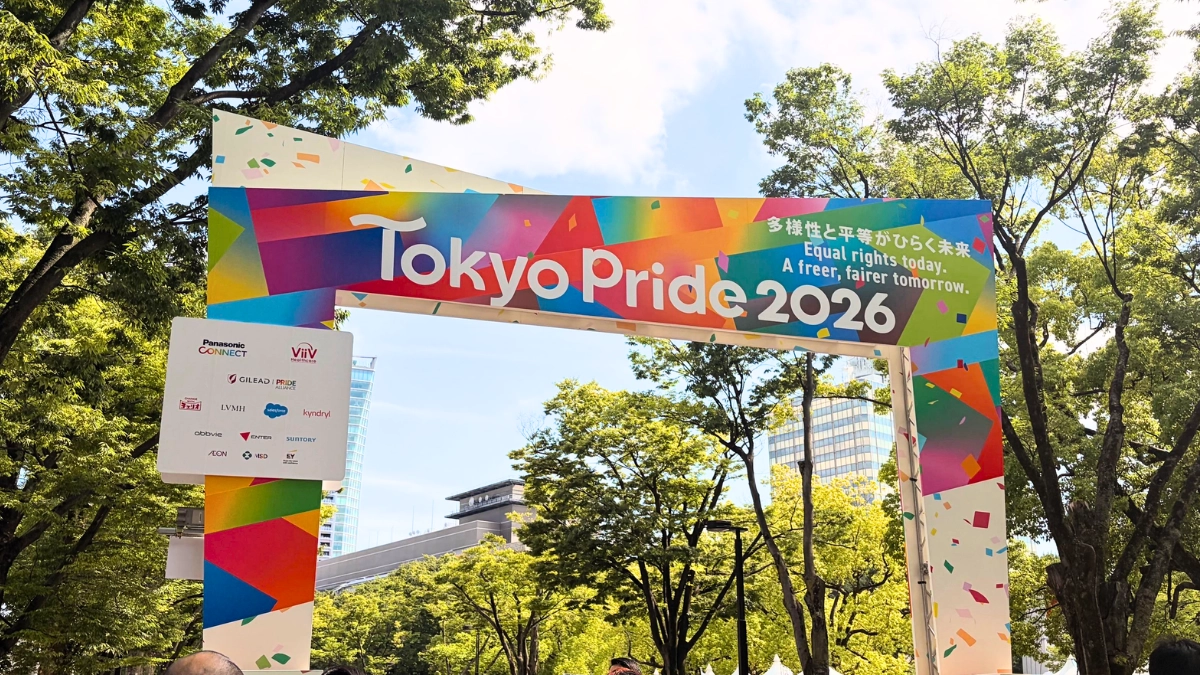

Tokyo Pride is the annual march and festival held in Japan’s capital to celebrate LGBTQ+ people and advocate for equality. Taking place in Yoyogi Park on 6–7 June 2026, this year’s event brought together an estimated 274,000 attendees and 15,000 parade participants for a weekend of performances, community outreach, activism, and celebration.
Here is our report from the weekend.
Tokyo Pride 2026 at a Glance
Tokyo Pride is the largest LGBTQ+ event in Japan. Every year, LGBTQ+ people and allies travel from all reaches of Japan to celebrate and march. The event has been held, on and off, since 1994, when it was a protest against gay people being denied access to public youth centers.
Dates and Location
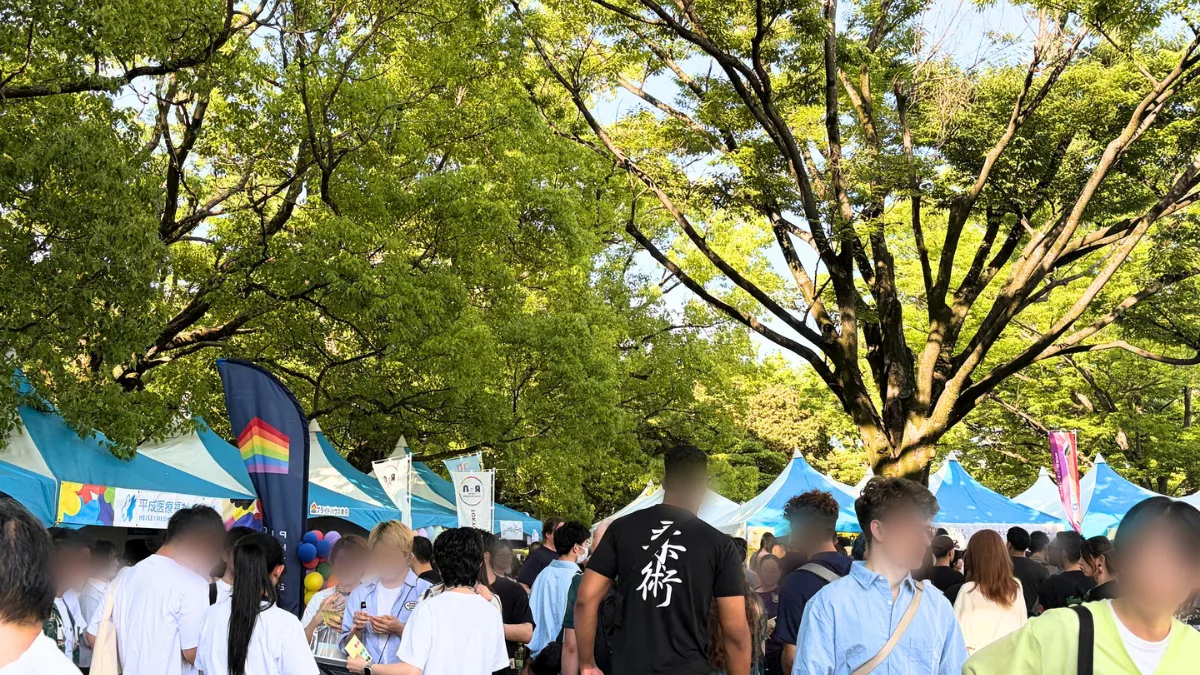
This year’s event took place on 6-7 June at Yoyogi Park in central Tokyo. The park has been the home of Tokyo Pride since 2012, and once again welcomed thousands of visitors over the weekend.
Located right between Shibuya and Harajuku, Yoyogi Park has become a great venue for both the festival grounds and the parade route through some of Tokyo’s busiest districts.
Attendance and Key Facts
According to organizers, an estimated 274,000 people attended Tokyo Pride 2026, with around 15,000 joining the march itself.
They included LGBTQ people, families, allies, students, activists, corporations, and visitors from overseas. Together they gathered, both as a group and as individuals, united in their desire for Japanese LGBTQ+ rights — and the rights for people abroad.
Biggest Highlights From the Weekend
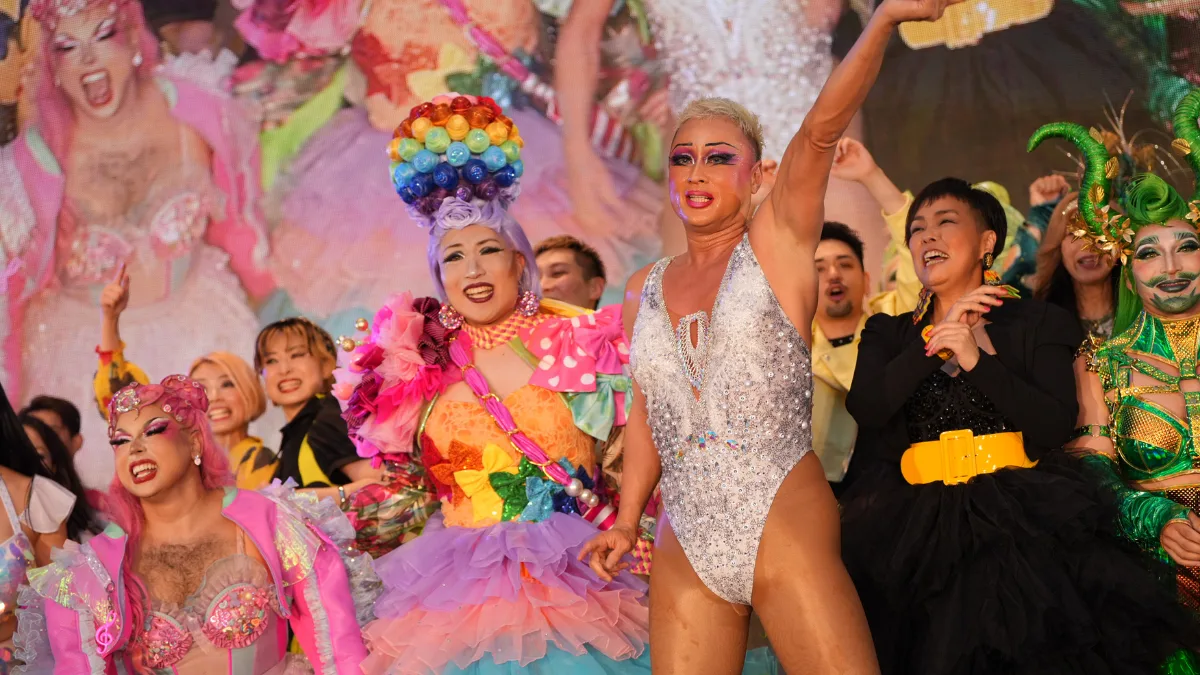
One of the biggest highlights was the main stage program, which featured a mixture of speeches, live music, and performances throughout both days.
Among notable guests included transgender actress from Blue Boy Event, Miyu Makagawa. But that wasn’t all: Pride also included Durian Lollobrigida and Thelma Aoyama, a major drag queen and musical artist ally, respectively. The main stage also included a number of other performers, including the singers like AI, SIRUP, Kaya, Jasmine High, and YENO, and dancers AYA SATO, Macoto (RHT.).
Away from the stage, visitors explored the hundreds of community and sponsor booths. Some offered information about legal support and healthcare, while others focused on LGBTQ+ advocacy, education, and social services.
Inside the Pride Parade
Parade Route
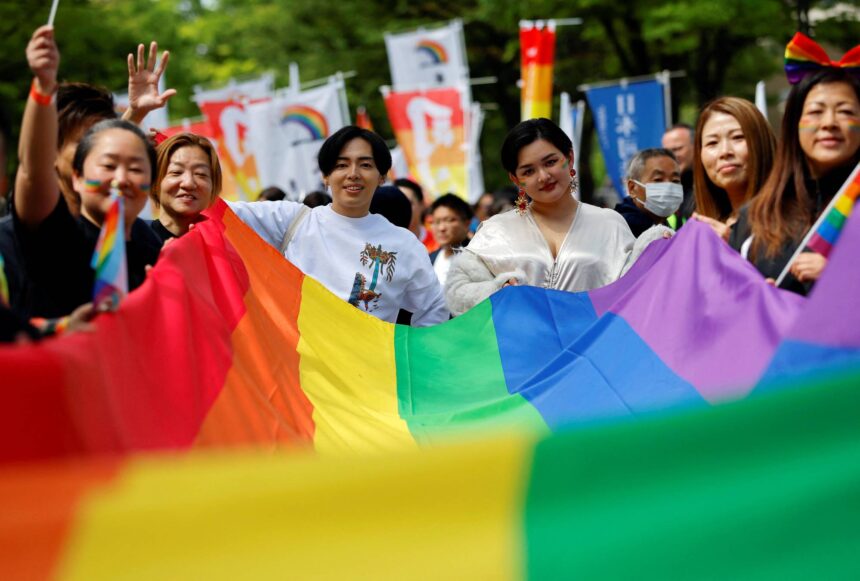
The march started and ended at Yoyogi Park, taking roughly 2.5 hours to walk. Participants marched through some of the highlights of Tokyo like Harajuku and Shibuya carrying rainbow flags, banners, and signs supporting LGBTQ+ rights. Along the way, we met supporters, and gleefully shook their hands.
Participants
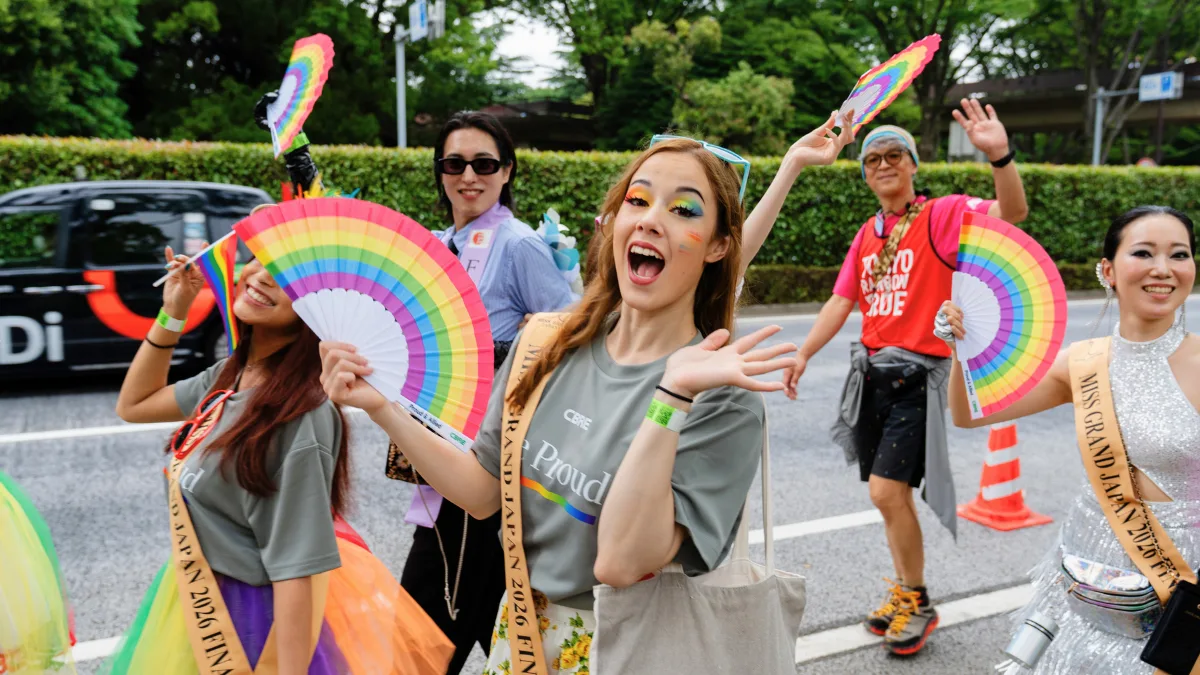
The parade featured a broad mix of participants.
Community groups marched alongside nonprofit organizations, labour unions, embassies, and international missions. Marriage for All Japan was among the organizations present, continuing its advocacy for marriage equality in Japan.
Many corporate sponsors also participated. Companies including Aeon, a well-known Japanese supermarket, NHK, Pfizer, and others joined the parade and festival.
Crowd atmosphere
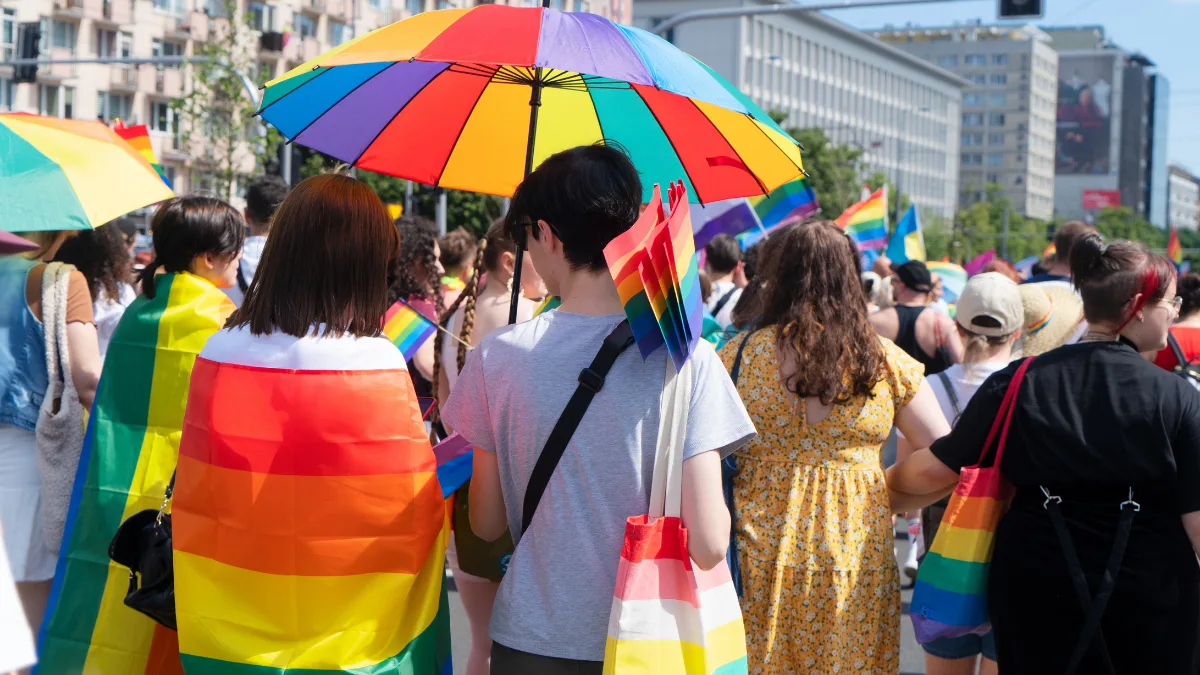
The atmosphere was one of solidarity. While people recognized the commercialism of Pride, they were there with one purpose: to be proud, and to be together.
Visitors carried pride flags, wore colorful outfits, and explored the food stalls, community booths, and stage area.
What stood out most was the variety of people present. From the elderly to the drag queens to the young to the suited, all met and shook hands to support gay rights and share the same space. Pride has always been about visibility, and that visibility was on full display throughout the weekend.
Festival Activities and Community Booths

Entertainment
The main stage kept busy throughout both days. Visitors could see major musical and dance performances, community talks, and appearances from multiple LGBTQ+ advocates and public figures.
Performers included Satsuki Nishihara and the Nekoneko Dancers, while MCs kept crowds engaged between events.
Community Organizations and Accessibility
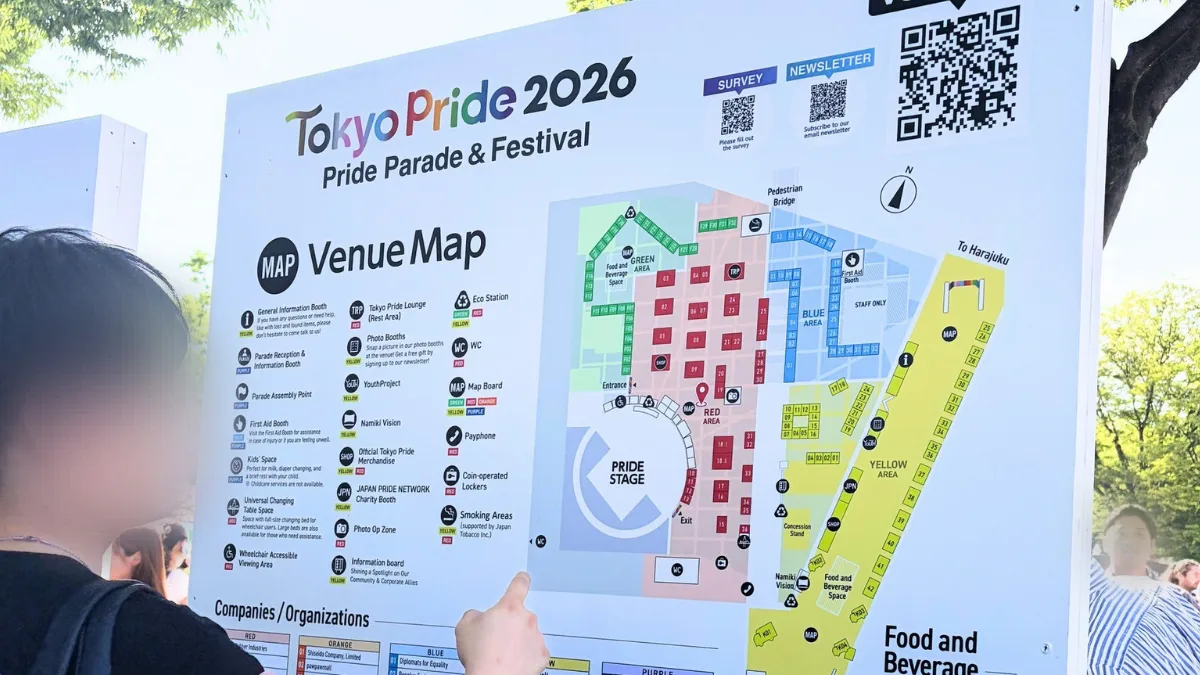
One of the biggest parts of Tokyo Pride is the large number of community organizations that participate every year.
One such organization was the Japanese Society of Legal Scriveners. Representatives explained that, because same-gender marriage isn’t legal in Japan, a big part of their jobs is helping registration for those who are married abroad.
NHK, Japan’s public broadcaster also attracted significant attention. Its rainbow-themed Domo-kun mascot showed to be very popular, with visitors lining up to take photographs throughout the day.
There were also pharmaceutical companies, unions, and others devoted to the public good, wishing others well and giving information. The Precariat Union, for example, recognizes that LGBTQ+ people are often oppressed, even in Japan, and are offering their services.
Food and Vendors
No festival would be complete without delicious food, and Tokyo Pride had plenty of options.
Visitors could choose from traditional Japanese festival food, like okonomiyaki and yakisoba, alongside popular foreign cuisine such as Mexican food, Thai food, and other street-food favorites. Drinks included Japanese beer, as well as chuuhai-drinks (fizzy Japanese cocktails).
The food areas kept busy throughout the entire weekend as people took breaks between performances and events.
Merchandise vendors also sold pride-themed goods, allowing visitors to support organizations while taking home a souvenir.
Accessibility
Accessibility continued to be an important focus.
Organizations supporting deaf LGBTQ+ people had a great presence at the festival, offering information and opportunities to learn JSL (Japanese Sign Language). Accessible facilities and support services were also available to help ensure that everyone could participate in the weekend’s activities.
After the Festival
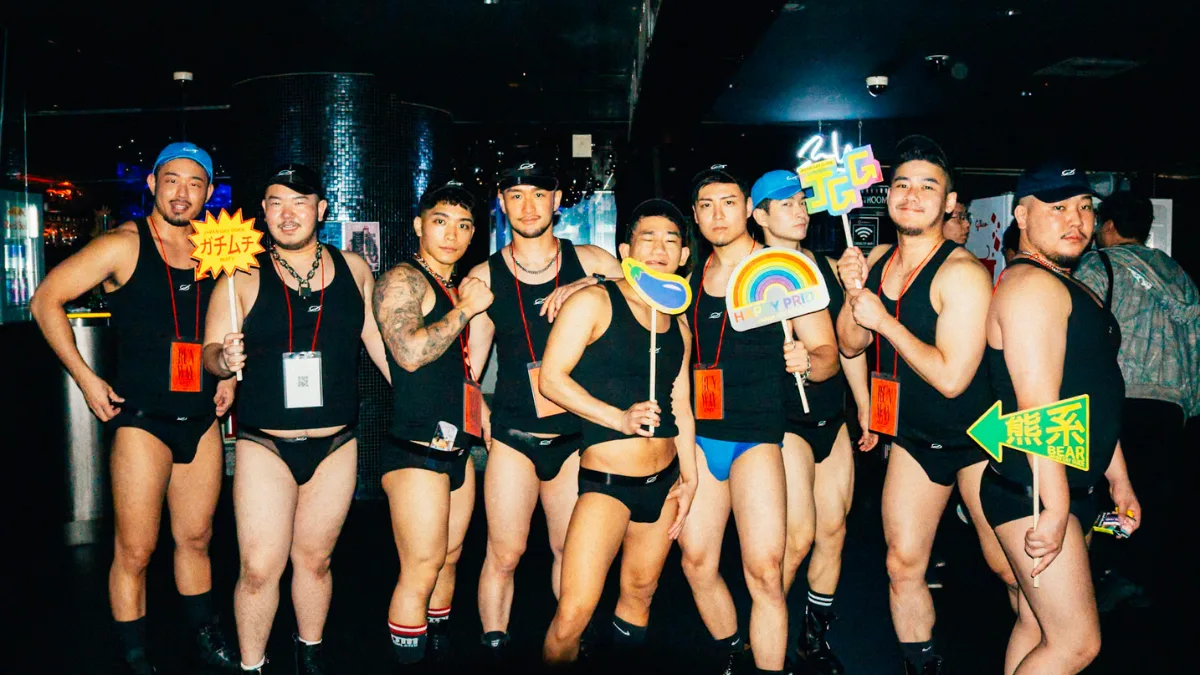
While Yoyogi Park may have closed for the evening, Pride celebrations continued elsewhere in Tokyo.
Many Pride attendees (including us!) headed to Shinjuku Nichome, Japan’s most famous LGBTQ+ district, where bars like King, Queen, Kingdom, Queendom, and other spaces hosted Pride-related parties.
For many people these after-parties are a key part of the Pride experience, where they can meet people, hangout with friends, and continue celebrating after the parade has ended.
Why Tokyo Pride 2026 Mattered
Tokyo Pride is a celebration, but it is also a reminder that the movement for LGBTQ+ equality in Japan continues.
Events like Tokyo Pride matter because they create visibility. They bring together people who might otherwise feel isolated and provide a space where LGBTQ+ people can gather openly and proudly.
We cannot and must not neglect rights for queer people. We have seen overseas the results. And that is why this year was especially important for LGBTQ+ people.
What’s Next for Tokyo Pride?
Tokyo Pride grows more and more each year, with larger crowds and wider ranges of participants gathering.
As discussions around LGBTQ+ rights, especially marriage, continue across Japan, it will likely remain one of the country’s most important opportunities for advocacy, education, and celebration.
Conclusion
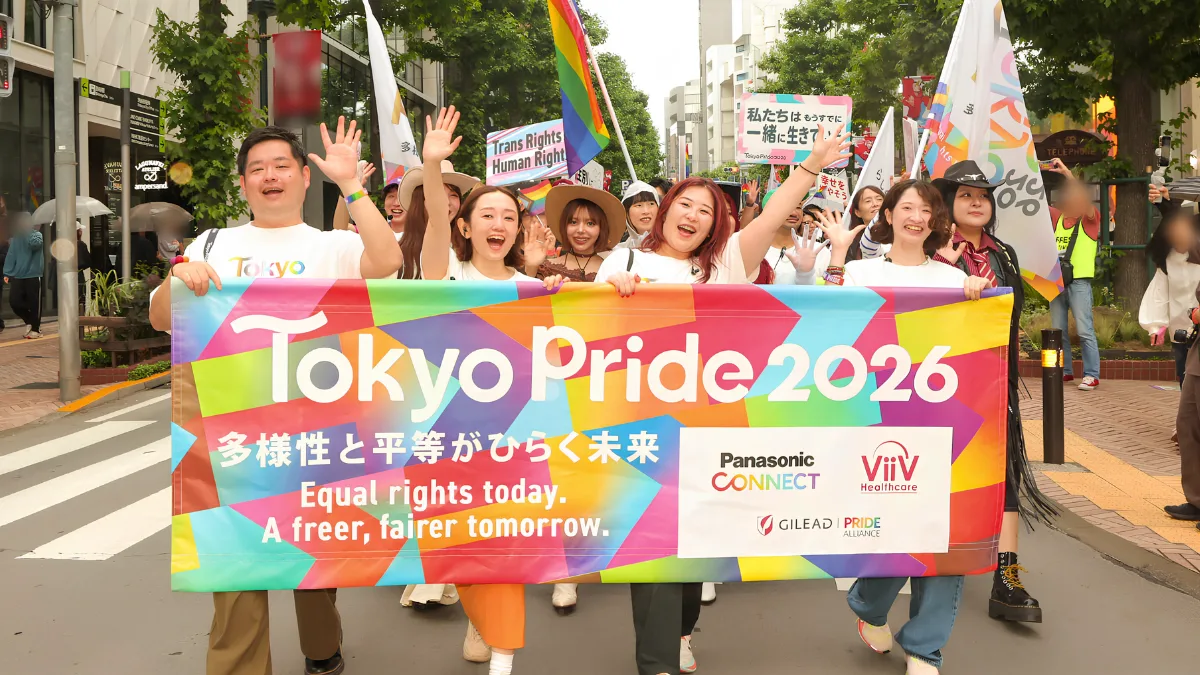
Tokyo Pride was one of the biggest events in the Tokyo year. It demonstrated once more the solidarity and importance of LGBTQ+ love. Attended by thousands or people, it demonstrated how important queer people are in and to Japan.
Tokyo Pride 2026 Key Details
Where was Tokyo Pride 2026 held?
Tokyo Pride 2026 was held at Yoyogi Park in Tokyo on 6–7 June 2026. The parade route passed through nearby areas including Harajuku and Shibuya, ending back at Yoyogi Park.
What were the biggest highlights from Tokyo Pride 2026?
Highlights included the Pride Parade, live performances from major music artists, appearances by LGBTQ+ figures, and the hundreds of community organizations that participated during the weekend.
Could anyone attend the Tokyo Pride festival and parade?
Yes. Tokyo Pride is a public event open to LGBTQ+ people, allies, families, friends, and anyone wanting to support the community!
How large was Tokyo Pride 2026?
According to organizers, around 274,000 people attended the festival, and approximately 15,000 participated in the Pride Parade.
What is the difference between Tokyo Pride and Tokyo Rainbow Pride?
Tokyo Rainbow Pride was the previous name of the event. It was rebranded to Tokyo Pride in 2025 while continuing the same annual festival, parade, and advocacy activities.