

BL Manga History Seminar
While Boys’ Love (BL) manga, anime, and live action shows are highly popular (not to mention lucrative) these days, this was not always the case. Although Japan has a long history of queer art and relationships, what we consider to be modern BL, yaoi, or shounen-ai (depending, to a degree, on your preference) was not always as prolific, its tropes not as codified, and its fanbase not always so established. So, how did it emerge to become the force it is today?
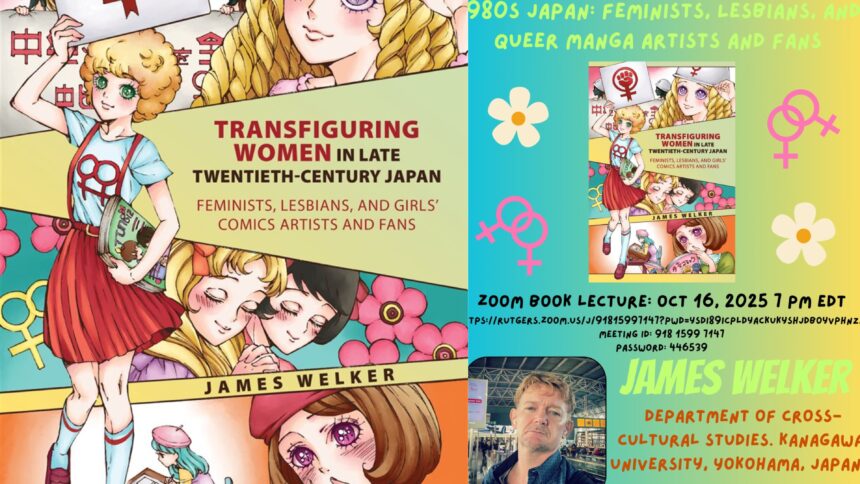
On 7 April, the Ca’ Foscari University of Venice’s Gesshin Japanese Society hosted an online seminar with guest speaker James Welker to discuss the history of BL manga, from its earliest beginnings to its establishment as a genre in and of itself in the 1970s. JGG was lucky enough to attend the event, and are pleased to give you our run-down for anyone who could not attend.
Who is James Welker?
First, we must establish the speaker for the event. James Welker is a professor at Kanagawa University’s Department of Cross-Cultural Studies. According to his biography, his focus is on “gender and sexuality in modern and contemporary Japan, with an emphasis on queer and feminist issues as well as globalization and popular culture.”
His works have included Boys Love Manga and Beyond: History, Culture, and Community in Japan, which was nominated for an Eisner Award (the comics equivalent of the Oscars) in 2016 for Best Academic/Scholarly Work. In 2017, he was the host for the International Symposium on Boys Love Media in Asia. He is also knowledgeable about a wide range of LGBTQ+ media and culture in Japan, and provided the foreword for Erica Friedman’s By Your Side: The First 100 Years of Yuri Anime and Manga.
His latest book, Transfiguring Women in Late-Twentieth Century Japan: Feminists, Lesbians, and Girls’ Comics Artists and Fans, is what formed the basis for this seminar. It broadly charts the rise and interactions between the ūman ribu (woman’s liberation) movement, the rezubian (lesbian) community, and the creators and fans of queer shoujo manga (he uses the romanized forms to distinguish these Japanese movements from their western counterparts).
What is the Contextualized History?
Starting at the chronological beginning, many may not know is that the use of the term “shounen-ai”, literally “boys’ love or can be traced back to the 1920s, it was not the same concept that we think of now. Rather, it was a term in magazines that were attempting to be both serious and erotic, but typically explored love between older men and younger men, often in a mentor/mentee relationship. These stories nevertheless were of great interest to young women, who formed a great part of the audience.
In manga, however, the emergence of BL can be traced back to the 1970s, a period which saw a number of significant historical moments for women in Japan. Following the Second World War, Welker argues, the economic development of Japan led to greater opportunities — and demands — from Japanese women. The first ūman ribu demonstration, demanding equality and increased freedom of individual choice for all women. Meanwhile, queer women had been meeting in places like Shinjuku Nichome for years, 1971 saw the birth of Wakakusa no Kai, the first lesbian-centered community group in Japan. And in the midst of all this, shounen-ai manga was born.
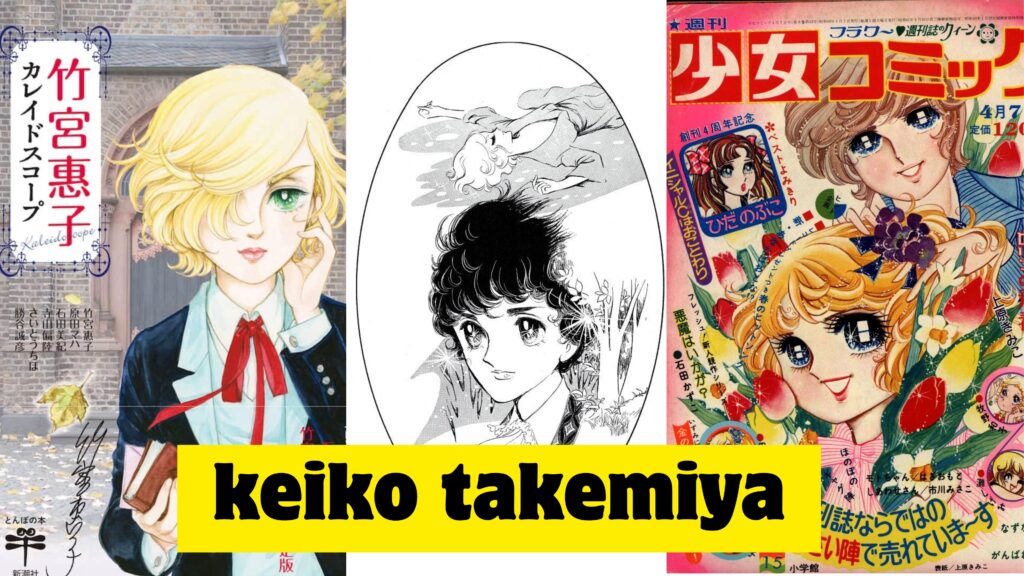
One of the pioneers of this genre was Keiko Takemiya. She was one of the “Year 24 Group”, referring to manga artists borfn in 1949, or Showa 24. This cohort of artists and writers would be considered the first to write manga for girls from a woman’s perspective, rather than primarily comics for girls written by men. Additionally, Takemiya was known to have been influenced by her neighbor, Norie Masuyama, to try and incorporate the maturity of European writers, perhaps most notably Hermann Hesse, into manga, and was also influenced by Taruho Inagaki’s essay ‘The Aesthetics of Boy Love’ to beging working on gay romance.
So it was that her manga In the Sunroom, a story about two young men who fall in love and, at the climax of the book, explicitly kiss, became the first shounen-ai manga. It was a critical success, and she went on to create several more stories that we would today recognise as BL.
The influence of Takemiya’s work — as well as that of fellow manga-ka Hagio Moto, helped to codify the concept of the boarding school as a place for young men to discover their sexuality and feelings for one another as a recurring trope in BL manga.
Ongoing Transfiguration in BL
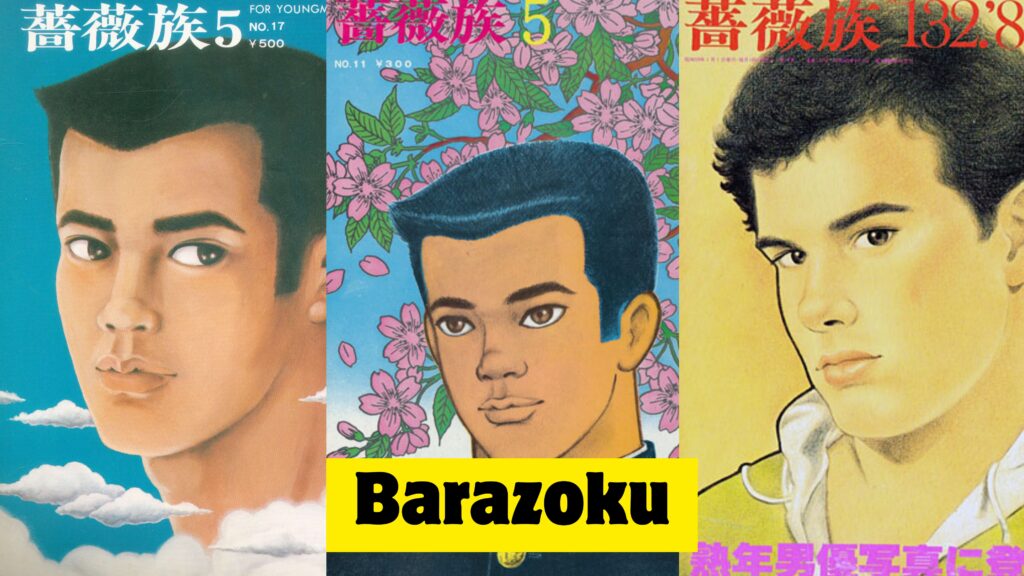
It is this “transfiguration” between cultures that marks out what would become BL from other media of the time, or of its type. Barazoku magazine published a number of highly sexualized manga, though it was created by and for men. BL, on the other hand, being primarily by and for women, was not only a source of entertainment, but also helped promote European aesthetics in manga (even today, boarding schools and/or Catholic schools are fertile grounds for queer imagination), transfiguring continental locations into spaces for the imagination and desires for Japanese women.
Additionally, BL is transfiguring, among the readers, their feelings towards themselves and others in the real world. Many readers have reported that, through reading BL manga, women have felt more free from social norms and mores, as they reassess masculinity, femininity, and romance. In the latter case, especially, the introduction to stories depicting men in love with men demonstrates that gender is not necessarily that important when it comes to love.
More than this, while BL is still primarily thought of as a strictly Japanese genre, it is itself being transfigured, with live action BL drama from Thailand being especially highly influenced (to the extent that live action adaptations of Japanese BL manga like Cherry Magic come out in Thailand before they do in Japan).
Additionally, we can see Japanese BL tropes being highly influential in the west, which then return to Japan in a new shape, and so influence Japanese output. As an example, Welker notes the Omegaverse (which we will delve deeper into in a future article), which in many cases takes cues from Japanese BL, and these works, once translated into Japanese, go on to influence manga-ka who create their own Omegaverse works. In this sense, the works act almost like boomerangs, moving backwards and forwards between cultures, influencing and emulating one another.
The story of yaoi, shounen-ai, and BL is, in some senses, 100 years old. In others, a little more than 50. But the most important thing about the history of BL is that it is still ongoing.