

Have You Ever Heard of Intersex?
We usually grow up thinking that people are born either male or female. But in reality, some people are born with physical sex traits that don’t fit neatly into those two categories. One word used to describe this is “intersex,” which refers to people who are born with sex characteristics that do not fully match the typical definitions of male or female. It may not be a widely known term, but it is not as rare as many people think. In this article, we will explain what intersex means in simple, easy-to-understand terms.
What is Intersex?
Intersex refers to people who are born with bodies that cannot be clearly classified as either wholly male or female. For example, their chromosomes, hormones, or the shape of their genitals may not completely match typical male or female patterns. Intersex describes physical sex characteristics. It is different from sexual orientation (who someone is attracted to) or gender identity (whether someone feels they are male or female).
What is the Difference Between Intersex and DSD?
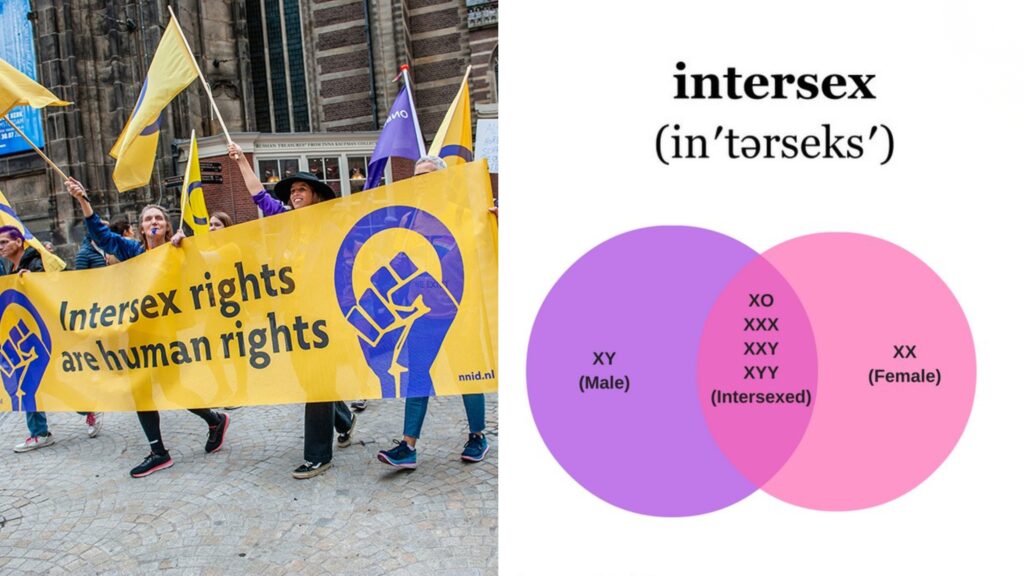
DSD stands for “Differences in Sex Development.” It is a medical term used to describe situations where the development of chromosomes, hormones, gonads, or external genitals differ from what is typically expected in male or female bodies. The term is sometimes used in a similar sense to intersex, but they are not the same. “Intersex” is often used in social or human rights contexts, while “DSD” is mainly used in medical settings. So even when referring to similar physical traits, the term used may depend on the context.
How common is intersex?
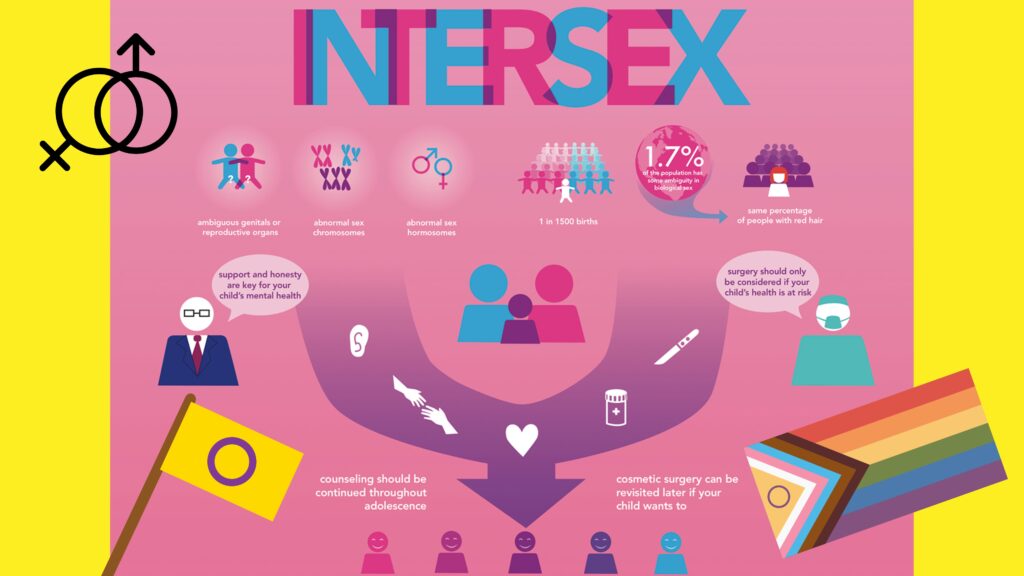
It is estimated that about 1.7 percent of people are born with intersex traits. In terms of population, this means roughly one in every 4,500 births may involve intersex characteristics. Additionally, these traits are not always visible from the outside.
Challenges Faced by Intersex People
People with intersex traits may face various challenges because their bodies do not fully match typical male or female expectations. These issues can appear in medical, social, psychological, and legal areas.
1. Medical challenges
At birth, surgeries may sometimes be performed to assign the child as either male or female. These procedures are done before the person can give consent, and they can sometimes lead to physical or psychological effects later in life. In some cases, medical treatments proceed without sufficient explanations given to the parents.
2. Social and cultural challenges
Many parts of society, such as schools, workplaces, and official systems, are built on the assumption that there are only two sexes: male or female. Because of this, intersex people may struggle to find understanding or acceptance. Some experience bullying, discrimination, or prejudice. Since intersex topics are rarely discussed in the media or education, many people also feel isolated.
3. Psychological and emotional challenges
Some people experience confusion or discomfort related to their bodies or their sense of identity. When understanding and support from family or others are limited, this can lead to major anxiety or stress.
4. Legal and institutional challenges
Many official documents and procedures only allow “male” or “female” as options. Because of this, the right to determine one’s own sex may not always be fully recognized. In some countries or regions, laws and protections related to sex registration or legal recognition are still limited.
The Meaning of the Intersex Flag
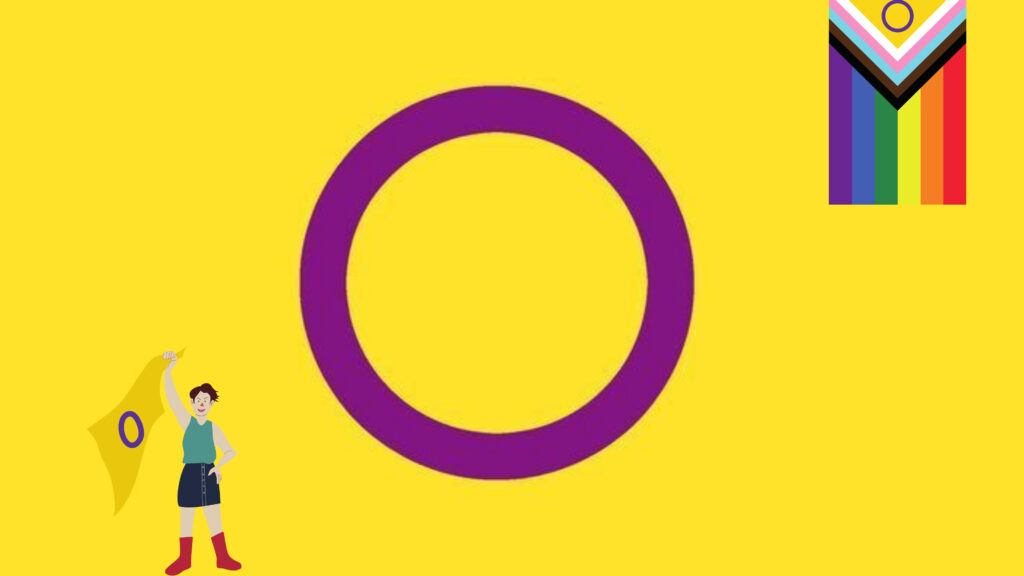
The intersex flag is a symbol that represents intersex people and their rights. It was created in 2013 by the Australian organization Intersex International Australia.
The design is simple: a yellow background with a purple circle in the center. Yellow represents a neutral color that is not traditionally associated with male or female, while the purple circle represents wholeness and the idea that intersex people are complete and should be respected just as they are.
This flag is used as a symbol to raise awareness and promote a society without discrimination.
Intersex in Conclusion
Intersex includes many different kinds of physical traits, and there is no single way that an intersex body can present itself. Differences in chromosomes, hormones, gonads, and genital development create a wide range of variations. In medical terms, there are roughly 40 different conditions that attract the most attention.
In other words, intersex is not one specific type of body. It is a broad concept that includes many different natural variations. Rather than something that needs to be divided or excluded, it can also be understood as part of the natural diversity of human development. Respecting that diversity is one way we can build a society where people live together with understanding.
Click Intersex-Inclusive Progress Pride Flag: Meaning and History | Japan Gay Guide for more details