


There is a popular belief that nostalgia comes around in 30-year cycles, and in many ways, this is turning out to be true for the 1990s. A new generation has discovered Friends on streaming platforms, Britney Spears has been rediscovered, re-evaluated and reappreciated as people become aware of the difficulties that she has faced, and even video games are being made with PlayStation or Nintendo 64 aesthetics (sorry, Sega Saturn).
Does the same theory hold water for gay anime? Well, let’s take a look! Here are our choices for five gay anime that are as ‘90s as the Spice Girls, Nirvana, and sex scandals in the highest offices of US power.
Gravitation
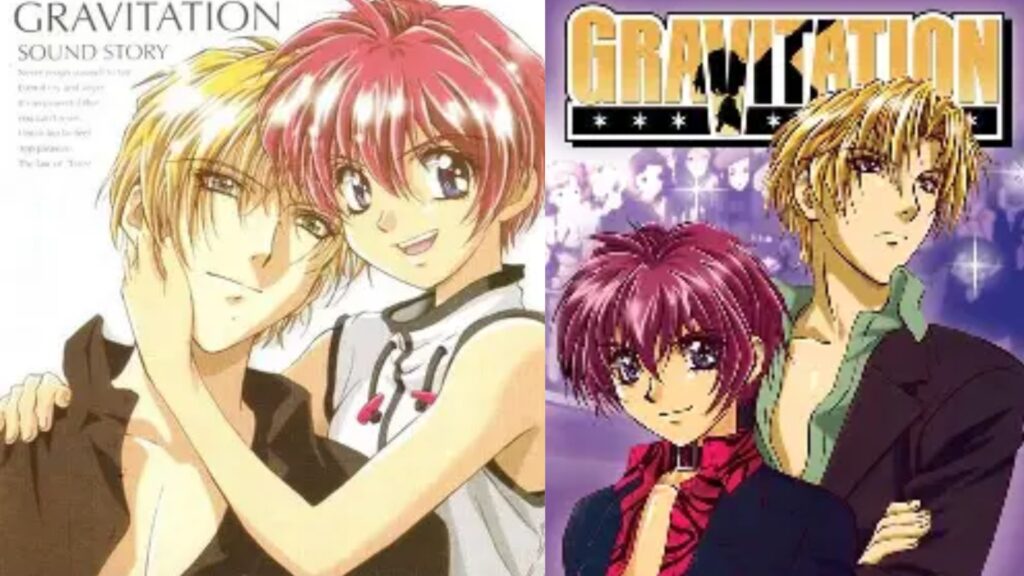
Arguably the most influential Boys’ Love (BL) anime of the decade (and, by extension, the millennium), the manga by Maki Murakami was adapted into two original video animation (OVA) episodes in 1999. OVAs are like a special: typically not the length of a movie, but with higher budgets than TV anime, as they tend to be shorter series. Being released directly to video, and thereby bypassing broadcast regulations, meant they could often portray more taboo subjects (which will become a running theme in this article).
Gravitation is the story of Shuichi Shindou, the lead singer of the band Bad Luck, who has a chance meeting with novelist Eiri Yuki after his new lyrics are blown away and end up in the writer’s hands… who promptly tells him that they are awful. Trash. Poop from a butt. Despite a less than auspicious meeting, the two soon become close, then closer, then closer still.
The OVAs eventually spawned a TV series, despite the relative taboo of portraying gay relationships in a serious light in the late ‘90s and early ‘00s. Fan translations of the anime, just as the Internet was becoming a major part of people’s lives, also helped promote Japanese BL to western audiences. A classic in every sense.
Ai no Kusabi
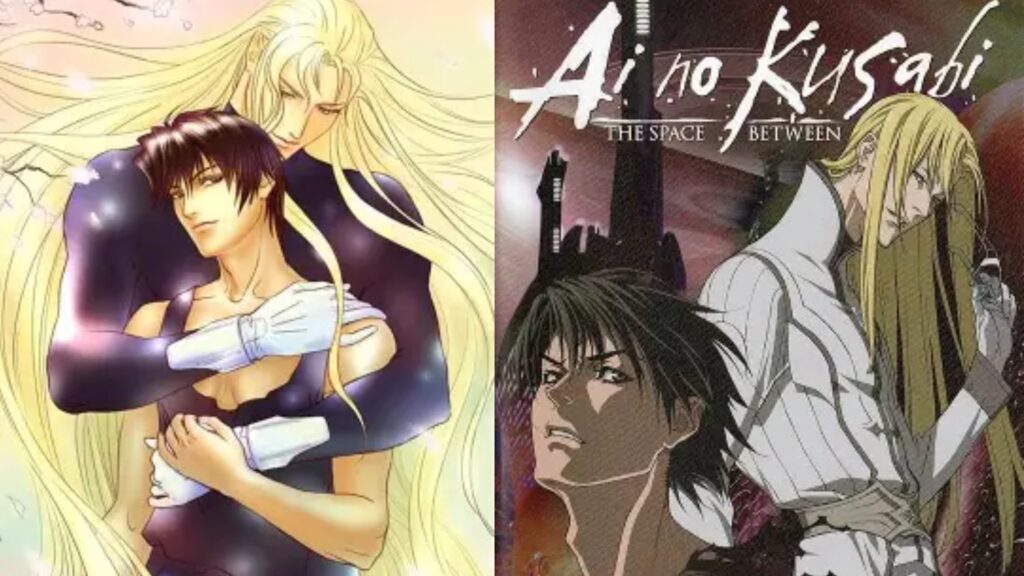
A critical darling, as a science fiction classic that explores themes of domination, class, and even AI, Ai no Kusabi is perhaps even more relevant today than it was when it was released, making it an essential entry on this list.
Set on the planet of Amoi, humanity has long since been superseded as the director of its own destiny by an AI named Jupiter. Jupiter-created cyborgs, known as the Elites, rule the capital city of Tanagura, with humans relegated to the smaller, neighboring city of Midas, which includes the independent ward of Ceres — now a slum after being left to run its own affairs.
The Elites are themselves ranked, and have their functions determined by hair color, with the 13 “Blondies,” who have certain privileges, including the chance to keep certain humans (usually specially bred for the purpose) as pets.
The story follows Riki, a “mongrel” from Ceres, who was the charismatic leader of his gang, but who has now become the pet of Iason, a Blondy from Tanagura. Riki is torn between his natural rebellious nature and his growing feelings for Iason, who in turn is slowly becoming obsessed with his pet.
Fake
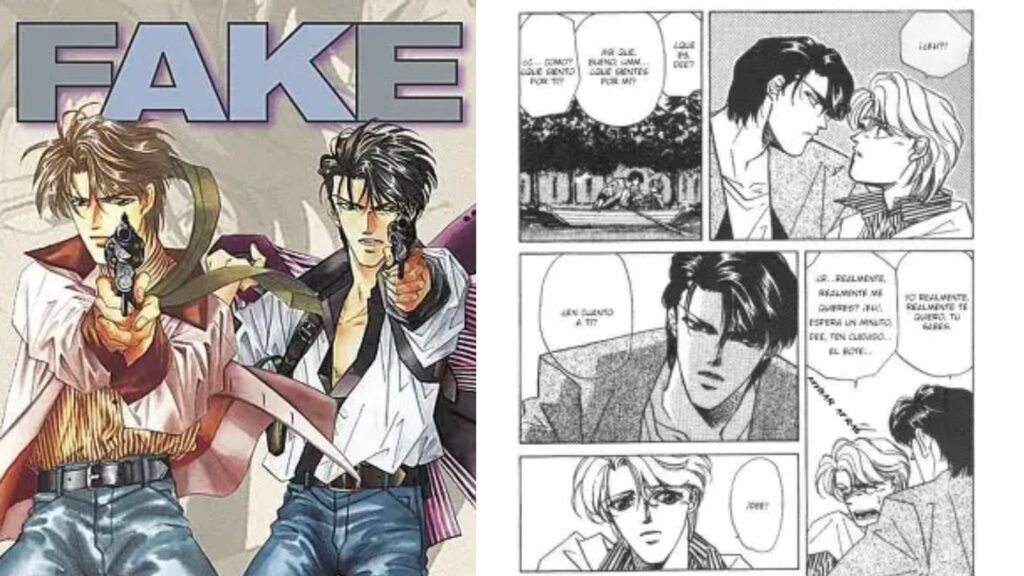
Another OVA, this time a one-hour piece based on the second volume of the original manga, itself released in the 1990s. Fake is the story of Randy “Ryo” Maclean, a Japanese-American policeman in New York, who is partnered with the cocky Dee Laytner. Dee quickly develops feelings for Ryo, but Ryo himself is unsure of how he feels about his partner. As they tackle crime and watch each others’ backs in the Big Apple, will their partnership remain purely professional, or will they become something more?
The anime adaptation sees the policeman pairing getting some much needed rest and relaxation in the UK, staying at an English mansion. However, their break is soon interrupted by the discovery of a body, and the investigation that goes with it. As the story makes its twists and turns, Ryo and Dee’s partnership is tested just as much as their detective skills.
Kizuna
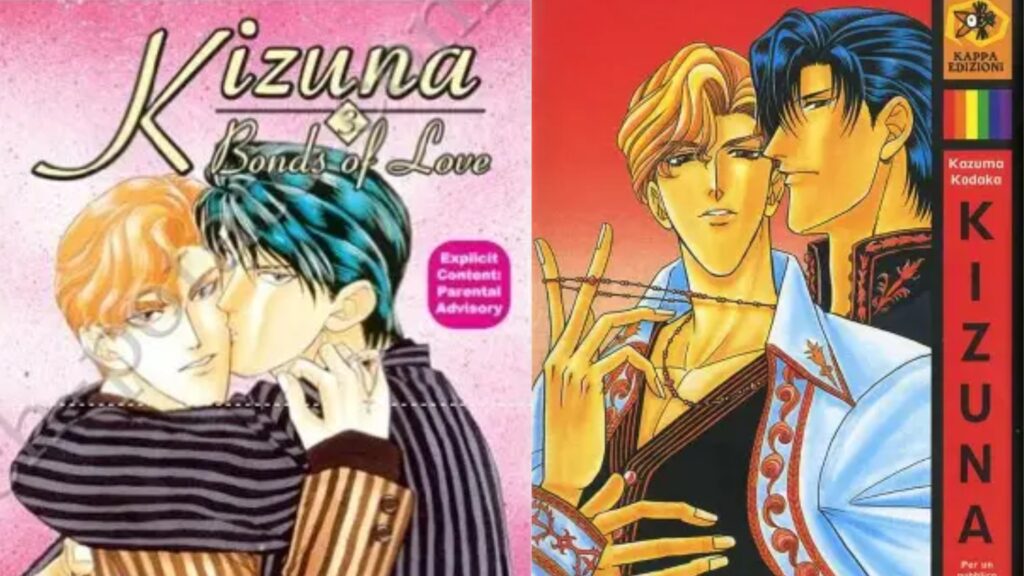
A BL with as much edge as it has softness, Kizuna is the tale of Kei Enjouji, who from a young age is in love with Ranmaru Samejima, a talented kendo fencer. The two soon become more than friends, but their life is upended when Kei’s mother passes, and he is revealed to be the eldest — yet illegitimate — son of a yakuza boss. Neither of the couple want anything to do with the gangster life, but regrettably the gangster life seems to want to intrude on theirs.
Three OVAs were made, the first two in 1994, followed by another in 2001. Fans of the OVAs note that the anime, while not covering all of the story of the early manga, is uninhibited in its portrayal of a gay relationship, with an early scene making it clear that the pair are in a sexual relationship… and who the top is (spoilers: it’s Kei). The complex relationship between Kei, Ranmaru, and Kei’s half-brother, Kai Sagano, have been a favorite of yaoi lovers for decades. Not to be missed.
Sekimatsu Darling
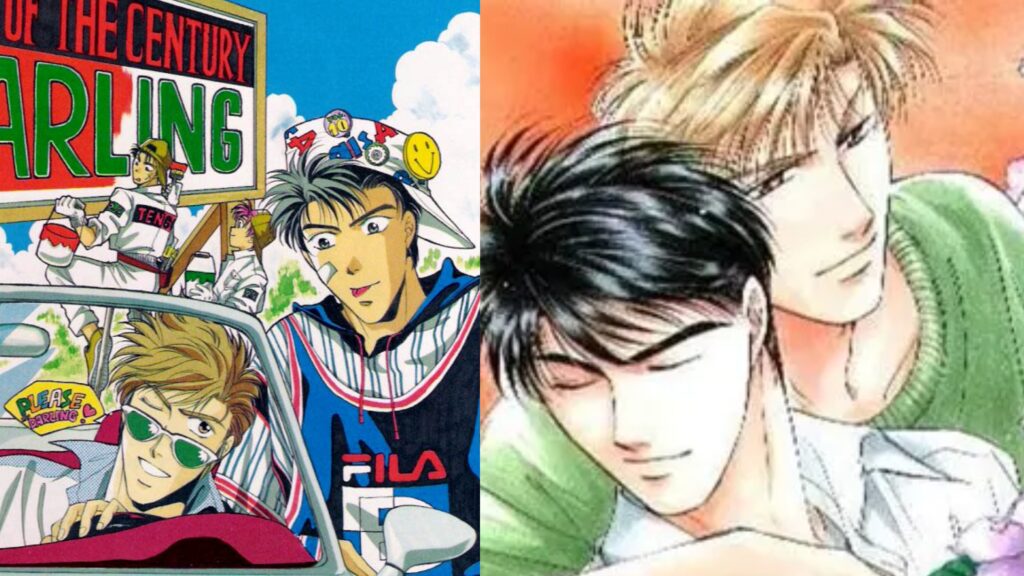
Released in 1996, this 30-minute OVA is an adaptation of Maki Naruto’s manga of the same name (also known in English as End of the Century Darling). We follow Kousaku Ogata, who has fallen for his colleague, Youichiro Takasugi. Eventually confessing his love, Youichiro reciprocates — but there’s an issue. They’re both tops, and neither are willing to compromise. So, the game is on when Youichiro invites Kousaku to a hot spring for a trip alone.
A fun, funny, and energetic thirty minutes with a strong concept and more than enough jokes to keep the audience riveted until the end, this OVA is even available on YouTube — now that’s a darling that anyone can get with, top or not.
So if any of these have piqued your interest, grab your turtleneck, microwave some pizza bagels, and get ready to enjoy some of the best queer anime of the end of the second millennium!